Is a Quonset hut cheaper than a regular building?
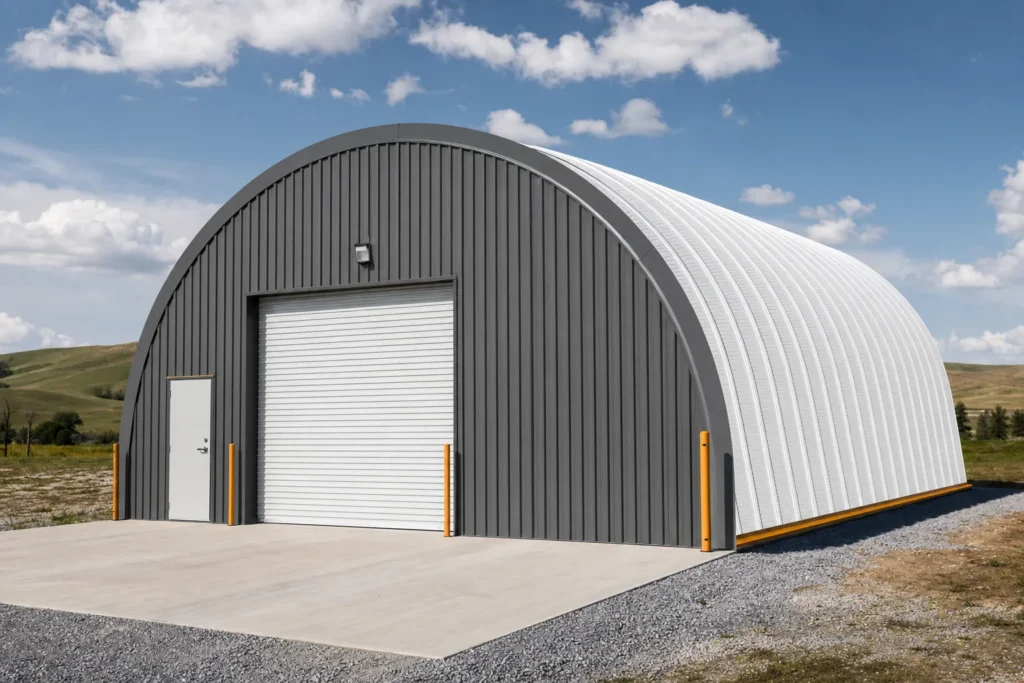
Yes, a Quonset hut is usually cheaper than a regular straight-wall metal building of the same footprint,
Can one person build a metal building?
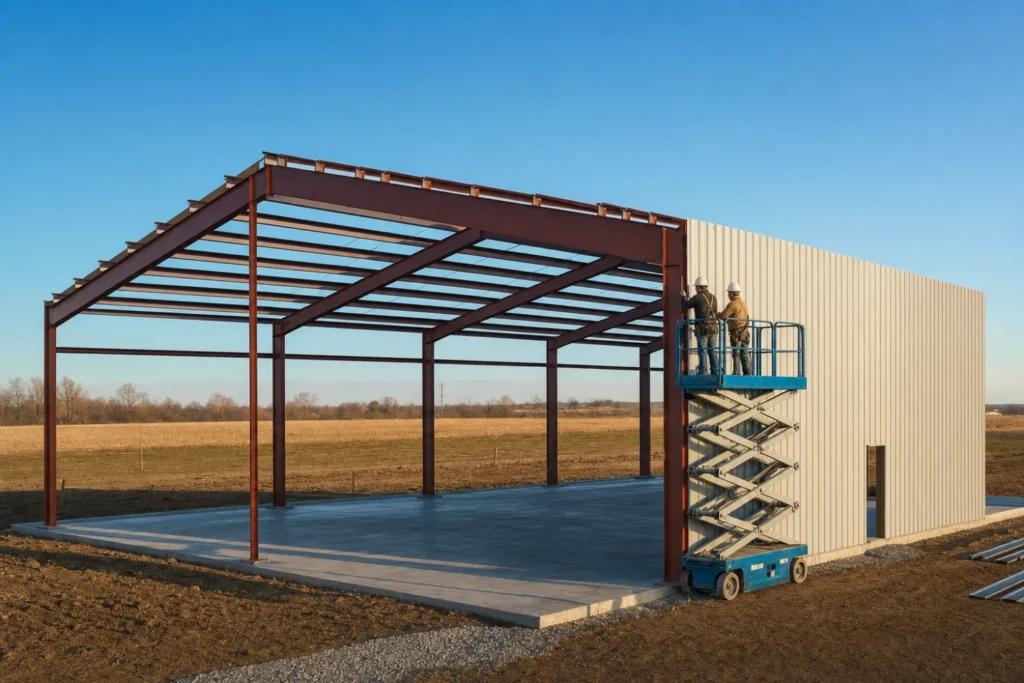
Yes, one person can build a small, light metal building, such as a carport, an RV cover, or a single-car bolt-up garage,
Red iron vs tube steel: what is the difference?

The difference is shape and strength: red iron is solid hot-rolled structural steel, the I-beam and wide-flange shape used in commercial construction,
Are bolt-up buildings strong?
Yes. A bolt-up steel building is strong, and a properly engineered one is every bit as strong as a welded building stamped for the same loads.
What is a Quonset hut?
A Quonset hut is a prefabricated steel building with a rounded, semicircular roof that curves all the way down to the ground,
Do I need a crew to build a metal building?
Not for every building. A small bolt-up kit, a carport, a single-car garage, or a light tube-steel shed,
What tools do I need to build a metal building?
To build a metal building you need tools in four groups: a way to lift and reach the steel, a way to fasten it, a way to lay it out square,
How long does it take to build a metal building kit?
Assembling a metal building kit takes a weekend to a few weeks once the steel is on site ‹confirm›: a small carport or garage stands in two to four days
Bolt-up vs weld-up: which is better?
For most buyers, bolt-up is the better choice. A bolt-up building ships as a kit of pre-cut, pre-drilled, pre-punched parts that bolt together,
What is a pre-engineered metal building?
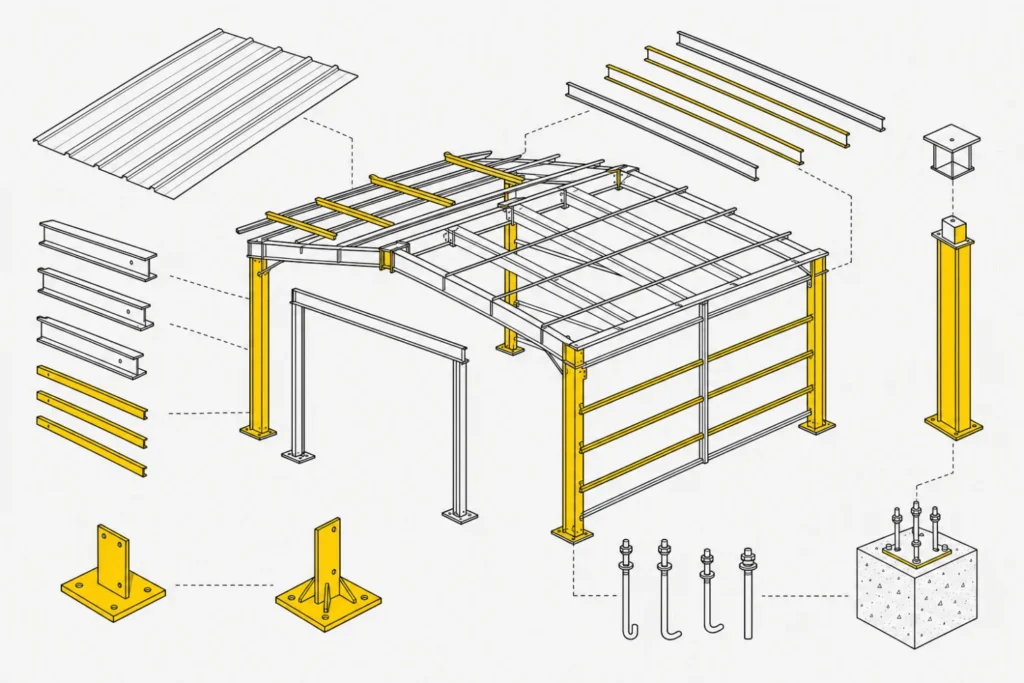
A pre-engineered metal building is a steel building whose frame and parts are designed, sized, and fabricated at the factory to fit your exact dimensions,
Can I build a metal building kit myself?
Yes, you can build a metal building kit yourself. A bolt-up kit ships as numbered, pre-engineered parts that go together with common hand tools,
Hiring a Crew vs DIY Metal Building Assembly
DIY saves labor on small kits; a crew buys speed, equipment, and fewer mistakes on wide red iron. Here’s how to decide and how to vet an erector.
Modular Metal Buildings Explained
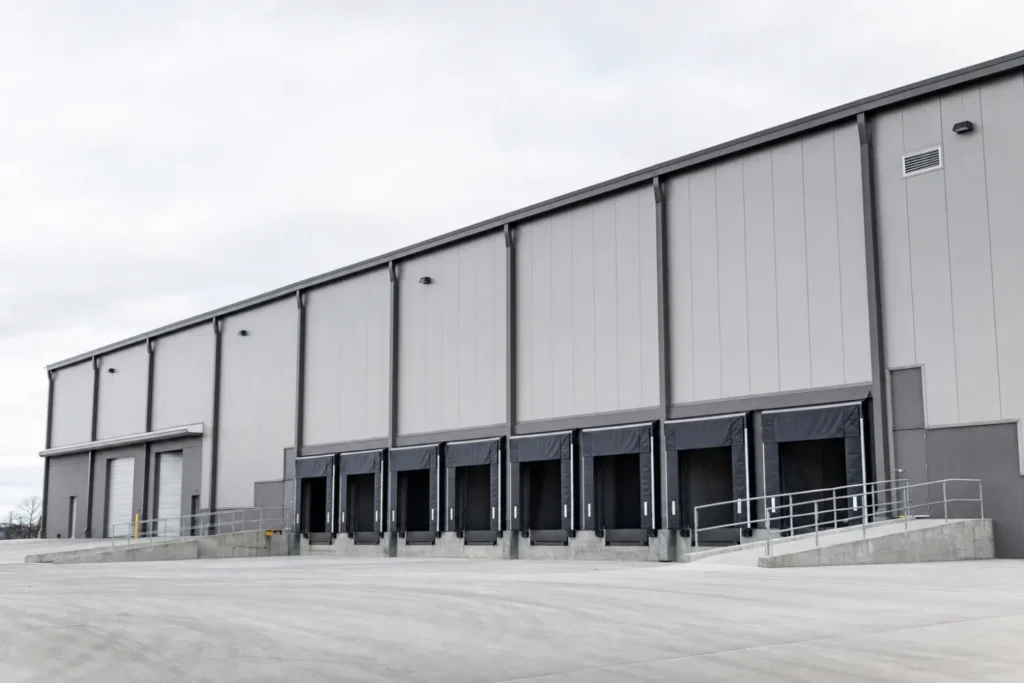
Modular metal buildings are factory-built sections joined on site, unlike a flat-packed kit. Here’s how modular differs, what it suits, and the tradeoffs.
Wood-Frame vs Metal-Frame Buildings
Steel spans wider and resists fire, rot, and termites; wood costs less on short spans. Here’s how the two framing materials compare, plus the hybrid.
Metal Building Assembly: A Step-by-Step Overview
Six steps, in order: prep the slab, stage parts, set anchors, raise the frame, add secondary framing, then sheet and trim. Here’s the overview.
How Long Does Metal Building Assembly Take?
Shell assembly runs from a weekend to a few weeks by size, crew, and weather. Here’s the realistic timeline, plus the permit-and-slab clock that comes first.
Tools Needed to Assemble a Metal Building Kit
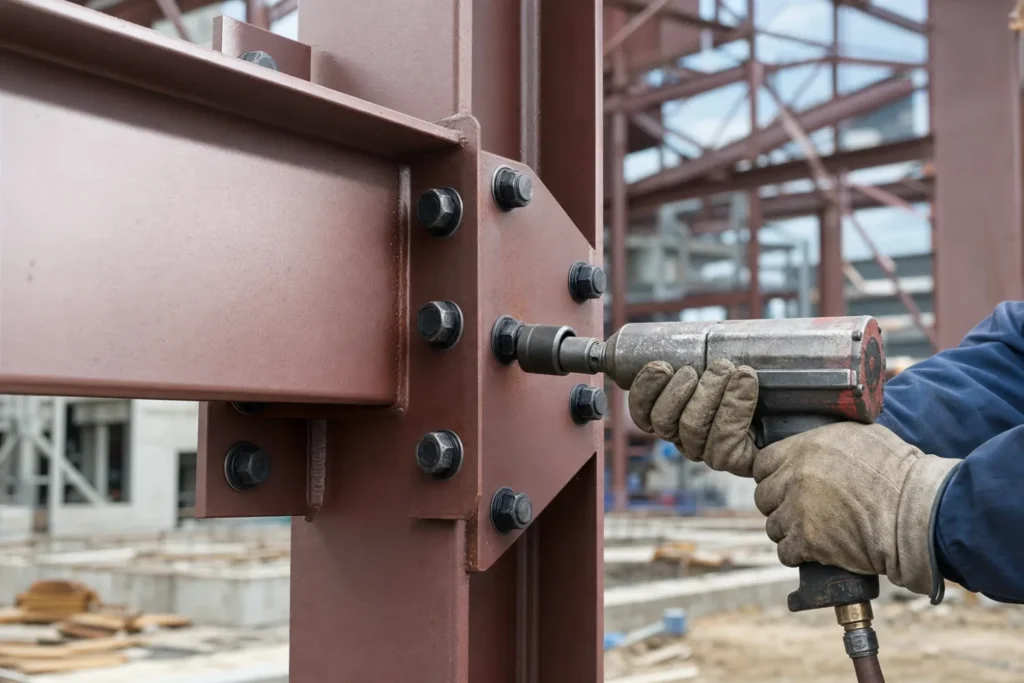
The tools for a kit fall into four groups: lifting, fastening, layout, and safety. Here’s the full checklist and what to rent vs buy.
Can You Build a Metal Building Kit Yourself?
Yes, for a small bolt-up kit with a helper and a lift. Here’s what size, crew, and skills a DIY build takes, and when to hire instead.
DIY Metal Building Kits: The Complete Buyer’s Guide
A DIY metal building kit is a bolt-up steel kit you assemble yourself. Here’s what makes a kit DIY-friendly, how to choose one, and what to budget.
Specialty Metal Building Shapes: 3-Sided, Round & Lean-To
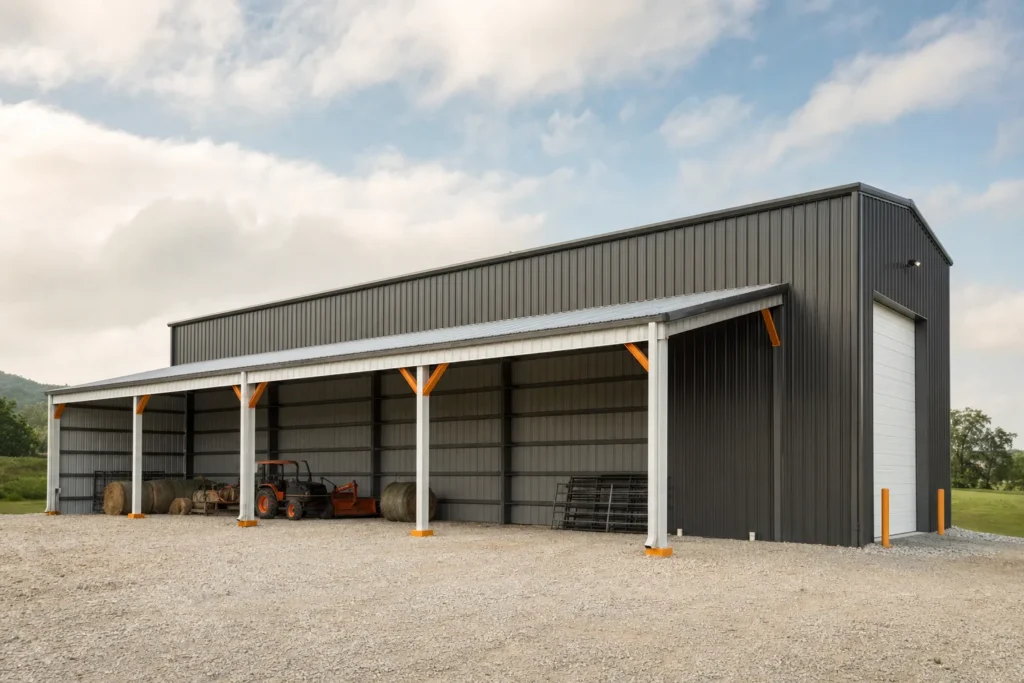
Beyond gable and single-slope: 3-sided loafing sheds, round-roof barns, and lean-tos. Here’s what each specialty shape is good for.
A-Frame & Gable Metal Buildings
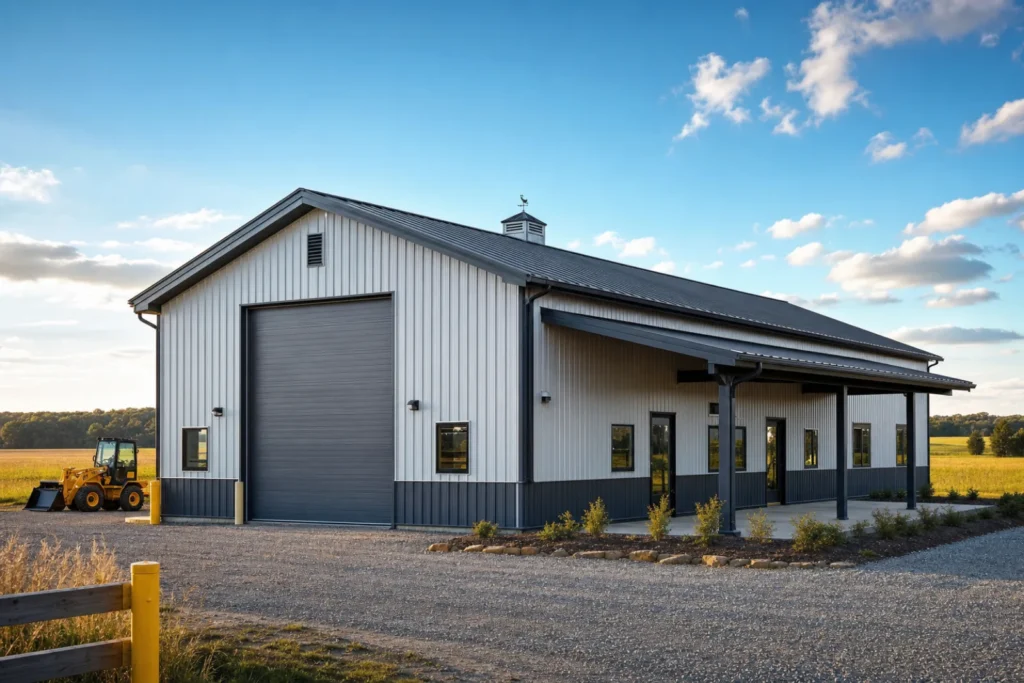
A gable (A-frame) building has two slopes meeting at a ridge, the most common metal building shape. Here’s why it’s the default, and the panel options.
Single-Slope Metal Buildings
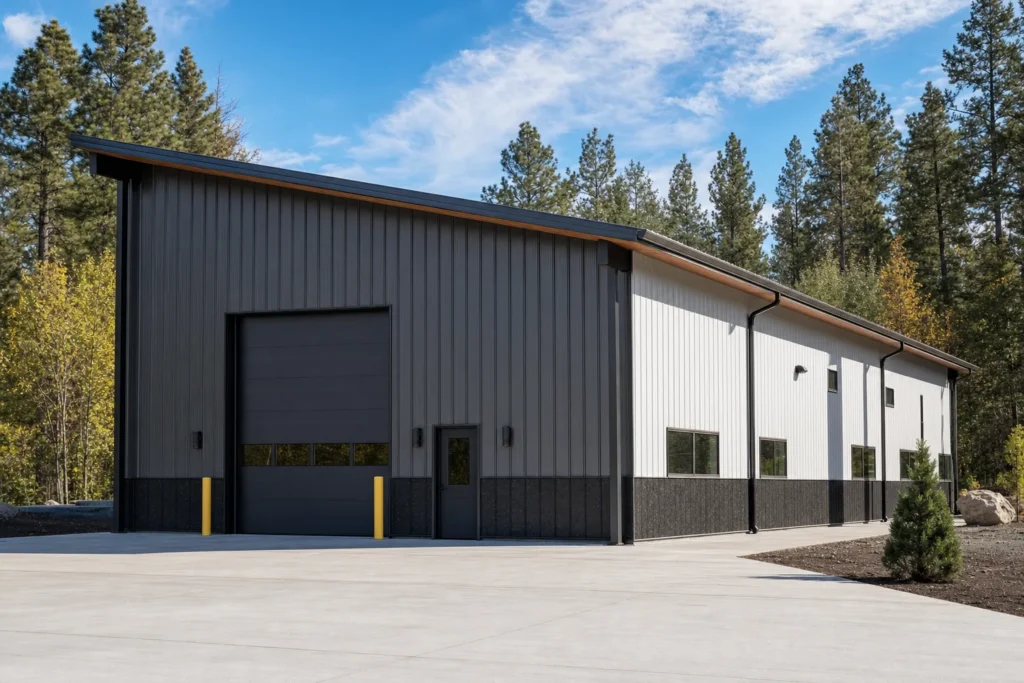
A single-slope building has one roof draining to one side. Here’s why people choose mono-slope, what it’s good for, and how it compares to a gable.
Quonset Hut & Arch Building Kits
A Quonset hut is a self-supporting steel arch with no interior frame. Here are the pros, cons, uses, and costs before you buy one.
Red Iron Building Kits
A red iron kit uses a structural I-beam frame for wide clear spans. Here’s what it’s good for, its strengths and tradeoffs, and how it ships.
Tube Steel (Tubular) Building Kits
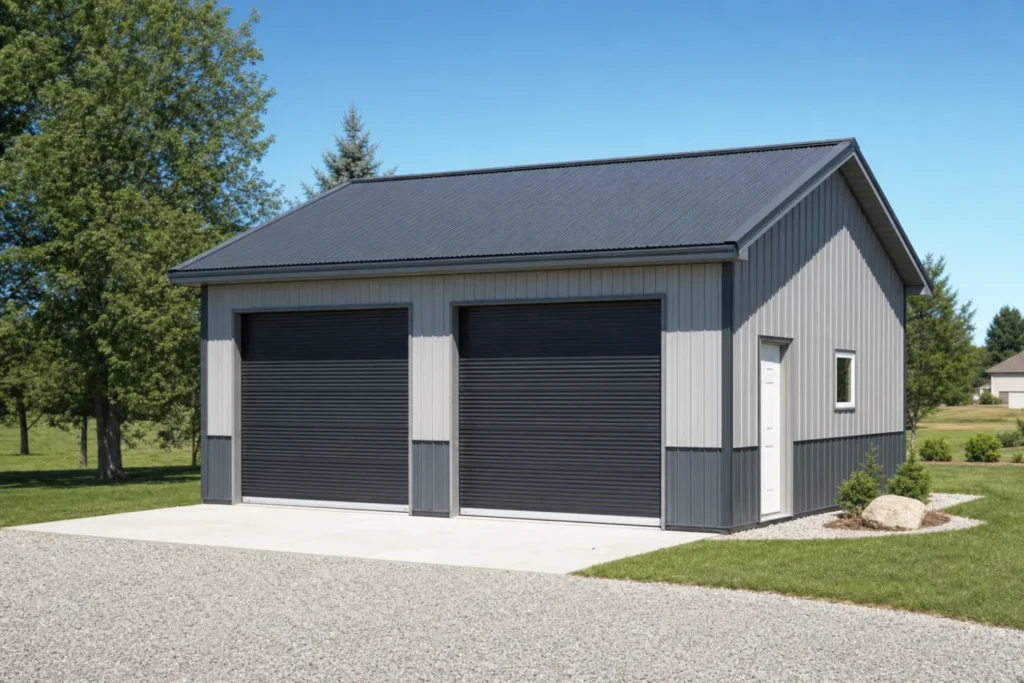
A tube steel kit is a galvanized tubular frame for carports, covers, and small garages. Here’s how the gauges, sizes, and uses work.
Weld-Up vs Bolt-Up Metal Buildings
Weld-up is welded on site; bolt-up ships pre-punched and bolts together. Here’s how they compare on strength, labor, cost, and who builds each.
Bolt-Up Metal Building Kits Explained
A bolt-up kit ships pre-punched and bolts together on site, no welding. Here’s why it’s the DIY-friendly standard and how it goes up.
Prefab vs Pre-Engineered vs Custom Metal Buildings
Prefab, pre-engineered, and custom overlap but aren’t the same. Here’s what each term means and how they compare on cost, lead time, and flexibility.
Pre-Engineered Metal Buildings Explained
A pre-engineered metal building is steel engineered and fabricated to a stamped plan before it ships. Here’s how it works and why kits use it.
Metal Building Construction Types & DIY Kits
Metal building kits come in bolt-up, weld-up, and different frame types. Here’s how construction types compare, and whether you can build one yourself.