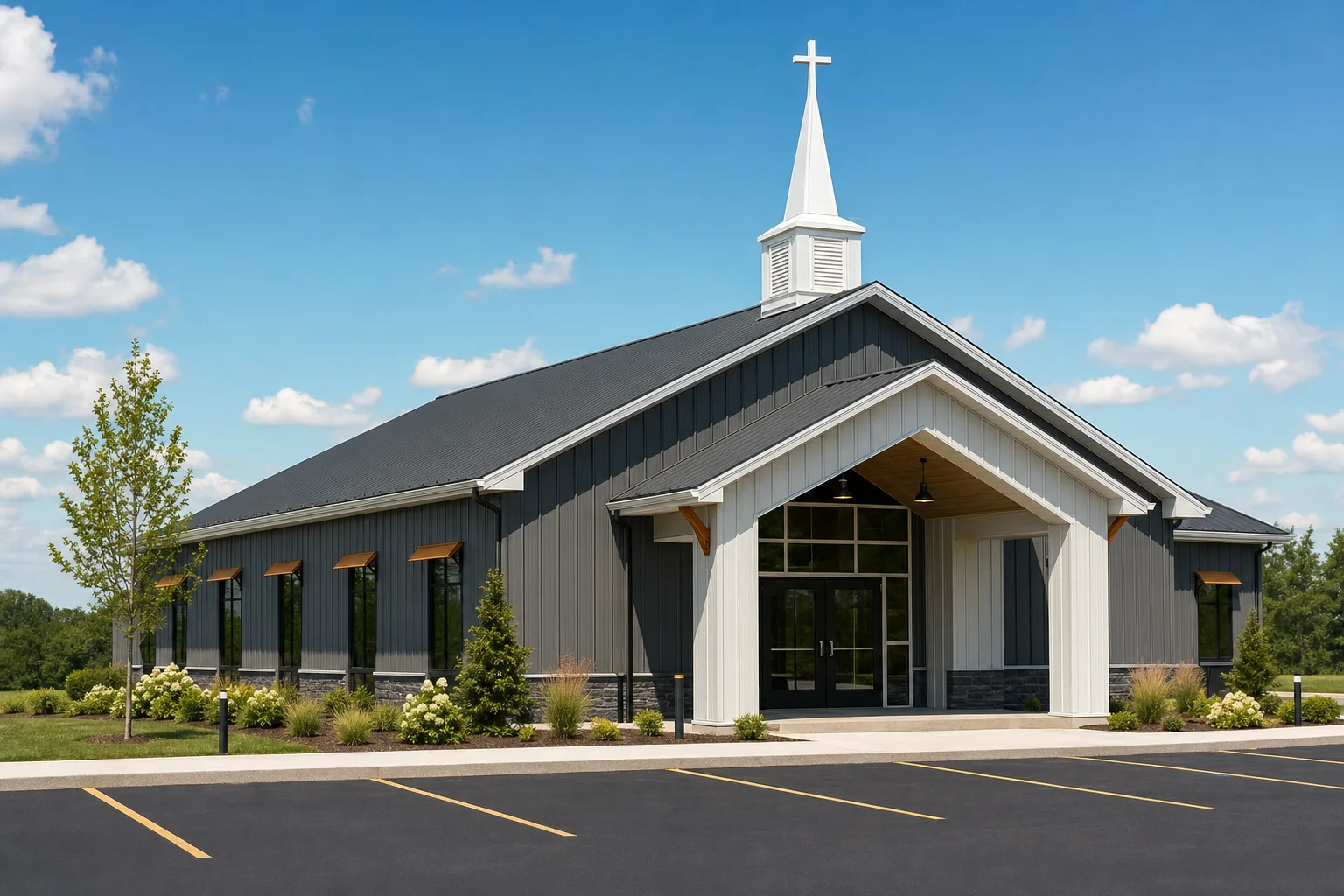
A tube steel building kit is a metal structure framed in hollow, square or rectangular galvanized tubing, cut and pre-punched at the factory so you bolt it together on site. It is the light, low-cost end of the metal building world: carports, RV covers, and smaller garages, where short spans and modest loads let thin steel do the job. You pay less than you would for a heavy structural frame, you can often raise it with a small crew and hand tools, and the galvanized finish fights rust without paint.
This guide sits under the metal building construction types pillar and treats the tube steel kit as a product: what it is, the sizes it ships in, who buys it, and where it stops. The material-level question of tube versus structural steel belongs to our red iron vs tube steel comparison, so we point there rather than re-run it. Here we stay on the kit.
What it is
What a tube steel building kit is
A tube steel kit uses hollow structural tubing for its frame, not solid I-beams. The tubes are square or rectangular in section, the same family of steel you see in a carport leg or a sign post. Each piece arrives cut to length and pre-drilled, so assembly is a bolt-together job rather than a cutting-and-welding one.
Most tube frames ship galvanized, coated in zinc that resists rust on every face, inside and out. That matters because a tube kit often stands in the open, an unsided carport or a cover with no walls to keep the weather off. For how that coating compares to the alternatives, see galvanized vs Galvalume vs painted steel.
The kit format keeps it simple. You get the tubing, the roof and wall panels if the building is enclosed, the fasteners, and a drawing. Nothing needs a welder. That is what separates a tube kit from a custom bolt-up shop building: the parts are lighter, the spans are shorter, and the whole package is built to go up fast.
Where it fits
What people build with tube steel kits
Tube steel kits cover the small, light side of the market. The frame is strong enough for short spans and ordinary loads, which is exactly what these buildings need:
- Carports. The classic tube kit. One, two, or three bays of open cover for cars, trucks, and equipment.
- RV and boat covers. Taller versions of the same idea, built to clear a motorhome or a trailer.
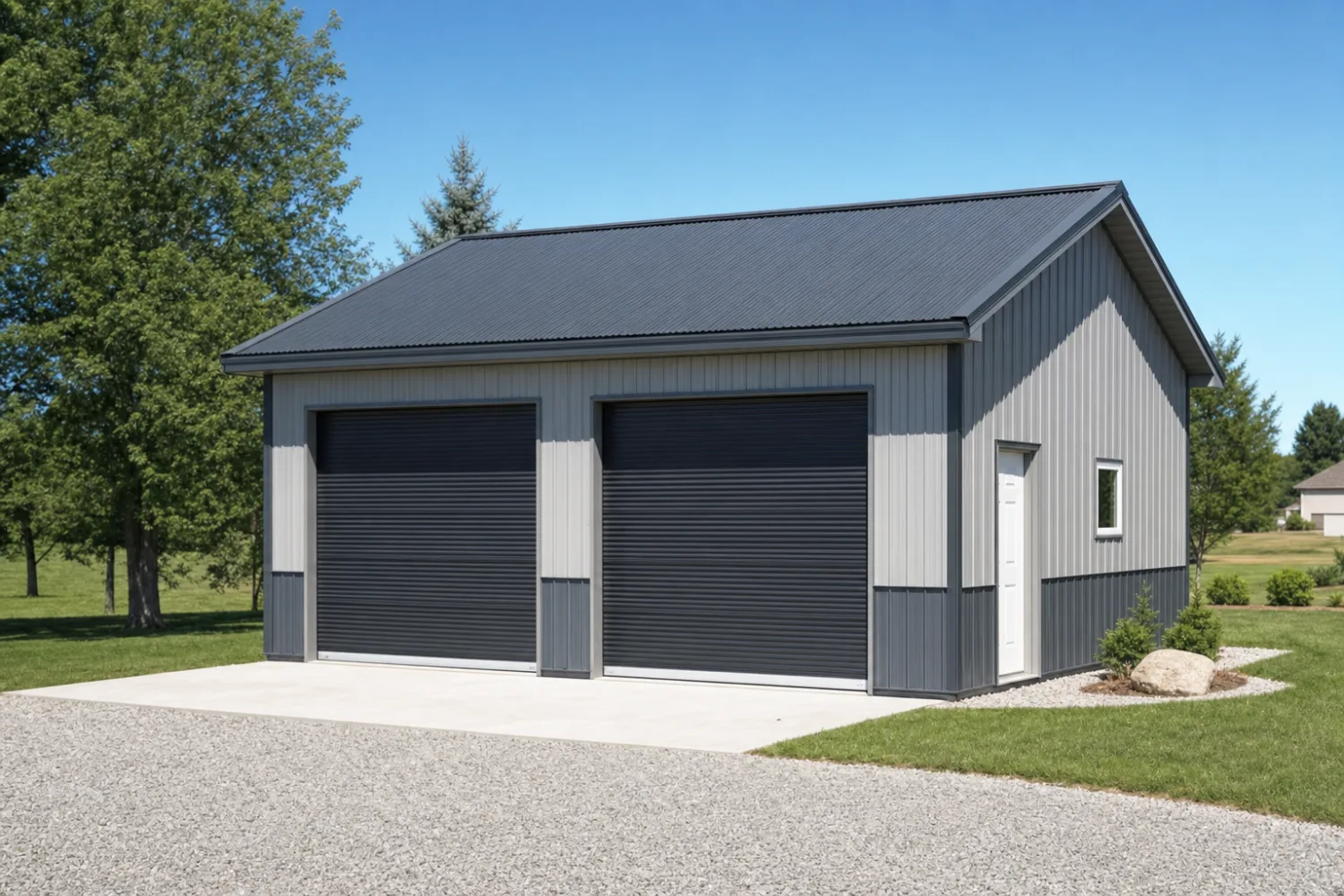
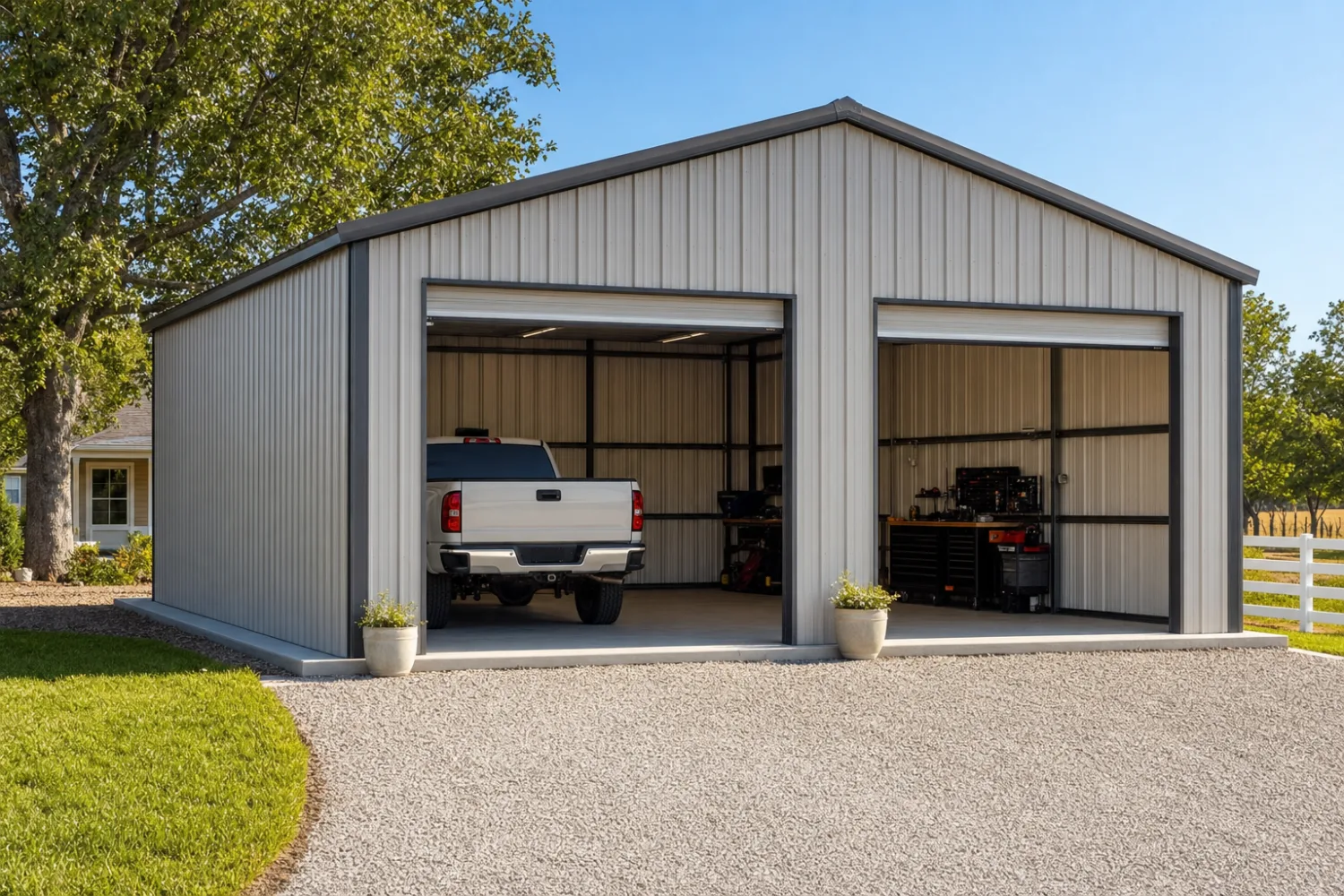
- Small garages. Add walls and a door to a tube frame and you have an enclosed single or two-car metal garage.
- Utility and storage buildings. Lawn equipment, a workbench, seasonal gear, anything that wants a roof and a lock.
- Run-in shelters and lean-tos. Three-sided covers for livestock or a side bay added onto an existing wall.
What ties these together is span. None of them needs to reach 40 or 50 feet clear, and none carries the heavy snow or wind rating a commercial shop does. When a project does need that reach, the answer is a red iron building kit, not tube. For odd footprints like round-roof or three-sided covers, our specialty shapes guide walks the options.
Gauge
Tube gauge: 12 versus 14
Tube steel is sold by wall thickness, measured in gauge, where a lower number means thicker steel. On kits you will mostly see two: 14-gauge and 12-gauge. The difference is the wall of the tube, and it decides how much load the frame can take.
- 14-gauge. The lighter, cheaper option. It suits basic carports and covers in mild climates with low snow and moderate wind.
- 12-gauge. The thicker wall, and the stronger frame. Worth the upgrade for enclosed garages, taller buildings, and anywhere snow or wind runs heavy.
The rule is to match the gauge to the loads, not to the lowest sticker. A 14-gauge carport is fine in a calm climate and a poor bet under real snow. If your county has a wind or snow requirement, the engineering will often call for 12-gauge to certify the building, so check the rating before you choose on price.
Get the gauge in writing. A quote that says only “steel tube” without a number is hiding the one spec that drives both strength and cost. Ask which members are 12 and which are 14, because some kits mix a heavier frame with lighter bracing.
Strengths and limits
What tube steel does well, and where it stops
Tube steel earns its place on four counts, and it gives up ground on one. Read both sides, because the strengths and the limit are the same fact seen from two directions.
The strengths are weight, price, assembly, and corrosion. Tube is light, so one or two people can handle the parts and raise a small building without a crane. It costs less per pound than structural steel, so a carport or single-car garage comes in cheaper. The pre-punched parts bolt together, which makes it a real DIY project for a handy owner. And the galvanized finish shrugs off rust without paint, which suits a building that takes weather on every side.
The limit is span and load. Tube carries less than an I-beam of the same length, so once a building gets wide or has to hold heavy snow, a tube frame either needs interior posts or does not qualify at all. The galvanizing fights rust but adds no structural reach. When the clear span or the load rating climbs past what tube can do, the honest answer is structural steel, and our red iron vs tube steel comparison shows exactly where that line falls.
The span ceiling
There is no single magic number, because span depends on gauge, spacing, and your local snow and wind loads. The practical takeaway is simpler: tube kits live in the carport-to-small-garage range, and they thin out fast past it. If a supplier quotes a wide building on tube, confirm in writing that it certifies for your code without hidden interior posts.
Sizing
How tube steel kits are sized
Tube kits are sold by width, length, and height, and the standard sizes cluster around the buildings they make. Width is the span that matters most, because that is where tube reaches its limit:
| Spec | Typical tube steel kit |
|---|---|
| Frame | Galvanized square or rectangular tube |
| Gauge | 14-gauge (light) or 12-gauge (stronger) |
| Common widths | 12 to 24 ft –30 ft at the top end |
| Common heights | 6 to 12 ft leg height |
| Lengths | Adjustable in roughly 5 ft increments |
| Uses | Carports, RV covers, small garages, storage |
| Assembly | Bolt-together, DIY-friendly on small builds |
| Coating | Galvanized zinc, no paint required |
A tube steel kit at a glance. Treat the numbers as the common range, and confirm your size and loads on the quote.
Widths to around 24 feet are routine, and a few designs push toward 30 with the right gauge and bracing. Past that you have left tube territory. Length is the flexible dimension: most kits extend in standard increments, so a carport grows from one bay to three by adding frames. Height follows the use, with taller legs for RV and boat covers. For the full size picture across all frame types, see the metal building glossary.
Who buys
Who a tube steel kit is right for
A tube steel kit fits the owner who wants a roof over something for the least money, with a build they can manage themselves. The match is about the project, not the buyer:
- You need cover, not a clear-span shop. A carport, a cover, or a small garage where short spans are fine.
- You want to build it yourself. The light, bolt-together parts make a tube kit a weekend project for two people.
- Budget leads the decision. Tube is the cheapest way into a metal building, and on a small footprint the savings are real.
- Your climate is mild to moderate. Low snow and ordinary wind let lighter gauges certify without a fight.
The wrong fit is the opposite case: a wide workshop, a heavy-snow region, or a building you want to certify for high loads. Those call for structural steel and usually a bolt-up or red iron frame. If you are weighing a garage against a larger shop, the metal garage kits pillar lays out where each frame earns its cost.
FAQ
Tube steel building kits: common questions
What is a tube steel building kit?
It is a metal building framed in hollow galvanized tubing, square or rectangular in section, cut and pre-punched so you bolt it together on site. Tube steel kits cover carports, RV covers, and smaller garages, the light end of the metal building range where short spans and modest loads let thin steel do the job.
Is tube steel strong enough for a garage?
For a one or two-car garage, yes. Tube handles those spans and loads, especially in 12-gauge, and it keeps the price down. The limit is width and weather: once a building gets wide or has to carry heavy snow, a tube frame needs interior posts or a structural-steel frame instead.
What gauge tube is best?
Match it to the loads. 14-gauge suits light carports in mild climates, while 12-gauge gives you more frame strength for enclosed garages, taller buildings, and snow or wind country. If your code sets a load requirement, the engineering will often call for 12-gauge to certify the building, so check before you choose on price.
Is tube steel cheaper than red iron?
On small buildings, yes. Tube weighs less and costs less per pound, so a carport or single-car garage comes in lower on a tube frame. On wide-span buildings the comparison breaks down, because tube cannot do the job. Our red iron vs tube steel guide covers the full tradeoff.
Does tube steel rust?
Galvanized tube resists rust well, because the zinc coating protects every face, inside and out, with no paint to chip. It is built for open buildings that take weather on all sides. Keep an eye on cut ends and any scratches that reach bare steel, and the frame holds up for many years.
Can you assemble a tube steel kit yourself?
Often, yes, and that is part of the appeal. The parts are light and pre-drilled, so two people can raise a small carport or garage with hand tools and a ladder, no welding required. Larger or taller kits go faster with extra hands and a few rented tools, but the work stays within reach of a handy owner.
Related guides
Keep reading
Tube steel is one frame in a wider construction-types silo. Follow these next:
- Metal building construction types (the parent pillar).
- Red iron building kits (the heavy-duty frame for wide spans).
- Bolt-up metal building kits (how the parts go together).
- Specialty shapes (3-sided, round-roof, and lean-to covers).
- Red iron vs tube steel (the material comparison in full).
- Steel gauge explained (how 12 and 14-gauge are measured).
- Metal garage kits (the cross-silo pillar for garages).
- Metal building glossary (every framing term defined).