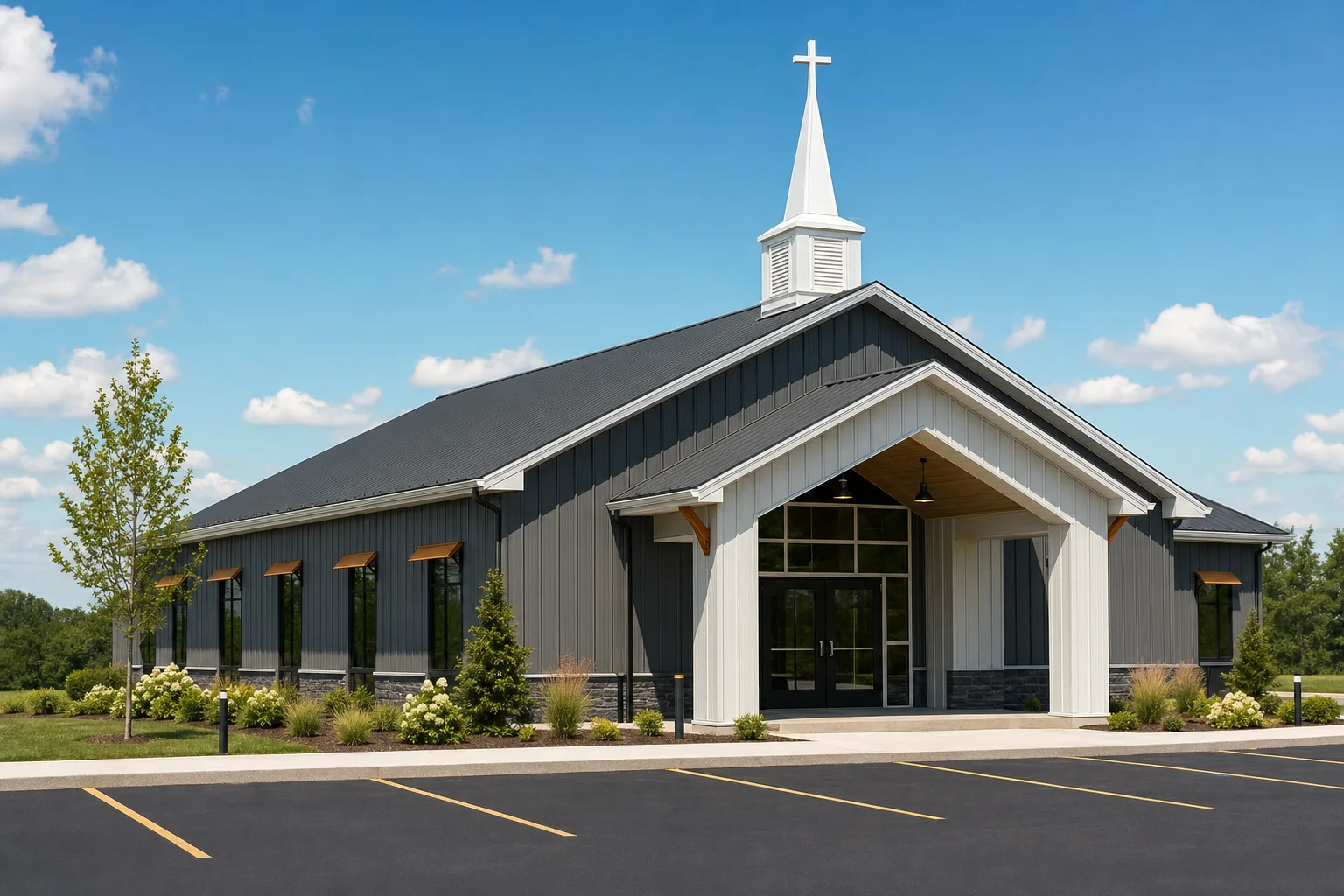
Prefab, pre-engineered, and custom describe three different things, which is why the terms get tangled. Prefab means the building is built off-site and shipped to you in pieces. Pre-engineered means the design is a proven system the supplier has already worked out. Custom means the building is engineered to your own dimensions and spec. A single metal building can be all three at once, so the real question is not which label fits but which tradeoff you are buying: off-site assembly, a stock design, or a one-off plan.
This guide sits in our metal building construction types silo and owns the three-way comparison. We define a pre-engineered metal building in full in the pre-engineered metal buildings guide; here we line all three terms up side by side. Below: what each word means, how they overlap, how they split on cost, lead time, and flexibility, and which buyer each one suits.
Prefab
What prefab means: built off-site
Prefab is short for prefabricated, and it describes where the work happens, not how the building is designed. A prefab building has its parts cut, punched, and finished in a factory, then shipped to your site to be assembled. The opposite is stick-built, where raw material arrives and the whole structure is cut and fitted in place.
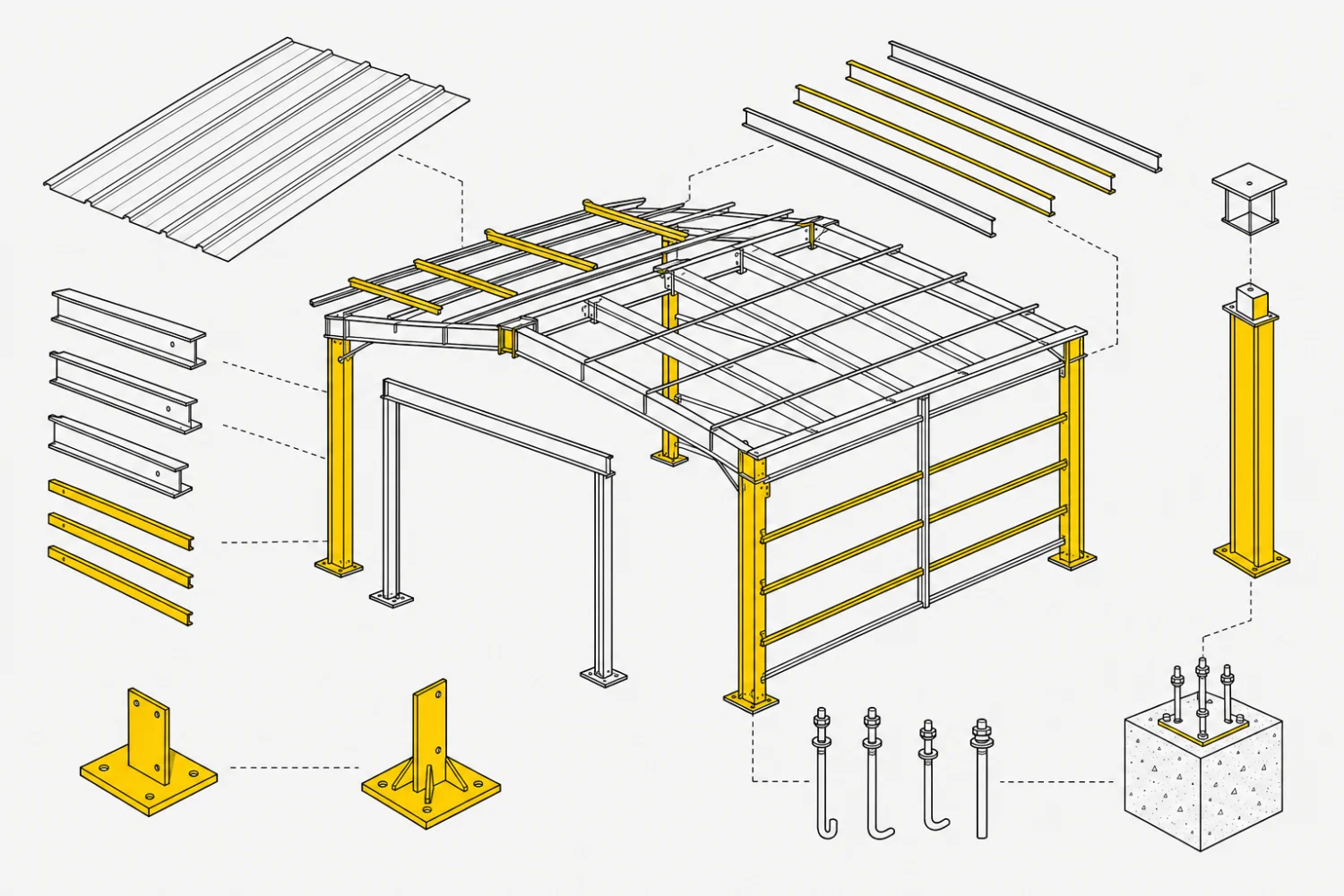
Almost every metal building kit is prefab. The columns, rafters, panels, and fasteners are fabricated in a plant and delivered as a numbered package you bolt together, which is the model our bolt-up metal building kits guide covers in depth. The modular building approach takes prefab a step further, shipping whole sections that join on site.
Prefab is a method, so it sits alongside the other two labels rather than competing with them. A prefab building can run on a stock pre-engineered design or a fully custom one. What prefab buys you is consistency and speed: factory tolerances are tight, the parts arrive ready to fit, and the on-site work shrinks from fabrication to assembly. That is the whole appeal of a kit.
Pre-engineered
What pre-engineered means: designed as a system
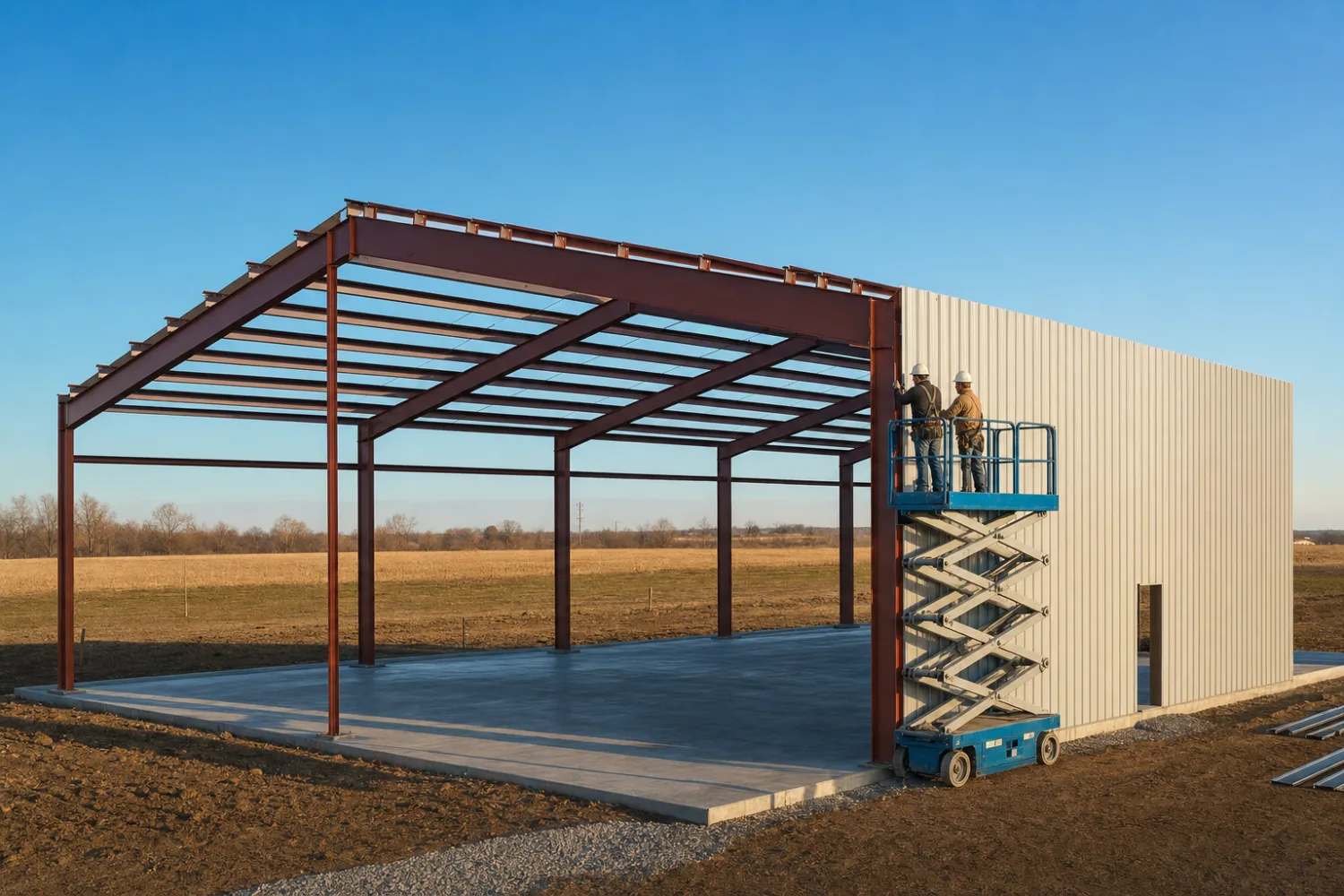
Pre-engineered describes the design, not the factory or the site. A pre-engineered metal building, or PEMB, uses a frame and connection system the manufacturer has already engineered, tested, and stamped for common loads. You order from a proven catalog of sizes and the heavy design work is done before you ever call. The pre-engineered guide walks the full definition and the frame anatomy.
The payoff is price and predictability. Because the system is repeated across thousands of buildings, the engineering cost spreads thin and the parts are standard, so a pre-engineered kit prices and ships faster than a one-off. The frame still gets sized to your local snow and wind loads, but it draws on a library of solved designs rather than a blank sheet.
Pre-engineered is not the same as inflexible. Most systems offer a wide grid of widths, lengths, and wall heights, plus options for doors, windows, and insulation. What you cannot do is rewrite the system itself. You work within the manufacturer’s framework, which is exactly the constraint that keeps a PEMB affordable.
Custom
What custom means: engineered to your spec
Custom describes how far the design bends to you. A custom metal building is engineered from your own dimensions and requirements rather than pulled from a stock grid. You set the width, length, and clear height to the foot, choose the frame, and specify the openings and finishes. Our Basics silo covers the kit-buying angle in custom vs standard metal building kits.
Custom solves the cases a stock design cannot reach: an odd-shaped lot, a clear height a lift demands, a wide clear span for equipment, or a heavy load a catalog model will not pass. An engineer sizes and stamps the one-off plan, and the factory cuts parts it has not run before. You get a building that fits a plan nothing else can.
The cost is time and money. A custom plan adds an engineering and fabrication premium over a comparable stock package and stretches the lead time. The further your spec drifts from a standard size, the more both numbers climb. Custom is worth it when the project truly needs it and wasteful when a stock size would have done the job.
How they overlap
How the three terms overlap and differ
The confusion comes from treating the three as one scale. They are not. Prefab answers where the building is made, pre-engineered answers how the design is created, and custom answers how much that design bends to your site. A building has an answer on each axis at once.
Picture the common cases. A stock 30×40 shop is prefab and pre-engineered, the most popular combination on the market. An odd-footprint building stamped for heavy snow is prefab and custom, fabricated off-site but engineered to your numbers. Even a custom design is usually still prefab, because the parts are cut in a plant and shipped to assemble. The labels stack; they do not exclude one another.
| Prefab | Pre-engineered | Custom | |
|---|---|---|---|
| What it describes | Where it is made | How it is designed | How far it bends to you |
| Off-site assembly | Yes, built in a factory | Usually (most are prefab) | Usually (most are prefab) |
| Flexibility | Method, not a spec | Set grid of sizes and options | Any dimension, full control |
| Relative cost | Lower on-site labor | Lower (shared engineering) | Higher (one-off plan) |
| Lead time | Faster than stick-built | Faster (proven design) | Longer (new engineering) |
| Best for | Nearly every kit build | Common sizes, tight budgets | Odd lots, tall heights, heavy loads |
Three axes, not one scale. A single building can be prefab, pre-engineered, and standard all at once, or prefab and custom together.
Prefab is the how, pre-engineered is the design, and custom is the fit. Most buyers want a prefab, pre-engineered kit and only reach for custom when the site forces it.
Which buyer
Which one suits your project
Start with whether a stock size covers your use, then check if your site forces an exception. The prefab part is almost a given on a kit, so the real choice is pre-engineered versus custom. Here is how the common buyers land:
- A common garage, shop, or barn on a flat lot. Prefab and pre-engineered. The stock grid covers it, so you get the lowest price and the fastest delivery. Use how to choose a metal building kit to size it.
- A tight budget or a quick timeline. Pre-engineered. Shared engineering and standard parts keep both the cost and the lead time down.
- An odd-shaped lot or a tight setback. Custom, or a trimmed stock footprint. When the dimensions have to hit an exact number, a catalog grid may not fit.
- Tall clear height, a wide clear span, or heavy snow and wind. Custom, stamped to your site. A stock model engineered for mild loads will not pass in demanding country.
- A DIY builder who wants to bolt it together. Prefab either way. Both pre-engineered and custom ship as factory parts, so the assembly is the same job.
Most buyers want the middle, not the extremes
You rarely choose pure custom or bare-bones stock. The smart path is a pre-engineered footprint with a few options changed, a taller wall, an upgraded gauge, added doors or insulation, which keeps most of the standard price and speed while still fitting your use. Ask the supplier which lines are stock and which trigger a custom charge, and check the cost guide for where each dollar goes.
Cost & lead time
How the choice moves cost and lead time
Prefab saves on labor, pre-engineered saves on design, and custom spends on both. Because a prefab building arrives as finished parts, the on-site work shrinks to assembly, which trims labor against a stick-built structure. A pre-engineered design carries no separate engineering fee and uses standard parts, so it prices and ships ahead of a one-off. Custom adds the engineering and the new fabrication, which raises the price and stretches the schedule.
Treat any figure as illustrative and confirm it for your order. As a 2026 rule of thumb, a custom design can add a meaningful premium over a comparable pre-engineered package and weeks to the lead time ‹confirm›, while a stock prefab kit on a common size is the quickest path from order to delivery ‹confirm›. The further your spec drifts from the standard grid, the more both numbers climb.
The lesson is to spend on purpose. Take the prefab method and the pre-engineered design wherever a stock size fits, and pay for custom only where the site demands it, an exact footprint, a tall clear height, a heavy load. For real ranges on each path, see the cost guide and the metal building glossary for every term defined.
FAQ
Prefab, pre-engineered, and custom: common questions
What is the difference between prefab and pre-engineered?
Prefab describes where the building is made; pre-engineered describes how it is designed. A prefab building has its parts fabricated in a factory and shipped to assemble on site. A pre-engineered building uses a frame system the manufacturer has already engineered and stamped for common loads. Most metal buildings are both at once: prefab in method and pre-engineered in design.
Is a metal building kit prefab?
Yes. Nearly every metal building kit is prefabricated. The columns, rafters, panels, and fasteners are cut, punched, and finished in a plant, then shipped to your site as a numbered package you bolt together. That off-site fabrication is exactly what makes it a kit rather than a stick-built structure.
What does custom mean for a metal building?
Custom means the building is engineered to your own dimensions and spec rather than pulled from a stock grid. You set the width, length, and clear height, choose the frame, and specify the openings. It fits a plan a catalog size cannot reach, but it adds engineering and lead time. Our custom vs standard guide covers the kit-buying side.
Which is cheaper, prefab, pre-engineered, or custom?
A prefab, pre-engineered kit on a stock size is the cheapest, because the off-site fabrication trims labor and the shared engineering keeps the design cost low. Custom is the most expensive, since a one-off plan adds engineering and new fabrication. Prefab and pre-engineered are not competing on price; the real cost gap is pre-engineered versus custom.
Which has the fastest lead time?
A pre-engineered prefab kit on a common size. It runs on a proven design with standard parts, so it ships sooner than a custom order that needs new engineering and one-off fabrication. If your timeline is tight, a stock size is the quickest path from order to delivery.
Can a building be prefab and custom at the same time?
Yes, and many are. Prefab is the method and custom is the design, so a building can be engineered to your exact spec and still have its parts cut in a factory and shipped to assemble. A custom prefab kit gives you a one-off plan with the consistency and speed of factory fabrication.
Related guides
Keep reading
Sorting these three terms connects to the rest of the construction picture. Follow these next:
- Metal building construction types (the parent pillar for this silo).
- Pre-engineered metal buildings explained (the full PEMB definition and frame anatomy).
- Modular metal buildings (prefab taken a step further, in whole sections).
- Bolt-up metal building kits (how prefab parts go together on site).
- Custom vs standard metal building kits (the kit-buying view of the same choice).
- How to choose a metal building kit (size and spec the one you need).
- Metal building glossary (every term defined).