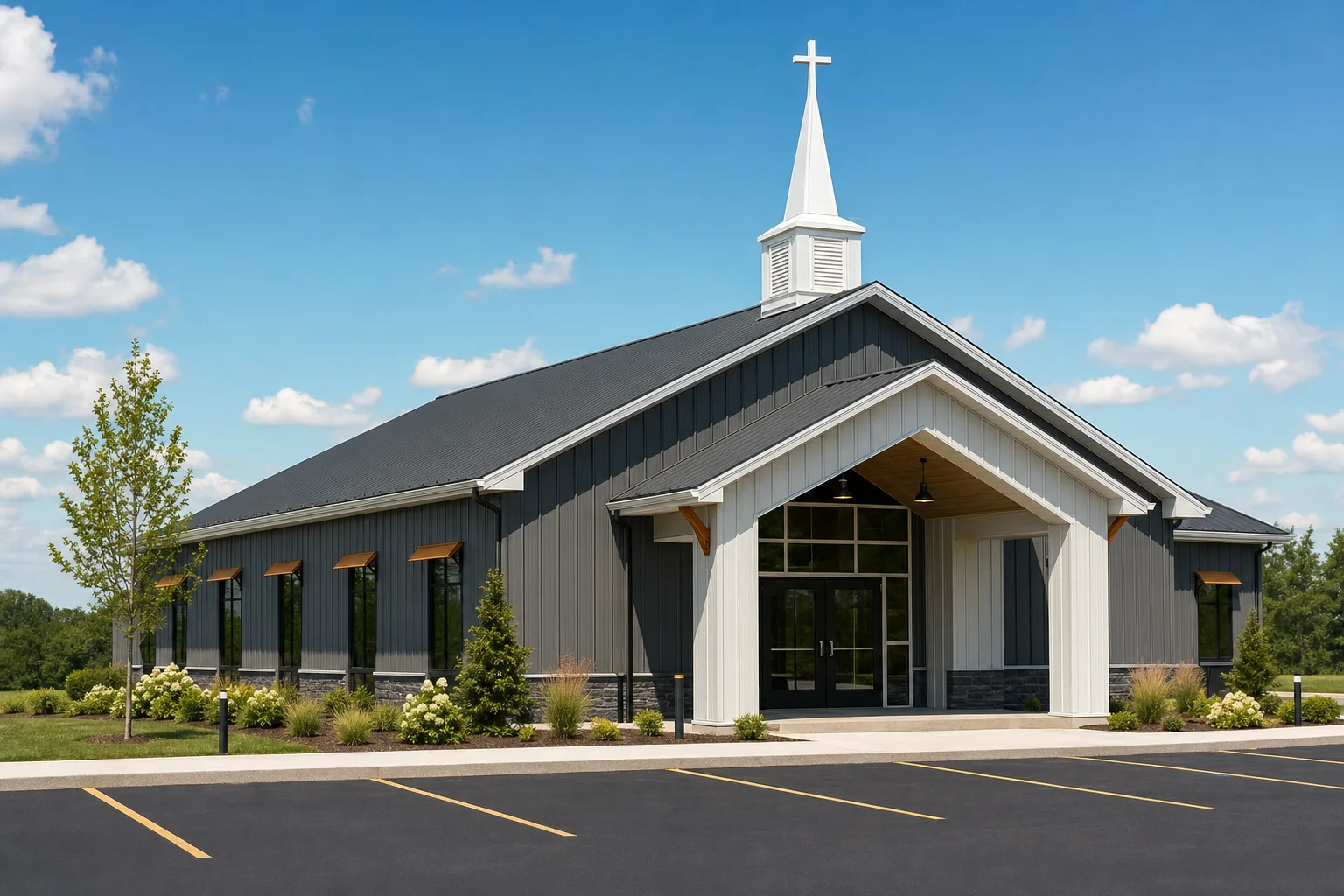
Build it yourself and you save the labor cost; hire a crew and you buy speed, equipment, and experience. That is the whole trade. A small bolt-up kit on a slab is a realistic do-it-yourself job that can cut a few thousand dollars off the build ‹confirm›. A wide red iron building, a tight timeline, or no lift access tips the math the other way, and a hired crew becomes the cheaper answer once you count the mistakes a pro will not make.
This guide sits under our Construction Types & DIY pillar, and it answers one question: should you assemble the kit or pay someone who does it for a living. It is not the feasibility read, which is can you build a metal building yourself, and it is not the DIY buyer’s walkthrough, which is the DIY metal building kits guide. Here we weigh cost against time and risk, then show when to hire and how to find a crew worth paying.
What DIY saves
What building it yourself saves
Doing it yourself saves the labor line, and nothing else. The steel, the panels, the fasteners, and the freight cost the same whether you raise the building or a crew does. What you avoid is the bill for the hands that put it up, which on a kit shell is a real number worth chasing if the building is small enough to handle.
That labor line is not trivial. On a modest bolt-up kit, professional erection often runs a meaningful share of the shell price ‹confirm›, so an owner who supplies the weekends keeps that money. The pre-engineered kit is built for this: parts arrive cut, punched, and labeled to a stamped drawing set, which is the whole point of bolt-up over weld-up construction. You assemble, you do not fabricate.
The savings are real only when the building is in your reach. A carport, a single-car garage, or a small shop on a finished slab is the sweet spot: light members, short spans, and a sequence two capable people can follow. Push past that and the labor you save gets eaten by rented equipment, lost time, and the cost of fixing what went wrong.
What a crew buys
What hiring a crew buys you
A crew sells four things you cannot buy off the shelf: speed, equipment, experience, and fewer mistakes. A seasoned erection team raises a shell in days that would take an owner weeks, because they have set the same frame a hundred times and they own the lift that makes the rafter day safe.
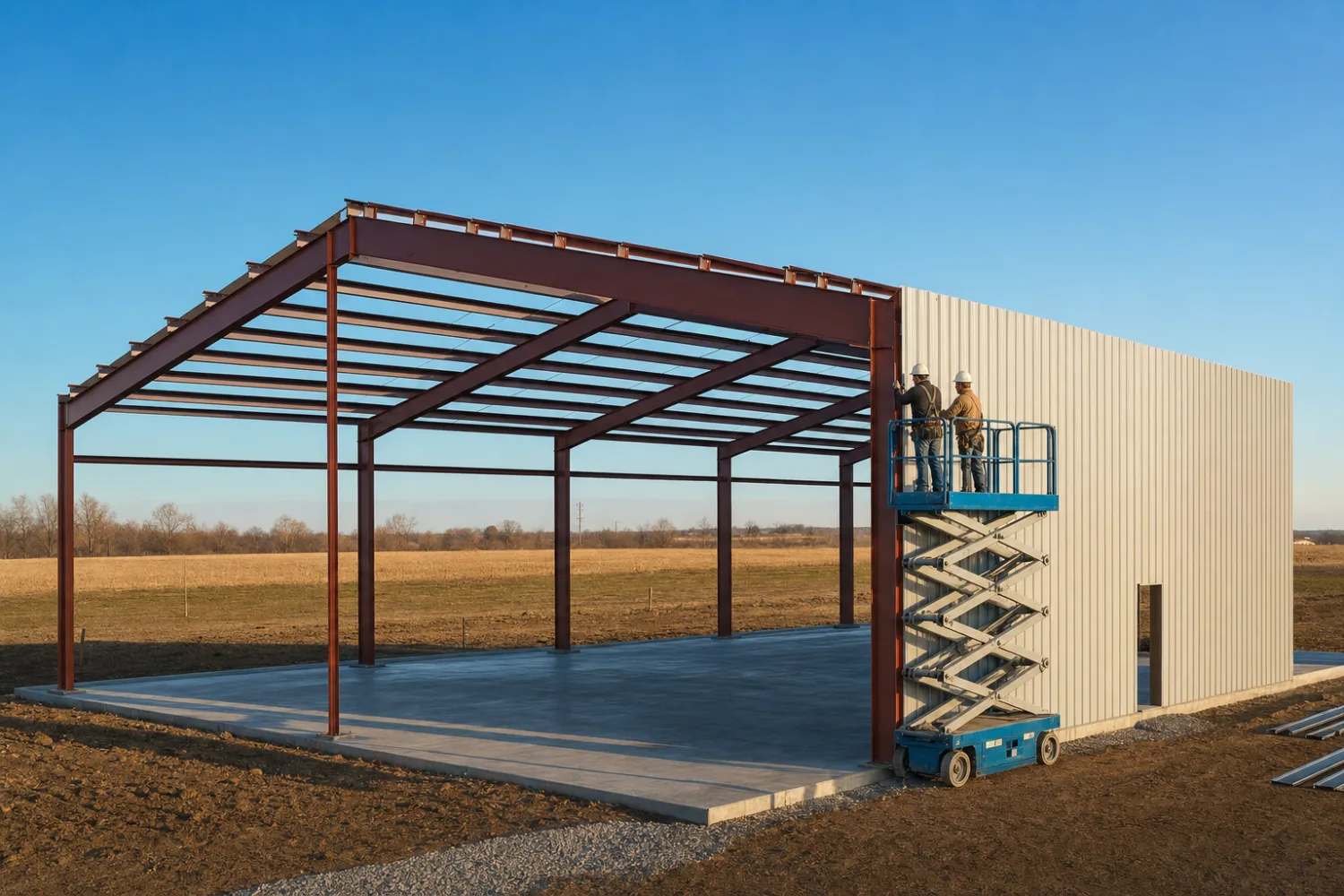
- Speed. A crew works full days with enough hands to keep every stage moving, so the shell is weathertight fast instead of sitting half-open across a month of weekends.
- Equipment. Booms, scissor lifts, and telehandlers come with the crew. You do not rent them, learn them, or risk the frame day on gear you have never run.
- Experience. They know the order, the torque, and the tricks that keep a frame square. The judgment that takes an owner one nervous build is already in their hands.
- Fewer mistakes. A mis-set anchor, an out-of-square frame, or an over-driven panel screw is expensive to undo. A crew that does this daily makes those errors far less often.
Two more things sometimes ride along: insurance and warranty. A professional crew carries liability and workers’ comp, so an injury on your slab is their problem, not yours. And some suppliers tie the building warranty to professional erection, or void it on owner error, which is worth confirming on the buying checklist before you decide to self-build.
The real cost of DIY
The real cost of doing it yourself
Doing it yourself is not free; it moves the cost off the invoice and onto you. Three line items hide behind the saved labor: the tools you rent, the time you spend, and the price of the mistakes you make. Count all three before you call DIY the cheaper path.
Tool rental is the first surprise. A bolt-up frame wants an impact wrench, a torque wrench, a panel screw gun, and on anything but a small carport, a lift to set the rafters. A boom or scissor lift rents by the day or week ‹confirm›, and a long build means a long rental. The lighter the steel, the less of this you need, which is part of why tube-frame kits are friendlier to a solo owner than heavy red iron.
Time is the cost owners discount most. A shell a crew raises in days can take an owner several weekends, and the building earns nothing while it sits half-open. Our how long assembly takes guide puts real ranges on that, and the honest version is that DIY trades money for weeks of your own labor.
The mistake tax
The expensive risk in DIY is not the labor; it is the error. A frame raised out of square, anchor bolts set off the template, or panels driven loose can mean re-doing work, ordering replacement parts, or failing inspection. One serious mistake can erase the labor you saved. If you are unsure you can hold the frame true and torque every structural bolt to spec, read the honest feasibility check before you commit.
Head to head
DIY vs hired crew: the comparison
The choice splits along four lines: what it costs, how long it takes, how much risk you carry, and what skill it demands. Read them together, because the line where DIY wins on cost is the same line where it loses on time and risk.
| Do it yourself | Hired crew | |
|---|---|---|
| Cost | Saves the labor line; adds tool rental | Pays for labor and equipment |
| Time | Several weekends on a small shell | Days, with full crew and a lift |
| Risk | On you: errors, injury, warranty | On them: insured, experienced |
| Skill needed | Read a plan, run a wrench, hold square | Already in the crew |
| Equipment | You rent and learn it | They bring and run it |
| Best for | Small carports, garages, light kits | Wide spans, red iron, tight timelines |
A decision table, not a verdict. The right pick depends on the size of the building and the value of your time.
Count the mistake tax before you call DIY cheaper. The labor you save on a small kit is real money; the labor you save on a wide red iron frame can vanish the first time the steel comes down out of square.
When to hire
When to hire a crew instead
Hire a crew when the building is big, the steel is heavy, the clock is tight, or the site cannot take a lift. Any one of those flips the math, and two of them together make professional erection the clear call. Here is how the common cases land:
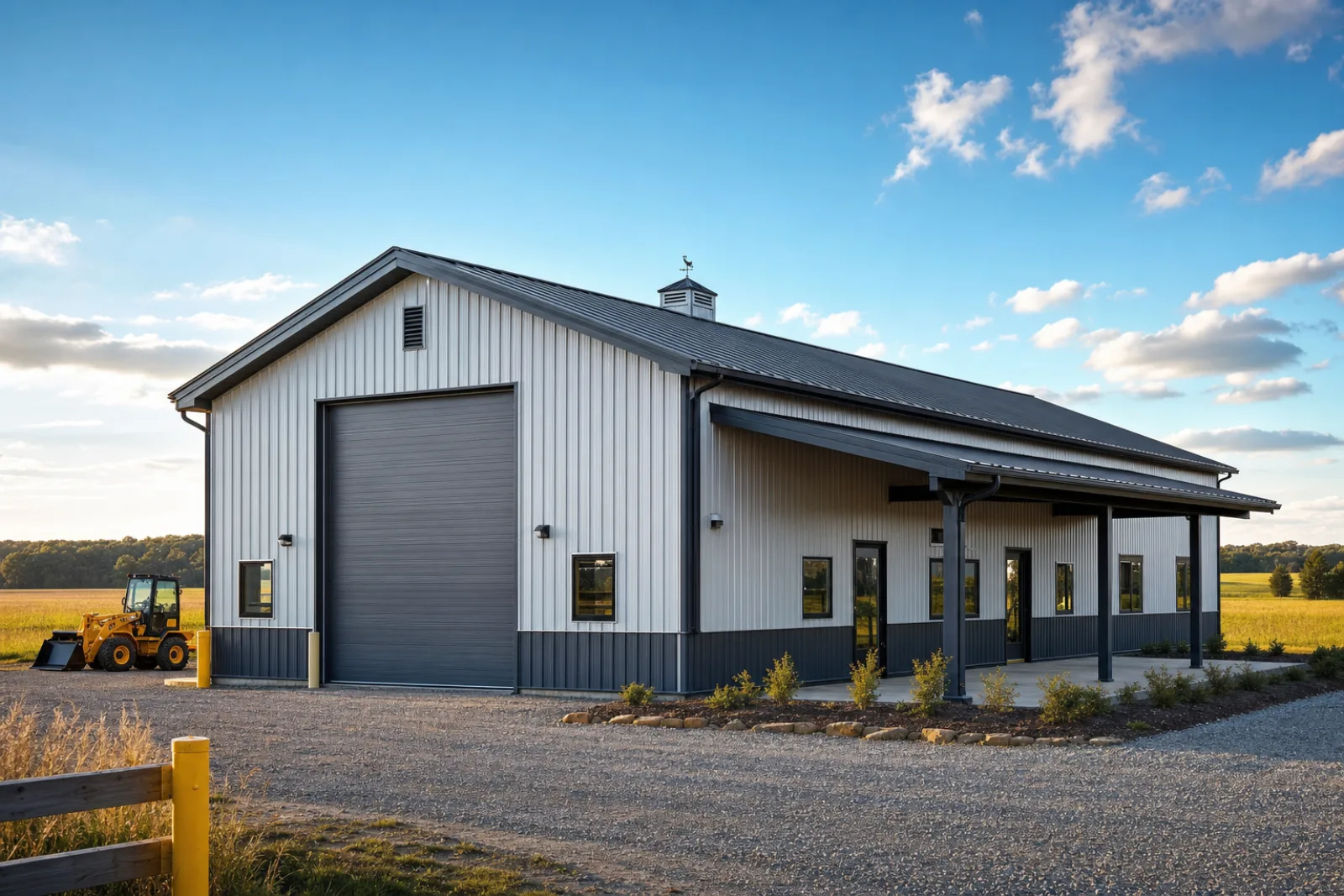
- Big buildings. Once a shell runs wide or tall, the members get heavy and the rafter day gets dangerous. A 40-foot-plus clear span is crew territory.
- Red iron frames. Structural I-beam is heavy enough that raising it safely wants a lift and trained hands. A {L(‘weld-up-vs-bolt-up-buildings’,’heavy structural frame’)} is not a two-person job.
- Tight timeline. If the building has to be weathertight by a date, a crew hits it. Spread across owner weekends, the same shell can slip for a month.
- No lift access. If you cannot rent or run a boom or scissor lift, you cannot safely set rafters on anything but the smallest building. The crew solves that on day one.
There is a middle path many owners take: hire the crew for the frame day only, then finish the panels and trim yourself. The lift-heavy, high-risk step gets professional hands and equipment, and you keep the slower, ground-level work. It splits the cost and the risk, and it pairs well with sourcing the kit through a supplier that sells to owners.
Finding a crew
How to find and vet an erection crew
Find a crew through your kit supplier first, then through local contractors and steel-building reviews, and vet every one on insurance, references, and a written scope. A metal building erector is a specialist, not a general framer, so you want hands that have raised pre-engineered steel before, not someone learning on your slab.
Start with the supplier. Many sellers keep a list of crews who have erected their kits, and a crew that knows the brand’s connections and drawings works faster and cleaner. Ask when you buy; the where to buy guide covers which suppliers support owners this way. From there, search local steel erectors and ask other building owners in your area who they used.
Vet on three things before you sign:
- Insurance. Confirm current liability and workers’ comp, and get the certificate. An uninsured crew injured on your property is your liability, which erases any savings.
- References and photos. Ask for recent buildings the same size and frame type as yours, and call the owners. A real erector has a trail of finished shells.
- A written scope and price. Get erection-only versus turnkey spelled out, what the slab and anchors have to be ready, and whether the lift is included. Vague quotes hide change orders.
Match the crew to the frame. A team that raises tube-frame carports is not automatically the team for a wide red iron shop. Confirm they have set your kind of building, that they will work to your stamped drawings, and that the price is for the building you ordered. The buying checklist and the cost guide cover the rest of what to confirm before money changes hands.
FAQ
Hiring a crew vs DIY: common questions
Should I hire a crew or build it myself?
Build it yourself if the kit is small, the slab is ready, and you have two capable people and the time. Hire a crew if the building is wide, the frame is red iron, the timeline is tight, or you cannot run a lift. The deciding factor is rarely the wrench; it is the weight of the steel and the value of your weeks. For the honest self-assessment, read can you build it yourself.
How much does an assembly crew cost?
Professional erection is typically priced per square foot of the building or as a share of the shell cost, and it varies with size, frame type, height, and your region ‹confirm›. Wide red iron shells cost more to raise than light tube carports because they need a lift and more hands. Get an erection-only quote and a turnkey quote in writing so you can compare them line by line.
Does DIY save money?
On a small kit, yes; on a large one, often not. You save the labor line, but you add tool and lift rental, weeks of your own time, and the risk of an expensive mistake. On a carport or single-car garage those costs stay small and DIY wins. On a wide red iron building the rental and the mistake tax can erase the savings, and a crew comes out cheaper once you count everything.
When should I hire a crew?
Hire when any one of four things is true: the building is big or tall, the frame is heavy red iron, the timeline is tight, or you have no safe lift access. Two of those together make it an easy call. Many owners split the difference by hiring the crew for the lift-heavy frame day only, then finishing panels and trim themselves.
How do I find a metal building erector?
Start with your kit supplier, who often keeps a list of crews that have erected their buildings, then search local steel erectors and ask other building owners. Vet each one on current insurance, references for buildings like yours, and a written scope and price. See where to buy metal building kits for suppliers that support owner builds and crew referrals.
Can two people put up a metal building kit?
For a small bolt-up kit, yes. A carport, a single-car garage, or a light shop on a finished slab is realistic for two capable people who can read a plan, run an impact wrench, and hold a frame square. Wide spans and red iron frames want three to four hands and a lift. The DIY kits guide walks the build a two-person crew can take on.
Related guides
Keep reading
This hire-or-build decision connects to the rest of the build. Follow these next:
- Construction Types & DIY (the parent pillar).
- Can you build a metal building yourself? (the feasibility read).
- DIY metal building kits guide (the owner-builder walkthrough).
- How long does assembly take? (real time ranges by size).
- Weld-up vs bolt-up buildings (why kits assemble instead of fabricate).
- Where to buy metal building kits (suppliers that support owner builds).
- Metal building kit prices and the cost guide (what the whole project runs).