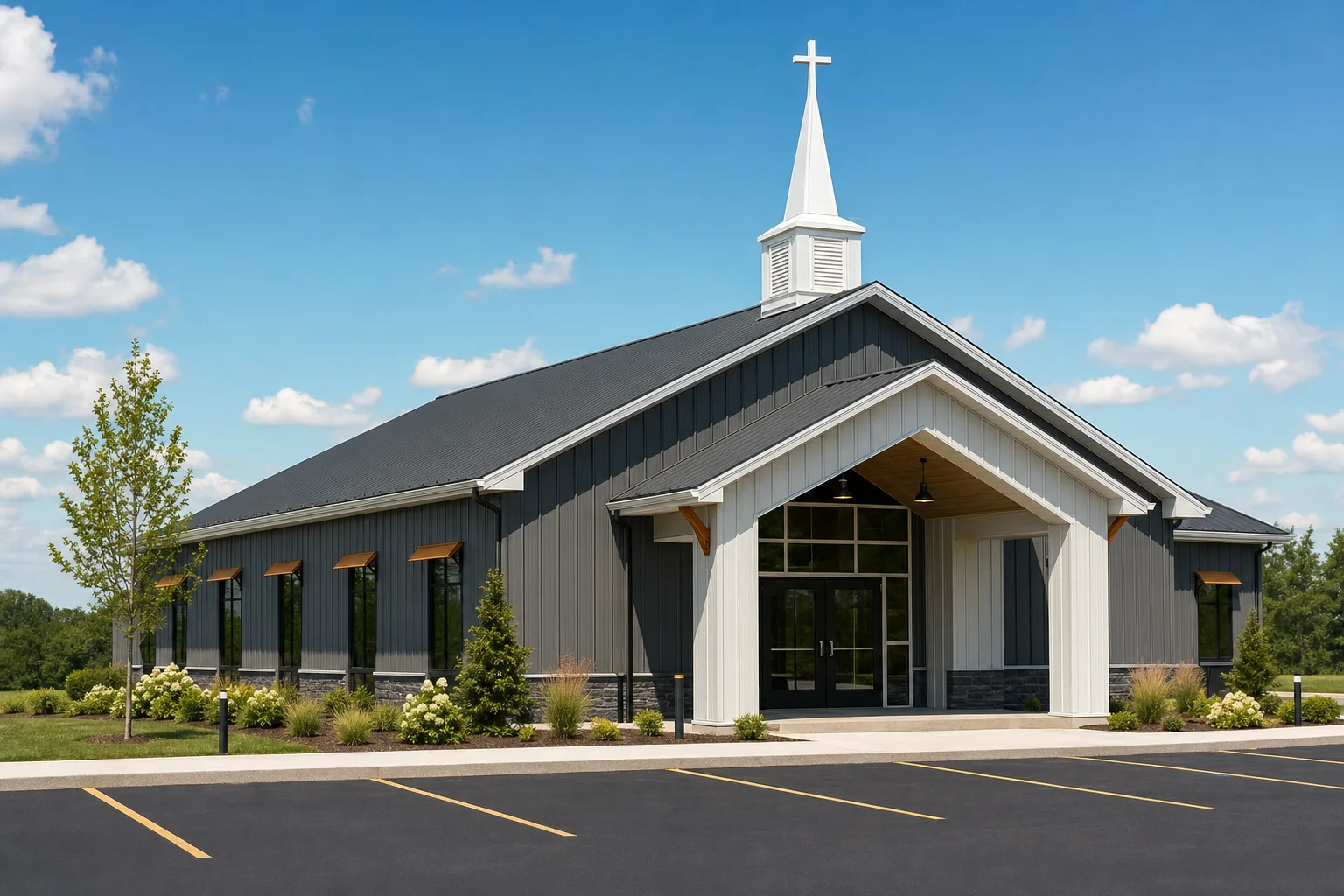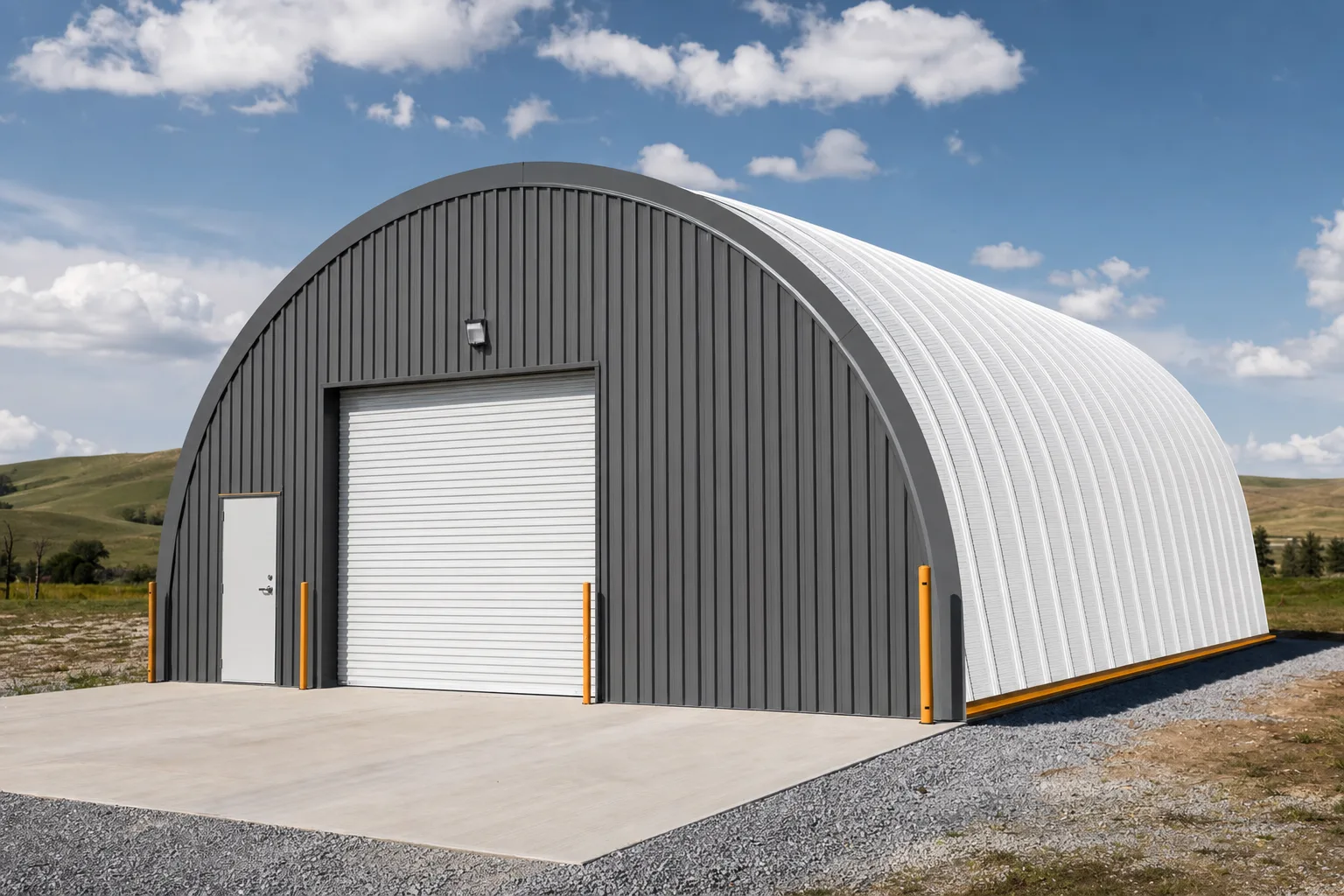
Yes, a Quonset hut is usually cheaper than a regular straight-wall metal building of the same footprint, because the arched panels are the frame and the wall and roof all at once, so you buy less steel and skip the rigid I-beam frame. As an illustrative 2026 range, a bare Quonset arch kit runs about $10 to $25 per square foot ‹confirm›, against roughly $16 to $35 per square foot ‹confirm› for a comparable straight-wall steel building shell. The gap is real on the bare shell, but it narrows once you add end walls, doors, and a finished interior, and a Quonset gives up some usable floor space along its curved sides.
This page sits under the metal building construction types pillar and gives the full price answer that our Quonset hut and arch building kits guide covers in brief. Below: where the Quonset saving comes from, the costs that close the gap, and which building wins once you count usable space and the finished interior. Every dollar figure here is a dated 2026 illustrative range to confirm against a live quote, never a fixed price.
Where it saves
Why a Quonset hut costs less to build
A Quonset hut beats a straight-wall building on the cost to enclose, and the saving traces to three things: the curved panels carry the load themselves, so there is no separate primary frame to buy, the arch uses less steel per square foot, and the same panels bolt up fast with hand tools and a small crew. For a bare, unfinished span, that self-supporting arch is most of the building, so the price is hard for a framed building to match.
| Finish level | Quonset hut ($/sq ft) | Straight-wall building ($/sq ft) |
|---|---|---|
| Bare arch shell, no slab | $10–$25 ‹confirm› | $16–$35 ‹confirm› |
| Shell plus concrete slab | $22–$45 ‹confirm› | $30–$55 ‹confirm› |
| With end walls and doors | $28–$55 ‹confirm› | $35–$65 ‹confirm› |
| Finished, insulated interior | $60–$110 ‹confirm› | $65–$115 ‹confirm› |
Illustrative 2026 ranges to confirm against a live quote. The Quonset lead is largest on the bare arch and narrowest once both are finished.
Read the table top to bottom and the pattern shows. The Quonset lead is largest on the bare arch, holds through the slab, and shrinks once you add end walls and finish the inside, because insulation, wiring, and trim cost about the same on either shape. The arch also resists rust well, since most kits use a coated steel that takes weather from every angle. For the per-foot method behind these numbers, see the cross-silo metal building kit prices pillar.
The catch
The costs that close the gap
The Quonset advantage is largest at the bare arch and smallest at the finished, fitted-out building, so the headline saving can fade as the real costs go in. Grasp this before you weigh the two on price, because it is where most arch-versus-framed comparisons go wrong.
Three things narrow the gap. End walls often cost extra, since a bare arch ships open on both ends and you frame and panel them yourself or pay for the add-on ‹confirm›. Doors and windows in a curved wall need flat framed openings, which add labor over a straight wall that already takes a standard pre-engineered door. And the curved sides eat usable floor space, because the wall starts leaning in at the perimeter, so a 40-foot-wide arch gives you less full-height floor than a 40-foot straight-wall building. The Quonset and arch kit guide walks the layout tradeoff in full.
Price both to the same usable space
Most Quonset-versus-framed arguments collapse because the two shapes price different buildings. A bare arch against a finished straight-wall shop is not a fair fight, and neither is matching them on outside width when the arch loses floor to its curve. Decide the usable square footage and the finish level first, then quote both to that exact standard. For the framed alternative the comparison leans on, see red iron building kits.
Which wins
Which building is the better buy
On a bare, open-span shell where you want maximum cover for the lowest price, the Quonset wins on cost, and it is a strong pick for storage, ag use, and a basic workshop. On a building you plan to finish, fit with many doors and windows, or use the full floor width, a straight-wall building earns its higher shell price back in usable space and easier finishing.
Compare the finished building over its lifespan and its usable floor, not the bare arch on day one. The Quonset wins the race to weather-tight for less, but a framed building is easier to live and work inside.
Both shapes hold up well over decades, since coated steel does not rot, warp, or feed termites, so the long-run pick comes down to use, not durability. Choose the arch when budget and speed lead and a curved interior suits the job. Choose the straight wall when you want vertical walls, wide door openings, and the full floor. For the framing terms and the rest of the build-method decision, start at the construction types pillar and read the Quonset and arch kit guide alongside it.
Related
Read more
This price answer connects to the rest of the build-method decision. Follow these next:
- Metal building construction types (the parent pillar).
- Quonset hut and arch building kits (the full guide this page deepens).
- Red iron building kits (the framed building the price compares against).
- Pre-engineered metal buildings explained (how a regular straight-wall building is built).
- Metal building kit prices (the cross-silo cost pillar).