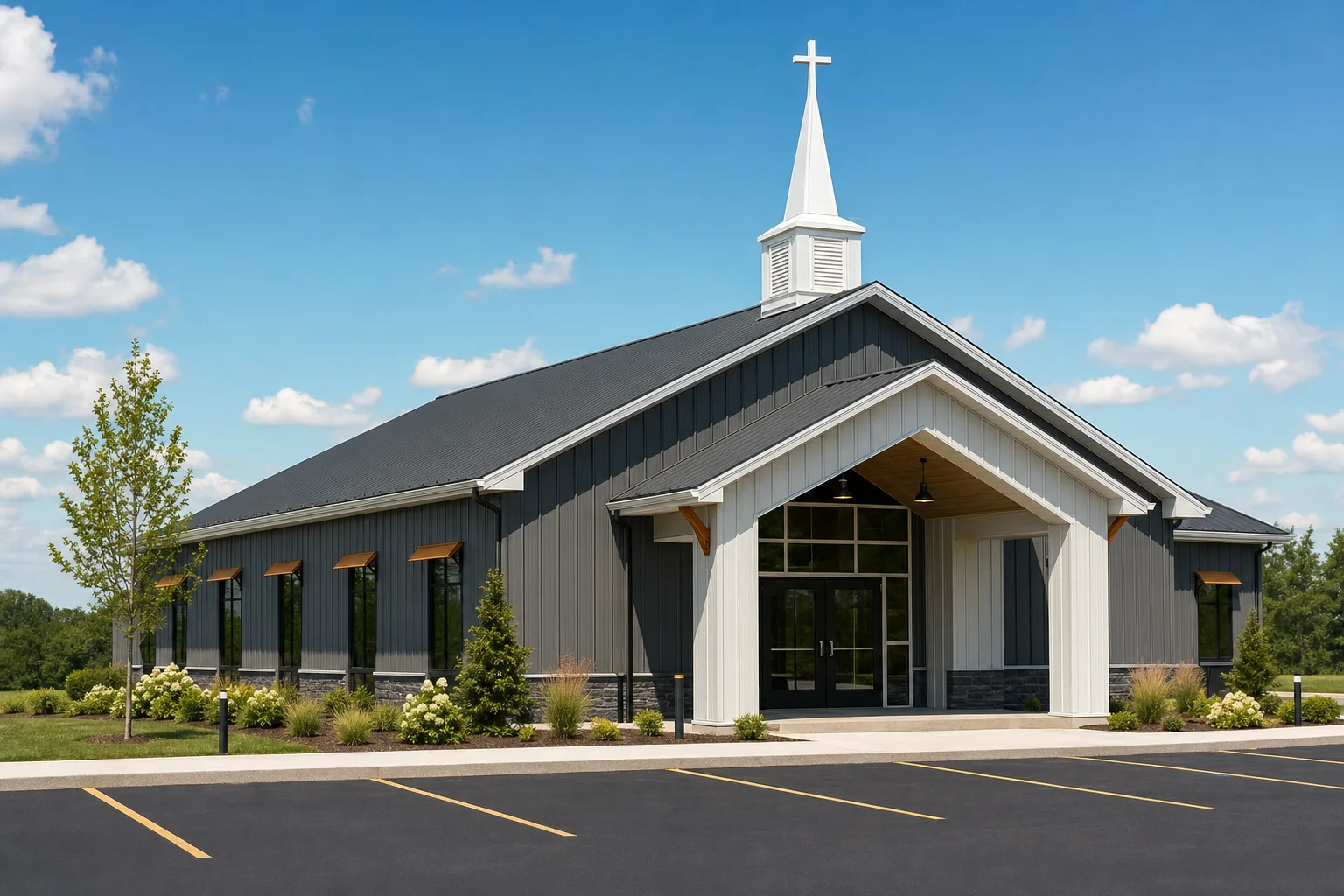
A metal frame is structural steel; a wood frame is dimensional lumber. Steel carries wider clear spans, holds a straight line for decades, and will not burn, rot, or feed termites. Wood is lighter to lift, cheaper on short spans, and easy to cut, drill, and finish on site. The right frame depends on the span you need, the loads it carries, the fire and pest risk where you build, and how long the structure has to stand. For most wide-span shops and barns the steel frame wins; for small, heavily finished spaces wood still holds ground.
This guide sits in the metal building construction types silo and compares the frame material on its own: structural steel framing against structural wood framing. It does not re-run the whole-building question of a steel kit versus a stick-built house, which the Basics guide metal building kits vs stick-built covers in full. Here the focus stays narrow, on the skeleton: strength, span, fire, pests, moisture, lifespan, and what the frame costs.
Two frames
What a steel frame and a wood frame are
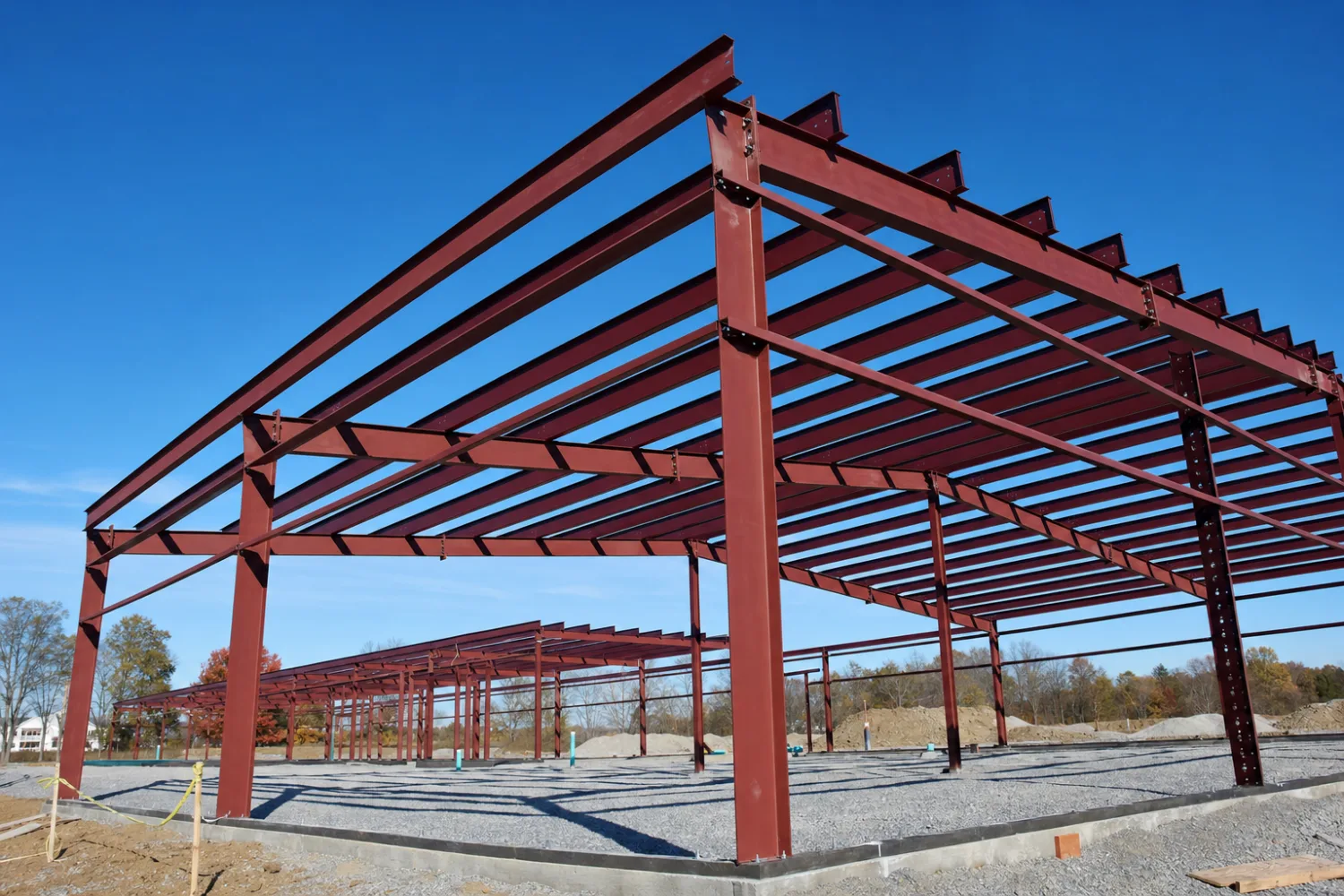
A metal frame is structural steel shaped into columns and rafters or beams. On a kit, that frame is hot-rolled I-beam, the red iron you see in shops and warehouses, or lighter formed steel on smaller buildings. The mill cuts and punches each member to plan, so the parts bolt together instead of being fabricated on site. The frame does one job: carry the roof and walls down to the foundation.
A wood frame is dimensional lumber, the studs, joists, and rafters a crew cuts and nails into walls and a roof. Nothing arrives pre-engineered as a unit; the framing takes shape board by board to the plan. That is what gives wood its flexibility and what makes it slower to raise. The same lumber that frames a house frames a pole barn or a garage.
The split matters because the two materials are good at different things. Steel is a system built for span and permanence. Wood is a material built for shaping and quick changes. The frame you pick sets the building’s reach, its fire and pest behavior, and how it ages, so it is worth understanding before you read a quote. The pre-engineered building model is what lets a steel frame ship ready to bolt up.
Strength & span
Strength-to-weight and clear span
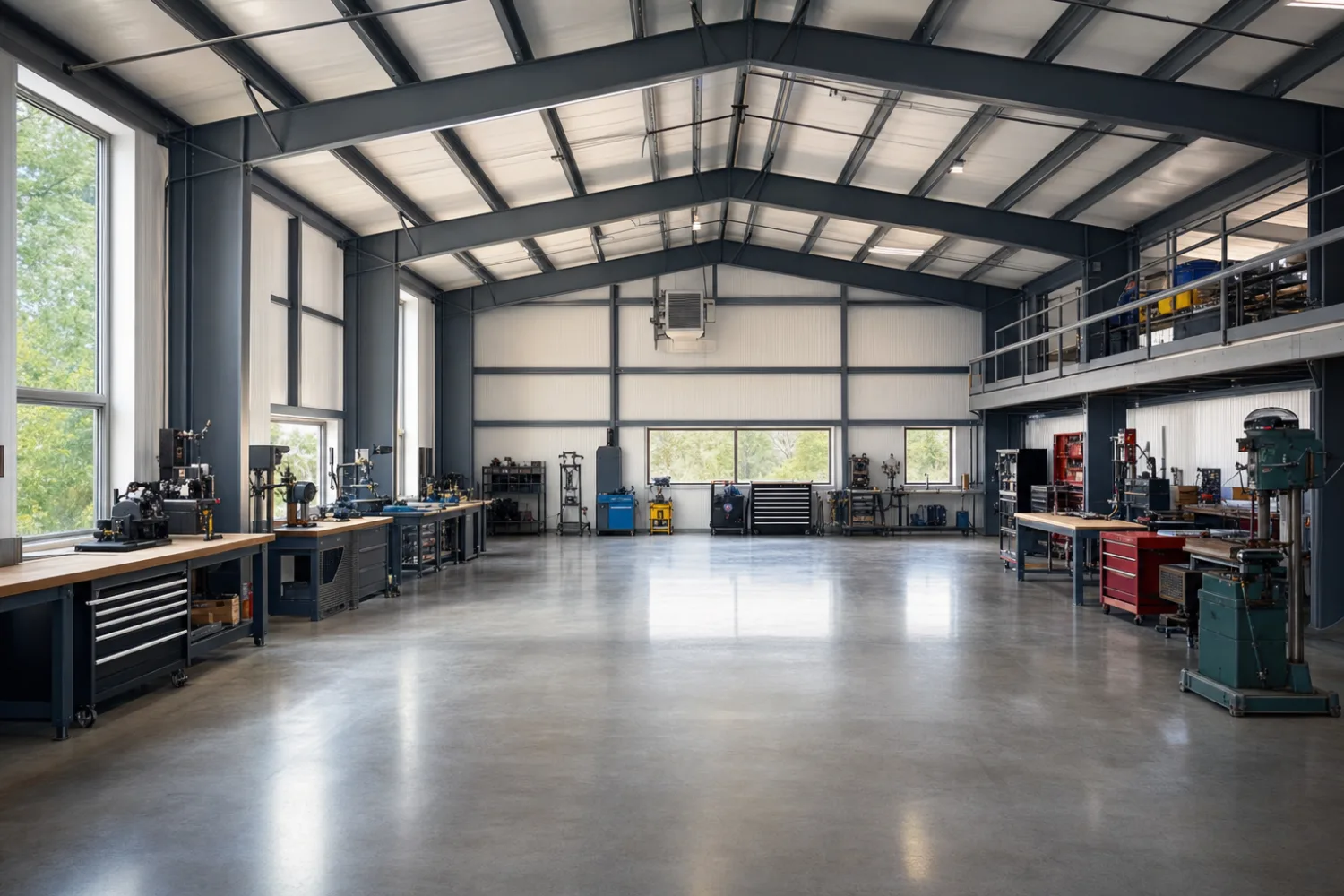
Steel carries more load per pound than wood and spans wider without help underneath. That single advantage decides most wide buildings. A steel frame reaches across 40, 60, even 100 feet of clear floor, so a shop or arena has no posts in the middle to drive around.
Wood framing can span too, but not as far on its own. Push a wood roof past a modest width and you need interior bearing walls, posts, or engineered beams to hold it up, and each of those adds cost and eats the open space you wanted. For a narrow garage or a finished room that is no problem. For a wide working building it is the reason steel takes over, sized to your local loads rather than a generic rule of thumb.
Strength-to-weight cuts the other way on handling. The same steel that spans wide is heavy, so the larger frames want a lift and a small crew to set the rafters. A wood frame is light enough to cut and raise with hand tools and a couple of people, which is part of why wood stays cheaper on small spans. You pay for steel’s reach in weight; you pay for wood’s ease in span.
Steel also holds its shape. It does not warp, twist, cup, or shrink as it dries, so a steel frame stays straight and square for the life of the building. Wood is a natural material that moves with moisture and time, which is normal but means a wood frame can develop the squeaks, gaps, and out-of-square that a steel frame does not.
Fire, pests & rot
Fire, termites, and moisture
Steel is non-combustible, will not feed termites, and does not rot. Wood burns, can be eaten by insects, and rots when it stays wet. That is the cleanest line between the two frames, and it favors steel on durability.
Fire is the headline. A steel frame does not add fuel to a fire, which can matter for insurance in some areas ‹confirm› and for any building storing flammable material. Wood framing is combustible, and while modern construction manages that with assemblies and detailing, the material itself burns. If fire risk is a real concern for your use, the steel frame starts ahead.
Pests are the second line. Termites, carpenter ants, and wood-boring beetles can hollow out a wood frame over years, and in much of the country that means treatment and inspection as part of owning the building. A steel frame gives them nothing to eat. In termite-heavy regions that alone pushes many owners to steel for the structure.
Moisture splits the difference. Wood rots when it stays wet, so a wood frame depends on staying dry and detailed to drain. Steel does not rot, but a bare steel frame can rust if water sits on it, and inside a metal building the real moisture problem is usually condensation, not rain. A primed steel frame inside a sealed, ventilated shell is well protected; an enclosed wood frame is fine too, as long as it never traps water. Neither frame survives chronic moisture, but steel tolerates a damp event better than wood.
Head to head
Wood frame vs metal frame: the comparison
The two frames split along the lines that decide most projects: clear span, strength-to-weight, fire, pests, moisture, lifespan, and the cost of the frame itself. Read them together, because a win on one line is often a tradeoff on another.
| Metal frame (steel) | Wood frame (lumber) | |
|---|---|---|
| Clear span | Wide, no interior posts | Limited without added beams or walls |
| Strength-to-weight | High load per pound | Lower; heavier members for the same load |
| Handling | Heavy, larger frames need a lift | Light, DIY-friendly with hand tools |
| Fire | Non-combustible | Combustible |
| Pests | Will not feed termites or borers | Vulnerable to termites and insects |
| Moisture | Will not rot; primed against rust | Rots if it stays wet |
| Dimensional stability | Stays straight, no warp or shrink | Can warp, twist, and shrink over time |
| Lifespan of the frame | Decades, sheltered inside the shell | Long if kept dry; degrades if not |
| Frame cost | Higher per pound; wins at wide span | Lower on short spans |
| Best for | Wide-span shops, barns, commercial | Small, heavily finished or shaped spaces |
A frame comparison, not a verdict. The right pick matches your span, loads, and risk, not the lowest sticker.
Compare the frames on the job, not on the price tag. A wood frame under a wide shop needs posts it was never meant to avoid, and a steel frame under a small finished room buys reach you will never load.
Where each wins
Which frame fits the building
Let the building decide. Start with the clear width, the heaviest load, and the fire and pest risk, then the frame follows. Here is how the common cases land:
- Wide-span shop, barn, or arena. Steel frame. You want the clear span and the load rating, and wood cannot reach that wide without interior support.
- Commercial or warehouse. Steel frame, for the span, the fire rating, and the code-stamped structure those buildings need.
- Small, heavily finished room or addition. Wood frame holds its own. Short spans, easy finishing, and stud bays sized for standard insulation and wiring.
- Termite or high-fire region. Steel frame for the structure, to take fuel and food off the table no matter the size.
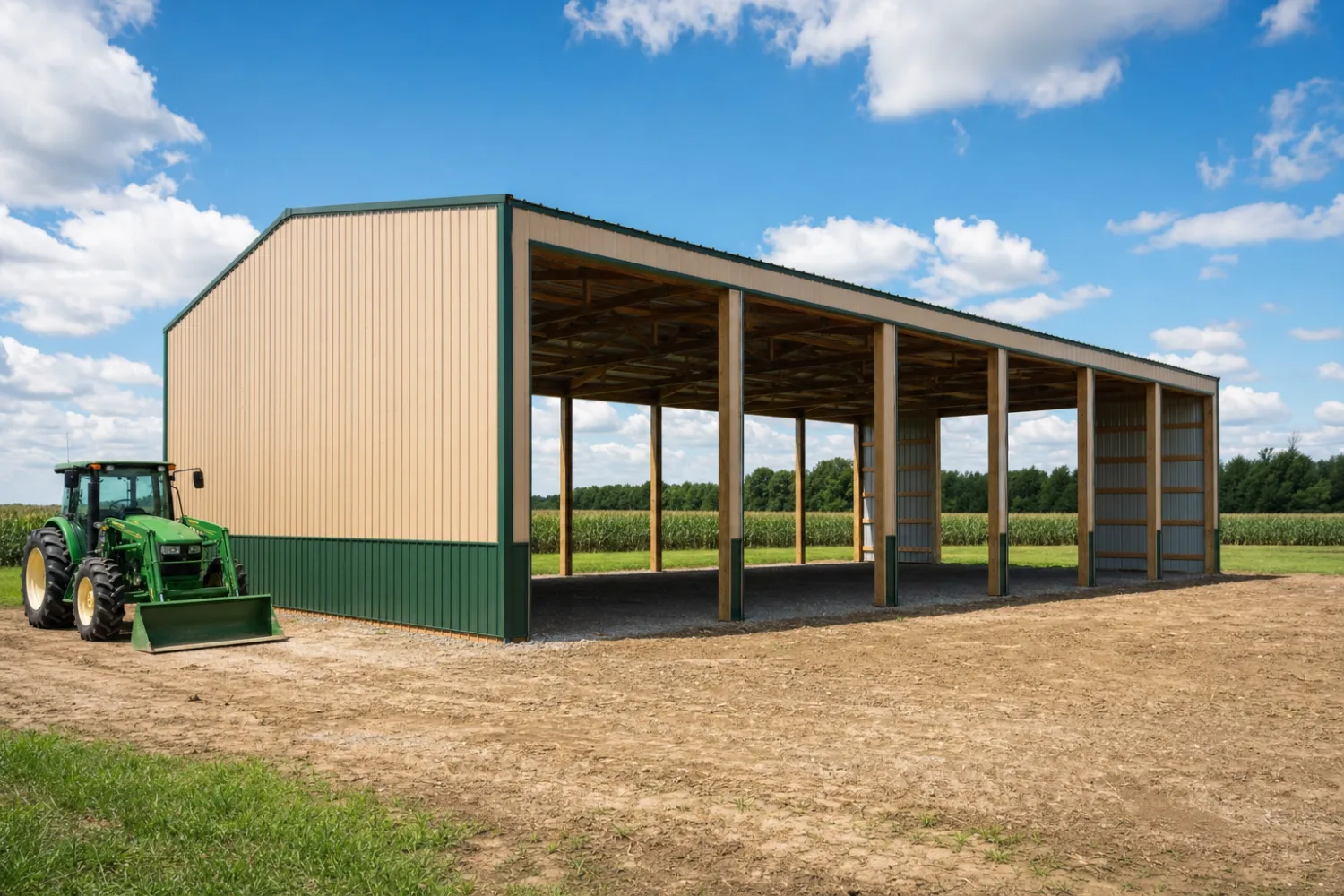
- Agricultural building. Compare both. A pole barn uses a wood post frame and competes hard on price for open storage.
The hybrid
The hybrid reality: steel frame, wood interior
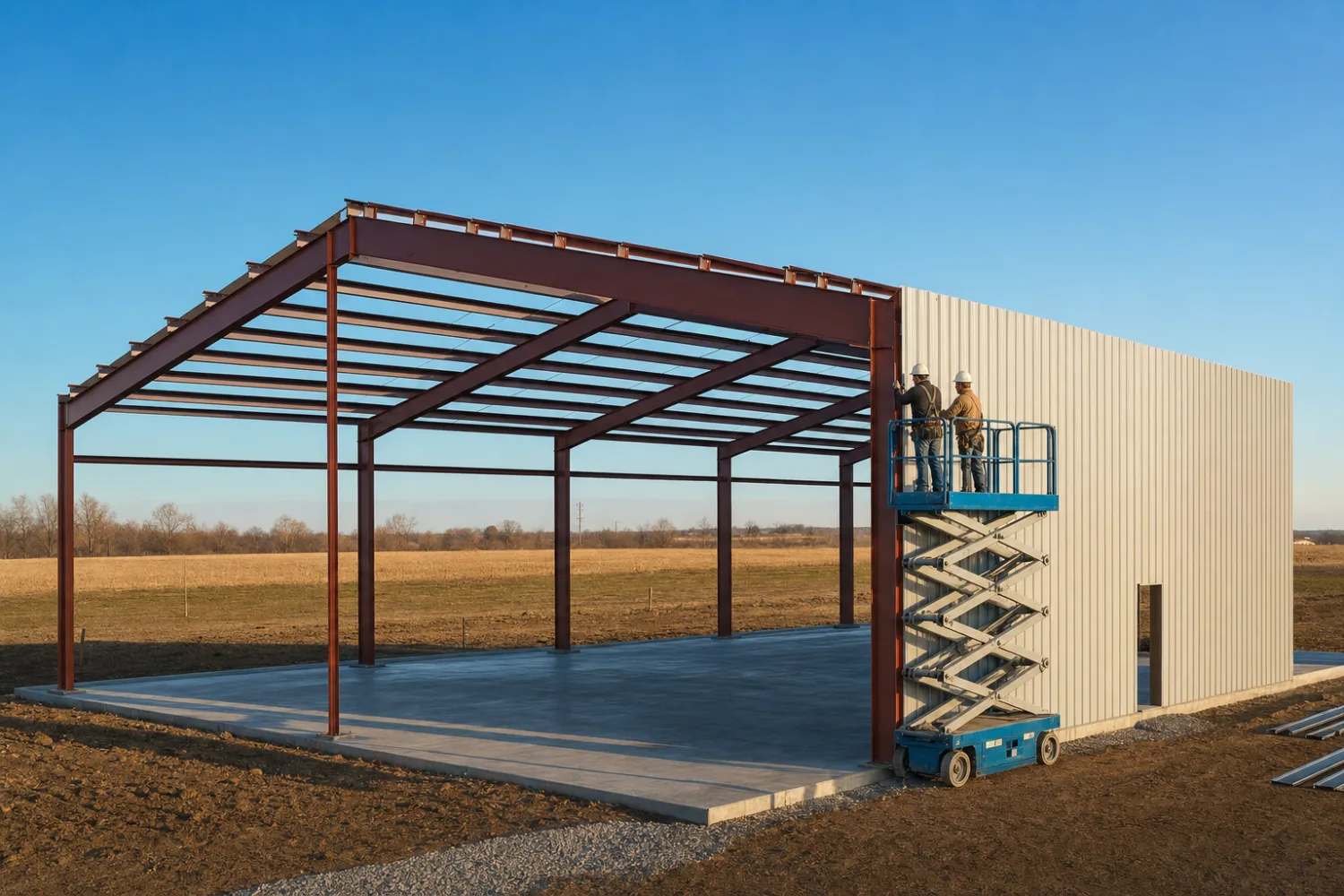
Most real buildings are not all one material. A common and smart setup uses a steel primary frame for the structure and wood for the interior, so you get the steel’s span and durability with the wood’s easy finishing.
The logic is simple. The steel frame does the heavy structural work, carrying the roof across a wide clear span and shrugging off fire, rot, and termites in the part of the building that holds everything up. Then wood furring, studs, and framing go inside to give drywall, insulation, cabinets, and trim something easy to attach to. You are not choosing one material for the whole building; you are putting each where it is best. This is the frame story behind the red iron kit that gets finished into a workshop or a home.
Keep the wood dry inside steel
The one rule for a steel-frame, wood-interior build is moisture control. Wood furring against a steel shell can trap condensation if the building is not insulated and ventilated right, and that is where rot starts. Detail the assembly to stay dry and the hybrid gives you the best of both frames. Manage the condensation and the interior wood lasts as long as the steel around it.
Frame cost
What the frame costs
Steel costs more per pound than wood, and on a small, short-span building that gap is real money for capacity you may not need. On a wide-span building it flips: wood cannot do the job without added structure, so the steel frame is often the only honest quote, and the comparison stops being about price.
Lumber prices also swing more than steel. Wood is a commodity that rises and falls with the market, so a wood frame quoted today may not hold next season, while steel pricing tends to move slower. On any given project the frame is one of the biggest single lines, so a few percent either way shows up in the total ‹confirm›.
Then there is the cost over time. A steel frame asks for almost nothing once it is up: no termite treatment, no rot repair, no re-squaring. A wood frame can carry small ongoing costs for inspection and pest control in some regions, and the occasional repair where moisture or movement shows up. Right-size the frame to the span and the risk and you stop paying twice, which is part of why a steel frame lasts as long as it does. For the broader build-method math, the kit vs stick-built guide runs the whole-building numbers.
FAQ
Wood frame vs metal frame: common questions
Is a metal frame better than a wood frame?
It depends on the job. A metal frame is stronger per pound, spans wider with no interior posts, and will not burn, rot, or feed termites, so it wins on wide-span and durability. A wood frame is lighter, cheaper on short spans, and easy to finish, so it holds its own on small, heavily detailed spaces. Match the frame to the span, the loads, and the fire and pest risk rather than calling one better outright.
Is steel framing more expensive than wood?
Per pound, yes, and on a small short-span building a steel frame can cost more for capacity you do not need. On a wide-span building the comparison breaks down, because wood needs added beams or posts to reach that far and steel becomes the only frame that qualifies. Lumber prices also swing more with the market, while steel tends to move slower, so confirm both on the day you buy.
Does a steel frame burn or rot?
No. Structural steel is non-combustible, so it does not add fuel to a fire, and it does not rot the way wood does. A bare steel frame can rust if water sits on it, but a primed frame sheltered inside an insulated, ventilated shell is well protected. Most moisture trouble in a metal building traces to condensation, not to a flaw in the steel.
Which lasts longer, steel or wood framing?
A steel frame has the edge. It will not rot, warp, twist, or feed termites, so it holds its shape and strength for decades inside a dry shell. A wood frame can last just as long when it is kept dry and protected from pests, but it is more vulnerable to moisture, insects, and movement over time. See how long metal buildings last for the full picture.
Can you mix a steel frame and a wood interior?
Yes, and many buildings do. A steel primary frame carries the structure across a wide clear span, then wood furring and studs go inside to give drywall, insulation, and trim something easy to attach to. The one rule is moisture control: insulate and ventilate so condensation does not get into the interior wood. Done right, the hybrid gives you steel’s span and durability with wood’s easy finishing.
Is a wood frame ever the better choice?
For small, short-span, heavily finished spaces, often yes. Wood is light enough to raise with hand tools, cheap on modest spans, and its stud bays take standard insulation, wiring, and drywall with no extra framing. The case for wood weakens as the building gets wide, the loads get heavy, or fire and termites become a real concern, which is where the steel frame takes over.
Related guides
Keep reading
This frame-material comparison connects to the rest of the build decision. Follow these next:
- Metal building construction types (the parent pillar for frame and build types).
- Red iron building kits (the structural steel frame, as a kit).
- Pre-engineered metal buildings explained (the factory model behind the steel frame).
- Metal building kits vs stick-built (the whole-building method comparison).
- Metal building kits vs pole barns (steel against the wood post-frame method).
- How long do metal buildings last (what gives the steel frame its lifespan).
- Metal building glossary (every framing term defined).