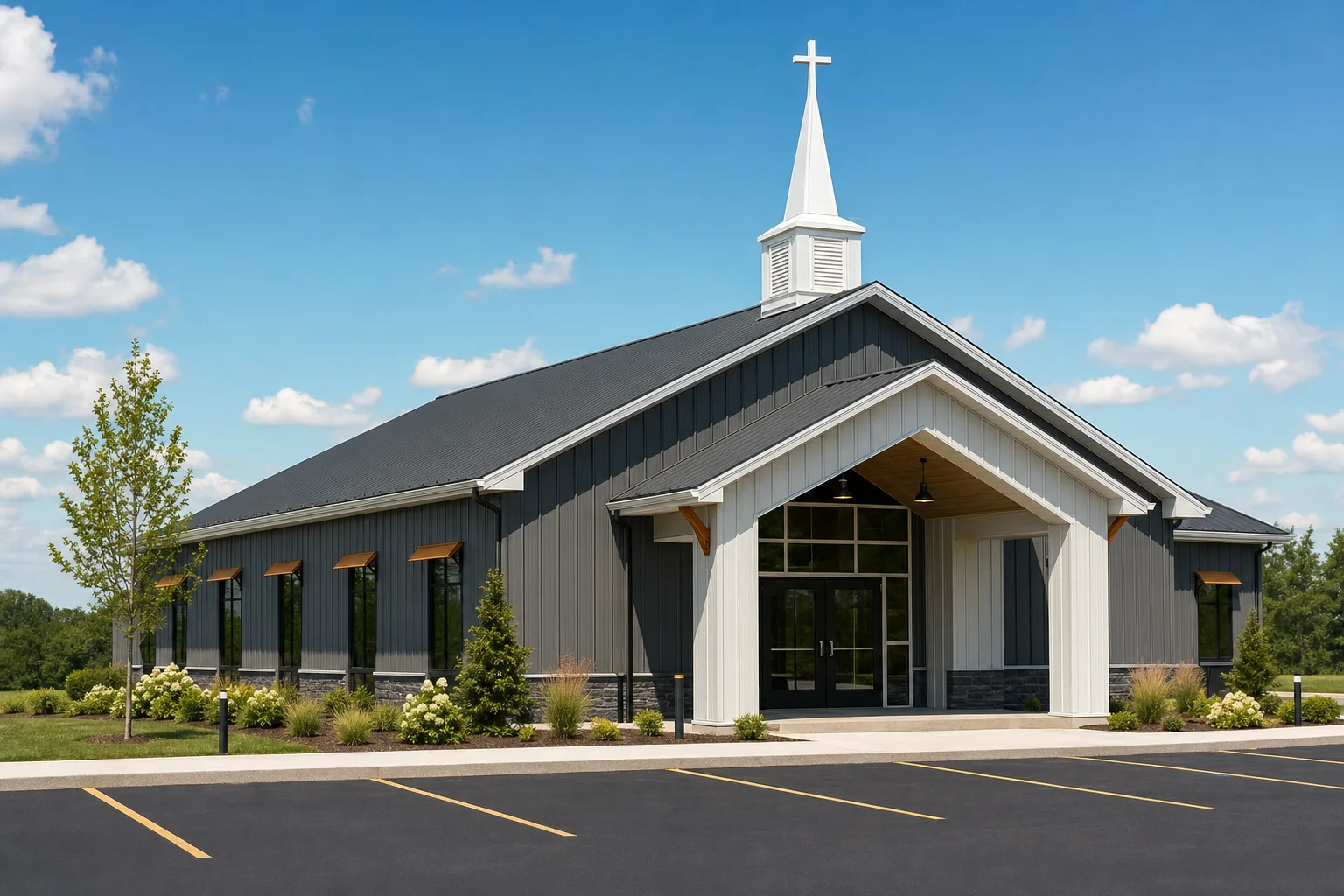
A DIY metal building kit is a steel building that ships as a complete set of pre-cut, pre-punched, labeled parts you bolt together yourself on a slab, with a drawing set and a manual that show where each piece goes. The kit is engineered before it leaves the plant, so the work left to you is careful assembly, not fabrication. That is what makes a metal building one of the few structures an owner can put up without a welder or a framing crew, on a budget that keeps the labor savings in your pocket.
This guide is the buyer’s-guide overview inside our Construction Types & DIY pillar. It covers what makes a kit DIY-able, how to choose one, what the build looks like from a distance, what to budget, and when handing the job to a crew is the smarter call. It points you to the deep guides for the parts that deserve their own page, so use it as the map, not the manual.
DIY-friendly
What makes a metal building kit DIY-friendly
A kit is DIY-friendly when the steel arrives ready to assemble and nothing on site needs cutting, welding, or fabricating. Four traits do the heavy lifting: the connections are bolt-up, the parts are pre-punched, every piece is labeled to a plan, and a manual walks the order. Miss any of the four and the build stops being assembly and starts being a trade job.
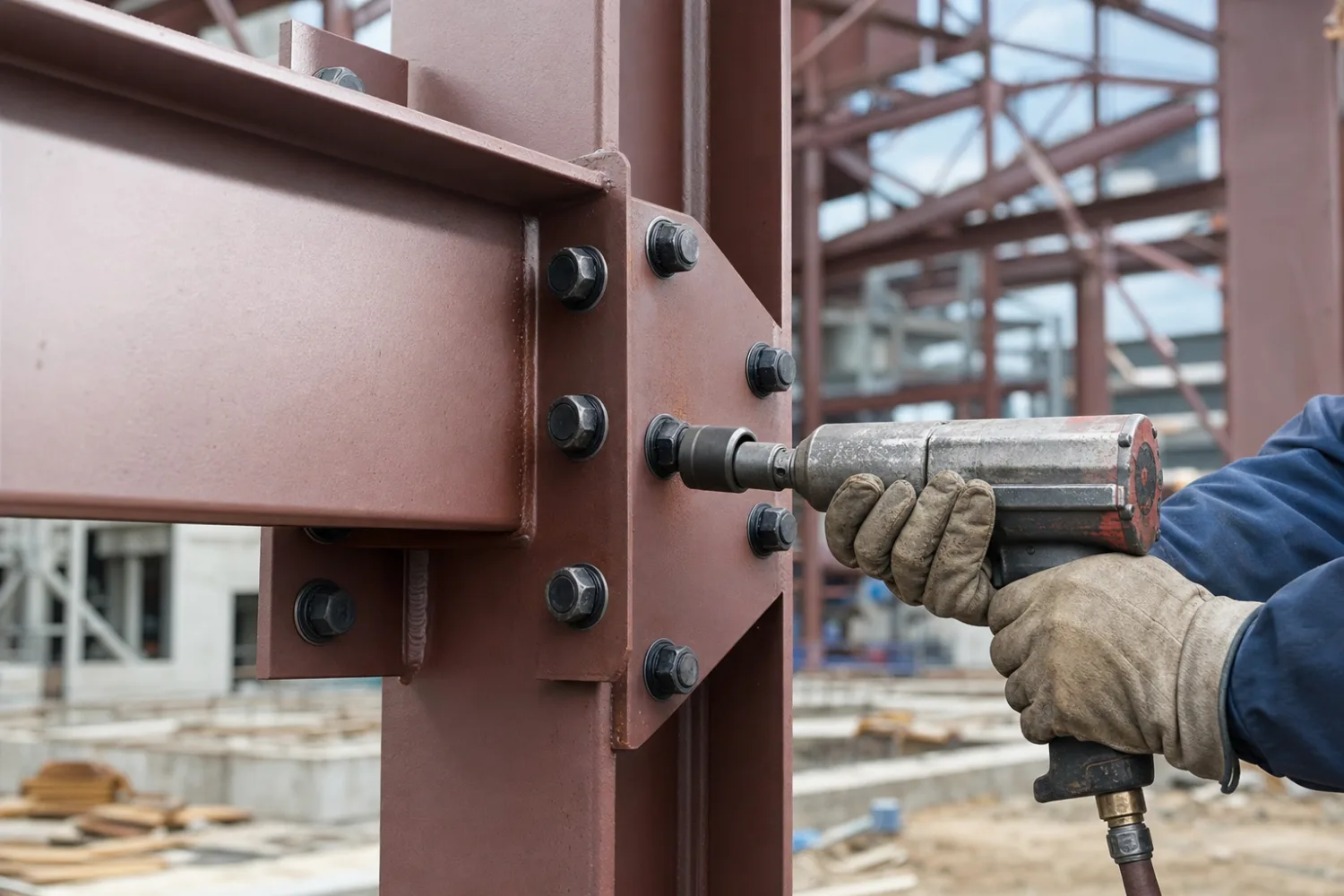
Bolt-up is the first trait and the most important. A bolt-up kit joins steel with structural bolts and self-drilling screws, so the skills you need are reading a plan, running an impact wrench, and following a torque spec. A weld-up building is the opposite: it wants a skilled welder and raw steel cut on site, which takes a true DIY kit off the table for most owners.
Pre-punched parts are the second trait. The factory drills every bolt hole to the engineered drawing, so you never measure or drill structural steel in the field. The members line up hole to hole and fasten one way, which removes the error that field fabrication invites. Labeling is the third: each column, rafter, purlin, and girt is marked to match the plan, so the build reads like a checklist instead of a puzzle.
The fourth trait is the documentation. A DIY-able kit ships with a stamped drawing set and an assembly manual, so you know the order, the torque, and the anchor layout before the first column stands. The table below sorts the traits that mark a kit as DIY-friendly and what each one buys you on the slab.
| DIY-friendly trait | Why it matters for an owner build |
|---|---|
| Bolt-up connections | No welding or field fabrication, just bolts and screws |
| Pre-cut, pre-punched steel | No measuring or drilling of structural members |
| Labeled parts and a plan | Each piece marked to the drawing it belongs on |
| Stamped engineering included | The sealed plans your building department reads |
| Clear assembly manual | A fixed order, torque specs, and anchor layout |
| Self-drilling panel screws | Roof and wall sheets fasten without pre-drilling |
The traits that make a kit assemble-able by its owner. Confirm all of them before you order.
Choosing a kit
How to choose a DIY-able kit
Choose a DIY kit by matching three things to your project: the size you can realistically raise, the frame the building needs, and the gauge that carries your loads. Get those right and the build is within reach. Get the frame wrong and you have bought steel you cannot lift, or a span that fails inspection.
Size sets the tone. A small carport or a single-car garage is light enough that two capable people can handle most of it, while a wide shop puts heavy members overhead where you want a crew and a lift. Pick a footprint you can raise with the help you have, not the largest one the supplier will sell. Our how to choose a metal building kit guide runs the full sizing and selection workflow.
Frame is the next call. Tube steel framing is lighter, cheaper, and easier for an owner to handle on small buildings, while red iron carries the wide, post-free spans a shop or barn needs but wants equipment to raise. Both ship as bolt-up kits, so both are DIY-able in principle. What changes is the weight on the lift, which is why the framing choice is about span and load, not about whether you can build it.
Gauge is the last number to read. Lower gauge means thicker steel, and the right gauge is the one stamped for your local snow and wind, not the lightest one that fits the price. Ask for the gauge in writing on the primary frame and the panels, and confirm the kit is engineered for your site loads before you compare two quotes on price alone.
The DIY path
What a DIY metal building build looks like
At a high level, a DIY build runs in a fixed order: pour the slab to the anchor plan, stand and bolt the primary frame, add the secondary framing, then hang and screw the panels and trim. The sequence never changes, which is part of why a kit is predictable. The detail of each stage is its own guide, so here is the shape of the job, not the step-by-step.
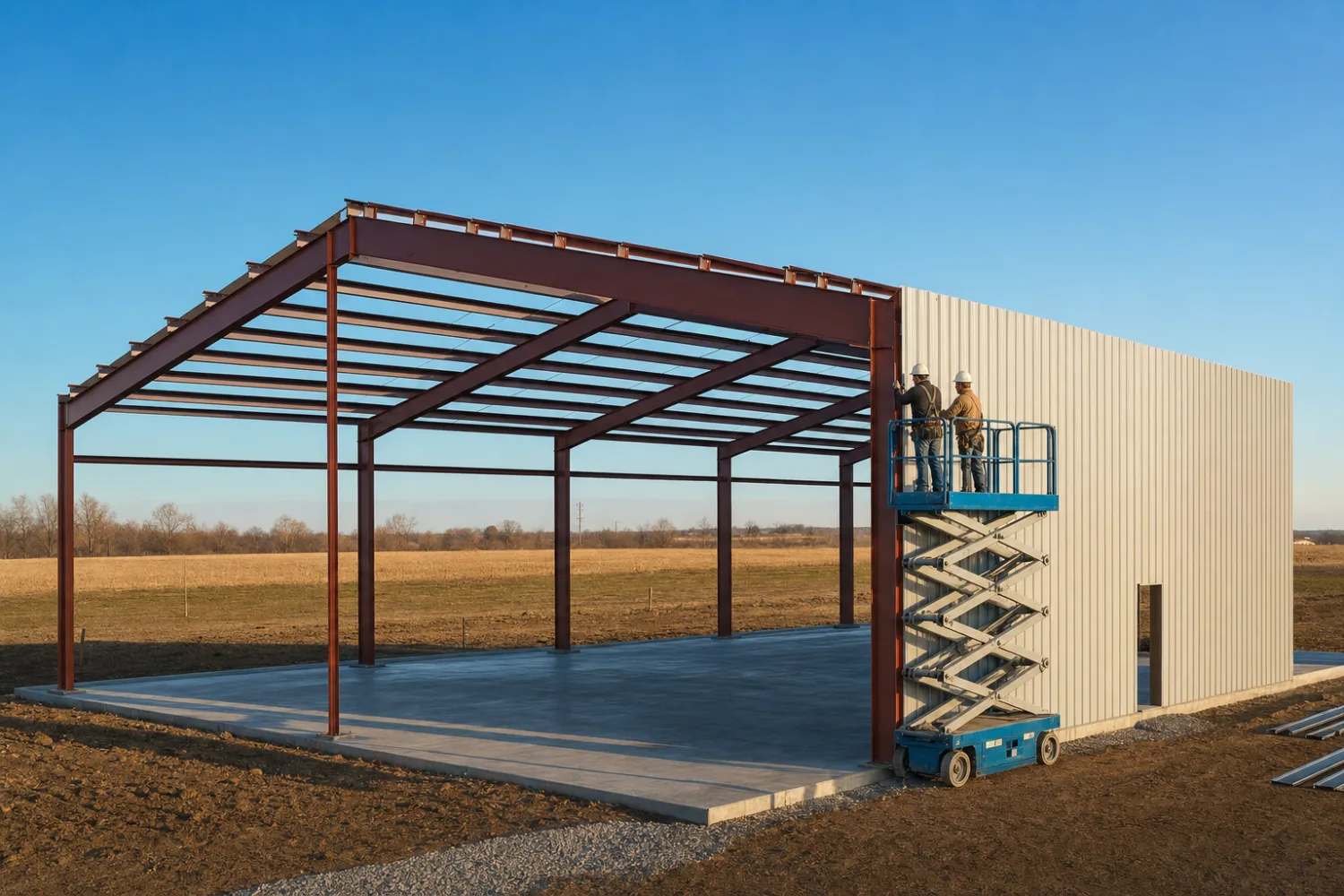
Before any steel moves, you stage the parts and read the plans. A DIY build runs smoothest when the kit is sorted by the order it goes up and the drawings are open on the slab. From there the work is methodical: the frame day is the lift-heavy one, and the panel days are the slow, careful ones. For the full sequence, walk our step-by-step assembly overview, which breaks each stage into its own checklist.
Two practical guides decide whether the build is comfortable. The first is the toolkit: an impact wrench, a torque wrench, ladders or a lift, and the right fastening bits are the difference between a smooth day and a stalled one, and the tools needed to assemble a kit guide lists what to have on hand. The second is the clock: a small kit can go up over a weekend, while a large shell runs into weeks, and the how long assembly takes guide sets honest expectations by size and crew.
This is the map, not the manual
This overview points to the deep guides on purpose. It does not replace the assembly steps, the tool list, or the timeline. Read those before you order, so the build holds no surprises and your weekend math is real.
Budget
What to budget and watch for on a DIY kit
Budget a DIY kit as the steel plus everything the steel sits on and needs to go up. The kit price is the headline, but the slab, the anchors, the delivery, the permit, the tools, and the equipment rental all land on the same project. The DIY part is where you save, because you are trading your labor for a contractor’s, and on a metal building that labor is a real share of the total ‹confirm›.
Three line items catch first-time owners. The foundation is the big one: a code-correct slab poured to the anchor template is not optional, and on some sites it costs as much as the steel ‹confirm›. Delivery and offloading come next, because a flatbed of steel needs a way off the truck. And the equipment to raise a frame, a boom lift or a scissor lift for a day or two, is a rental line most kit prices do not include.
Watch for the gaps between the quoted kit and the finished building. Trim, fasteners, closures, and sealant are small parts that a thin quote can leave out. A vague spec sheet that does not name the frame, the gauge, or the loads is a flag to push back on. Before you sign, the buying guide below is your line-by-line confirmation.
The kit is the part you can see on the invoice. The slab, the offload, and the lift are the parts that surprise a first-time owner. Budget the whole project, not the headline, and the DIY savings are real.
Read the quote with the same care you read the plans. A clear quote names the frame, the gauge, the panels, the trim, and the engineering, and it states what is and is not included. Our metal building buying checklist is the reference that covers every line to confirm before you order, so the budget you set is the budget you spend.
When to stop
When a DIY metal building stops making sense
DIY stops making sense when the building outgrows what you can safely raise, when your time is worth more than the labor you would save, or when the engineering on your site is beyond a first build. The kit being bolt-up does not change the weight of a 50-foot rafter or the height of a 16-foot wall. Knowing where your build sits on that line is the most useful thing this guide can give you.
This overview does not make the call for you, and on purpose. Whether you should attempt your own build is its own honest self-assessment, and we keep it in the can you build a metal building yourself guide, which weighs your skills, your help, and your tolerance for the lift. Read it before you commit, because the answer is personal, not universal.
And when the question is not whether you can but whether you should hire it out, the hiring a crew vs DIY assembly guide runs that decision in full: what a crew costs, what your time is worth, and where the break-even sits. A common middle path is to hire the frame day, where the weight and the height live, and self-perform the panels and trim, where the work is slow but light. That hybrid keeps most of the savings and takes the danger off the table.
The honest rule is to size the ambition to the help you have. A small bolt-up kit with one capable partner is a realistic weekend project. A wide red iron shop is a job for a crew and a lift, whether you swing some of the wrenches or not. Match the build to your hands, your help, and your calendar, and DIY stays the smart way to save. Push past that line and the savings turn into a stalled slab.
FAQ
DIY metal building kits: common questions
What is a DIY metal building kit?
A DIY metal building kit is a steel building that ships as a complete set of pre-cut, pre-punched, labeled parts you bolt together yourself on a slab, with a stamped drawing set and an assembly manual. Nothing is welded or fabricated on site. The engineering is finished at the plant, so the work left to you is careful assembly, which is what lets an owner put one up without a welder or a framing crew.
What makes a kit DIY-friendly?
Four traits: bolt-up connections, pre-punched parts, labeled pieces tied to a plan, and a clear assembly manual. Together they mean no field cutting, drilling, or welding, just matching labels and torquing bolts. A bolt-up kit is the standard here, because welding on site takes a true DIY build off the table for most owners.
Do DIY metal building kits save money?
Yes, mainly on labor. When you assemble the kit yourself you trade a contractor’s labor for your own, which is a real share of a finished metal building ‹confirm›. The savings are genuine, but budget the whole project: the slab, delivery, offloading, tools, and any lift rental land on top of the kit price, and those are where first-time owners get surprised.
What should I look for in a DIY kit?
Confirm it is bolt-up with pre-punched, labeled steel and includes a stamped drawing set and a manual. Then match the size to what you can raise, the frame to your span, and the gauge to your local snow and wind loads. Get the frame and gauge in writing. Our how to choose a metal building kit guide walks the full selection workflow.
Where do I start with a DIY build?
Start with the plans and the foundation. Read the stamped drawings, pour the slab to the anchor template, then stage the kit in the order it goes up. From there the build runs slab, frame, secondary framing, panels, and trim. The step-by-step assembly overview breaks each stage down, and the tools guide lists what to have ready first.
How big a kit can one person build?
A small carport or single-car garage is realistic for one or two capable people, because the tube steel members are light enough to handle by hand. Wide or red iron buildings put heavy rafters overhead and want a crew and a lift for the frame day. Whether your specific build is within reach is the honest question the can you build it yourself guide is built to answer.
Related guides
Keep reading
This overview maps the DIY path. Follow these for the decisions and the detail behind it:
- Construction Types & DIY (the parent pillar).
- Can you build a metal building yourself? (the honest self-assessment).
- Hiring a crew vs DIY assembly (where the break-even sits).
- Step-by-step assembly overview and tools needed to assemble a kit (the how and the kit list).
- How long does assembly take? and bolt-up metal building kits (the timeline and the method).
- How to choose a metal building kit (sizing and selecting the right kit).
- Metal building buying checklist (every line to confirm before you order).