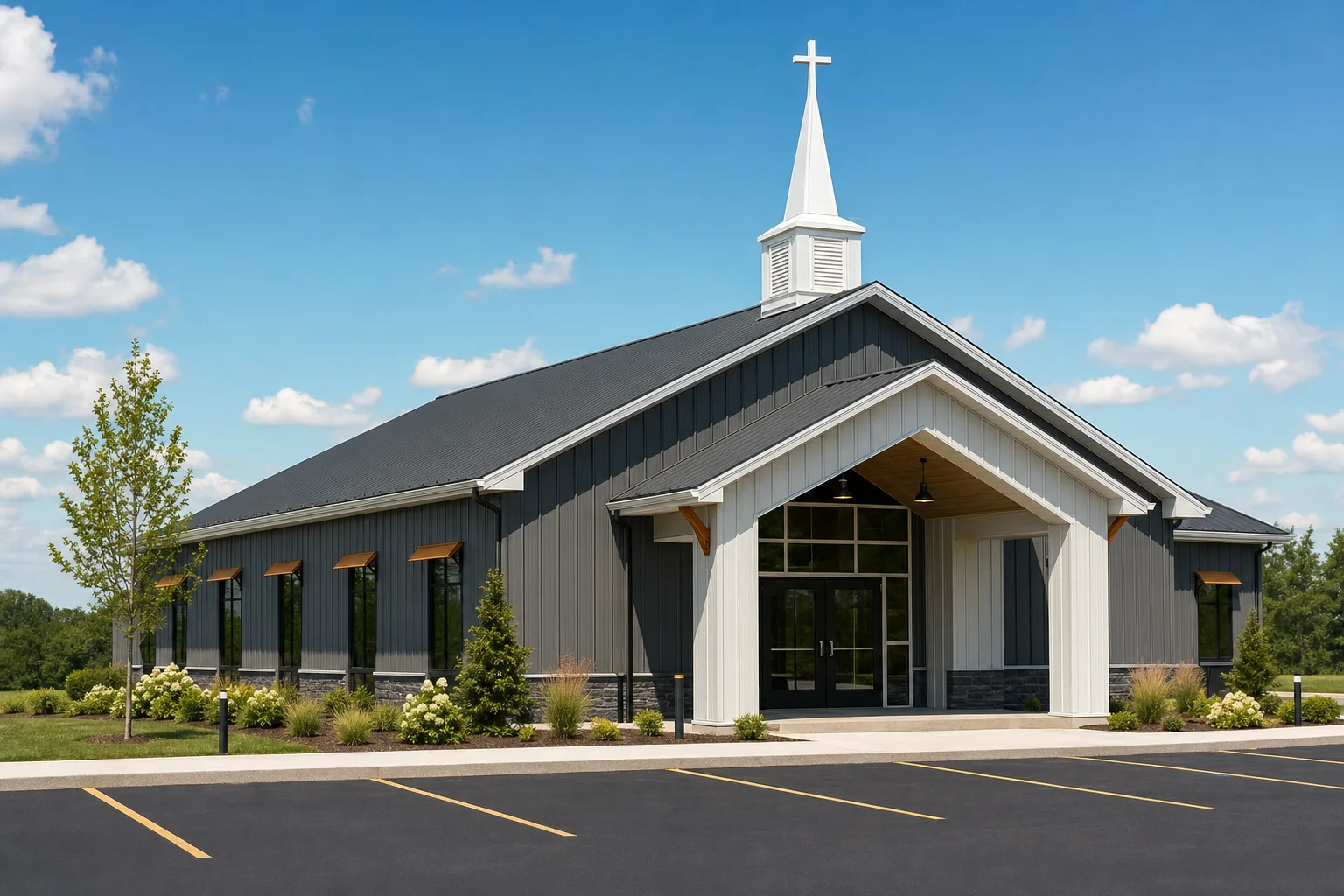
Weld-up and bolt-up are the two ways a steel building gets put together. A weld-up is welded on site, usually from raw tube steel by a local crew, and it bends to whatever shape and layout you want. A bolt-up ships as a pre-cut, pre-punched kit that you assemble with bolts, so it travels well and a handful of people can raise it. Weld-up wins on custom work and on-site fit; bolt-up wins on shipping, speed, and engineering you can hand to an inspector. The right pick depends on who is building it, how custom it has to be, and how far it has to travel.
This guide sits under the construction types and DIY silo, the part of the metal building kits reference that covers how a building goes together. Below: what each method is, how they compare on strength, labor, cost, and portability, and which one fits your project. The deep bolt-up kit explainer lives in its own guide; here you get the head-to-head.
Weld-up
What a weld-up building is
A weld-up building is fabricated on your site. A crew brings raw steel, cuts it to length, and welds the frame together post by post, then sheets it with panels. The frame is usually square or rectangular tube steel, joined at every connection with a welded seam rather than a bolted plate.
The appeal is freedom. Because the crew builds from raw stock, they can change a wall height, move a door, set an odd roof pitch, or fit the building to a sloped or tight lot on the spot. Nothing is locked to a factory punch pattern. If you want a one-off shape or you are matching an existing structure, weld-up gives you room a kit does not.
The cost of that freedom is the crew. Welding a frame takes skill, certified equipment, and time on the ground, so weld-up leans on a local crew rather than a do-it-yourself weekend. Quality also rides on the welder. A clean, well-prepped weld lasts for decades; a rushed one becomes the weak point and the rust point. You are buying labor as much as steel.
Bolt-up
What a bolt-up building is
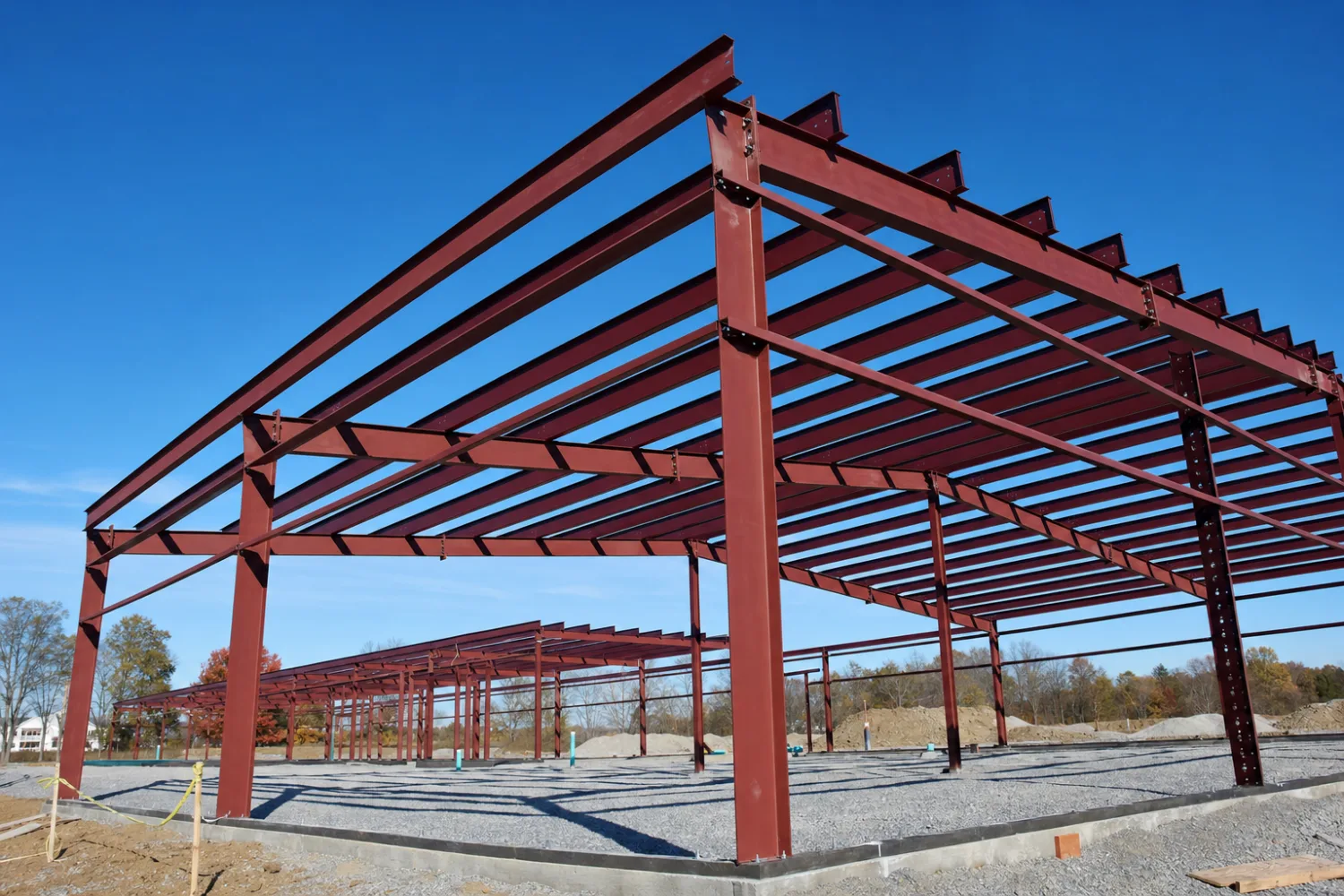
A bolt-up building arrives as a kit. The factory cuts, drills, and punches every member to an engineered drawing, stamps the parts, and ships them flat. On site you set the pieces and connect them with bolts at marked holes. Most bolt-up frames use red iron structural steel, though lighter tube-frame kits sell the same way.
The appeal is repeatable engineering. Each kit is designed and sealed for known snow and wind loads before it leaves the plant, so the building you bolt together matches a drawing an inspector can read. The parts ship anywhere on a truck, which is why a kit can reach a rural lot a fabrication crew would not drive to. For the full walk-through of what a kit includes and how it goes up, see the bolt-up metal building kits guide.
The tradeoff is the punch pattern. The holes are where the factory put them, so a bolt-up is less forgiving of a last-minute change than a weld-up. You adjust by ordering the right options up front, not by cutting steel in the field. For most buyers that is a fair trade, because the engineering and the lower labor more than cover it.
Head to head
Weld-up vs bolt-up: the comparison
The two methods split along a few lines: how the frame is joined, what it is made of, who can build it, how far it ships, and how custom it can get. Read the rows together, because a strength in one column is a tradeoff in another.
| Weld-up | Bolt-up | |
|---|---|---|
| How it joins | Welded on site, seam by seam | Bolted at pre-punched holes |
| Typical steel | Square or rectangular tube | Red iron, or tube on lighter kits |
| Who builds it | Skilled welding crew | DIY-friendly small crew |
| Engineering | Built to local practice | Factory-sealed drawings and stamp |
| Custom shapes | High, built from raw stock | Set by the ordered options |
| Shipping | Crew and steel come to you | Flat-packs and ships anywhere |
| Speed | Slower, more field labor | Faster once parts arrive |
| Best for | One-off shapes, tight or odd lots | Standard spans, remote sites, DIY |
A method comparison, not a verdict. The right pick matches your site, your crew, and how custom it has to be.
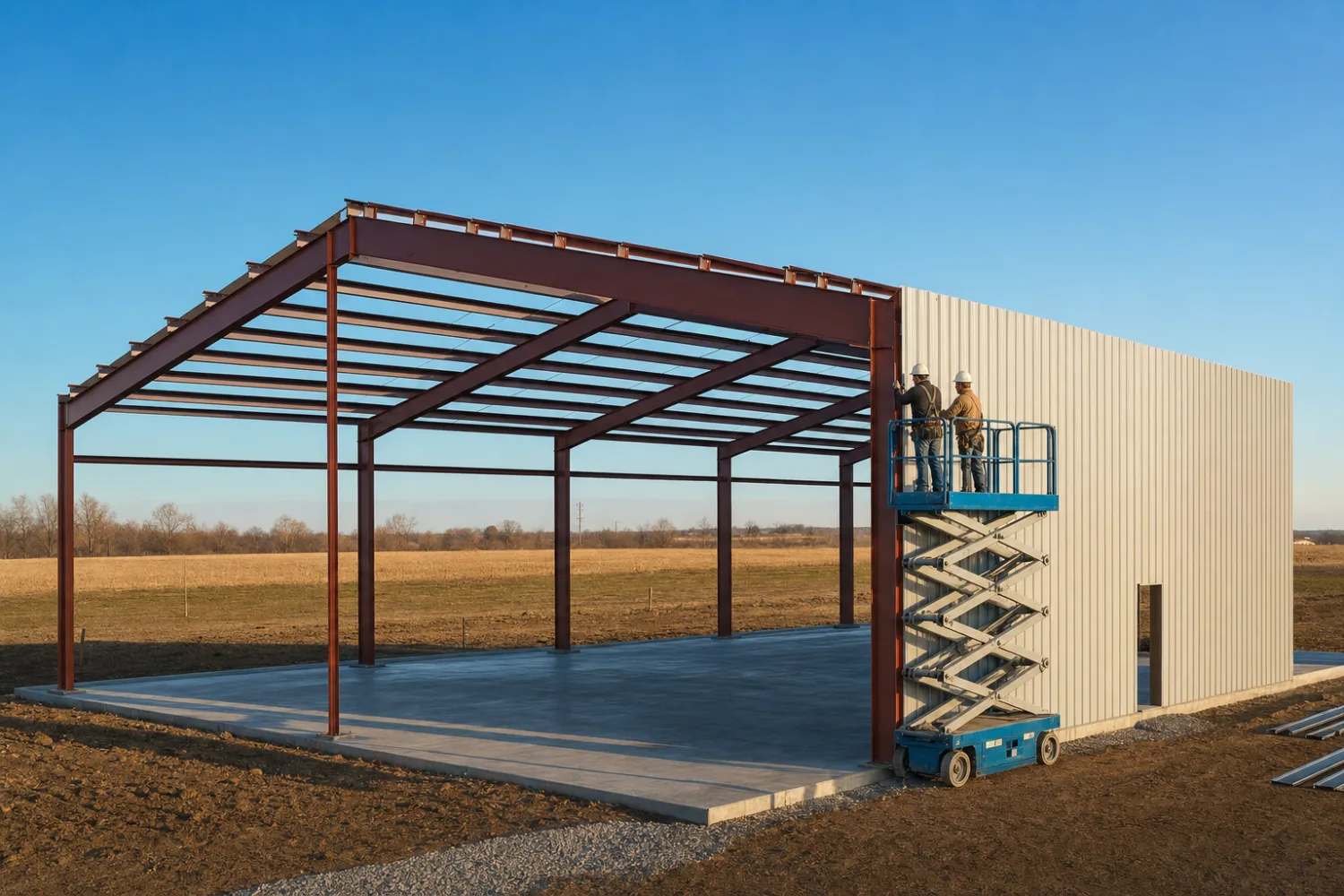
Pick the method that fits who is building it. Hand a weld-up to a welding crew and it tailors to your lot; hand a bolt-up to two people with wrenches and it goes up on a Saturday.
Strength
Is a weld-up or a bolt-up stronger?
Neither method is stronger by default; the steel and the engineering decide it. A bolt-up red iron frame and a well-built weld-up tube frame can both stand for decades. What matters more than weld versus bolt is the frame material under each, and whether the building is sized for your real loads.
A welded joint is continuous, so a sound weld is rigid and strong. The catch is that its strength rides on the welder. A clean, full-penetration weld is excellent; a cold or under-prepped one hides a weak spot you cannot see. A bolted joint is the opposite: every connection is visible, torqued to a spec, and inspectable, and it does not depend on one person’s skill on one cold morning.
This is why bolt-up dominates wide-span and commercial work. The frame is engineered, sealed, and bolted to a drawing, so an inspector can verify it against your local snow and wind loads. Weld-up shines on smaller, custom buildings where a trusted crew controls the quality end to end. Strength is real on both; it just gets proven in different ways.
Cost and labor
Which costs more to build
On the kit price, bolt-up often looks higher, because you pay a factory to engineer and pre-punch the steel. On the finished cost, the picture flips for many buyers, because a bolt-up needs far less skilled labor on site. A DIY assembly or a small hired crew can raise it, while a weld-up wants a welding crew for the full build.
Weld-up cost is mostly labor and travel. You are paying a crew by the hour or the job, plus their equipment and their time on your lot. Close to a good fabricator on a simple shape, that can come in low. Far from one, or for a complex build, the labor climbs fast and the travel adds up. The number swings on your location more than on the steel.
Bolt-up cost is mostly the kit, and it is more predictable. You get a quoted price for sealed, shippable parts, then add a slab and either your own labor or a modest crew. For the full breakdown of what drives either number, see the cost guide. On a mid-size building the method can swing the total by a few thousand dollars ‹confirm›, so price out both before you commit.
Which to choose
Which method your project needs
Let the site and the crew decide. Start with how custom the building has to be, who is going to build it, and how far it sits from a good fabricator. Here is how the common cases land:
- Standard shop, garage, or barn on an open lot. Bolt-up. The engineering is done, the parts ship in, and a small crew raises it.
- Remote or rural site. Bolt-up. A kit travels on a truck where a fabrication crew may not, and it pairs with DIY or a local hire.
- One-off shape, odd roofline, or a tight, sloped lot. Weld-up, if a trusted crew is nearby. Building from raw stock lets them fit the site.
- Matching an existing welded structure. Weld-up, so the new frame ties into the old one cleanly.
A note on permits
Many jurisdictions want sealed engineering before they issue a permit, which a bolt-up kit supplies out of the box. A weld-up may need a local engineer to stamp the design. Check your building department first, and confirm the terms on your drawings before you sign anything.
FAQ
Weld-up vs bolt-up: common questions
What is the difference between weld-up and bolt-up?
A weld-up is welded together on your site, usually from raw tube steel by a local crew, so it can be shaped to fit the lot. A bolt-up ships as a pre-cut, pre-punched kit that you assemble with bolts at marked holes. Weld-up trades portability for custom freedom; bolt-up trades some flexibility for sealed engineering and easier assembly.
Which is stronger, weld-up or bolt-up?
Neither wins by default. A continuous weld is rigid and strong, but its quality rides on the welder. A bolted joint is torqued to a spec and inspectable, which is why bolt-up dominates wide-span and commercial work. The frame material and the engineering matter more than weld versus bolt.
Which is cheaper, weld-up or bolt-up?
It depends on your location. A bolt-up kit costs more to engineer and punch, but it needs far less skilled labor on site, so the finished price is predictable. A weld-up can come in lower near a good fabricator on a simple shape, and higher once travel and complex field labor add up.
Can you DIY a weld-up building?
Only if you can weld a structural frame to a safe, code-acceptable standard, which most owners cannot. Weld-up leans on a skilled crew. If you want to build it yourself, a bolt-up kit is the DIY-friendly path, since it bolts together at pre-punched holes with hand tools.
Which lasts longer, weld-up or bolt-up?
Both last for decades when built well and kept dry. A bolt-up frame is sealed at the factory and protected inside the shell. A weld-up lasts as long as its welds and coatings hold, so a clean, properly primed weld is the key. Most long-term failures trace to moisture and condensation, not to weld versus bolt.
Can a weld-up building be moved later?
Not easily. A welded frame is one continuous piece, so relocating it usually means cutting it apart. A bolt-up comes apart at the bolts, which makes it the better choice if you may need to disassemble or move the building down the road.
Related guides
Keep reading
This build-method decision connects to the rest of the construction silo. Follow these next:
- Construction types and DIY (the parent pillar for build methods).
- Bolt-up metal building kits (the full kit explainer).
- Red iron building kits and tube steel building kits (the frames behind each method).
- Hiring a crew vs DIY assembly (who should build it).
- Red iron vs tube steel (the framing materials compared).
- Metal building glossary (every build term defined).