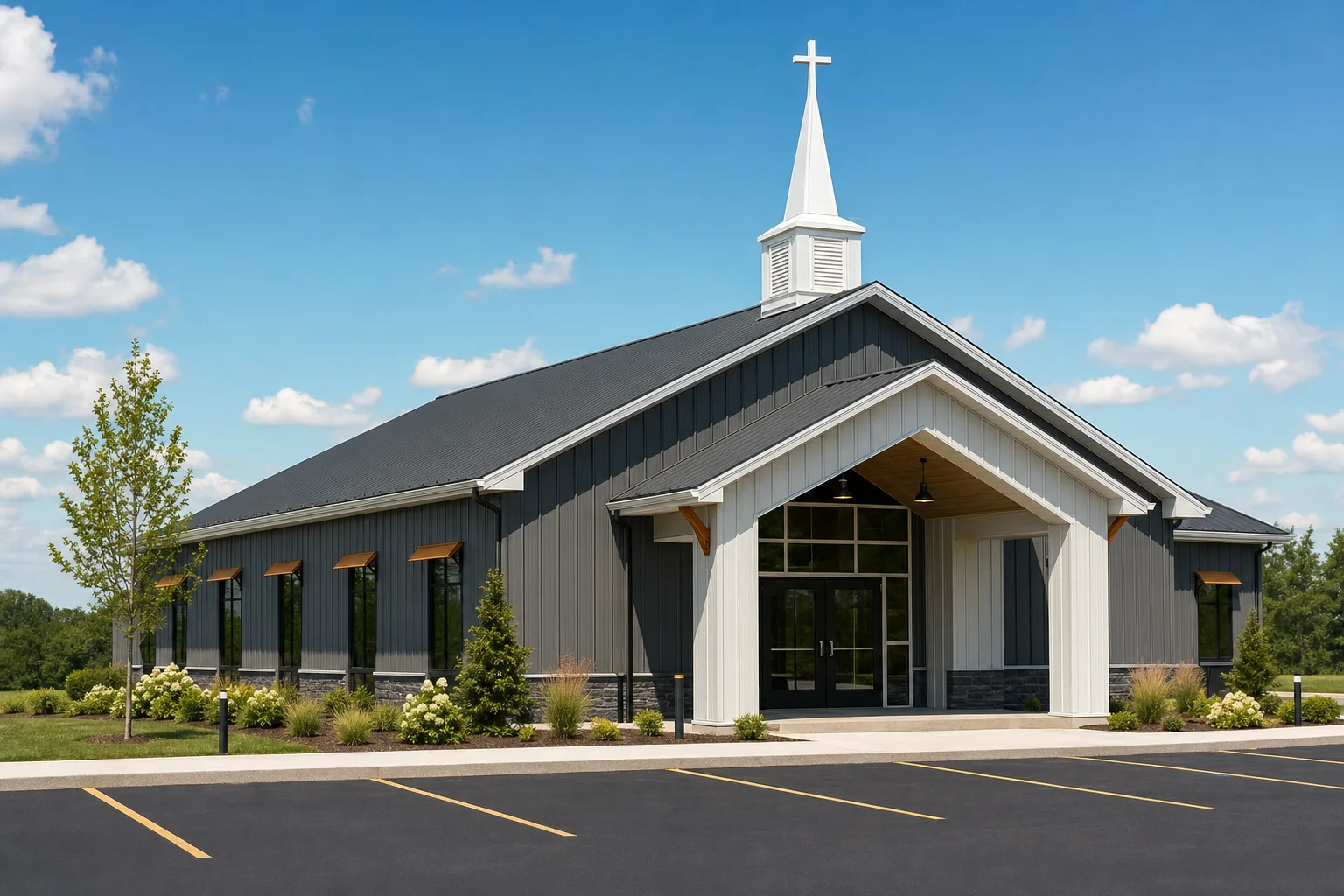
Assembling a metal building kit takes a weekend to a few weeks once the steel is on site ‹confirm›: a small carport or garage stands in two to four days with a couple of people, and a large clear-span shop runs one to several weeks with a full crew. The whole project, from ordering the kit to a weather-tight shell, usually spans two to four months ‹confirm›, because permits, the foundation, and delivery lead time take far longer than the bolting itself.
This page sits under the construction types and DIY pillar and gives the full timeline behind a question that decides how you plan a build. Below: how long the bolt-up takes by size, the separate clock for permits, slab cure, and delivery that runs first, and what speeds the job up or drags it out. For the assembly window on its own, our how long assembly takes guide covers the shell stage in depth.
The bolt-up window
How long it takes to assemble the kit
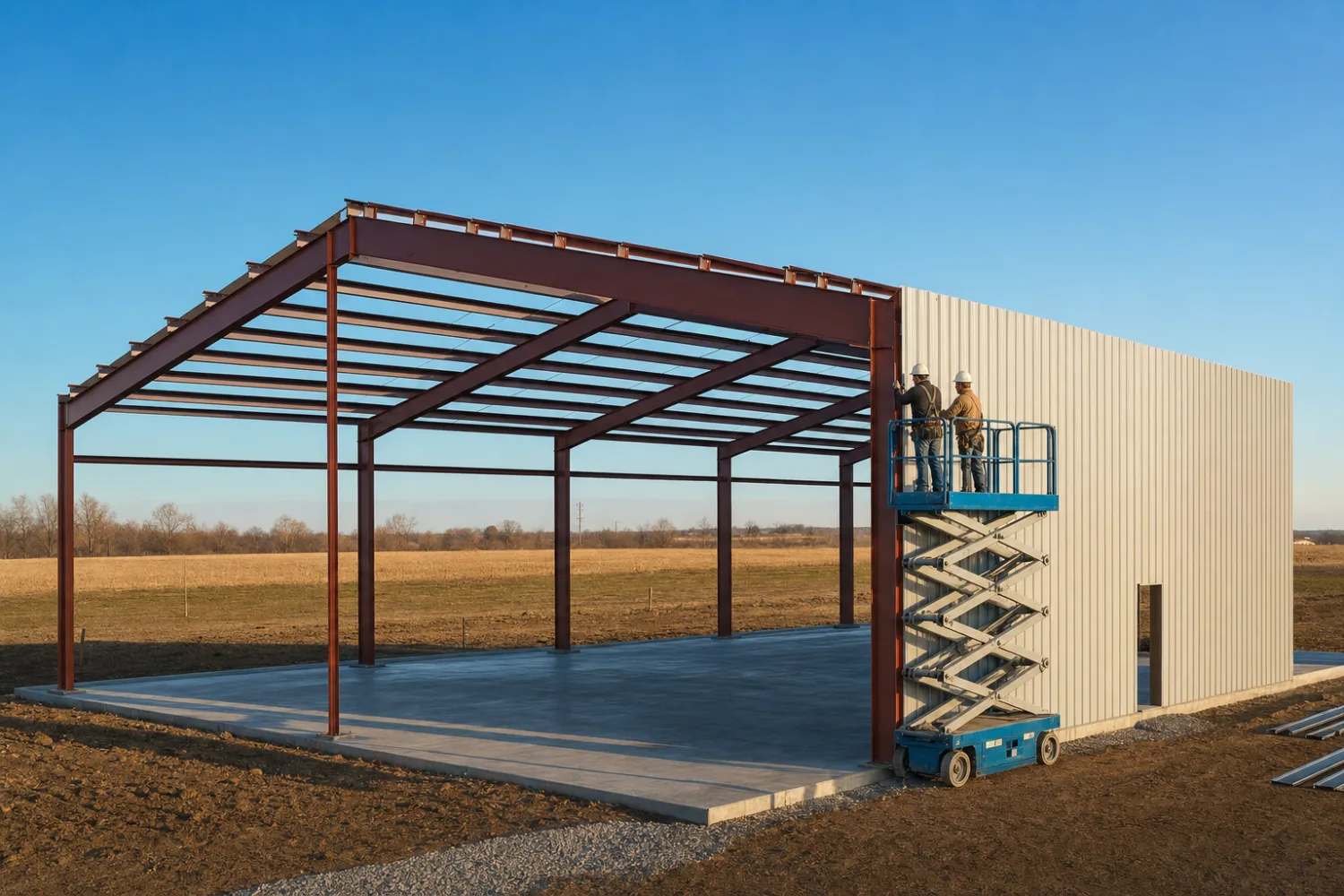
The bolting is the fast part, and size sets the range. A kit arrives pre-cut and pre-punched, so raising a bolt-up kit is assembly, not fabrication: the parts go together in a fixed order and the work stays predictable. A small building goes up in days because the steel is light and there is little of it; a wide one takes longer because the members are heavy, the spans reach far, and there is more to raise and fasten. The table sorts the common sizes against a rough shell time and the crew each usually wants.
| Building size | Rough shell assembly | Typical crew |
|---|---|---|
| Carport or small cover | About a weekend ‹confirm› | 1–2 people |
| Single or two-car garage | Two to four days ‹confirm› | 2–3 people |
| Workshop or mid-size shop | Roughly a week ‹confirm› | 3–4 people |
| Large shop or barn, wide span | One to a few weeks ‹confirm› | Full crew plus a lift |
| Commercial or large clear-span | Several weeks ‹confirm› | A professional crew |
Illustrative shell-assembly ranges, not quotes. Crew size and weather move every row. Confirm against your own kit and site.
Read these as the bolting window only, the time from a staged set of parts to a closed-in shell. They do not include the slab, the permits, or the truck. Frame type shifts the numbers too: a light tube steel kit goes up by hand and moves quickly, while a red iron frame is heavy structural steel that wants equipment to raise, which adds time on frame day.
The full clock
The real timeline: permits, slab, and delivery
The longest part of a metal building project is almost always everything before the steel arrives. Permits, the foundation, and the delivery lead time each run on their own clock, and together they often add up to weeks or months while the assembly itself is days. If you budget for the bolting alone, the timeline will surprise you.
Permits come first and vary the most by location. Pulling one can take days in a rural county or weeks in a busy jurisdiction, and the building has to be approved to local codes before you pour or build. Then the foundation: a slab has to be poured, finished, and cured before any steel loads it, and concrete needs several days to gain enough strength to bolt to ‹confirm›. You cannot rush a cure to hit a build date.
The lead time is the real schedule
Owners fixate on how fast the steel goes up, but the bolting is rarely the bottleneck. A kit is engineered and fabricated to your order, so the wait from purchase to a truck on your site is often the single longest line on the schedule ‹confirm›, frequently several weeks. Budget the project back to front: order early, start the permit while the kit is in production, and pour and cure the slab on its own clock so the steel has somewhere to land the day it arrives.
What moves it
What makes a kit go up faster or slower
Four things move an assembly timeline more than the building does: how big it is, how many hands are on it, what frame it uses, and the weather over the build window. Change any one and the same kit lands on a different schedule.
- Size and span. A bigger footprint is more parts, and a wider span is heavier members set higher in the air. Both add days. A 24-foot garage and a 60-foot shop are not the same job.
- Crew size. More hands shorten the build to a point. Two people raise a small kit; a wide frame wants three or four plus someone running the lift. Past that, extra bodies stop helping.
- Frame type. A light tube kit assembles by hand and moves fast, while a red iron frame is heavy structural steel that wants a lift, which stretches frame day.
- Weather and prep. Wind halts frame and panel work for safety, and rain bogs the site. A sorted, well-staged parts pile saves more hours than any single tool, since a disorganized pile is the most common reason a build runs long.
Who does the work matters most of all. A professional crew knows the order, owns the lift, and does not stop to read the drawings, so it raises a wide frame in a fraction of the time a first-time owner needs. On a small kit the gap narrows, which is where hiring a crew or going DIY is a fair trade either way. Before you start, our step-by-step assembly overview walks the order so a first build holds no surprises.
Match the build to the builder. A small kit rewards a careful weekend; a wide red iron shell rewards a crew with a lift. The expensive timeline is the one where an owner fights a frame that wanted equipment from the start.
Related
Read more
This timeline answer connects to the assembly, the crew choice, and the build order. Follow these next:
- Construction types and DIY (the parent pillar).
- How long does assembly take? (the shell-stage timeline in depth).
- Step-by-step assembly overview (the order a kit goes up).
- Hiring a crew vs DIY assembly (when a crew pays for itself).
- Bolt-up metal building kits (how the frame goes together).
- Metal building kits: the complete guide (the cross-silo pillar on what ships in a kit).