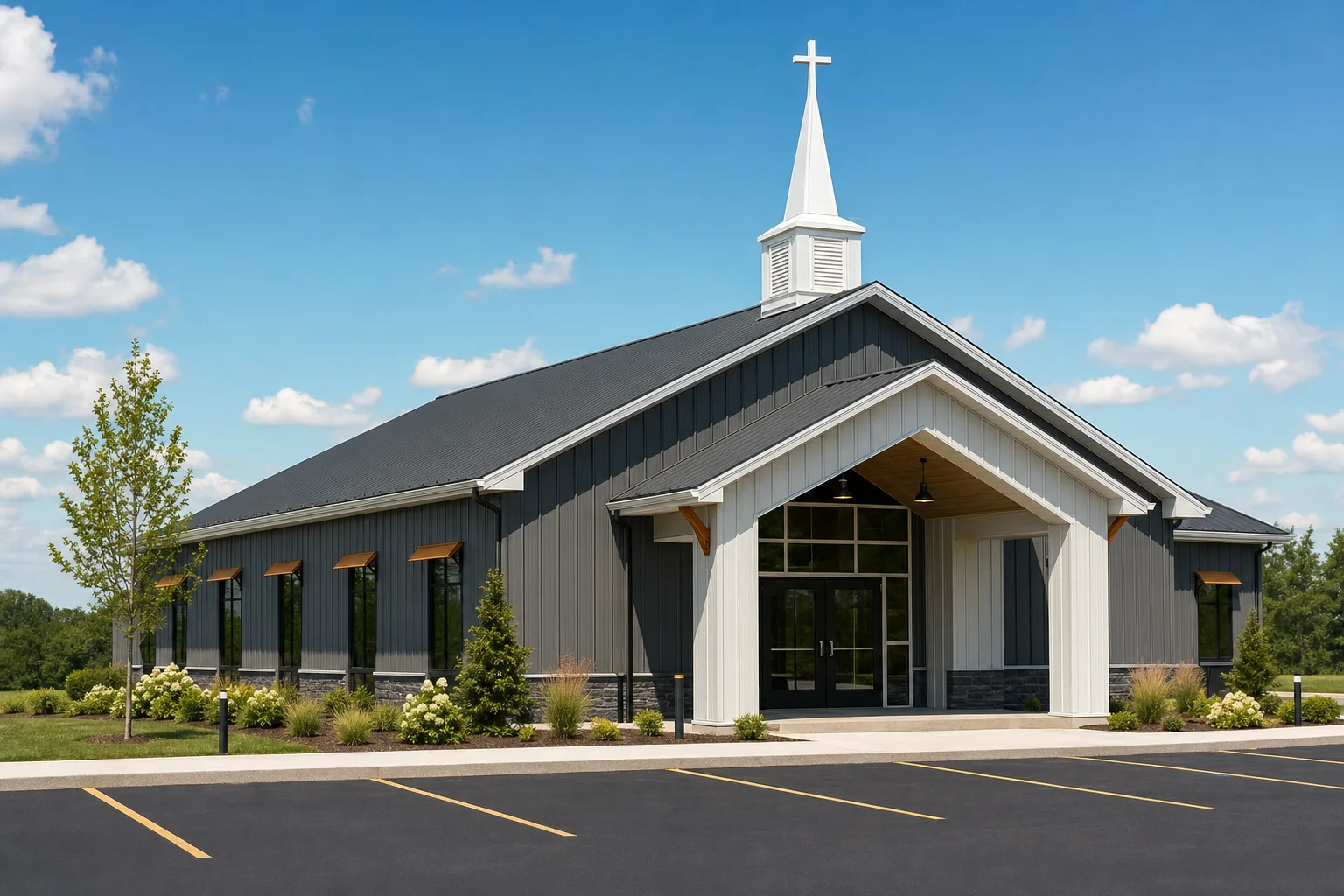
Yes, you can build a metal building kit yourself, with one honest limit: size. A small bolt-up kit, a carport, a one or two-car garage, or a shop up to about 30×40, is a realistic do-it-yourself job for two capable people with a lift and a free weekend or two. Past that, once the spans get wide or the frame is heavy red iron, the building outgrows a DIY crew and wants three or four people and equipment to go up safely. The kit is bolted, not welded, so the skill bar is low. The weight is what decides the answer.
This guide sits under our Construction Types & DIY pillar, and it answers one narrow question: can you, personally, put this building up? It is not the full DIY buyer’s walkthrough, that is the DIY metal building kits guide, and it does not run the money side of hiring versus building, that lives in hiring a crew vs DIY assembly. Here we cover feasibility: size, skill, crew, and the safety line you do not cross.
The honest answer
Can you build a metal building yourself?
For a small bolt-up kit, yes. The parts arrive cut, punched, and labeled to a stamped drawing set, and they bolt together one way, so the work is careful assembly, not fabrication. An owner who can read a plan, run an impact wrench, and follow a torque spec has the skills. Most carports, covers, and small garages go up this way every weekend.
For a large building, no, not by yourself. A wide-span shop or a red iron bolt-up kit ships rafters and columns heavy enough that a single person cannot raise them safely, and trying is how people get hurt. That building still bolts together, but it wants a crew of three or four and a lift or boom for the frame. The method is DIY-friendly. The mass is not.
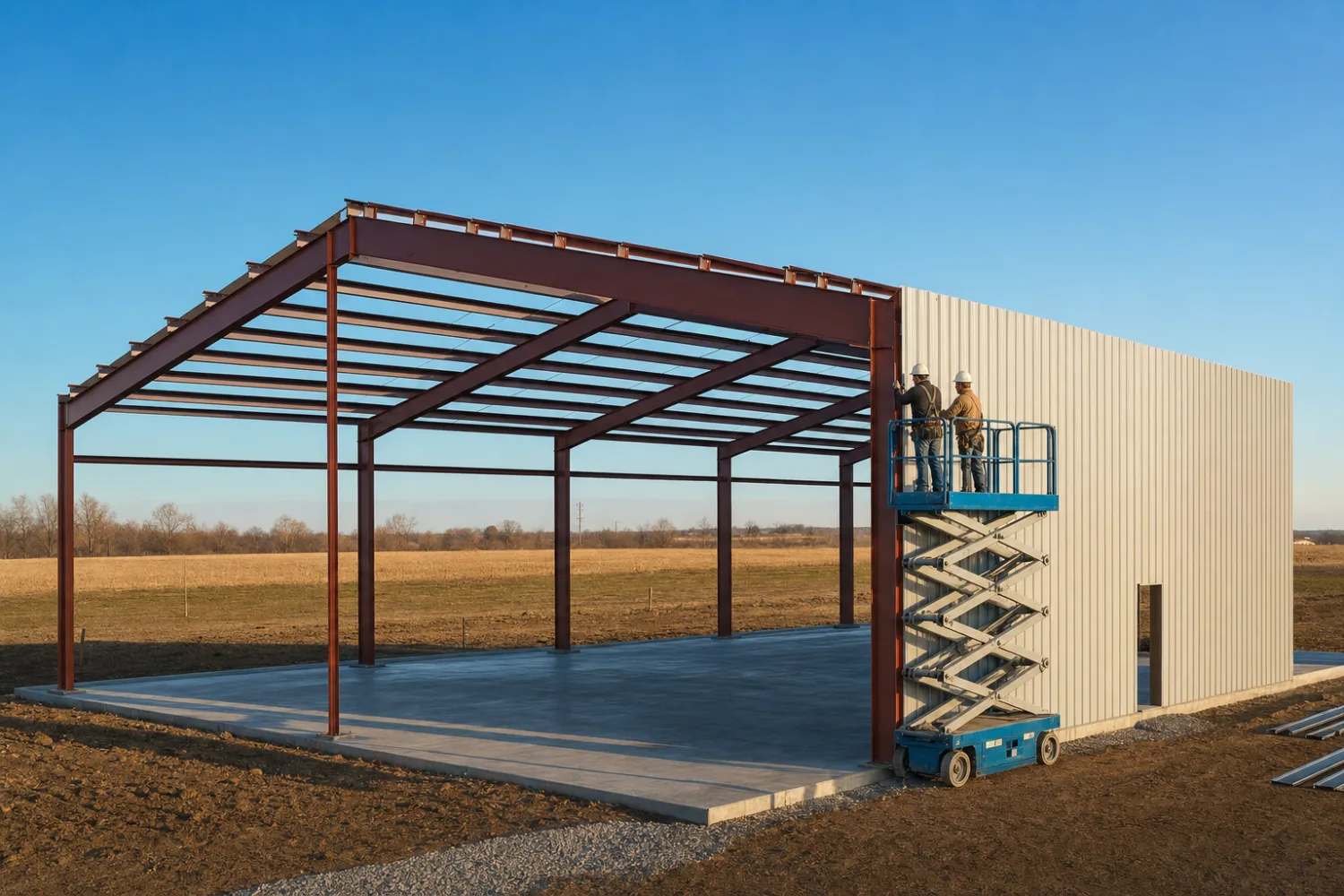
So the answer is yes, no, or it depends, and what it depends on is size, not talent. The bolt-up method is the reason a kit is approachable at all, and our bolt-up metal building kits guide explains why a bolted joint is as strong and as checkable as a welded one. The question this guide settles is whether the building in front of you is one you can handle, and that comes down to span, steel weight, and how many hands you can put on it.
What it takes
What it takes to assemble a kit yourself
A DIY kit build needs four things: enough people, a way to lift the frame, basic mechanical skill, and time. None of them is exotic, but skip one and the build stalls or turns dangerous. The skills are common. The lift is the piece owners underestimate.
- People. Two for a small kit, three or four once the frame is wide or heavy. You need a hand to steady a column while another bolts it, and a third to guide a rafter into place.
- A lift. A scissor lift, a boom lift, or for heavy frames a small crane or telehandler. Even a modest shop frame is too high and too heavy to set off ladders alone.
- Basic skills. Reading a drawing set, running an impact wrench, torquing a structural bolt to a number, and keeping a wall plumb and square. No welding, no fabrication.
- Time. A weekend for a carport, a few weekends to a couple of weeks for an enclosed building, depending on size, crew, and weather.
The tools are ordinary too. An impact wrench, a torque wrench, a level, ladders or a lift, and basic hand tools cover most of a bolt-up build. Our tools needed to assemble a kit guide lists the full set, and the step-by-step assembly overview walks the order the shell goes up so nothing on the slab surprises you.
The lift is the real gate, not the wrench
Owners worry about the bolting and underestimate the lifting. The joints are forgiving; a rafter twenty feet up is not. Budget for a lift rental on the frame day even if you do everything else by hand, and read the assembly sequence so you know which day needs the most hands and the most reach.
One person
Can one person build a metal building?
One person can build a small, light kit, and only a small, light kit. A carport, an RV cover, or a single-car tube-steel garage is light enough that a careful solo builder with a lift and patience can stand it. Past that, a second set of hands stops being a convenience and becomes a safety requirement.
Where one person works: light tube-steel frames, short spans, and panels you can carry. A bolt-up carport is the classic solo job, because the heaviest piece is a leg you can walk up alone. Much of the slow, methodical work on any kit, sorting parts, setting anchor bolts, fastening panels low on a wall, is solo-friendly too.
Where one person cannot: the frame day on anything enclosed. You cannot hold a column plumb and bolt it at the same time, and you cannot guide a long rafter onto a column while you run the lift. A panel on a windy day is a sail that needs two people. The moment a piece is heavy enough to swing, awkward enough to twist, or high enough to fall from, solo stops being smart.
If you are weighing whether to go it alone or bring help, that decision is a cost-and-crew question, and the hire a crew vs DIY guide runs it in full. The feasibility line is simpler: one person for light and low, two or more the moment the steel gets heavy or goes up high.
The safety reality
Is it safe to DIY a metal building?
DIY assembly is safe on a small kit done by the book, and genuinely dangerous when an owner rushes a heavy frame shorthanded. The two real hazards are the same on every build: handling the primary frame, and handling the panels. Respect both and a kit build is no more dangerous than any careful construction work.
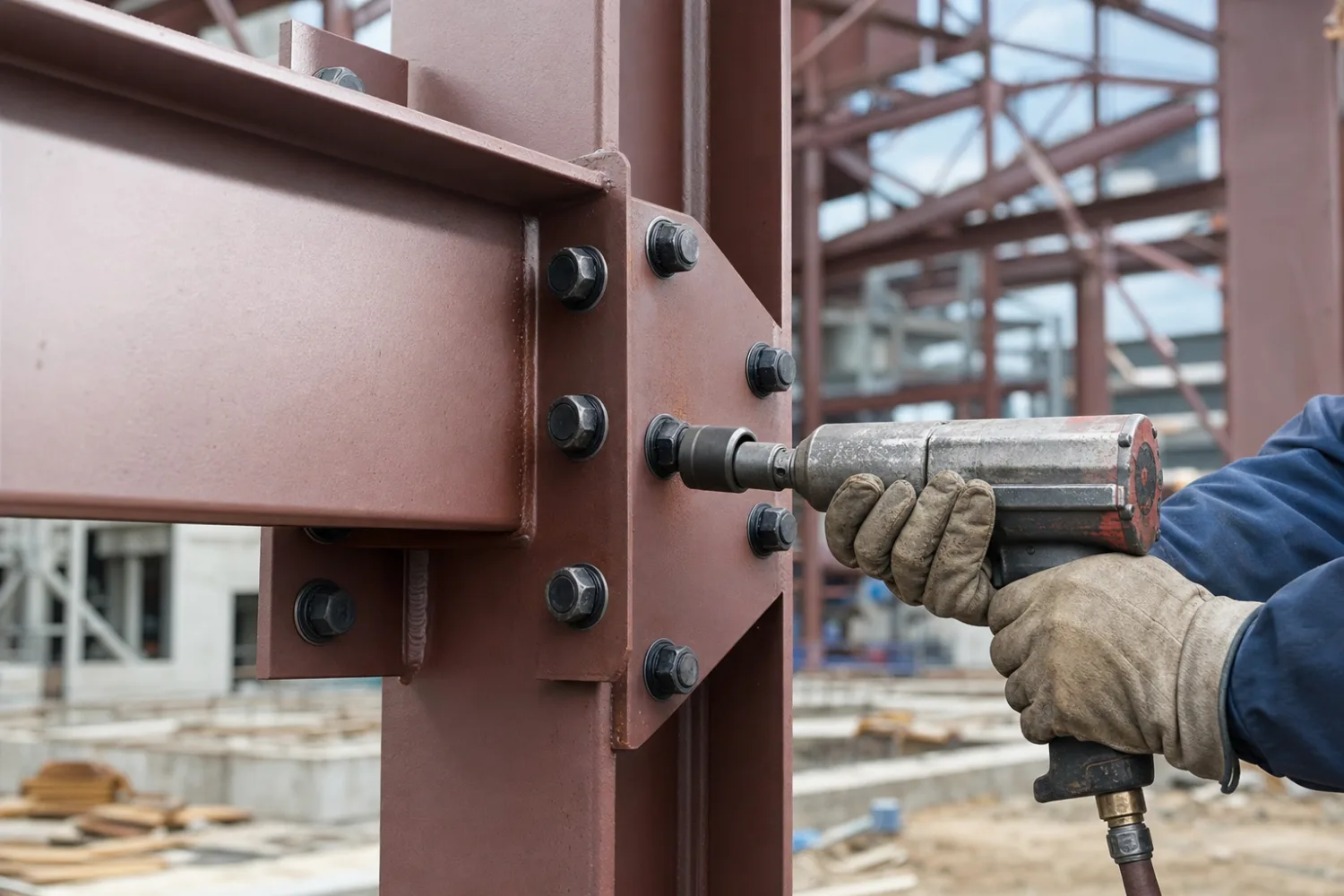
Rafters and columns are the first hazard. A primary frame member is heavy, long, and wants to swing or tip while you set it. Raise the frame with a lift rated for the load, never freehand off ladders, keep people clear of a piece in motion, and brace each bay before you move to the next so a half-raised frame cannot rack and fall.
Panels are the second. A roof or wall sheet is light but large, with sharp edges, and it catches wind like a sail, so two people and a calm day beat one person fighting a gust on a ladder. Cut-edge metal slices skin, so gloves are not optional. The tool and safety checklist covers the gloves, harnesses, and lift gear a kit build needs, and the honest rule is to stop and get help before you do something at height that you would not do twice.
The judgment that keeps a DIY build safe is knowing when not to. If the frame is heavier than your crew can control, if the lift is not rated for the lift, or if the weather turns on panel day, the right call is to wait or to call someone. No kit is worth a hospital trip, and the buildings that hurt people are the ones an owner muscled up shorthanded.
What size you can DIY
What size metal building can you DIY?
As a rough line, you can DIY up to about a 30×40 shop, and you should bring a crew above it. Below that, two or three capable people with a lift can handle most bolt-up kits. Above it, or anywhere the frame is heavy red iron, the steel gets too heavy and too high for a small DIY team to set safely. The table below maps common sizes to a realistic crew.
| Building size | Realistic DIY crew | DIY feasibility |
|---|---|---|
| Carport / RV cover | 1–2 people + basic tools | Yes, a weekend job |
| Single-car garage (tube) | 2 people + ladders or lift | Yes, beginner-friendly |
| Two-car garage, ~24×30 | 2–3 people + a lift | Yes, with care |
| Shop up to ~30×40 | 3 people + a lift | Yes, the upper DIY limit |
| ~40×60 and wider | 3–4 people + boom or crane | Crew territory, not solo DIY |
| Heavy red iron / commercial | Pro crew + equipment | Hire it out |
A size-to-crew guide, not a hard rule. Frame weight and your own experience move the line either way ‹confirm›.
Two things shift these lines. Frame type is the big one: a tube-steel building of a given size is lighter and easier than a red iron one, so a tube garage DIYs more comfortably than the same footprint in heavy I-beam. Your own experience is the other, since a builder who has stood one kit reads the second far faster. When you compare quotes, the metal building buying checklist flags the frame and weight details that tell you which side of the line your building sits on.
When to hire
When to stop and hire a crew
Stop and hire when the building is bigger than your crew, heavier than your lift, or taller than you are comfortable working. Those are the three honest triggers, and any one of them is reason enough to bring in a pro. There is no prize for muscling up a frame you cannot control.
- The frame is heavy red iron or the span is wide. Once primary members need a boom or crane to set, you are past a DIY crew and into equipment-and-experience territory.
- Your crew is short. If you cannot put three or four reliable people on the frame day, a wide building is not a safe solo or two-person job.
- The site or weather fights you. Soft ground, tight access, high wind, or a slab that is out of square turns a manageable build into a risky one.
- The work is above your comfort at height. If setting rafters or screwing roof panels feels beyond you, that instinct is correct, and it is cheaper than an injury.
Hiring out the frame and finishing the rest yourself is a common middle path, and it is a money decision as much as a safety one. The hire a crew vs DIY assembly guide runs the full cost comparison, and the broader DIY kit guide walks the whole owner-build start to finish. This guide only draws the feasibility line: small and light is yours, wide and heavy is theirs, and the smart builds know which one they are looking at before the steel ships.
FAQ
Building a metal building yourself: common questions
Can you build a metal building kit yourself?
Yes, for a small bolt-up kit. The parts ship cut, punched, and labeled to a stamped drawing set, and they bolt together one way, so the work is assembly, not fabrication. An owner who can read a plan, run an impact wrench, and torque a bolt can build a carport, a small garage, or a shop up to about 30×40 with a helper and a lift. Larger or heavy red iron buildings want a crew.
Can one person build a metal building?
One person can build a small, light kit like a carport, an RV cover, or a single-car tube-steel garage. Past that, a second set of hands becomes a safety requirement, not a convenience: you cannot hold a column plumb and bolt it alone, and a panel on a windy day needs two people. Solo works for light and low, not for heavy or high.
How many people do you need to build a metal building?
Two for a small kit, three or four once the building is wide or the frame is heavy red iron. The frame day sets the number, because raising columns and rafters needs hands to steady, guide, and bolt at the same time. The size-to-crew table above maps common building sizes to a realistic crew so you can plan the right help before the steel arrives.
Is it safe to DIY a metal building?
It is safe on a small kit built by the book, and dangerous when an owner rushes a heavy frame shorthanded. The two hazards are raising the primary frame and handling large panels in wind. Use a lift rated for the load, brace each bay before moving on, wear gloves on cut-edge metal, and stop when the frame is heavier than your crew can control. The bolting itself is low-risk.
What size metal building can you DIY?
As a rough line, up to about a 30×40 shop with two or three capable people and a lift. Below that, most bolt-up kits are realistic DIY. Above it, or anywhere the frame is heavy red iron, the steel gets too heavy and too high for a small team to set safely, and you want a crew of three or four with a boom or crane.
Do you need experience to assemble a metal building kit?
No formal experience, but basic mechanical skill helps. If you can read a drawing set, run an impact wrench, torque a bolt to a number, and keep a wall plumb and square, you have the skills for a bolt-up kit. There is no welding or fabrication. Our tools guide and assembly overview fill in the rest before you start.
Related guides
Keep reading
Feasibility is one piece of the DIY decision. These guides cover the rest, from tools to crew to the full owner-build:
- Construction Types & DIY (the parent pillar).
- DIY metal building kits guide (the full owner-build walkthrough).
- Hiring a crew vs DIY assembly (the cost decision behind the build-it choice).
- Tools needed to assemble a kit (the gear a bolt-up build wants).
- Step-by-step assembly overview (the order the shell goes up).
- Bolt-up metal building kits (why the kit method is DIY-friendly).
- Metal building buying checklist (what to confirm before you order).