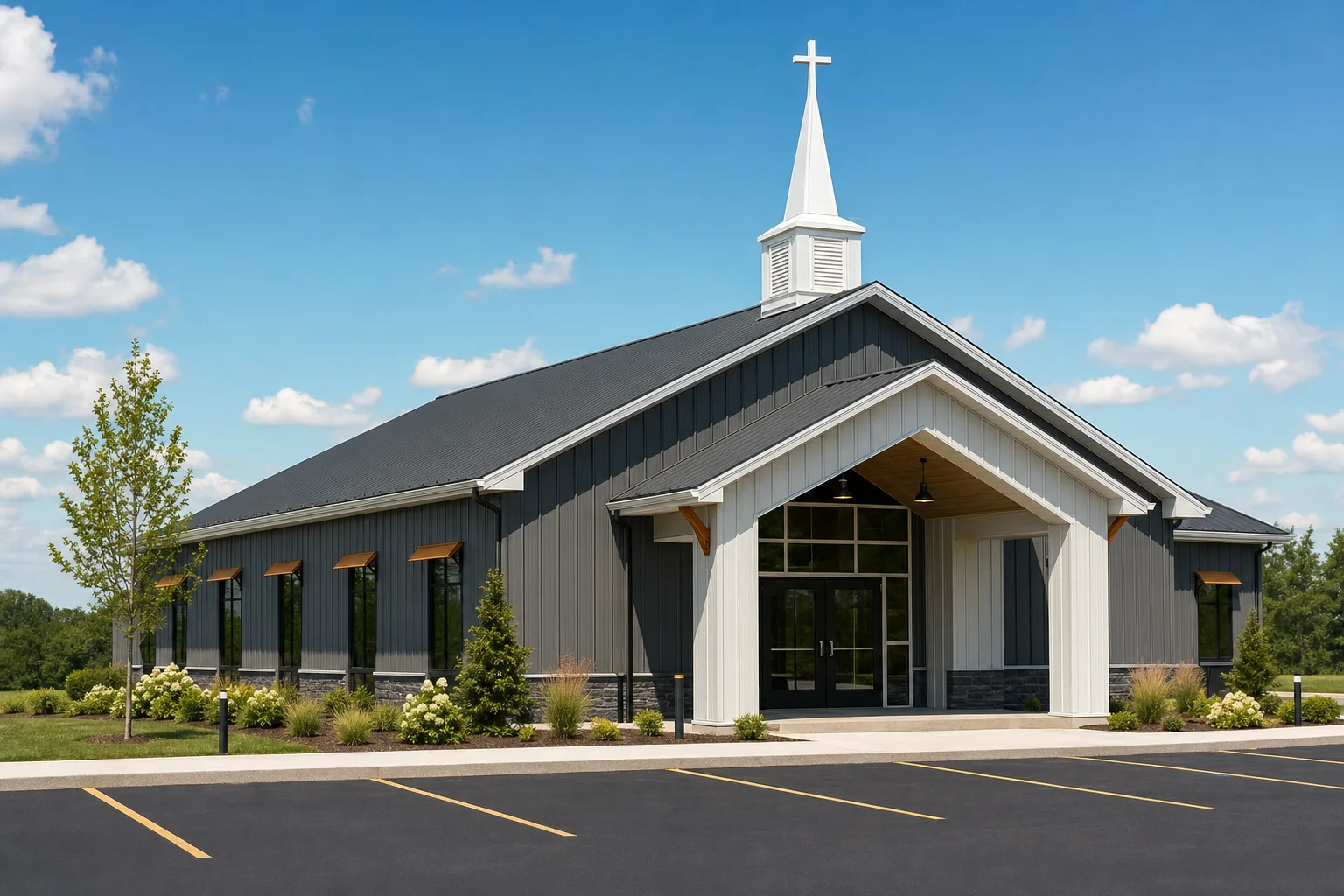
Yes, one person can build a small, light metal building, such as a carport, an RV cover, or a single-car bolt-up garage, working alone with hand tools and a ladder. The hard limit is the roof: lifting rafters and setting roof panels overhead is the point where solo work turns slow and unsafe, so most kits past a small garage want a second set of hands. Frame weight and roof height, not your skill, decide whether one person can finish the job.
This page sits under the metal building construction types pillar and answers the solo question on its own terms: what one person can stand alone, where the job stops being a one-person task, and how to plan a build so you are not stuck holding steel overhead by yourself. If you are weighing the wider self-build, our can you build a metal building yourself answer covers the skills and time, and this page focuses on doing it alone.
Solo range
What one person can build alone
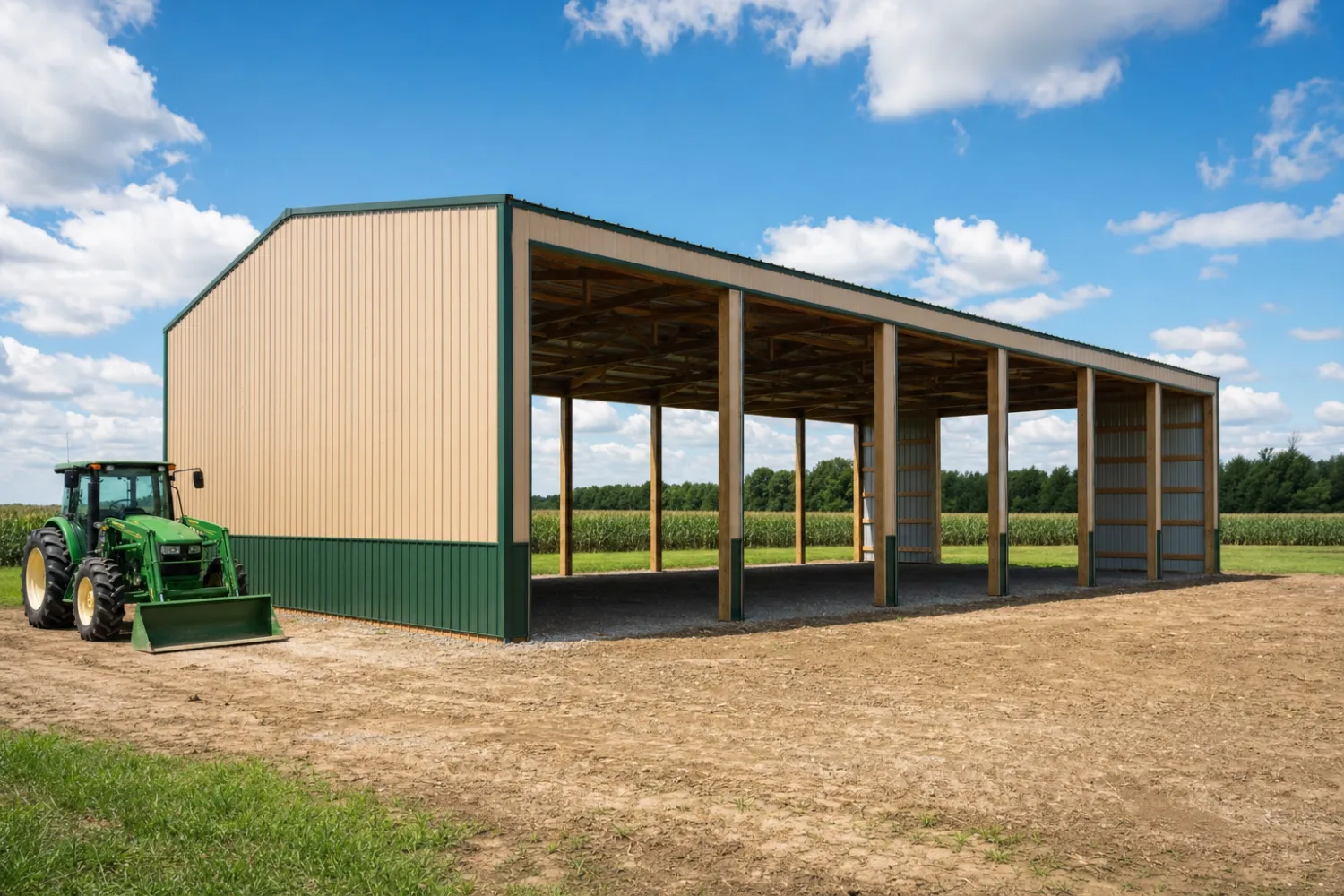
Light, low, and bolt-up is the one-person zone. A carport, an RV cover, a small shed, or a single-car garage on a tube-steel frame ships pre-cut and pre-punched, so you bolt labeled parts together instead of cutting or welding on site. The members are light enough for one set of hands to carry, stand, and brace, and most of the wall work happens at or near ground level where a ladder is enough.
The frame type sets the ceiling. A bolt-up kit goes together with a drill and wrenches, which is what makes a solo build possible at all. The lighter the gauge and the shorter the span, the more of the job one person can carry without a helper or a machine. Anchor the columns, plumb them, run the wall girts, and a determined owner can take a small shell most of the way up alone, right until the roof.
The roof line
Where building solo stops being safe
The roof is where one person should stop working alone. Lifting a rafter into place, holding it square, and driving the connection at the same time is a two-person move on all but the smallest buildings, and setting roof panels overhead in any wind is worse. This is the part of a metal building that hurts solo builders, so plan a helper for the frame-raise and the roof even if you do every other step yourself.
The job that ends solo builds
Most one-person trouble traces to the lift, not the bolting. A column you can stand alone; a roof panel you are holding overhead on a ladder in a gust you cannot. Borrow a second set of hands for rafter day and panel day, keep your feet on solid footing, and never raise a primary frame alone. The wrench work is safe to do solo; the overhead lift is not.
Weight is the other wall you hit. Once a building runs on a red-iron frame, the columns and rafters weigh hundreds of pounds each ‹confirm› and stand too high to raise by hand, so the work needs a crew and a lift rather than one person. If your kit is wide, tall, or heavy, read hiring a crew vs DIY assembly before you plan to go it alone.
By building
Which metal buildings one person can handle
Match the ambition to the frame and the size. The guide below is typical 2026 framing, not a rule, since your wall height, loads, and site access all shift how much one person can carry. Confirm the frame type and panel weights on your own engineered drawings before you commit to a solo build.
| Building | Solo realistic? | Why |
|---|---|---|
| Carport / RV cover | Yes | Light tube steel, short spans, near ground-level work one person can manage |
| Small shed / single-car garage | Mostly, with help on the roof | Bolt-up frame is light, but rafters and roof panels want a second set of hands |
| 2-car garage / small shop | Roof needs a helper | Heavier panels and a wider span make the overhead lift a two-person job |
| 30-ft+ shop or barn | No | Red-iron frame and high rafters need a crew and a lift, not one person |
| Weld-up building | No | On-site structural welding needs a skilled welder, not solo assembly |
A feasibility map, not a verdict. The roof lift is the line, so plan a helper wherever it reads “roof.”
Make it work
How to build a metal building mostly by yourself
Plan the solo parts and the two-person parts separately, and the job gets far more doable. Do the slow, repetitive work, the anchors, the girts, the wall sheeting, on your own schedule, then line up help for the few hours the frame and roof demand. The honest one-person playbook looks like this:
- Start with a bolt-up kit. A bolt-up building is the only frame type a solo builder should attempt; weld-up needs a welder on site.
- Lay out the right tools. An impact driver, a panel screw gun, a level, and fall-protection gear. Our tools needed to assemble a kit guide lists the full set.
- Rent a lift for the heavy moments. A telehandler or a sturdy scaffold turns the rafter-raise from a danger into a steady task, even with one helper.
- Follow the sequence. Build to the step-by-step assembly overview so you are never improvising while holding steel.
- Schedule a helper for the roof. One day of borrowed hands for the frame and panels keeps the whole solo build safe and square.
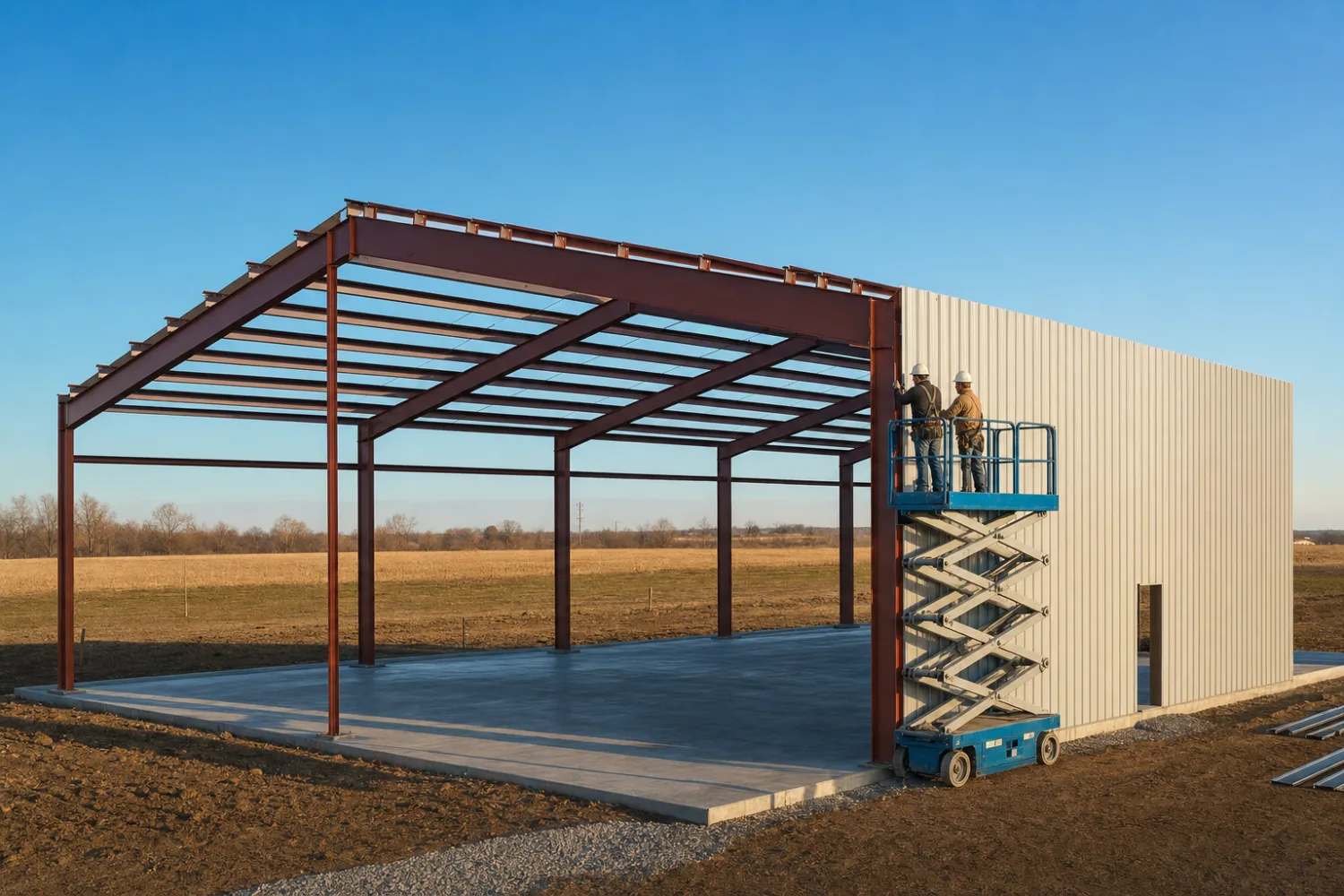
Build the parts you can do alone on your own time, and borrow hands for the roof. The kit makes the steel manageable; the overhead lift is the only place one person should not stand alone.
The payoff is real savings and a building you know inside out. The full self-build playbook, from slab to last panel screw, lives in our DIY metal building kits guide, and the labor math sits in the cross-silo metal building kits pillar. Read your drawings first: a small bolt-up kit rewards the lone builder who plans the roof, and a wide red-iron shell does not.
Related
Read more
Building solo connects to the kit type, the tools, and the assembly sequence. Follow these next:
- Construction types & DIY (the parent pillar).
- Can you build a metal building yourself? (the skills and time a self-build takes).
- Hiring a crew vs DIY assembly (when the building outgrows one person).
- DIY metal building kits guide (the full self-build playbook).
- Tools needed to assemble a kit (the gear a solo build takes).
- Metal building kits: the complete guide (the kit pillar, cross-silo).