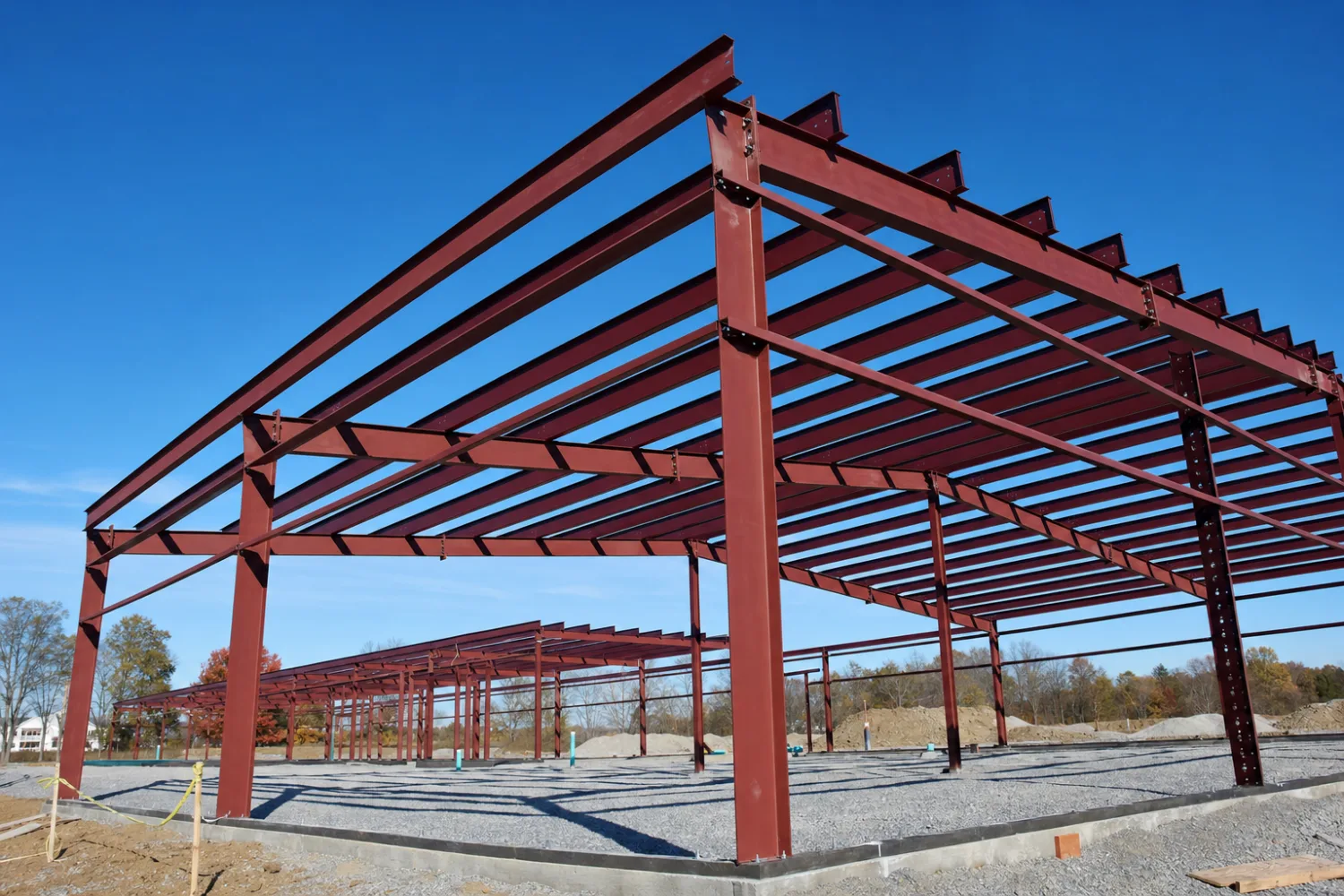
The difference is shape and strength: red iron is solid hot-rolled structural steel, the I-beam and wide-flange shape used in commercial construction, while tube steel is hollow square or rectangular tubing. Red iron spans wider and carries heavier snow and wind loads, so it frames shops, barns, and commercial buildings; tube steel is lighter and cheaper, so it frames carports and smaller garages. Neither is the right answer on its own. The frame you need depends on your span, your loads, and your budget.
This page sits under the metal building construction types pillar and answers the comparison on its own terms: what each steel is, how they differ on strength, weight, corrosion, and cost, and which one your project calls for. If a supplier quotes one frame without explaining why, this is the context that lets you read the spec and push back.
The core difference
Solid I-beam vs hollow tube
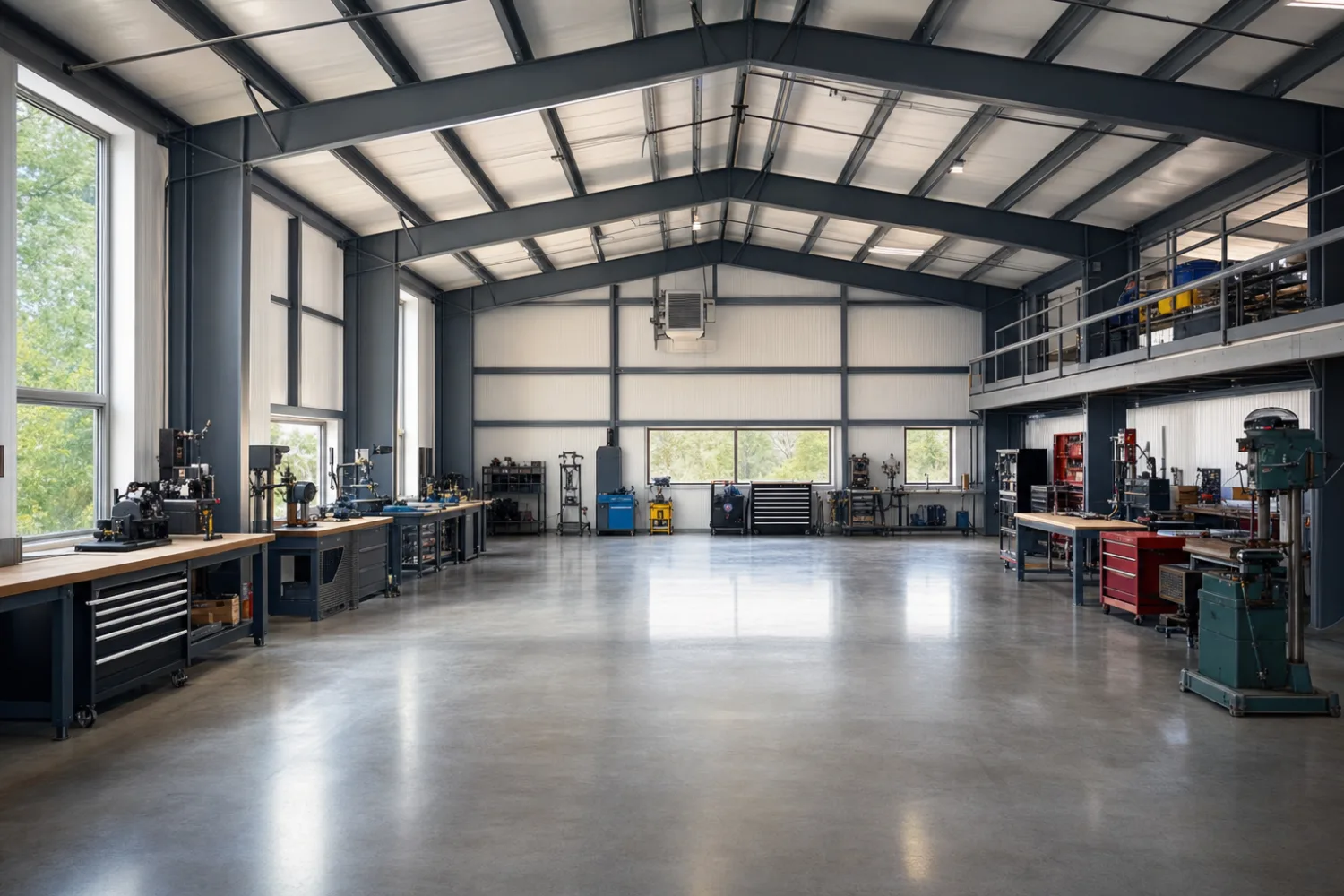
The split starts with the cross-section. Red iron is rolled into an I-beam or wide-flange shape, which puts most of its steel in the top and bottom flanges where bending stress is highest, so it resists sagging across a long span. Tube steel is a closed box, square or rectangular, with its steel wrapped around a hollow center. The box shape handles short spans and twisting loads well, but it carries less weight over distance than a comparable run of red iron.
The names also point to the finish. Red iron wears a red-oxide primer sprayed on at the mill, which slows rust on bare steel and gives the frame its rust-red color. Tube steel usually arrives galvanized, coated in zinc that fights corrosion without paint. That is why an open carport on a tube steel kit shrugs off weather, and why a red iron frame is built to live inside the shell, away from the rain. For the steel on its own, our red iron building kits guide treats the structural frame as a product.
Side by side
Red iron vs tube steel: the comparison
The two frames separate along five lines: how far they span, how much load they hold, what they weigh to raise, how they fight rust, and what they cost. Read them together, because a strength on one line is a tradeoff on another.
| Red iron | Tube steel | |
|---|---|---|
| Shape | Solid hot-rolled I-beam | Hollow square or rectangular tube |
| Clear span | Wide, no interior posts | Short to moderate |
| Load capacity | High (heavy snow, high wind) | Light to moderate |
| Weight & handling | Heavy, wants equipment and a crew | Light, DIY-friendly on small builds |
| Corrosion finish | Red-oxide primer, then painted | Usually galvanized |
| Relative cost | Higher per pound | Lower on small buildings |
| Best for | Shops, barns, commercial, wide span | Carports, covers, small garages |
A frame comparison, not a verdict. The right pick is the one that matches your span and loads.
Tube steel is sold by wall thickness, measured in gauge, where a lower number means thicker steel: you will see 14-gauge ‹confirm› tube on lighter carports and 12-gauge ‹confirm› on stouter garages. Red iron is measured by its structural section, not gauge alone, because the depth and weight of the beam drive its capacity. Either way, the galvanized finish on tube fights rust but adds no structural reach, a point our galvanized vs Galvalume vs painted steel guide spells out.
Match the frame to the span, not to the sticker price. Tube steel under a wide shop fails the job, and red iron under a carport buys reach you will never use.
Which to choose
Which frame your project needs
Let the building decide. Start with the clear width and the heaviest load it has to carry, then the frame follows. Here is how the common projects land:
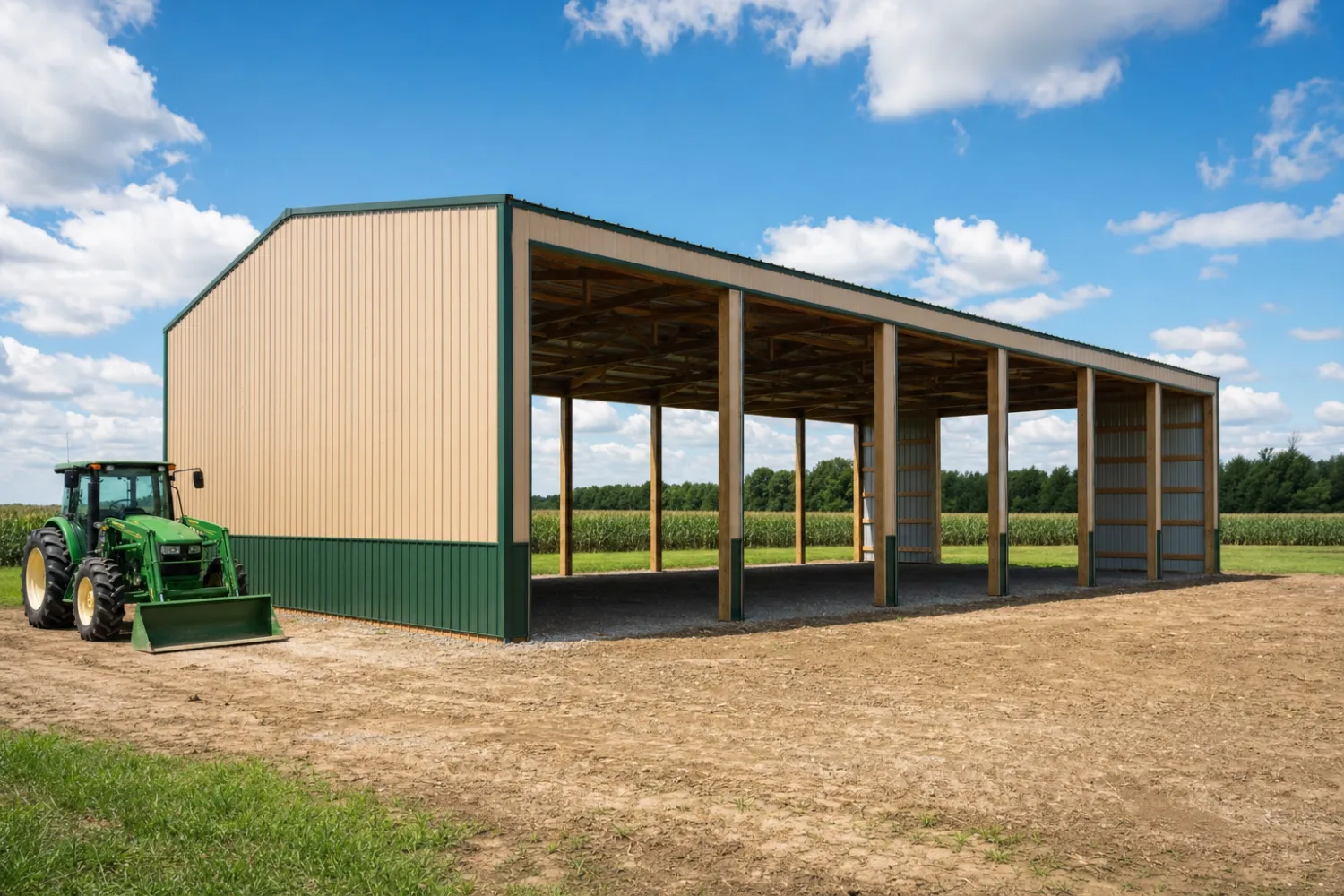
- Carport or RV cover. Tube steel. Short spans, light loads, and a price that stays low. See the metal garage kits pillar for those builds.
- One or two-car garage. Tube steel handles it, and light red iron is an option if you want extra capacity or a taller wall.
- Workshop, shop, or barn 30 feet wide and up. Red iron. You want the clear span and the load rating.
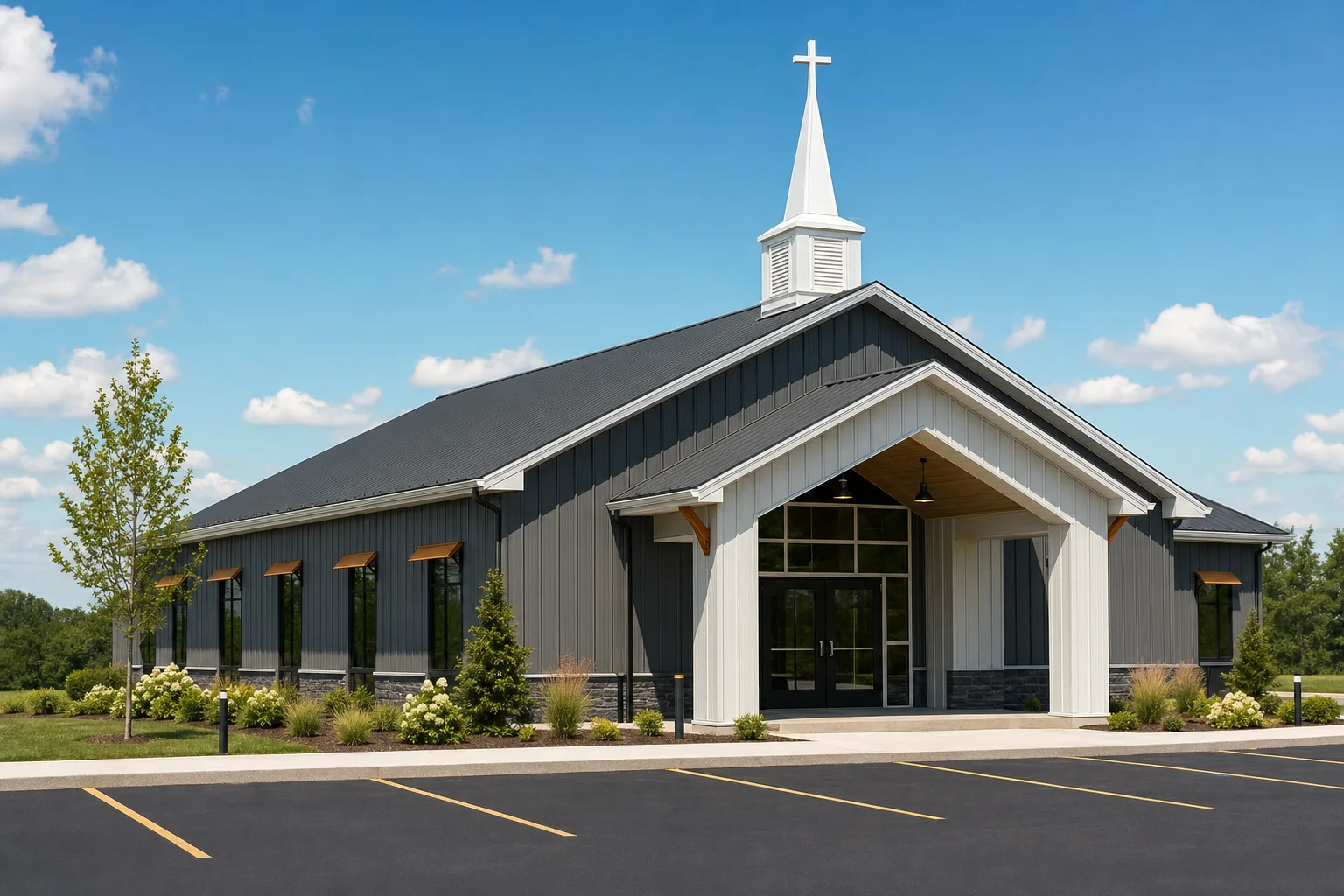
- Commercial, warehouse, or heavy-snow country. Red iron, stamped for your local snow and wind loads. This is not the place to save on the frame.
Many kits use both
You are not always choosing one or the other. Plenty of kits pair a red iron primary frame with tube or formed light-gauge secondary members for the purlins and girts, so the building gets the reach of red iron and the economy of tube where the loads are lighter. When you compare two quotes, check the frame and gauge line by line so you know which steel each price buys, and confirm the clear span and the loads it is stamped for.
The expensive mistake runs both ways. Pay for red iron on a 12-foot carport and you have bought reach you will never load. Save with tube on a 50-foot shop and you have bought a building that needs interior posts or fails inspection. On a mid-size shell the frame choice can swing the price by a few thousand dollars ‹confirm›, which is why it belongs on the spec sheet, not buried in a total. For the full side-by-side on the framing methods, our weld-up vs bolt-up buildings guide covers how each frame goes together.
Related
Read more
This framing choice connects to the steel, the coatings, and the loads. Follow these next:
- Metal building construction types (the parent pillar: framing, frame shapes, and DIY).
- Red iron building kits (the structural frame as a product, span by span).
- Tube steel building kits (the light, low-cost end for carports and small garages).
- Steel gauge explained (how tube and panel thickness is measured).
- Snow load & wind load explained (the loads a frame is stamped to carry).
- Metal building kits: the complete guide (the master pillar over every silo).