A metal garage kit is a pre-engineered steel garage that ships as a numbered set of parts you, or a hired crew, bolt together on a slab. Buying one well comes down to five decisions: the size, the frame and gauge, what the kit includes, the load rating for your area, and the options you add. Get those right and you pay for a garage that fits, not for steel you will never use.
This buyer’s guide sits under the metal garage kits pillar and walks the whole purchase, start to finish. Below: how to size the building, how to read the frame and the quote, what a kit runs in 2026, and the upgrades worth their price. Read it before you call a supplier, so you steer the conversation instead of the other way around.
Size first
Size the garage before you shop
Start with what goes inside, then add working room. The footprint you choose drives every other number on the quote, so lock it down before you compare prices. Measure your vehicles, add space to open doors and walk around, then round up to the next standard width.
Width tends to set the price more than length, because width decides the frame. A single bay suits one car and a little storage; see the 1-car metal garage kit range. Two vehicles or a car plus a shop bench want a wider building, which the 2-car metal garage kit guide breaks down. For trucks, a boat, or a small fleet, step up to a 3-car or 4-car layout.
Height is the number buyers forget. A tall door for an RV, a lift, or a dually changes the wall height and the whole frame, so decide it now, not later. If you want a loft, an apartment, or a shop in the same shell, look at a garage with living quarters or a workshop-garage combo before you size the walls.
Frame & gauge
Check the frame and the steel gauge
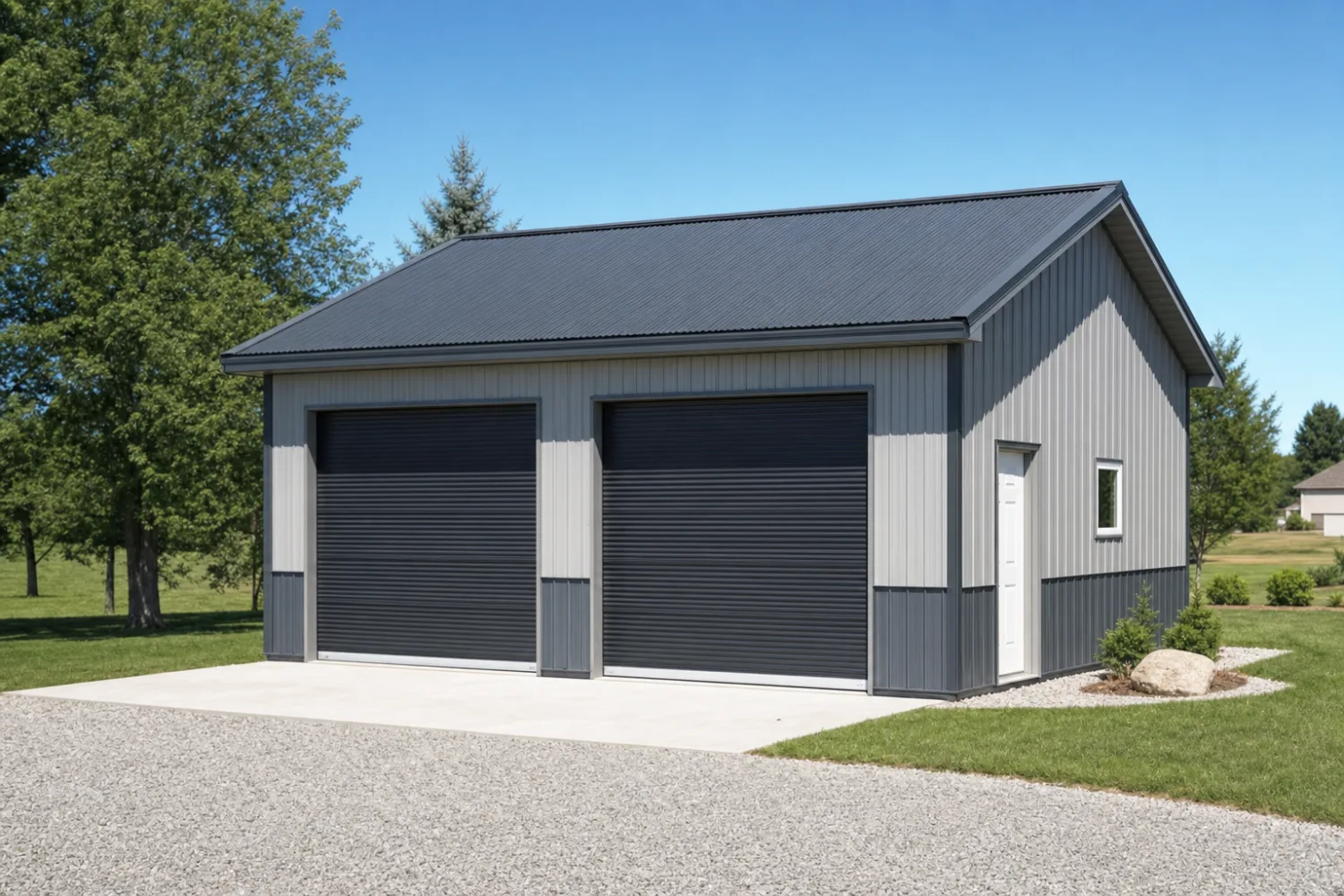
The frame is the most important line on the quote, and it comes in two forms. Tube steel is light galvanized tubing that suits carports and smaller garages; red iron is heavier structural I-beam for wide, high-load buildings. The carport vs enclosed garage comparison shows where each one lands.
Tube frames are sold by wall thickness, measured in gauge, where a lower number means thicker steel. You will see 14-gauge tube on light covers and 12-gauge ‹confirm› on stouter garages. Thicker steel and certified anchoring are what let a building carry real wind and snow, so always ask whether the kit is engineered and stamped.
That stamp matters because a garage has to hold the snow and wind loads for your county. A building rated for a 20 psf ‹confirm› roof in a mild state will not pass in heavy-snow country, where 40 psf ‹confirm› or more is common. Give the supplier your address up front so the engineering matches your code, not a generic spec.
The kit
What a metal garage kit includes
A kit is the steel shell and its fasteners, not a finished, code-stamped, slab-on-grade garage. Knowing where the kit ends saves you from a budget surprise. Most kits cover the frame, panels, trim, and hardware; the slab, doors, and permits are usually on you. Our what is included in a kit guide goes line by line.
| Line item | Usually in the kit | Usually your cost |
|---|---|---|
| Primary frame | Yes (tube or red iron) | Crane or crew to erect |
| Roof & wall panels | Yes, with trim | Color upgrades |
| Fasteners & anchors | Yes | Concrete slab |
| Garage & walk doors | Sometimes | Often added |
| Insulation | Rarely | Added option |
| Permit & engineering stamp | Engineering often yes | Local permit fees |
A typical split between what the kit covers and what you arrange. Confirm each line on your own quote.
Doors are the line buyers most often assume is included when it is not. Decide your opening sizes early, because a wider or taller door changes the framed opening. The garage door options and sizes guide covers roll-up versus overhead and the common widths.
Budget
What a metal garage kit costs in 2026
As an illustrative 2026 range, a small single-car steel garage kit often lands around $6,000 to $12,000 ‹confirm› for the shell, while a two-car building runs roughly $10,000 to $20,000 ‹confirm›, before the slab and doors. Larger and certified buildings climb from there. The metal garage kit prices guide breaks the ranges down by size.
Those figures are the kit, not the finished project. Plan for the slab, delivery, doors, and any permit as separate lines; together they can add several thousand dollars ‹confirm› to a small build. For the wider view across every building type, the metal building kit prices pillar puts garage pricing in context.
Where the budget leaks
The shell price is the easy number to compare; the surprises hide below it. Concrete, freight to a rural address, bigger doors, and the load upgrade your code demands are the four lines that move a budget most. Ask for each as its own quote, and price the slab with a local contractor, not the steel supplier.
Options
The upgrades worth paying for
A bare steel shell keeps the rain out, and not much else. A few targeted upgrades decide whether the garage is comfortable to use, so weigh them while the order is open, when they cost far less than a retrofit.
- Insulation. It controls condensation and makes a heated or cooled space practical. Compare a factory package against a later job in the insulated metal garage kits guide, and see how to insulate a metal garage for the methods.
- Flooring. The slab is structural; the finish on top is a choice. The metal garage flooring options guide covers sealed concrete, epoxy, and mats.
- Doors and windows. Size and number of openings shape both cost and daily use. Settle them with the door options and sizes guide before the frame is engineered.
- Wall height and trusses. A taller wall or a stronger roof is cheap to add now and expensive to retrofit, so buy the height you might grow into.
Buy the size, the height, and the load rating you might grow into. Skin, doors, and finishes you can add later; the frame you cannot change once it is up.
Site & slab
Prep the site before the steel arrives
The kit only goes up as well as the ground it lands on, so site prep happens before, not after, delivery. Most enclosed garages sit on a poured concrete slab, sized and anchored to the engineering, while some buyers set lighter buildings on a gravel pad or piers. The foundation options guide weighs each one.
Pour the slab before the steel shows up, and pour it to the kit’s anchor plan, not a guess. Get the dimensions, the thickness, and the anchor-bolt layout from your supplier and hand them to a local concrete contractor. A slab that is a few inches off square or short on rebar turns delivery day into a return trip.
Clear access matters as much as the pad. A delivery truck and any lift equipment need a level, reachable route to the build spot, which is easy to overlook on a wooded or sloped lot. Walk the site with that in mind, and read delivery and site prep so the freight, the grading, and the pour line up on the same week.
Before you sign
How to read a metal garage kit quote
Two quotes for the same size garage can differ by thousands, and the gap usually hides in the frame, the gauge, and the load rating. Compare the spec, not the headline price. Our quote-reading guide walks every line, and the points below are the ones that bite garage buyers most.
- Frame and gauge in writing. Tube or red iron, and what gauge. A vague spec is a red flag.
- Loads stamped for your address. Confirm the snow and wind rating matches your county code, not a generic number.
- What is and is not included. Doors, anchors, slab, and freight. Get each as its own line.
- Lead time and delivery. Ask for the install window and whether the price includes delivery to a rural site.
Run that list against any quote and the cheap one often turns out to be the thin one. Before you sign, walk the full metal building buying checklist so nothing on the order surprises you on delivery day.
FAQ
Metal garage kits: common questions
How much does a metal garage kit cost?
As an illustrative 2026 range, a single-car steel garage shell often runs around $6,000 to $12,000 ‹confirm›, and a two-car building roughly $10,000 to $20,000 ‹confirm›, before the slab, doors, and permit. Larger or certified buildings cost more. Always price the slab and delivery as separate lines, and confirm current figures with a supplier.
Can I assemble a metal garage kit myself?
A small tube-frame garage is within reach for a confident DIYer with a helper and basic tools, because the parts are light and pre-cut. A larger red-iron building wants equipment and a crew. Either way, the slab and the door install are jobs most buyers hire out. Check the engineering and your local permit before you start.
Do I need a permit for a metal garage?
In most places, yes. A permanent garage on a slab almost always needs a building permit, and the inspector will want engineering stamped for your local snow and wind loads. Give your supplier your address so the kit is engineered to your code, and confirm the permit process with your county office before you order.
What size metal garage do I need?
Size it around what goes inside, plus room to open doors and work. A single car fits a smaller bay, two vehicles or a car-plus-shop want a wider building, and trucks or an RV need extra height. Width drives the frame and the price more than length, so settle width and wall height first.
Is a metal garage kit cheaper than a wood-frame garage?
Often, yes, especially on the shell and the labor, since the parts are pre-cut and the frame goes up fast. The honest comparison depends on your slab, doors, and finish level. Compare a finished metal build against a finished wood build, not shell against shell, and read the cost guide for the full picture.
Do metal garage kits come with doors?
Sometimes, but not always, so never assume. Some kits include a roll-up door; many price doors as an add-on. Decide your opening sizes early, because a wider or taller door changes the framed opening and the price. The door options guide covers the common types and widths.
Related guides
Keep reading
This buyer’s guide connects to the rest of the garage silo. Follow these next:
- Metal garage kits: the complete guide (the parent pillar).
- Metal garage kit prices (the full cost breakdown by size).
- 2-car metal garage kits (the most common buyer size).
- Insulated metal garage kits (the comfort upgrade to weigh early).
- Garage door options and sizes (the add-on most buyers miss).
- Metal building buying checklist (verify every line before you sign).