A metal building quote is a list of what you are paying for, and reading it means checking the spec behind each line, not just the total at the bottom. A real quote names the frame type and gauge, the panel gauge and coating, the doors and openings, the freight, and what it leaves out. The price only means something once you know the scope it covers. Two quotes that look thousands of dollars apart often describe two different buildings, and the spec sheet is where that difference hides.
This guide sits under the metal building kits pillar in the Basics & Buying silo. Below: what every line on a quote should tell you, what gets left off, how to line two quotes up so you compare the same building, the red flags that mark a bad one, and the questions to ask before you sign. Read the spec first and the price second, because the cheapest number is often the thinnest building.
On the quote
What a metal building quote includes
A complete quote breaks the building into its parts and prices each one. The shell is the steel: the frame, the roof and wall panels, and the secondary framing that ties them together. Around that sit the openings, the freight to your site, and the fine print that says what is not in the number. Read each line as a spec, not a label, because “steel building, installed” tells you nothing about the gauge or the loads. For the full parts list a kit should carry, see what is included in a metal building kit. Here is what each line should tell you, and what to check on it:
| Line item | What to check |
|---|---|
| Shell / panels | Roof and wall panel gauge (26 or 29), the profile, and whether roof and walls are stated separately. A vague “steel panels” with no gauge is a gap, not a spec. |
| Frame & gauge | Red iron or tube steel, and the gauge or beam size of the primary frame. This is the biggest line on the price, so it is the one most worth confirming. |
| Coating / finish | Galvanized, Galvalume, or painted, plus the paint warranty on the panels. The coating, not the gauge, decides how long the steel resists rust. |
| Doors & openings | Every roll-up door, walk door, and window listed by size, with the framed opening that carries it. A bare shell quote with no openings is a different building from one with three doors. |
| Freight / delivery | Whether shipping to your site is in the price or added later, and whether the site needs to take a full-size truck. Freight can move a total by a real margin. |
| Exclusions | What the number does not cover: the slab, the permit, anchor bolts, assembly labor, and sales tax. The exclusions list is where two quotes quietly stop matching. |
A line-by-line read of a metal building quote. Check the spec on each line, not just the total.
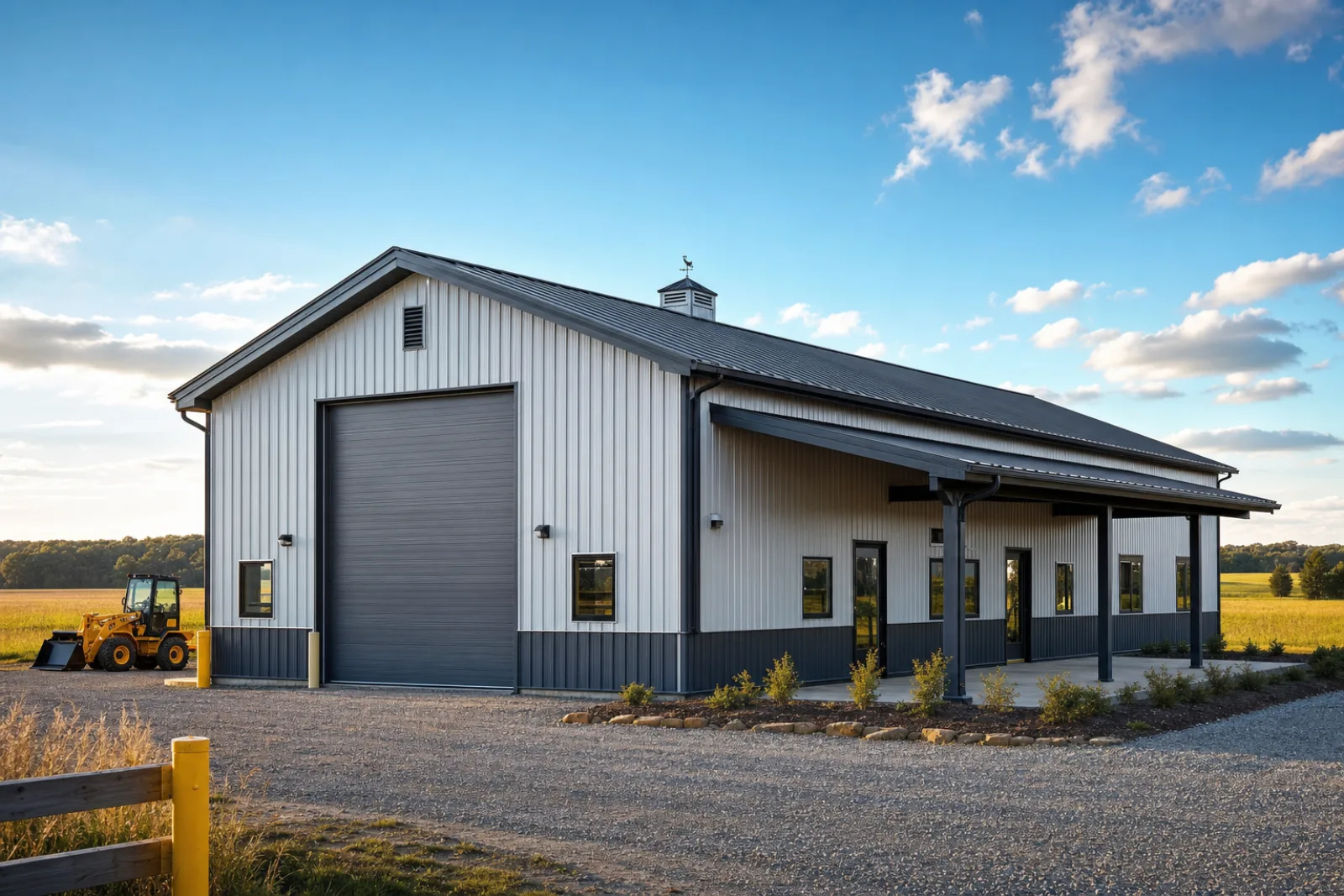
The frame line carries the most weight, because it is the largest cost and the one suppliers spell out least. Confirm whether you are being quoted red iron or tube steel and at what gauge, since that single line separates a wide-span shop from a light carport. When the spec sheet runs thin, the metal building glossary defines any term a quote throws at you.
What is left out
What a quote leaves out
The exclusions are where a low price gets made. A kit quote covers the steel building and almost nothing under or around it. The slab is yours. The permit is yours. So is the labor to stand the building up, the anchor bolts that tie it to the foundation, and the sales tax. None of that is hidden in bad faith, but it adds up, and a quote that buries the exclusions can look cheaper than one that lists them plainly.
Three exclusions catch buyers most often. The first is the foundation, since a slab can run a meaningful share of the total and is rarely in a kit price. The second is assembly, because a quote for a DIY kit is not a quote for a built building, and erection labor is a separate line you arrange yourself. The third is the permit and any engineering stamp, which your local office may require before the slab is poured. Price the building and the site together, or the cheapest kit can finish as the most expensive project.
Match the scope before you match the price
A price only means something next to a scope. Before you compare two totals, write down exactly what each one includes and excludes: the gauge, the coating, the doors, the freight, the slab, the labor. If one quote covers anchor bolts and assembly and the other stops at the bare steel, the lower number is not the cheaper building. Get both quotes onto the same scope first, then let the price decide.
Apples to apples
How to compare two quotes apples-to-apples
Comparing two quotes is a sequence, not a glance. The order matters, because matching the steel before the price keeps a thinner building from looking like a better deal. Work the two quotes through these steps in order:
- Match the size and clear span. Confirm both quotes describe the same width, length, and eave height, and the same clear span with no hidden interior posts. A wide building quoted on a tube frame may carry posts in the fine print.
- Match the frame and gauge. Line the frame gauge up tube against tube, red iron against red iron. A 14-gauge frame against a 12-gauge frame is not the same building, even at the same size.
- Match the panel gauge and coating. Put the roof and wall gauge side by side, then the coating and paint warranty. A 29-gauge panel against a 26 is thinner steel, not a better price.
- Match the openings. Count the roll-up doors, walk doors, and windows on each quote, by size. A shell with no doors will always undercut a finished plan.
- Match the loads. Confirm both are stamped for your local snow and wind, not a lighter default. A building rated for less load costs less because it is less building.
- Then compare the totals. Add freight and the exclusions back in on both, so you are weighing two complete projects. Only now does the lower number mean the better deal.
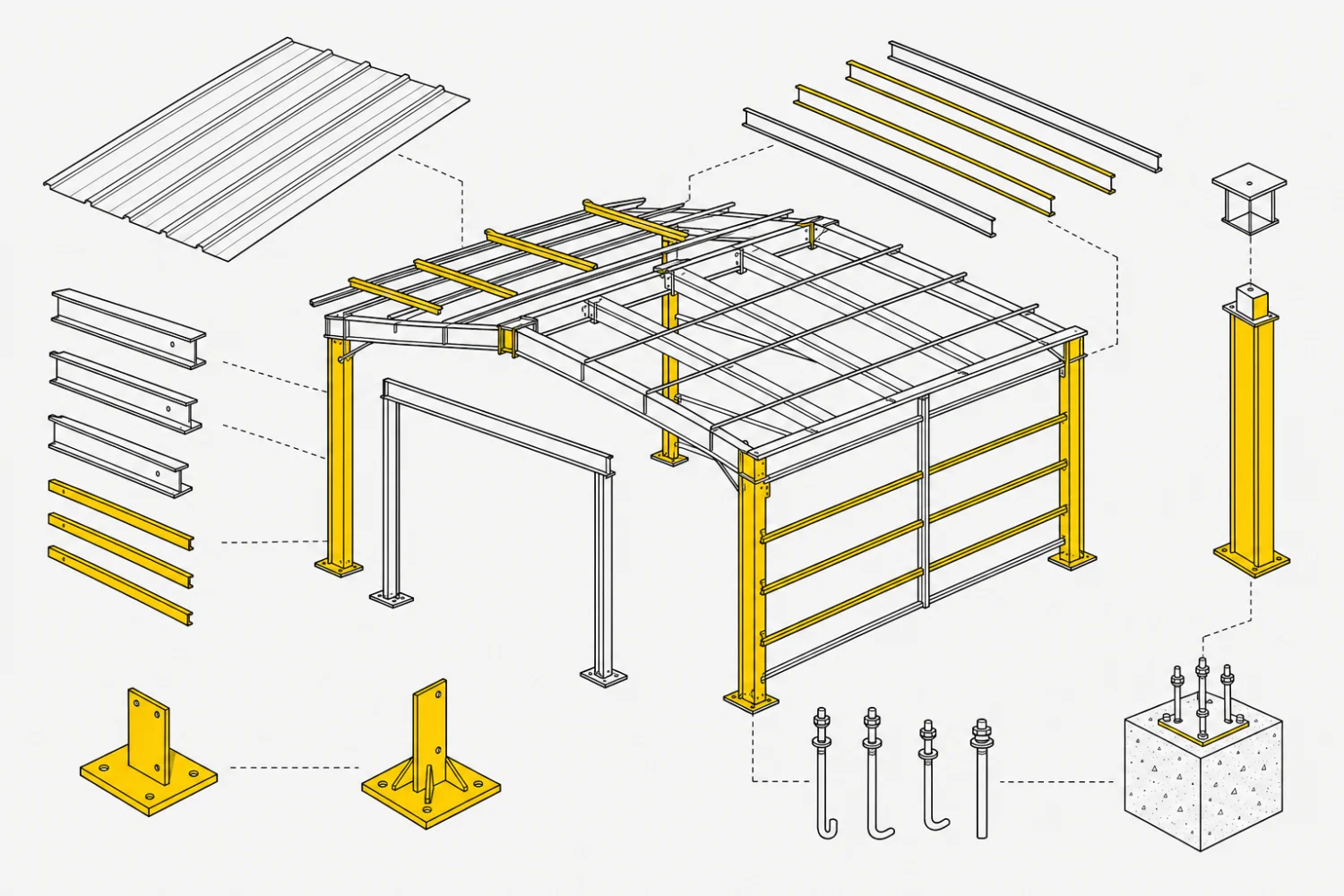
Done in this order, the comparison surfaces the real difference. Most of the time the cheaper quote is cheaper for a reason that lives in one of these lines: thinner gauge, lighter loads, fewer doors, or freight left off. For the wider list of traps that catch buyers at this stage, the common buying mistakes guide is worth a read before you decide.
Red flags
The red flags in a metal building quote
Some quotes warn you before you ever compare them. A few patterns mark a quote you should slow down on, because each one tends to hide a cost or a corner cut. Watch for these:
- Vague inclusions. “Steel building, fully loaded” with no gauge, no coating, and no opening sizes is a price without a spec. If you cannot tell what the steel is, you cannot tell what you are buying.
- No stamped drawings. A real building comes with engineered, stamped drawings sized for your site and loads. A supplier who will not commit to stamped plans is selling a banner number, not an engineered building.
- No load rating. A quote that never names the snow and wind load it is built for may be rated for a mild default that fails your climate. The load is the whole point of the engineering.
- A price far below the rest. When one quote sits thousands under three others for the same size, it is almost always thinner steel, lighter loads, or freight and exclusions left off. Cheap is a spec, not a discount.
- Pressure to sign today. A “this price expires tonight” push is a sales tactic, not a deadline. A sound quote holds long enough for you to read it.
Match the scope before the price. The lowest number on the table is usually the thinnest building, and the gap you save up front you pay back in steel you did not buy.
None of these flags is proof on its own, but two or three together is a quote to walk away from. The one that matters most is the price far below the rest, because a number that good almost always means a building that small. Set it against the typical kit prices for your size, and a quote that lands well under the range is telling you something the spec sheet is trying not to.
Before you sign
The questions to ask before signing
Before you sign anything, a short list of plain questions closes the gaps a quote leaves open. A supplier selling a known building answers each one without hesitating. One who cannot is the answer in itself. Ask these:
- What is the primary frame, and what gauge or beam? Red iron or tube, and the exact size. This is the biggest line on the price and the one most worth pinning down.
- What gauge are the roof and wall panels, and what coating? Get both numbers and the paint warranty in writing, since this is where a low price quietly thins the steel.
- Is it stamped for my local snow and wind loads? Confirm the building is engineered for your site, not a lighter default, and that stamped drawings come with it.
- What does the price exclude? The slab, the permit, anchor bolts, assembly, and tax. Get the exclusions named so the total reflects the whole project.
- Is freight to my site included, and can the site take the truck? Confirm delivery is in the number and that the access road handles a full-size load.
- How long does this quote hold? A firm price you can read in daylight beats a number that expires under pressure.
Write the answers down next to the quote, and the spec stops being a sales pitch and becomes a record you can hold the supplier to. The metal building buying checklist carries the full version of this list across the whole purchase, and the where to buy guide covers how to vet the supplier behind the quote before any of it gets signed.
FAQ
Reading a metal building quote: common questions
How do you compare two metal building quotes?
Match the building before you match the price. Confirm both quotes describe the same size and clear span, the same frame type and gauge, the same panel gauge and coating, the same doors, and the same stamped loads. Then add freight and the exclusions back into each total. Only once the scope lines up does the lower number mean the better deal.
What should be included in a metal building quote?
A complete quote names the frame type and gauge, the roof and wall panel gauge and coating, every door and window by size, the freight to your site, and the loads the building is stamped for. It should also list what it excludes, such as the slab, permit, anchor bolts, and assembly labor. If a line is missing, that is a question to ask, not a detail to assume.
What are the red flags in a metal building quote?
Vague inclusions with no gauge or coating, no stamped engineered drawings, no named snow and wind load rating, a price that sits far below every other quote, and pressure to sign the same day. Any one can have an innocent explanation, but two or three together is a quote to walk away from. The cheapest number on the table is usually the thinnest building.
Why is one metal building quote so much cheaper?
Almost always because it is a different building. A quote far below the rest tends to mean thinner panel gauge, a lighter frame, fewer or no doors, a lower load rating, or freight and the slab left off the number. Set it against the typical price range for your size, and a quote well under the range is telling you the spec is smaller than it looks.
What questions should I ask before signing a quote?
Ask what the primary frame is and its gauge or beam, what gauge the panels are and what coating they carry, whether the building is stamped for your local snow and wind, what the price excludes, and whether freight is included. Also ask how long the quote holds. A supplier selling a known building answers each one plainly and puts it in writing.
Does a metal building quote include the concrete slab?
Usually not. Most kit quotes cover the steel building and exclude the foundation, which you arrange and pour separately. The slab can be a meaningful share of the total, so price it alongside the kit rather than after. A quote that leaves the foundation off is normal, but you have to add it back before you compare two totals fairly.
Related guides
Keep reading
Reading a quote connects to the rest of the buying decision. Follow these next:
- Metal building kits: the complete guide (the parent pillar).
- Steel gauge explained (the spec a low price hides first).
- Common metal building buying mistakes (the traps a quote sets at comparison time).
- Where to buy metal building kits (how to vet the supplier behind the quote).
- Metal building kit prices (the price range to read a quote against).
- Metal building buying checklist (the full pre-purchase list, end to end).