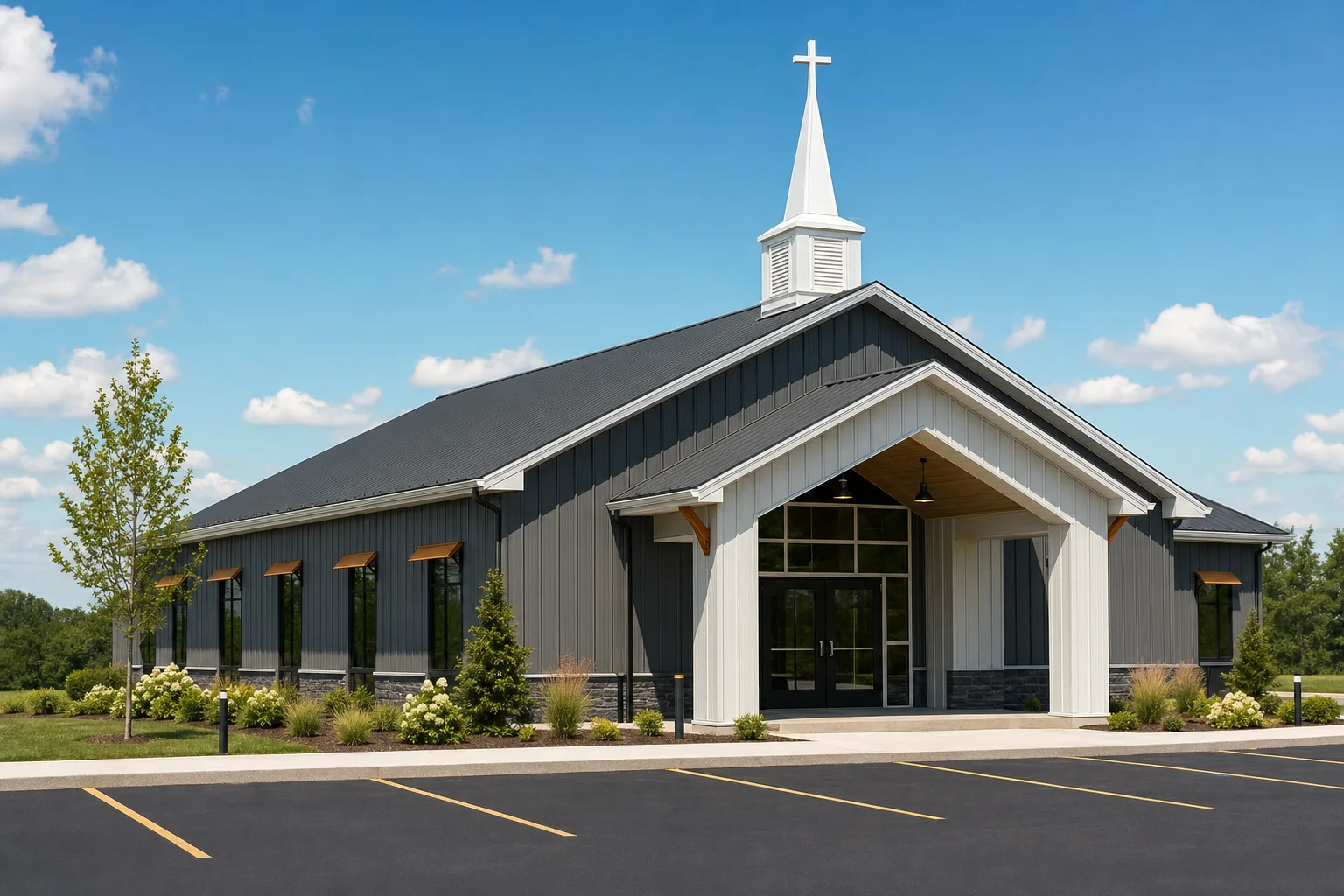
Snow load is the weight of snow a roof has to hold, measured in pounds per square foot (psf). Wind load is the pressure a building has to resist, tied to a design wind speed in miles per hour (mph). Every metal building kit is engineered to a specific snow and wind number for the exact spot it will stand, and those numbers come from your local building code, not from the supplier and not from a national chart.
This guide sits under the metal building kits pillar in the Basics & Buying silo. Below: what each load means in plain terms, why your local figures matter more than any generic chart, how a kit gets engineered and stamped to them, a word on seismic, and how the loads show up on a quote. Get these numbers right and the building stands for decades. Get them wrong and you have bought a structure that fails the first hard winter or the first real storm.
Snow load
What snow load means
Snow load is the downward weight that accumulated snow puts on a roof, expressed in pounds per square foot. A roof rated for a given psf can carry that much snow sitting on every square foot of its surface before the frame is stressed past its design limit. The higher the number, the more winter the roof can take.
Two things drive the figure. The first is the ground snow load for your area, a code value that reflects how much snow your region gets in a severe year. A site in the mountains or the snow belt carries a far higher ground load than one on the Gulf coast. The second is the roof itself: its pitch, its shape, and whether snow drifts or slides off, which the engineer factors in to turn the ground load into a roof load.
This is why you cannot read a snow rating off a brochure. The right psf for your build depends on where it stands, and that figure is set by code ‹confirm› for your county or your elevation. A roof engineered for a flat southern lot is not the same roof you need in heavy-snow country, even if the building looks identical. The frame that carries a high snow load is usually red iron, not tube steel, because the load has to travel through real structure to the foundation.
Wind load
What wind load means
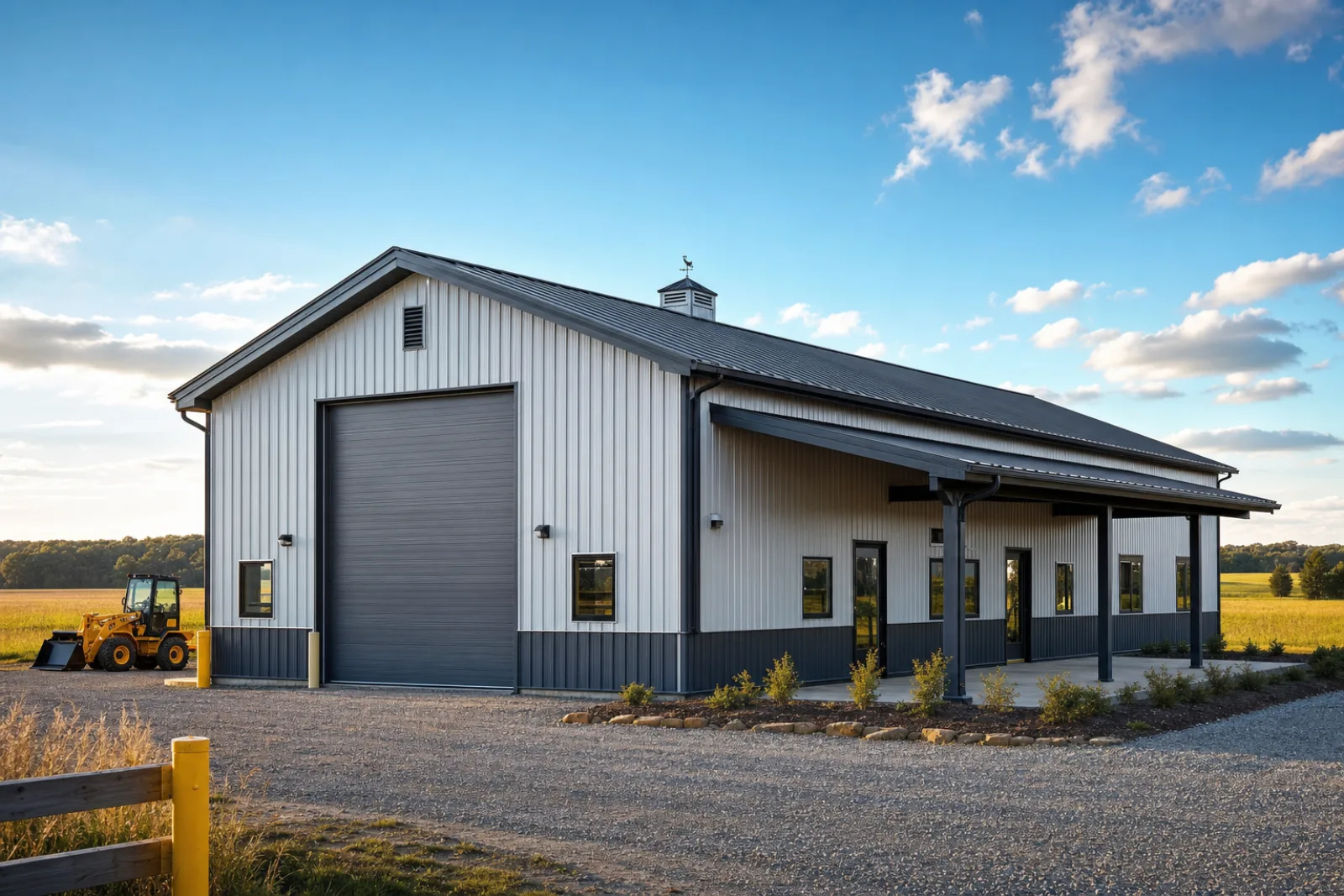
Wind load is the force moving air puts on a building, and it is quoted as a design wind speed in miles per hour. A building rated for a given mph is engineered to stand up to gusts at that speed without the frame failing, the panels peeling, or the whole structure lifting off its anchors. The higher the rating, the stronger the wind it is built to survive.
Wind does more than push on a wall. It pushes on the windward side, pulls on the leeward side, and lifts on the roof, so a building has to be braced and anchored against force from several directions at once. That is why anchoring to the foundation matters as much as the frame: a building can be strong enough in the steel and still fail at the connection to the slab if the anchors are undersized for the wind.
Like snow, the right wind number is local. Coastal and hurricane-prone regions carry much higher design wind speeds than sheltered inland sites, and some areas add an exposure category for open ground or for special wind zones ‹confirm›. The supplier does not pick this number. Your local building code does, and the kit gets engineered to match it.
The loads
Snow, wind, and a word on seismic
A building has to carry more than one kind of load at once, and each one gets engineered separately. Snow presses down, wind pushes and lifts, and in some regions the ground itself moves. Here is what each load measures and why it belongs on your spec.
| Load type | What it measures | Why it matters |
|---|---|---|
| Snow load (psf) | The weight of accumulated snow the roof must hold, in pounds per square foot | Sets the strength of the roof and frame. Too low and the roof can collapse under a heavy winter. |
| Wind load (mph) | The design wind speed the building must resist, in miles per hour | Sets the bracing and the anchoring. Too low and panels peel or the building lifts in a storm. |
| Seismic load | The ground motion from an earthquake the structure must absorb | Matters in active seismic zones. Drives bracing and connection design, set by a code seismic category. |
The three loads a metal building is engineered against. Each one is a local code value, not a single national figure.
Seismic is the load most buyers forget, because it only governs in certain regions. In a seismic zone, the building has to absorb the side-to-side motion of an earthquake without the frame racking or the connections shearing. Metal buildings handle this well, since steel flexes rather than cracking, but the kit still has to be engineered to the seismic category for your site ‹confirm›. If you are in an active zone, ask whether the design accounts for it, the same way you would ask about snow and wind. The permits and codes guide covers which loads your jurisdiction enforces.
Local numbers
Why your local numbers matter, and why a generic chart is dangerous
A snow or wind rating only means something when it is tied to a location. The same building that is safe on a calm inland lot can be dangerously under-built two states away, because the loads it has to carry are not the same. A generic chart that promises a single snow or wind number for everyone is hiding the one fact that matters: your code value.
Loads are set by the building code in force where you build, usually adopted county by county and sometimes adjusted for elevation, exposure, or a special wind region. Two towns an hour apart can carry different numbers. That is why a national one-size chart is the wrong tool, and why we point you to local figures through our metal buildings by state guides instead of quoting a universal psf or mph here.
A generic chart is a red flag
If a supplier sells you a building on a single nationwide snow or wind rating, slow down. The honest process starts with your address, pulls the code values for that jurisdiction, and engineers the kit to them. A quote that skips that step is guessing at the most important spec on the sheet. Confirm your local numbers through your building department or your state guide before you compare prices.
Engineered & stamped
How kits are engineered and stamped to your loads
A pre-engineered metal building is designed against your specific loads before a single piece ships. You give the supplier your site, your size, and your code values, and the engineer sizes the frame, the bracing, and the anchoring to carry the snow, wind, and seismic loads for that spot. The result is a building matched to where it will stand, not a generic shell.
The proof of that engineering is the stamp. Stamped drawings are the structural plans for your building, signed and sealed by a professional engineer licensed in your state, certifying that the design meets your local loads. Most permit offices require them, and they are how a building inspector knows the kit is safe to put up. A reputable supplier provides stamped drawings as part of the package, a point worth checking against the buying checklist before you order.
The frame choice follows the loads. Light loads on a small carport can ride on tube steel sized by gauge, while heavy snow or high wind on a wide span calls for red iron beams engineered to the job. The heavier the load, the more structure has to carry it to the ground, which is part of why a building stamped for real loads costs more than a bare-minimum shell. You are paying for capacity that a winter or a storm will eventually call on.
On the spec sheet
How loads show up on a quote, and what to ask
Snow and wind ratings belong on the spec sheet in plain numbers, not buried in fine print or left off entirely. A real quote names the design loads it was engineered to, and a vague one hopes you will not ask. The numbers are the difference between a building that passes inspection and one that does not, so read for them the same way you read the price.
A few tells separate a real load spec from a missing one:
- The snow load is stated in psf. Look for a roof snow load or ground snow load figure tied to your location, not a generic claim that the building is “rated for snow.”
- The wind load is stated in mph. Look for a design wind speed, and ideally an exposure category, that matches your code, not a blanket “wind rated” line.
- Stamped drawings are included. Confirm the kit comes with sealed engineering for your state, the proof the loads were engineered for, not assumed. See permits and codes for what your office requires.
When the loads are vague, ask three plain questions: what snow load in psf, what wind speed in mph, and are stamped drawings for my state included? A supplier who answers without hesitating has engineered the building to your site. One who cannot is selling a shell and leaving the code problem to you. The frame guide and the gauge guide cover the steel that carries those loads once you know the numbers.
FAQ
Snow and wind loads: common questions
How much snow can a metal building hold?
It depends entirely on what the building is engineered for, measured in pounds per square foot. A kit designed for a mild climate carries a low snow load, while one built for the snow belt carries a much higher one ‹confirm›. There is no single answer, because the right capacity is set by your local code, and the building is engineered to that figure before it ships.
How much wind can a metal building take?
As much as it is rated for, quoted as a design wind speed in miles per hour. A building engineered for a coastal or hurricane-prone region resists far higher gusts than one built for a sheltered inland lot ‹confirm›. The rating depends on your code and your site, and it relies on proper anchoring to the foundation as much as on the frame itself.
What is snow load?
Snow load is the weight of accumulated snow a roof has to carry, expressed in pounds per square foot. It is driven by the ground snow load for your area and adjusted for the roof pitch and shape. The higher the psf rating, the more winter the roof can hold without overstressing the frame.
Do I need a building engineered for my specific area?
Yes. Snow, wind, and seismic loads are set by the building code where you build, and they vary widely from place to place. A building engineered for one location can be unsafe in another. Pull your local code values, or check our state guides, and have the kit engineered and stamped to those numbers.
What about earthquakes?
Seismic load matters in active earthquake zones, where the building has to absorb side-to-side ground motion. Steel buildings handle this well because steel flexes rather than cracking, but the kit still has to be engineered to the seismic category for your site. If you are in a seismic region, ask whether the design accounts for it, just as you would for snow and wind.
Can I trust a snow or wind rating from a chart?
Not a generic one. A nationwide chart that gives a single snow or wind number ignores the fact that loads are local, set county by county and sometimes by elevation. The only rating you can trust is one engineered to your code values and backed by stamped drawings for your state. Treat a one-size chart as a warning sign, not a spec.
Related guides
Keep reading
Loads are the spec everything else has to satisfy. These guides cover what sits around them:
- Metal building kits: the complete guide (the parent pillar).
- Metal building permits & codes (the code that sets your loads).
- Red iron vs tube steel framing (the frame that carries the loads).
- Steel gauge explained (how the steel thickness is measured).
- Metal buildings by state (local snow and wind figures, state by state).
- Metal building buying checklist (the reference hub for what to verify before you order).