A metal garage kit usually costs between roughly $3,500 and $30,000 ‹confirm› for the steel shell in 2026, with size and certification setting where you land. A single-car kit runs about $3,500 to $7,000 ‹confirm›, a two-car kit about $7,000 to $14,000 ‹confirm›, and a three or four-car kit about $14,000 to $30,000 ‹confirm›. Those figures cover the steel package. Foundation, delivery, and installation are priced on top.
This guide sits under the metal garage kits pillar and walks the money side of the decision: what the ranges look like, what moves them, and how to read a quote so you know what the number buys. For the wider picture across every building type, the metal building kit prices pillar covers pricing beyond garages.
Price ranges
What a metal garage kit costs in 2026
Price tracks size first. A garage kit is sold as a steel package, and the bigger the footprint and the taller the walls, the more steel goes into it. The ranges below are illustrative 2026 figures for the shell only, before foundation, delivery, or labor. Treat them as a starting frame for your own quotes, not a fixed rate.
| Garage size | Typical footprint | Shell-only range (2026) |
|---|---|---|
| Single-car | 12×20 to 14×26 | $3,500 – $7,000 ‹confirm› |
| Two-car | 20×20 to 24×30 | $7,000 – $14,000 ‹confirm› |
| Three to four-car | 30×40 to 30×50 | $14,000 – $30,000 ‹confirm› |
| Workshop or RV-height | 30×40+ with tall walls | $18,000 – $40,000+ ‹confirm› |
Illustrative 2026 shell pricing. Site work, doors beyond the base spec, and install are separate.
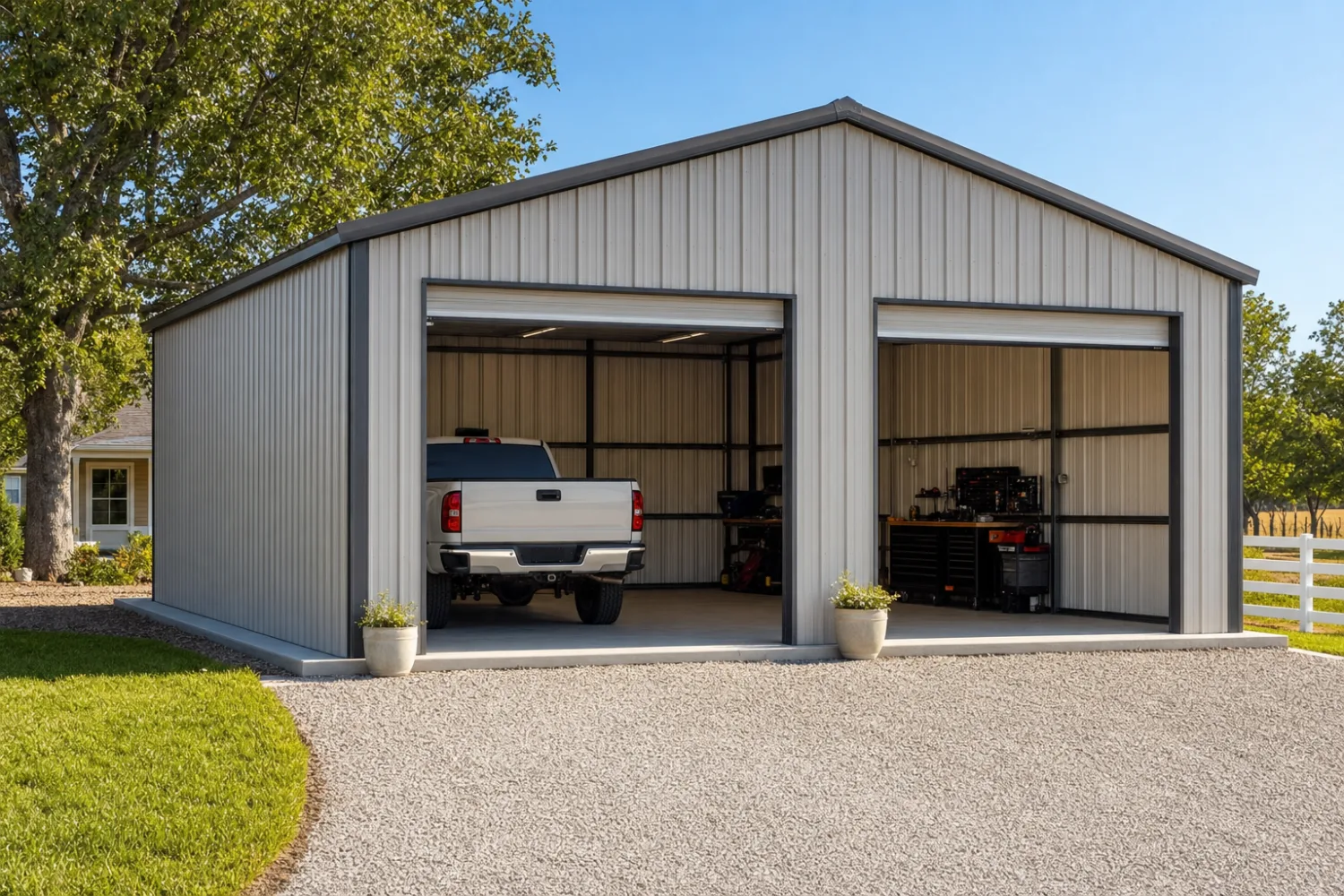
Sizes map to use. A single-car kit stores one vehicle plus a little gear; a two-car kit is the most common residential pick; and a three or four-car kit adds room for a workshop, a boat, or a tall door. Pick the footprint by what you park and store, then read the price against that, not against the cheapest line on a flyer.
Per square foot
Cost per square foot, and what the shell includes
Per square foot is the fastest way to sanity-check a quote across sizes. A bare steel garage shell tends to run about $15 to $25 per square foot ‹confirm› in 2026, and a finished, installed building lands closer to $25 to $45 per square foot ‹confirm› once you add the slab, doors, and labor. Smaller buildings cost more per foot than large ones, because fixed costs spread over less area.
The word that does the work is shell. A kit price almost always means the steel: the frame, the wall and roof panels, the fasteners, the trim, and the engineered drawings. It rarely includes the concrete pad, permits, or the crew to stand it up. When one quote looks far cheaper than another, the gap is usually in what sits outside that shell.
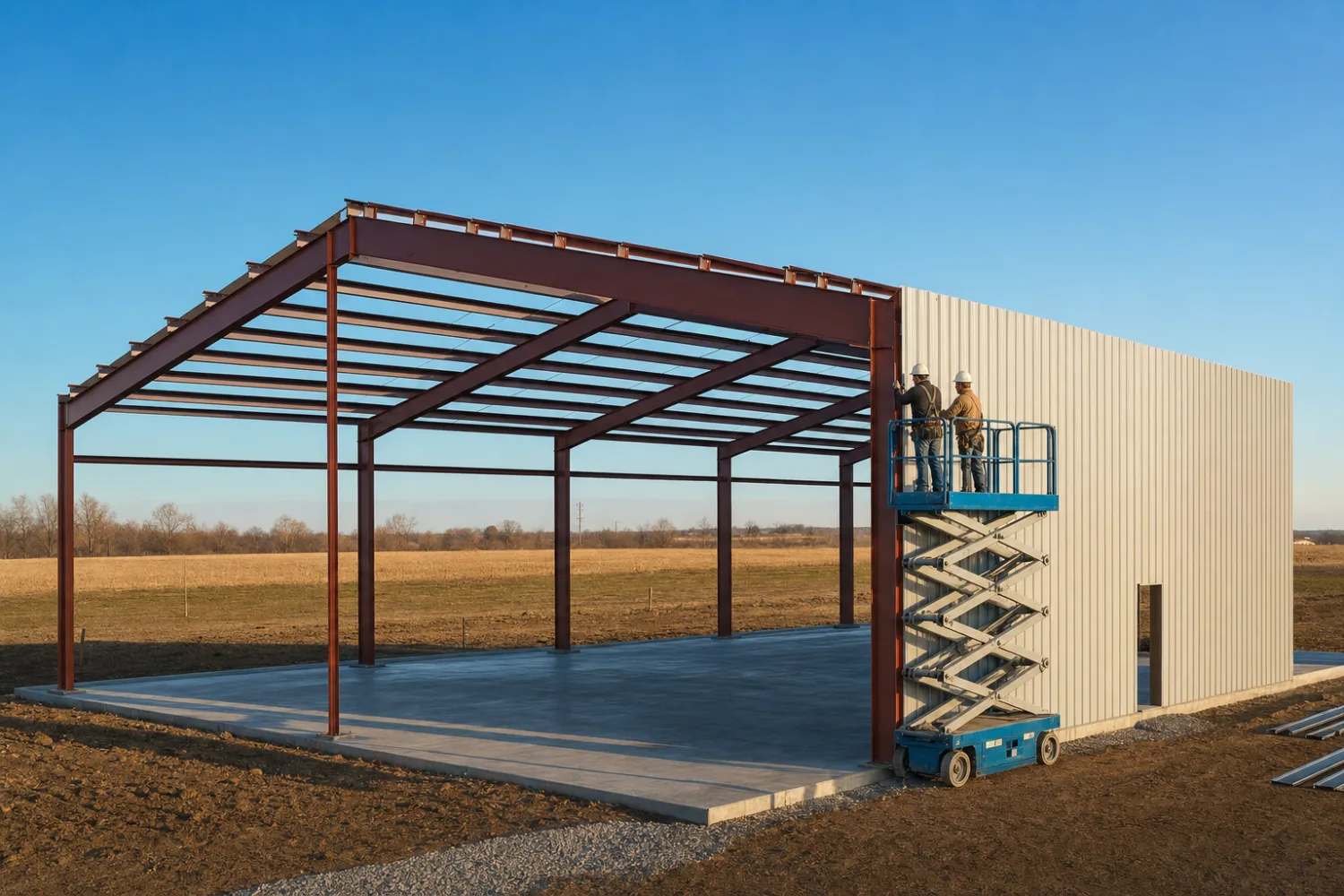
That split is why a turnkey number and a kit number can differ by thousands of dollars on the same building. If you are weighing a roof-only structure against a fully closed one, our carport vs enclosed garage comparison shows how much the walls and doors add.
Worked example
What a finished two-car garage adds up to
Numbers land better as a build than as a range. Here is an illustrative 2026 breakdown for a 24×30 two-car garage, certified, with two roll-up doors and a walk door, raised on a fresh slab. Your county, your site, and your supplier will move every line, so read it as a shape, not a quote.
| Line item | Illustrative 2026 cost |
|---|---|
| Steel kit (shell, certified) | $11,000 – $14,000 ‹confirm› |
| Concrete slab | $4,000 – $7,000 ‹confirm› |
| Doors and windows beyond base | $1,500 – $3,000 ‹confirm› |
| Delivery and installation | $3,000 – $6,000 ‹confirm› |
| Permit and engineering | $300 – $1,500 ‹confirm› |
| Finished total | $20,000 – $31,000 ‹confirm› |
Illustrative only. The kit is often half or less of the finished number.
The lesson sits in the bottom row. The steel kit is the headline, but the slab, doors, and labor together can match or beat it. When you budget, budget the finished building, not the kit price alone, or the gap will find you at the wrong time.
Price drivers
What changes the price
Past size, a handful of choices move a garage kit price the most. Knowing them lets you read why two quotes for the same footprint can sit a few thousand dollars apart.
- Steel gauge and frame. Heavier gauge steel and a structural frame cost more than light tube, and they buy strength a tall or wide garage needs.
- Snow and wind certification. A kit engineered and stamped for your snow and wind loads costs more than a non-certified one, and many counties require it before they issue a permit.
- Doors and windows. Each roll-up door, walk door, and window adds to the total. Door size and count is one of the easiest line items to over-buy.
- Wall height and roof style. Taller side walls and a vertical-panel roof cost more than a low wall with a horizontal roof, and they matter for RV or lift clearance.
- Insulation. Adding insulation raises the kit price but changes how the space works year-round, so price it against how you plan to use the building.
- Color, trim, and site. Two-tone color, wainscot, and a hard-to-reach delivery site each nudge the number up.
Compare like for like
Two garage quotes only mean something when the specs match. Line up the gauge, the certification, the door count, and the wall height before you compare totals. The buying checklist lists what to confirm on each quote so you are not paying more for less steel.
Certified or not
Certified vs non-certified, and why it moves the price
A certified kit comes with engineered, stamped drawings that prove the building meets your local snow and wind loads. A non-certified kit skips that paperwork and the heavier steel that often comes with it, so it costs less. The savings are real, and so is the catch.
Most permit offices want certified drawings before they approve a permanent garage on a foundation. If your site needs a permit and you buy non-certified to save money, you can end up paying twice: once for the kit, again to upgrade or re-engineer it. Check your local permit rule before you choose, because the right answer is set by your county, not by the lowest quote.
Buy the certification your county requires, not the one that makes the quote look cheap. A garage that fails inspection is the most expensive kind.
Get a number
How to get an accurate garage kit price
A flyer price is a starting point, not a quote. To get a number you can budget against, give a supplier four things up front: your footprint, your wall height, your door and window count, and your ZIP code for load certification. With those, a quote stops being a guess.
- Set the footprint and wall height from what you park and store, not from the cheapest size on the page.
- List the doors and windows you need, and the rough size of each, so they are in the base price.
- Give your ZIP code so the kit is engineered for your snow and wind loads from the start.
- Ask what the price excludes: slab, delivery, permits, and labor, so the gap to a finished building is clear.
Read the response as a spec sheet, not a headline. Match the gauge, the certification, and the door list across every quote before you compare totals. For the full cost picture beyond the kit itself, including site work and labor, see the metal building cost guide.
Where to save
Where you can save, and where you should not
Some savings are smart, and some come back to bite you. The line runs between cosmetic choices and structural ones.
- Worth trimming. Single-tone color, fewer windows, a standard door instead of an oversized one, and a delivery window you can be flexible on.
- Worth keeping. The certification your county requires, the gauge a tall or wide span needs, and enough door height for what you park.
- A real lever. Right-size the building. Paying for a three-car footprint you fill with a single car is the most common way to overspend.
The cheapest garage on day one is rarely the cheapest over its life. A right-sized, properly certified kit holds value and passes inspection, while a too-small or non-compliant one costs more to fix than it ever saved. Size the building to the job first, then shop the price, the same order our metal garage kits pillar walks you through.
FAQ
Metal garage kit prices: common questions
How much is a metal garage kit?
In 2026, a steel garage shell runs roughly $3,500 to $30,000 ‹confirm› depending on size. A single-car kit is about $3,500 to $7,000 ‹confirm›, a two-car about $7,000 to $14,000 ‹confirm›, and a three or four-car about $14,000 to $30,000 ‹confirm›. Those figures are for the steel package, before slab, delivery, and install.
How much does a 2-car metal garage kit cost?
A two-car steel garage kit usually runs about $7,000 to $14,000 ‹confirm› for the shell in 2026, for a 20×20 to 24×30 footprint. Certification for your snow and wind loads, taller walls, and extra doors push it toward the top of that range. The slab and labor to raise it are priced separately.
What is the cost per square foot?
A bare steel garage shell tends to run about $15 to $25 per square foot ‹confirm› in 2026, and a finished, installed building lands closer to $25 to $45 per square foot ‹confirm›. Smaller buildings cost more per foot, because fixed costs spread over less area.
Does the kit price include the concrete slab?
Almost never. A kit price covers the steel: frame, panels, fasteners, trim, and drawings. The concrete pad, permits, and the crew to stand it up are separate, and on a finished building they often add as much as the kit itself.
Why is one garage quote so much cheaper than another?
Usually the specs differ. A cheaper quote may use lighter gauge steel, skip certification, include fewer doors, or have lower walls. Line up the gauge, the certification, the door count, and the wall height before you compare totals.
Is a certified kit worth the extra cost?
If your county requires a permit for a permanent garage, yes. Most permit offices want stamped, engineered drawings that prove the building meets local loads. Buying non-certified to save money can mean paying again to upgrade or re-engineer it later.
What is the cheapest way to get a metal garage?
Right-size it and keep the options simple. A standard footprint, single-tone color, and a base door spec cost the least, and a kit you assemble yourself saves the install labor. Skip the certification your county requires and the savings can reverse fast.
Related guides
Keep reading
Price is one input. These guides cover the size and spec choices that set it:
- Metal garage kits: the complete guide (the parent pillar).
- Two-car metal garage kits (the most-quoted size).
- Three and four-car metal garage kits (where workshops and RVs fit).
- Carport vs enclosed metal garage (what the walls and doors add).
- Insulated metal garage kits (the cost and payoff of insulation).
- Metal building cost guide (site work, labor, and the full installed number).