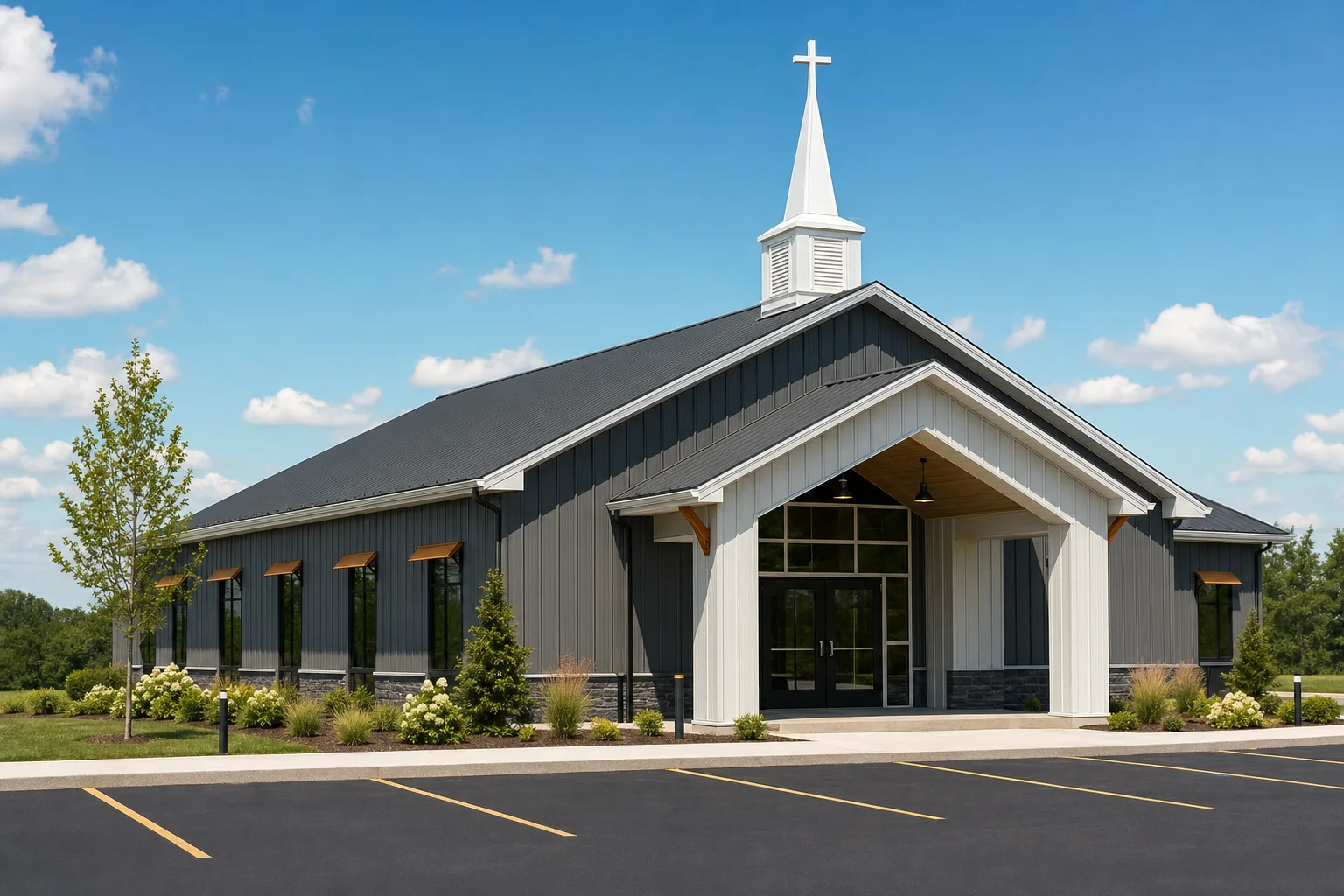
A carport is an open metal cover, a roof on posts with no walls; an enclosed metal garage adds walls and a door. A carport shields a vehicle from sun, rain, and snow at the lowest price. A garage closes the space in, so it locks, holds climate, and works as storage or a shop. The carport vs garage choice comes down to what you are protecting, your climate, and how much you want to spend.
This guide sits under the metal garage kits pillar and helps you decide before you size anything or read a quote. Below: what each structure is, how they compare on cost and protection, which one fits your project, and the price gap between them. If a supplier pushes one option, this is the context that lets you choose on your own terms.
Open carport
What a metal carport is
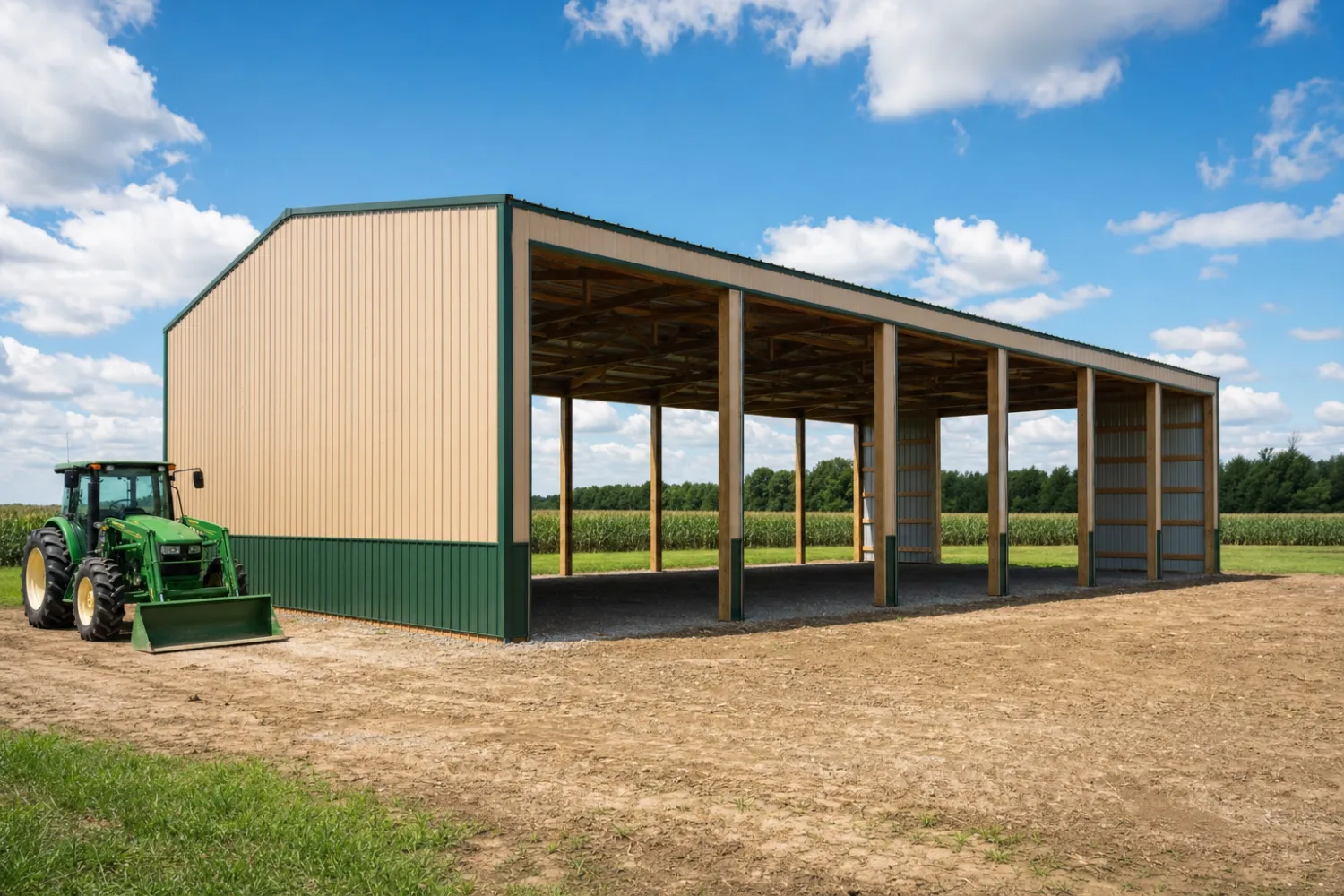
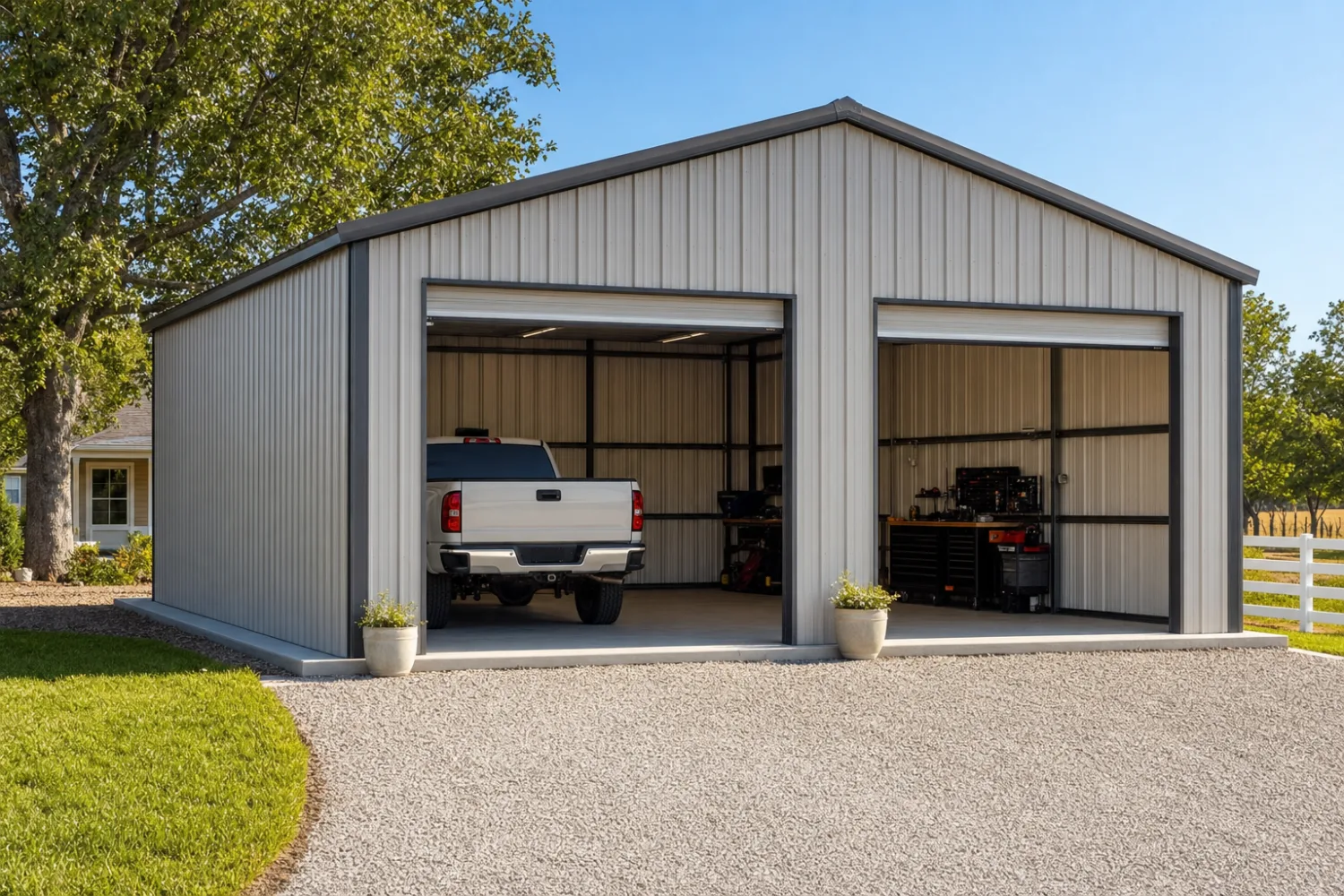
A metal carport is a roof on steel posts, open on the sides, built to keep weather off a vehicle for the least money. Most carports run on a galvanized tube frame, so they shrug off rust without paint and stay light enough to anchor on a gravel pad or a slab. They cover cars, trucks, RVs, boats, and equipment, and the open sides let you pull straight in from any direction. For the taller versions built around a motorhome, see our RV garage and cover kits.
The appeal is cost and speed. A carport uses less steel, needs no doors or wall panels, and a small crew can stand one up in a day. In many areas an open cover under a set footprint also skips the permit that an enclosed building would trigger, though that line varies by county, so confirm it locally. The same open frame suits boat storage where you want a roof but not four walls.
The limit is everything an open structure cannot do. A carport will not lock, so it offers no security against theft. Wind-driven rain and blowing snow still reach the vehicle from the sides, and the open bays do nothing for dust, pollen, or temperature. For a daily driver in a mild climate it is plenty. For a restored car, tools, or anything you want sealed away, it falls short.
Enclosed garage
What an enclosed metal garage is
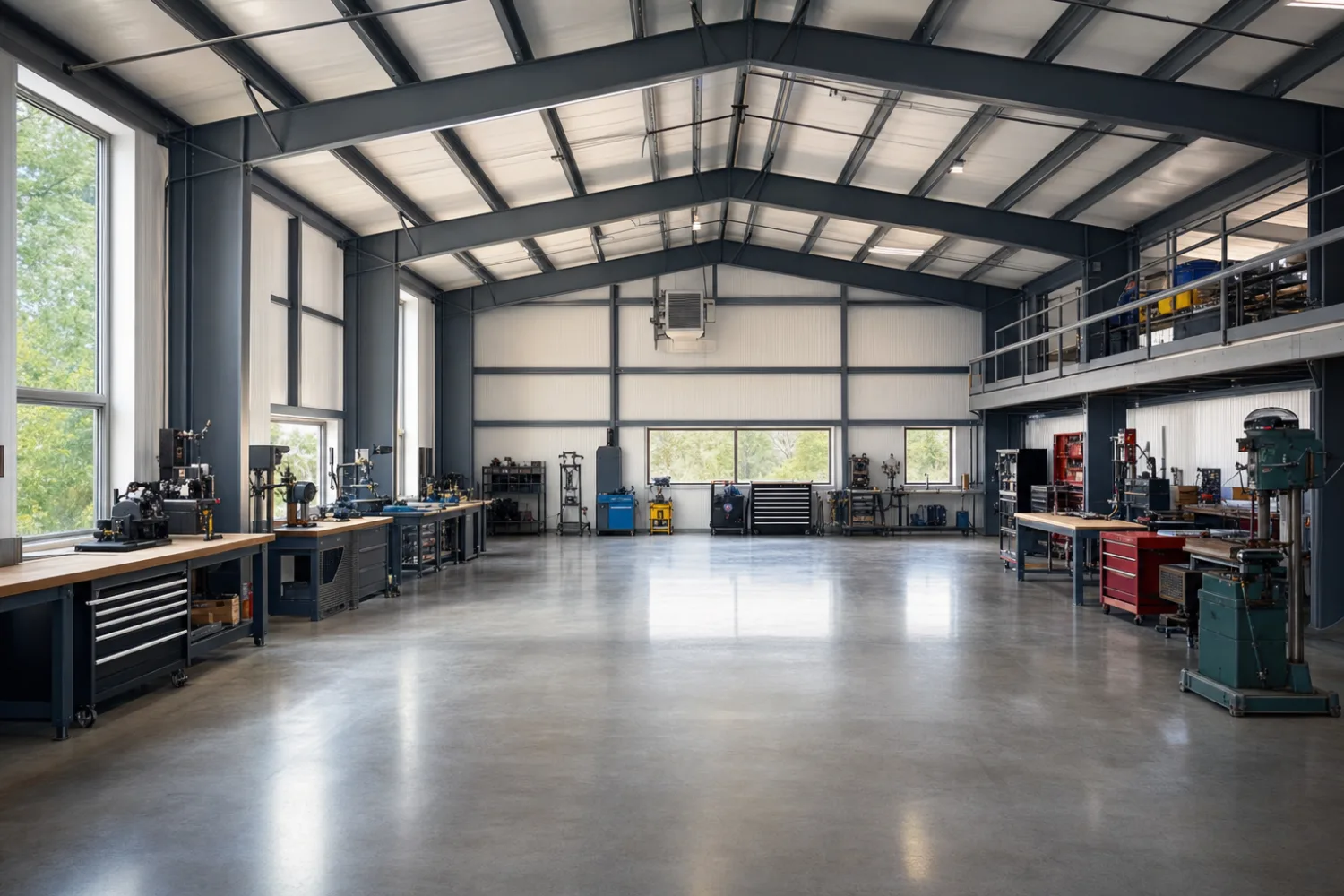
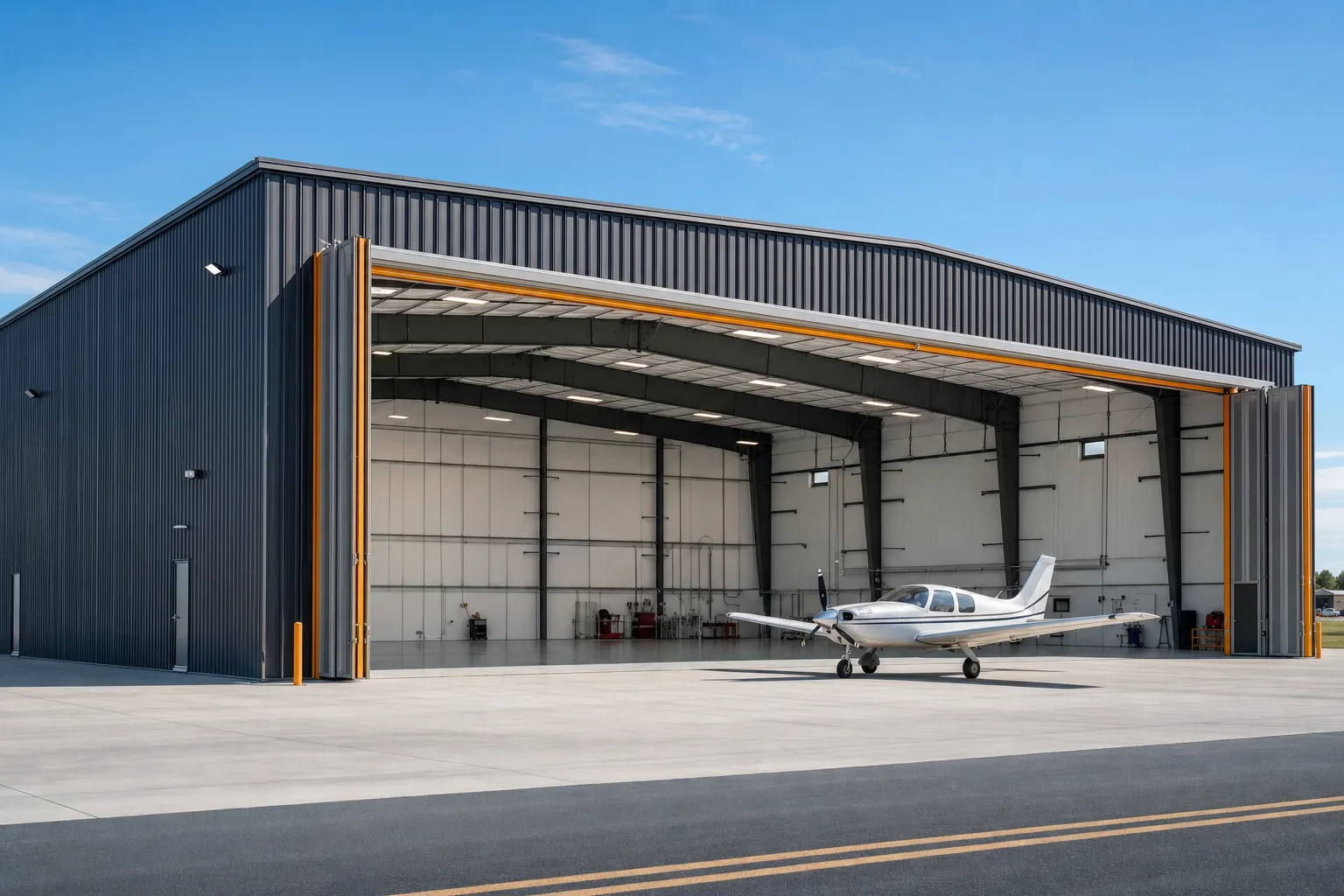
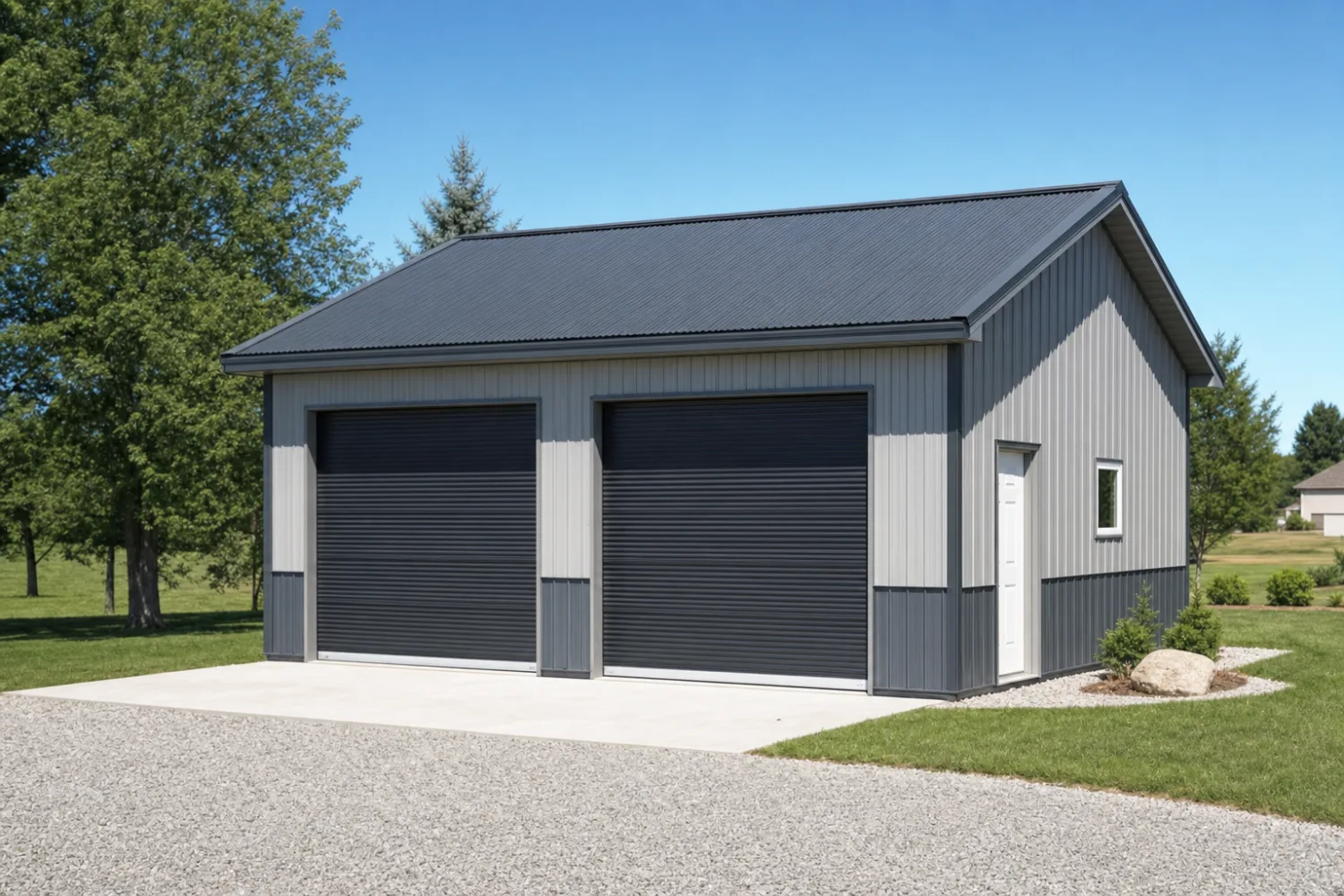
An enclosed metal garage is the carport closed in: the same kind of frame, now wrapped in wall panels with a roll-up or sliding door. That shell turns covered parking into a lockable, weather-tight room. It keeps out wind, rain, dust, and prying hands, and it gives you a wall to hang tools on. The single-car kits suit one vehicle and a workbench, while the two-car kits are the size most buyers land on.
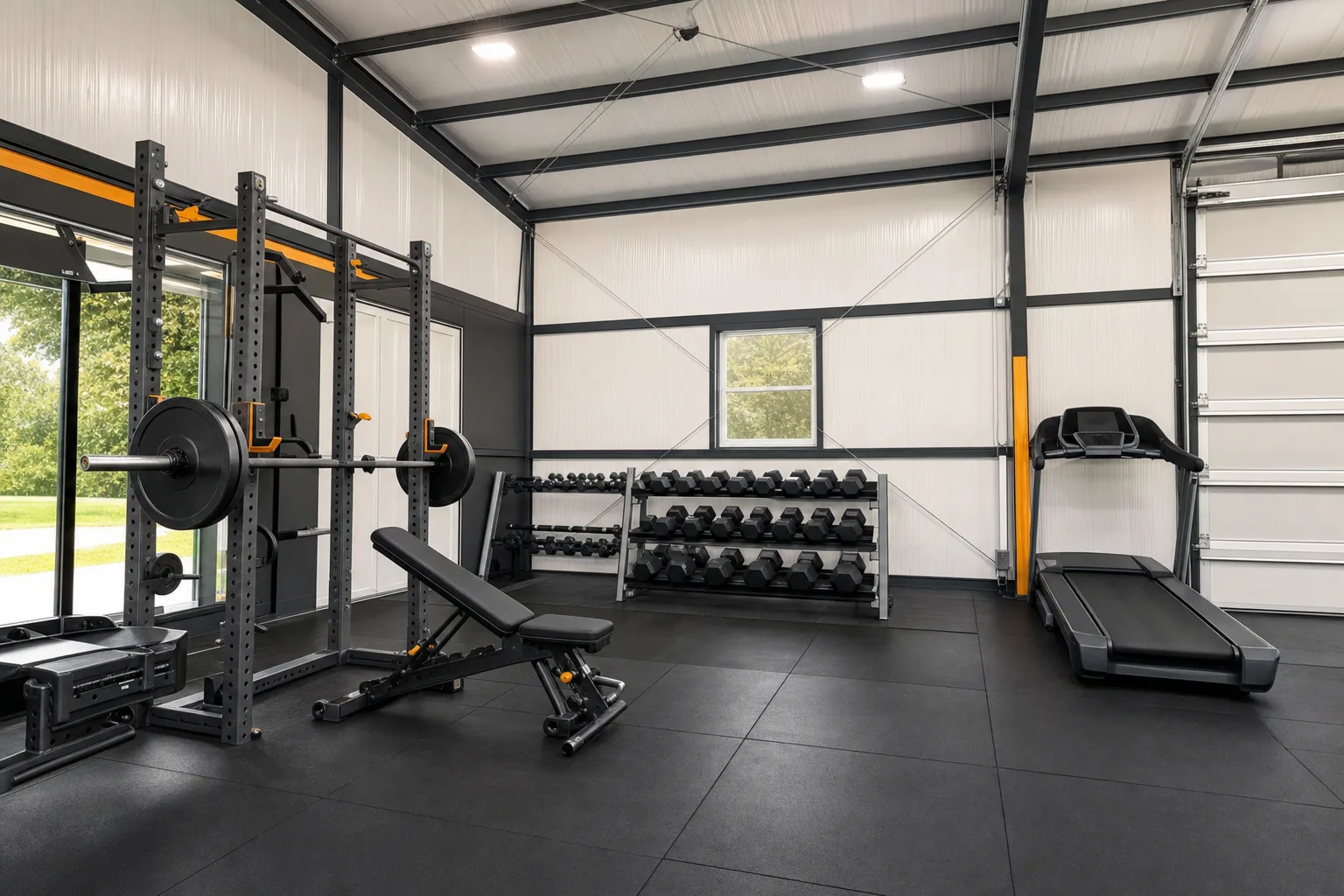
Closing the building in opens up what it can hold. You can insulate the walls and roof to steady the temperature, run power and lights, and pour a finished slab. That is what makes a garage double as a workshop, a gym, or dry storage. The trade is more parts to choose: you now pick door sizes and styles and a floor the carport never needed.
The cost of all that is real. A garage uses far more steel, adds doors and panels, and almost always needs a permit and a proper foundation. For cold-country buyers the enclosed shell is the only option that makes sense, which our insulated garage kits and cold-climate guide cover in depth. The walls are what let insulation do its job in the first place.
Head to head
Carport vs garage: the comparison
The two split along a handful of lines: how much weather they stop, whether they lock, whether you can heat them, what they ask of your site, and what they cost. Read them together, because a strength on one line is the reason for the price on another.
| Open carport | Enclosed garage | |
|---|---|---|
| Structure | Roof on open posts | Walls, roof, and a door |
| Weather protection | Overhead only | All four sides, sealed |
| Security | None, no lock | Lockable and enclosed |
| Climate control | Not possible | Insulate and heat |
| Permit & foundation | Often lighter requirements | Usually permit + slab |
| Relative cost | Lowest covered parking | Several times a carport ‹confirm› |
| Best for | Mild climates, vehicles, RVs, boats | Security, workshops, cold climates, storage |
A comparison, not a verdict. The right pick is the one that matches what you are protecting and your climate.
Match the structure to the job. A carport over a tool collection leaves it exposed, and a full garage over a second car in a mild climate buys walls you may never need.
Which to choose
Which one your project needs
Start with what you are protecting and the weather it faces, then the structure follows. Here is how the common projects land:
- A daily driver in a mild climate. Carport. Overhead cover is enough, and the savings are real. Compare it against an enclosed bay in our garage price guide.
- An RV, boat, or equipment you store outside. Carport or open cover, sized tall. See RV cover kits and boat storage kits.
- A vehicle you want locked and secure. Enclosed garage. A carport cannot keep anyone out. Start with the single-car or two-car sizes.
- A workshop, gym, or heated space. Enclosed garage, insulated. You need walls before insulation or heat can do anything. A workshop-garage combo takes it further.
- Snow or hard winters. Enclosed garage, stamped for your snow and wind loads. An open carport leaves the vehicle in the cold.
You can start open and close it in later
On many tube-frame designs you can add wall panels and a door to a carport down the road, turning it into an enclosed garage as your budget allows. Plan the foundation and post spacing for the closed version up front so the upgrade bolts on cleanly. The buyer's guide walks the full decision before you order.
Beyond the roof
Permits, security, and resale
The difference is not only the walls. An enclosed garage changes how the building is permitted, how it is valued, and how secure your property is. Those three lines often tip a borderline decision.
On permits, an open carport under a modest footprint may need only a light approval, while an enclosed garage usually triggers a full building permit, a foundation, and an inspection. Rules vary by county, so confirm yours before you order, and check the size chart to see where setback and footprint limits start to bite.
On security and resale, an enclosed garage that locks reads as added square footage and protected storage to a future buyer, while a carport reads as a convenience. If the building has to hold value or keep tools and a vehicle safe, the walls are part of what you are buying, not an upcharge to dodge.
Cost
The cost difference
A carport is the cheapest covered parking there is, and an enclosed garage of the same footprint runs several times more ‹confirm›. The gap is not markup. It is steel, wall panels, a door, and usually a permit and a slab, none of which an open cover carries. When you compare two quotes, you are comparing two different products, not a deal against a rip-off.
The honest way to weigh it is by what the space has to do. If overhead cover solves your problem, paying for walls is money spent on capacity you will not use. If you need to lock up, heat, or store more than a vehicle, a carport is the false economy: you save now and rebuild later. For the full breakdown by size, see the garage price guide and the wider cost guide.
One more cost lives off the price tag: site work. A carport often sits on gravel or a thin pad, while a garage wants a finished slab, which adds to the total before the building arrives. Factor the foundation in early, and read it against the rest of the line items in the buying checklist so nothing on the quote surprises you.
FAQ
Carport vs garage: common questions
Is a carport or a garage better?
Neither is better on its own. A carport is better when you want the cheapest overhead cover in a mild climate. A garage is better when you need security, climate control, or storage. Match the structure to what you are protecting and the weather it faces.
Is a carport cheaper than a garage?
Yes, by a wide margin. A carport uses less steel and skips the walls, door, and usually the permit and slab, so an enclosed garage of the same footprint can run several times more ‹confirm›. The gap reflects the extra parts and site work, not markup.
Can you turn a carport into an enclosed garage?
Often, yes. Many tube-frame carports can take wall panels and a door later, turning an open cover into an enclosed garage. It works best when you plan the foundation and post spacing for the closed version up front. See the door options guide for the part you would add.
Does a carport add value to a home?
Less than an enclosed garage. A lockable garage reads as protected, usable square footage to a future buyer, while a carport reads as a convenience that covers a car. If resale matters, the enclosed shell holds value better.
Do you need a permit for a metal carport?
It depends on your county and the footprint. An open carport under a set size may need only a light approval, while an enclosed garage almost always needs a full permit and a foundation. Confirm the rules locally, and check the size chart for where limits begin.
Can a carport protect against snow?
Only from above. A carport keeps snow off the roof of the vehicle, but blowing snow and wind-driven rain still reach it from the open sides. In real winter country an enclosed garage stamped for your snow load is the structure that keeps the cold out.
Is a metal carport strong enough for an RV?
Yes, when it is sized and anchored for the job. A taller, deeper carport on a heavier-gauge frame covers a motorhome or a fifth wheel without a problem. Our RV cover kits guide covers the heights and anchoring those builds need.
Related guides
Keep reading
This open-or-enclosed choice connects to the rest of the garage decision. Follow these next:
- Metal garage kits: the complete guide (the parent pillar).
- Metal garage buyer's guide (the full decision, start to finish).
- Two-car metal garage kits (the size most enclosed buyers land on).
- RV garage and cover kits (when an open cover is the right call).
- Insulated metal garage kits (why walls come first for climate control).
- Metal garage kit prices (the cost gap by size).
- Metal building size chart (footprints, setbacks, and where permits start).