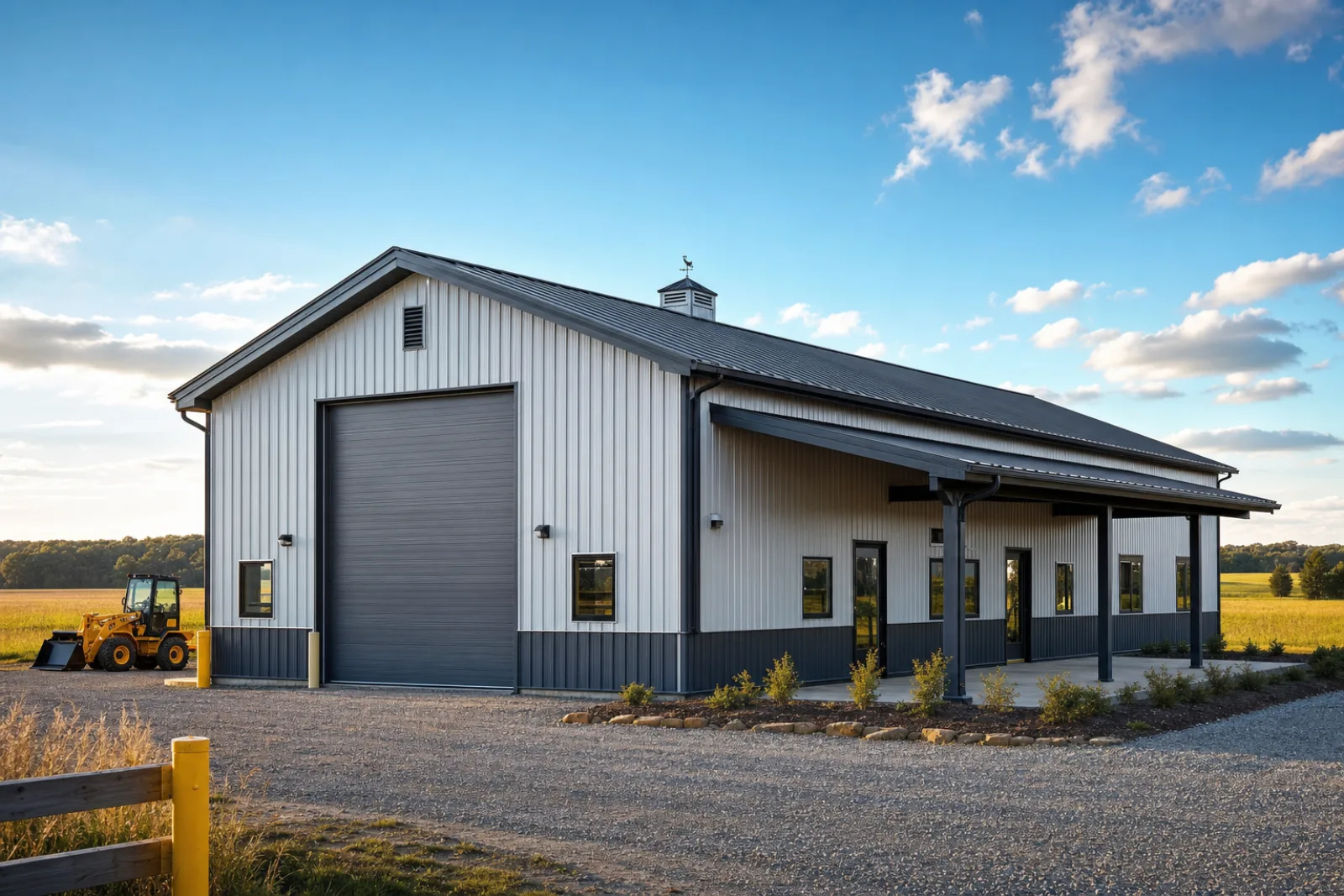
A metal building kit includes the structural steel shell and the plans to raise it: the primary frame, the secondary framing, the roof and wall panels, the fasteners, the trim and flashing, the anchor bolts, and a stamped set of engineered drawings. It does not include the foundation, insulation, doors, windows, or interior finish, so a kit hands you a weather-tight steel structure cut, punched, and labeled to bolt together on your slab.
That scope is the whole reason a kit costs what it does, and why two quotes that both say “kit” can land far apart. This page sits under the metal building kits pillar and gives you the full parts list: what ships, what you still have to buy, and how to read a quote so the price matches the steel behind it.
In the box
The parts a kit ships
Everything in a kit is the steel that makes the building stand and shed water, pre-engineered to your exact size. The parts arrive cut to length, bolt-holes punched, and tagged to the drawing, so you assemble in sequence rather than fabricate. Here is each piece and the job it does:
| Part | What it is | Why it matters |
|---|---|---|
| Primary frame | Columns and rafters, usually red iron | Carries the load to the foundation and sets the clear span |
| Secondary framing | Purlins and girts across the frame | Holds the panels flat and ties the frame together |
| Roof & wall panels | Formed steel sheets, often Galvalume or painted | The skin that keeps weather out and gives the finish |
| Fasteners | Self-drilling screws, bolts, washers | Locks each part to the next; a short count stalls the build |
| Trim & flashing | Eave, corner, gable, and base trim | Seals the seams and edges against wind and rain |
| Anchor bolts | Bolts that tie the frame to the slab | Joins steel to concrete; often shipped before the pour |
| Drawings | Stamped engineered plans and parts list | Your build manual and your permit document in one |
The shell a kit covers, line by line. Each row is steel or hardware you would otherwise source and engineer yourself.
The stamped drawings carry more weight than buyers expect. A real kit ships engineer-sealed plans drawn for your local load requirements, and that is the document your building department asks for before it issues a permit. Without sealed plans you own a pile of steel and no approved way to put it up, which is one of the common buying mistakes that catches first-time owners.
Not in the box
What a kit leaves to you
A kit is the shell, not the finished project, and the gap between the two is where budgets get blown. A low kit number can hide a long list of things you still buy and pay someone to install. The big ones:
- Foundation. The slab or piers get poured on site and almost never come with a kit. Your foundation choice drives a real share of the total.
- Insulation. Bare steel does nothing for temperature or sweat. Insulation is a separate line, and skipping it on a heated building invites condensation.
- Doors and windows. Walk doors, roll-up doors, and windows are options, not standard. Buying them with the kit lets the openings get framed into the steel from the start.
- Gutters and downspouts. Most kits ship eave trim but not gutters, so you add them to steer roof runoff away from the slab edge.
- Interior finish. Liner panels, drywall, electrical, plumbing, and flooring all sit on you. A kit gives you a dry shell to finish for the use.
Scope, not shortfall
None of this means a kit is incomplete. It means a kit is scoped to the part a factory does best, the engineered steel, and leaves site work and finishes to local trades. Budget for both halves from day one. When a quote looks low, check what it left out before you call it a deal, and run it against the buying mistakes guide so the gaps surface on paper, not on delivery day.
Reading the price
Why two kit prices cover different things
The word “kit” stretches across wildly different scopes, so a raw price comparison misleads. One seller quotes a bare shell; another bundles doors, insulation, and freight into the same line. Compare what each number buys before you compare the numbers, the same way the quote-reading guide walks a quote item by item. A few labels sellers stretch:
- Bare shell. Frame, panels, trim, and fasteners only. The lowest figure, and the one quoted most often to win on price.
- Shell plus openings. Adds framed door and window openings, sometimes the doors. A more honest starting point for most builds.
- Delivered and complete. Folds freight, insulation, and accessories into one number. Higher up front, fewer surprises later.
Freight is the quiet variable. A kit price that excludes delivery can land thousands of dollars ‹confirm› short of the real cost once the steel is trucked to your site. Ask whether the number is delivered or picked up, and from how far. The honest way to compare two kits is to line up the parts lists first: match the frame type, the panel gauge, the coating, the load rating, and the openings, then read the totals. A cheaper kit that drops to a lighter gauge is a different building, not a better price.
Read the parts list before the price. The list tells you what you are buying; the price only tells you what one seller decided to put in it.
Related
Read more
What sits in the box connects to the rest of the buying decision. Follow these next:
- Metal building kits: the complete guide (the parent pillar).
- How to read a metal building quote (line by line, so scope is clear).
- Common metal building buying mistakes (the gaps a low price hides).
- Foundation options and insulation (the site work and finish a kit leaves out).
- Metal building kit prices (what real-world kits run, by size and scope).