Metal garage flooring almost always starts with a concrete slab, then the choice is how you finish it: leave it bare, seal or polish it, coat it with epoxy or polyurea, or lay interlocking tiles or roll-out mats on top. A few buyers skip concrete and run gravel to keep the price down. The right floor for a metal garage comes down to what the space is for, how clean and tough you need the surface, and your budget.
This guide sits under the metal garage kits pillar and covers the floor decision you make before or just after the building goes up. Below: why the slab comes first, each finish from bare concrete to coatings to tiles, how they compare on cost and durability, which one fits your build, and how to keep moisture out from underneath. If a contractor quotes one floor without explaining the rest, this is the context that lets you choose on your own terms.
The slab
Why a metal garage floor starts with concrete
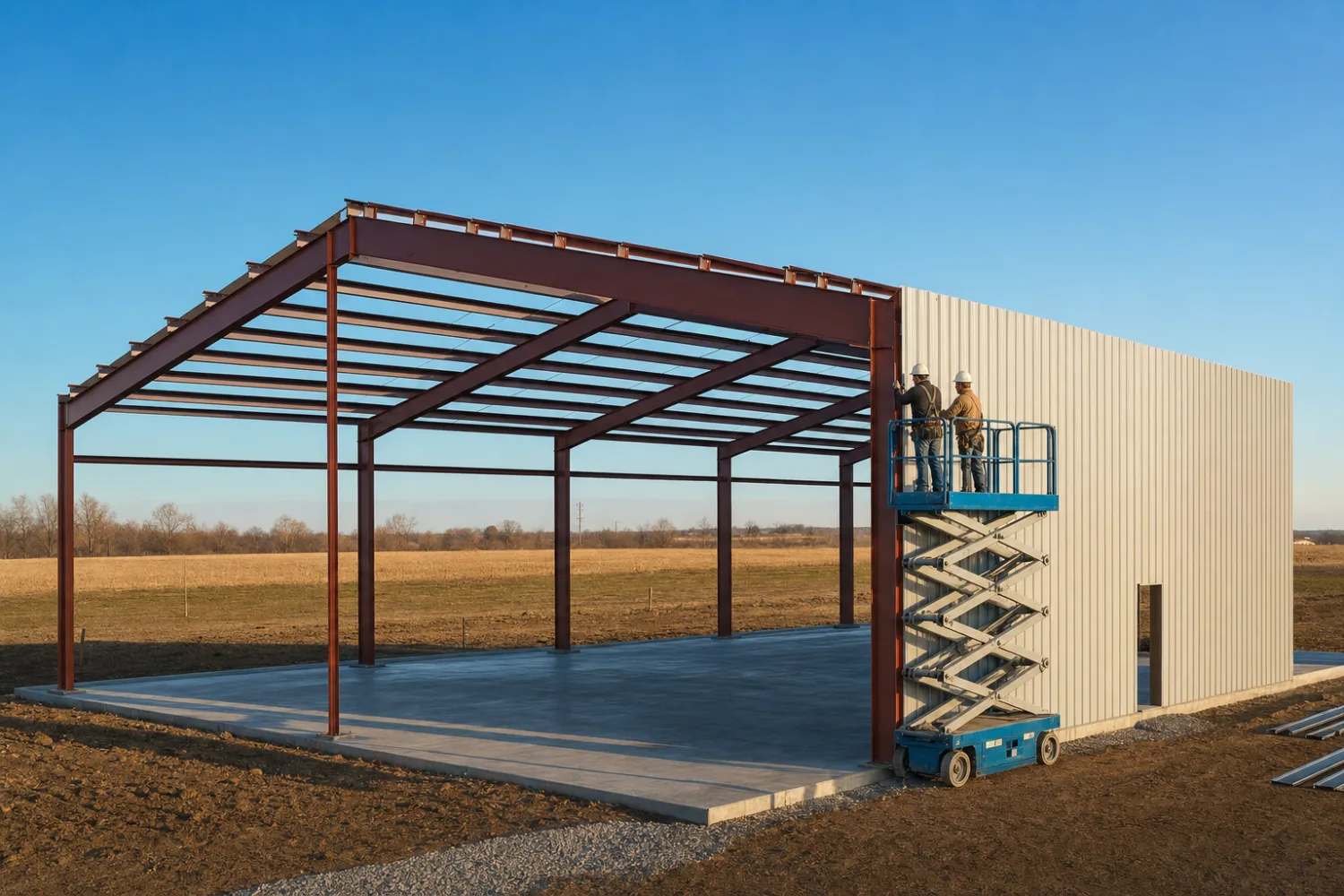
A poured concrete slab is the standard floor for an enclosed metal garage, and it does two jobs at once: it carries the building and it gives you a hard, flat surface to park and work on. Most garage slabs run about 4 inches thick ‹confirm›, with a thicker edge and rebar or wire mesh where the loads land. The slab is also the foundation, so its design belongs in the foundation options decision, not just the flooring one.
Get the slab right and every finish above it gets easier. A flat, cured, sealed slab takes coatings cleanly, holds tile flat, and resists the cracking that ruins a floor later. Pour it under spec and no epoxy or mat will save it. Because the slab ties into how the building is built and anchored, plan it with the kit, not as an afterthought once the steel is standing.
Put the moisture barrier under the slab
Before the pour, a layer of compacted gravel and a poly vapor barrier under the concrete keeps ground moisture from wicking up into your floor. Skip it and you get a damp slab that lifts coatings and grows condensation problems later. This is one detail you cannot add after the concrete is down, so confirm it is in the foundation plan.
Sealed concrete
Bare, sealed, and polished concrete
Bare concrete is the floor you already have once the slab cures, and for plenty of garages it is enough. It parks vehicles, holds weight, and costs nothing extra. The downside is that raw concrete is porous, so it soaks up oil, road salt, and water stains, and it sheds a fine dust that never quite stops.
A penetrating sealer is the cheapest upgrade that earns its keep. It soaks into the surface, cuts the dusting, and gives stains a chance to wipe up instead of soaking in. You can roll it on yourself in an afternoon, and you reapply it every few years ‹confirm›. For a garage that mostly parks cars and stores gear, sealed concrete is the practical floor.
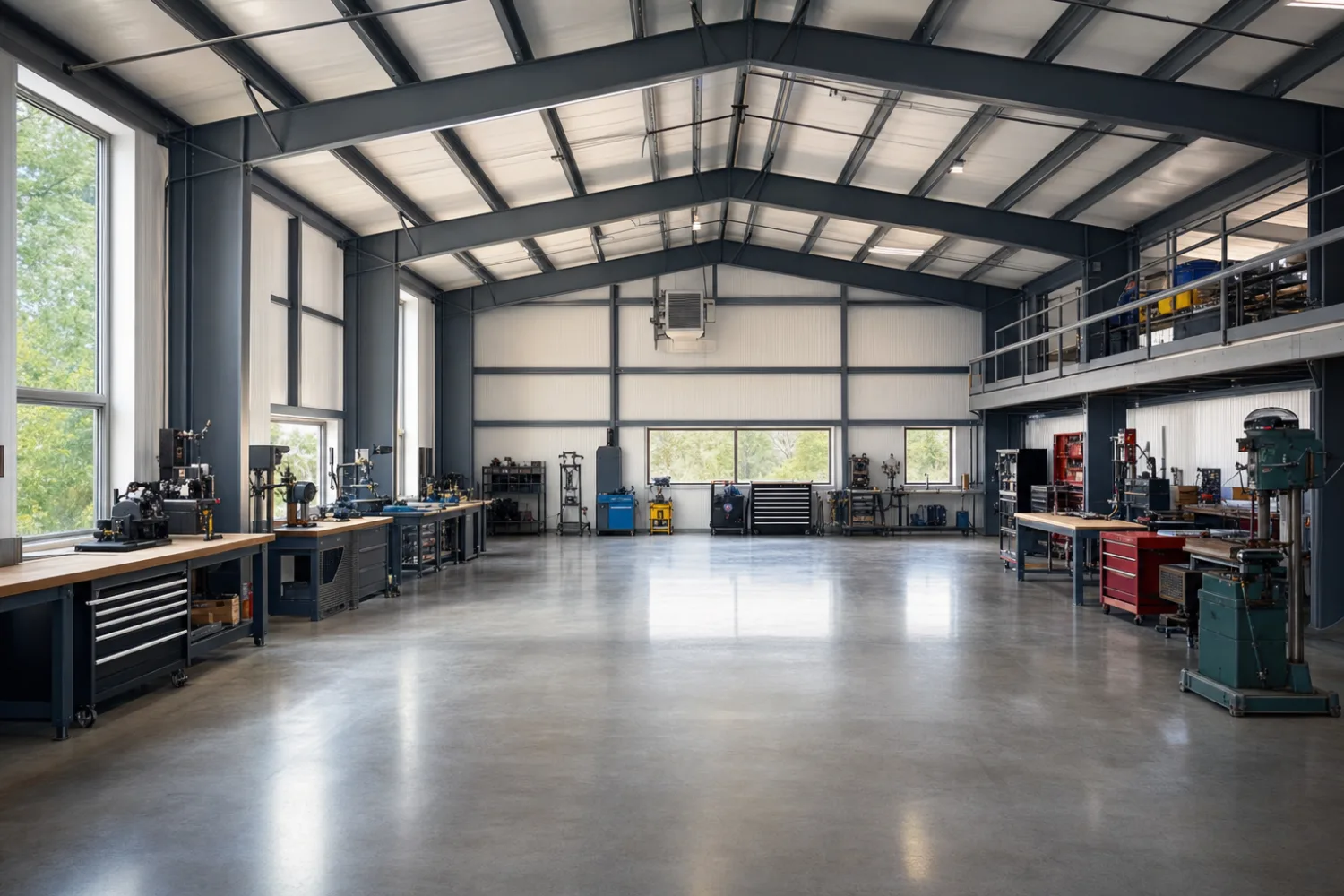
Polished concrete goes further. A crew grinds the slab with progressively finer pads until it shines, then seals it, leaving a hard surface that reads as finished without a coating on top. It resists tire marks and cleans up fast, which suits a garage that doubles as a showroom or a clean hobby space. It costs more than sealing and wants the right slab to start with, so weigh it against a coating before you commit.
Coatings
Epoxy and polyurea floor coatings
A floor coating bonds a tough, color-fast layer to the slab, sealing the concrete and giving you a surface that shrugs off oil, chemicals, and tire heat. This is the floor most people picture in a sharp workshop: a clean field color with flake or a solid finish, easy to mop, bright under the lights. The two common systems are epoxy and polyurea (often sold as polyaspartic).
Epoxy is the familiar, lower-cost option. A DIY kit covers a two-car floor for a few hundred dollars ‹confirm›, and a careful weekend gets you a finish that holds up well in a garage that is not punished daily. The catch is prep and patience: the slab has to be clean, etched, and dry, and epoxy can yellow in direct sun and chip under hot tires over years. It shines in a workshop-garage combo where the floor sees tools more than weather.
Polyurea and polyaspartic coatings cost more and usually want a pro crew, but they cure fast, resist UV yellowing, and take abuse that wears epoxy down. Many pros lay a polyurea base and a polyaspartic top for a floor rated to last many years ‹confirm›. If your garage is heated, used hard, or part of an insulated build you treat as a finished room, the upgrade is worth pricing out.
Tiles and mats
Interlocking tiles, roll-out mats, and gravel
Not every floor has to bond to the slab. Interlocking tiles and roll-out mats lay loose on top of cured concrete, so you can cover a stained or cracked slab in an afternoon with no etching, no cure time, and no permanent commitment. They suit renters, quick refreshes, and anyone who wants a floor today.
Interlocking PVC or polypropylene tiles snap together like a puzzle and lift out one at a time if one gets damaged. They add a little cushion underfoot, hide a rough slab, and come in patterns that dress up a two-car garage fast. Roll-out vinyl mats do the same job in long sheets, rolling out over the slab to catch drips and give you a softer surface to stand on. Both cost more per square foot than a sealer ‹confirm› and less labor than a pro coating.
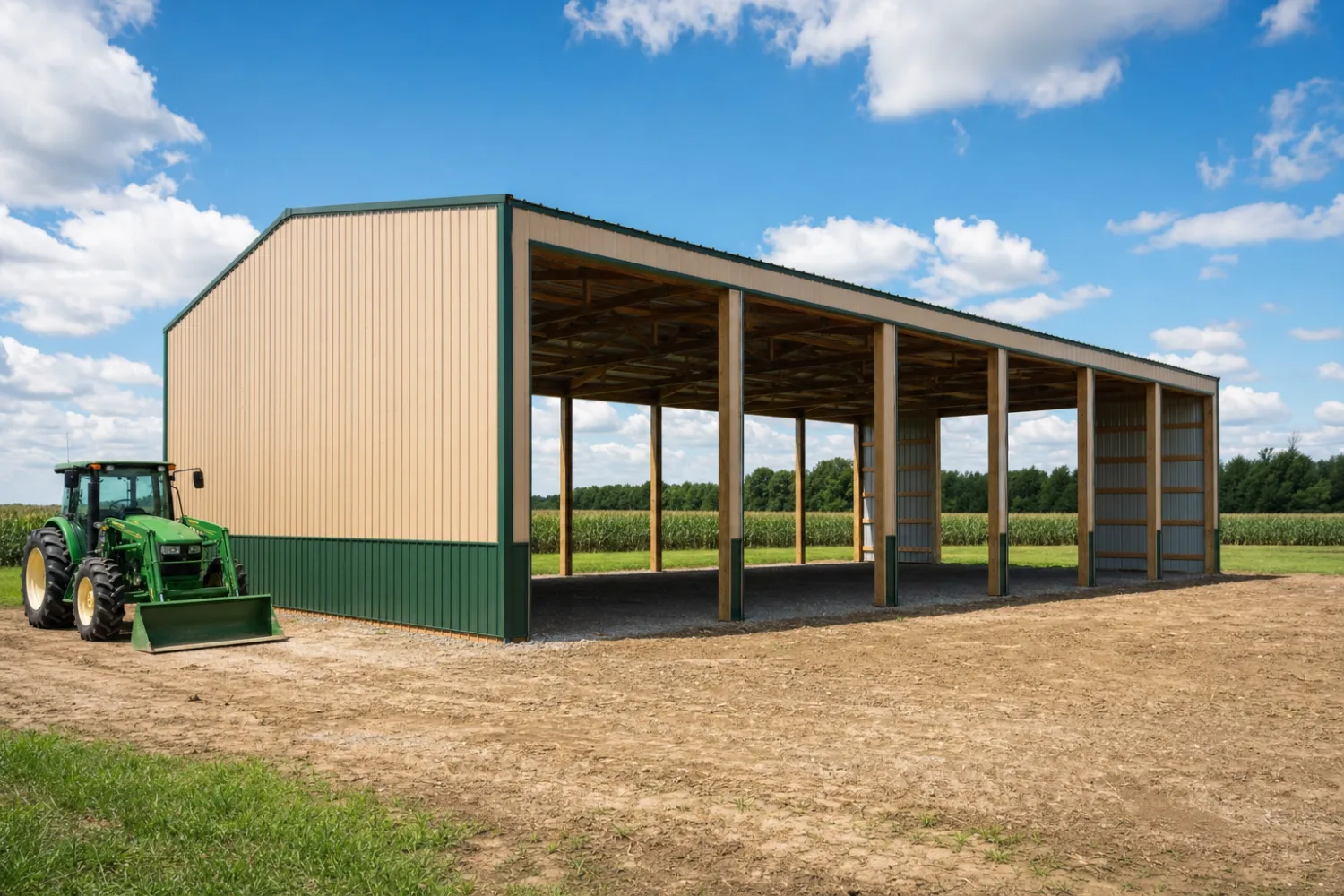
Gravel is the other end of the scale. Some open or unheated metal garages skip concrete and run a compacted gravel floor to keep the build cheap, which works for cold storage, equipment, or a structure you do not heat. The tradeoffs are real: gravel will not stay clean, you cannot roll a jack across it, and it does nothing for moisture or comfort. Treat it as a budget base, not a finished floor.
Head to head
Metal garage flooring options compared
The options split along a few lines: what they cost, how long they last, whether you can install them yourself, and what kind of garage they suit. Read them together, because the cheapest floor and the toughest floor are rarely the same one.
| Floor | Relative cost | Durability | DIY-friendly | Best for |
|---|---|---|---|---|
| Bare concrete | Lowest (slab only) | High, but stains and dusts | N/A | Parking, basic storage |
| Sealed concrete | Low | Good, reapply over time | Yes | Everyday garages on a budget |
| Polished concrete | Medium-high | High, no coating to chip | No | Clean, show-quality spaces |
| Epoxy | Medium | Good, can chip or yellow | Yes, with prep | Workshops, hobby garages |
| Polyurea / polyaspartic | Highest coating | Highest, UV-stable | Usually pro | Hard-use, heated shops |
| Interlocking tiles / mats | Medium per sq ft | Good, replace a piece | Yes | Renters, fast refresh |
| Gravel | Lowest overall | Low, not a finished floor | Yes | Cold storage, unheated |
A comparison, not a verdict. The right floor matches your use, your slab, and your budget.
Match the floor to the work it does. A showroom coating over a storage shed is money spent on shine you will not see, and bare concrete under a daily workshop is a stain waiting to happen.
Which to choose
Which floor your garage needs
Start with what the space is for and how clean you need it, then the floor follows. Here is how the common builds land:
- Everyday parking on a budget. Sealed concrete. It stops the dusting and stains for the least money, and you can roll it on yourself. Price it in the garage price guide.
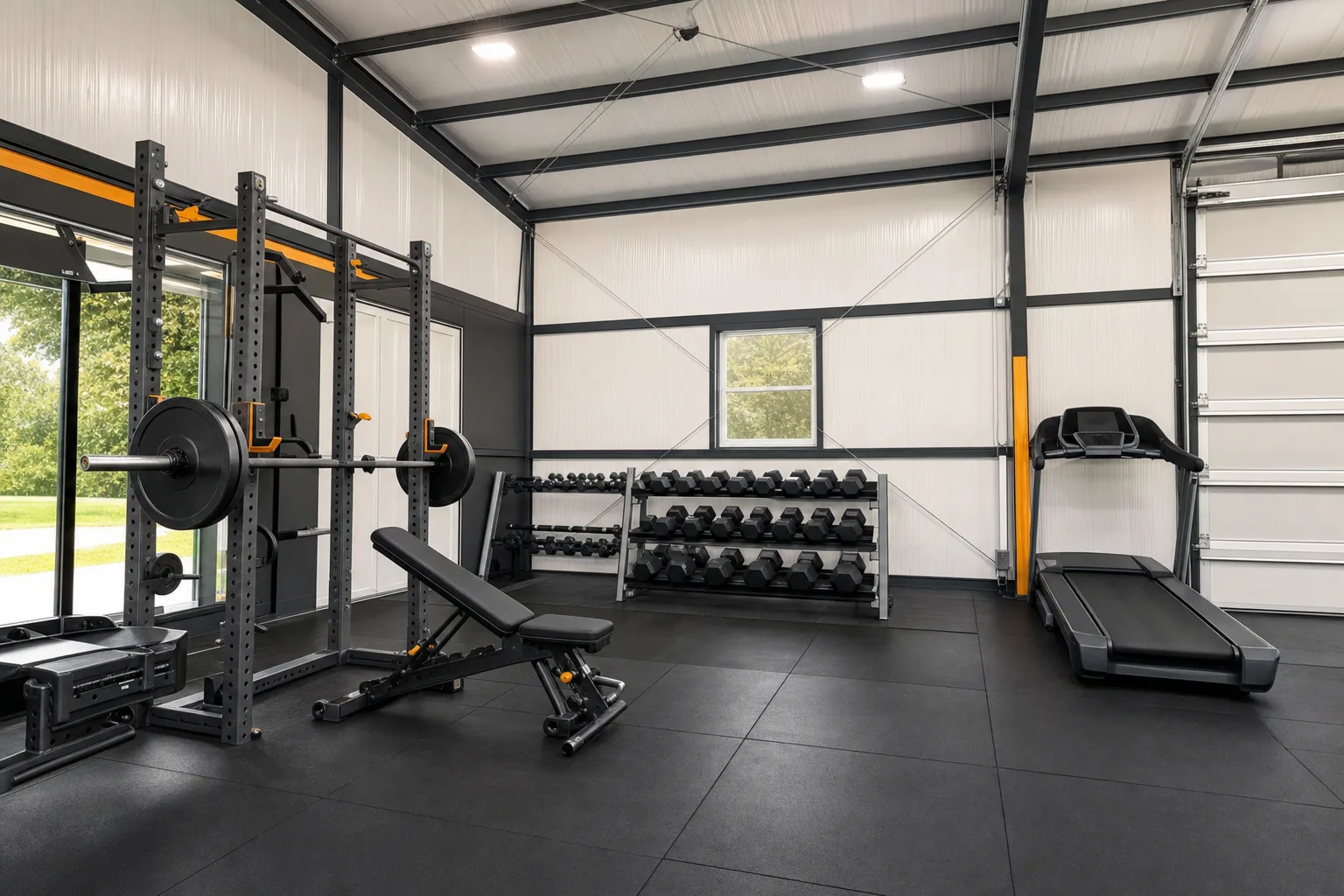
- Workshop or hobby shop. Epoxy, or polyurea if you use it hard. A coated floor wipes clean of oil and looks sharp under lights. A workshop-garage combo is the classic case.
- Renting, or covering a tired slab. Interlocking tiles or roll-out mats. No etching, no commitment, and you can take them when you go.
- Heated, insulated, finished room. Polyurea or polished concrete over an insulated and sealed floor. The surface should match the rest of the build.
- Cold storage or equipment you do not heat. Bare concrete, or gravel if the budget is tight and the use is rough.
Plan the floor before you order the building
Slab thickness, the vapor barrier, and any in-floor drains have to be set before the concrete pours, and the pour usually happens before the steel goes up. Decide your finish early so the slab is poured and cured to suit it. The buyer's guide walks the full sequence, and the buying checklist covers what else to lock down before you sign.
Moisture
Keeping moisture out from under the floor
The most common floor problem in a metal garage is not wear, it is water coming up from below or condensing from the air. A slab without a vapor barrier wicks ground moisture, which lifts coatings, beads under mats, and feeds rust on anything sitting on the floor. The fix lives in the build: gravel, a poly barrier, and a slab poured to drain are what keep the floor dry, and they tie straight into how you handle condensation and ventilation in the rest of the building.
Air does the rest of the damage. A cold slab under warm, humid air sweats, so a floor that stays wet in summer is usually a humidity problem, not a leak. Ventilation, a sealed or coated slab, and insulation under a finished floor all help. In real winter country this matters even more, which our cold-climate guide covers alongside the insulation that keeps the whole shell from sweating.
Cost
What metal garage flooring costs
Flooring spans a wide range, because you are choosing both a base and a finish. The concrete slab is the biggest single line, and it is part of the foundation cost, not an add-on you can skip on an enclosed garage. As an illustrative 2026 guide, a poured garage slab runs a few dollars per square foot ‹confirm›, a roll-on sealer adds little to that, an epoxy kit covers a two-car floor for a few hundred dollars ‹confirm›, and a professional polyurea system or polished finish runs several times that ‹confirm›. Tiles and mats price by the square foot in between.
The honest way to weigh it is by what the floor has to do over the life of the building. A sealer that costs little and lasts years is the bargain for a parking garage, while a cheap floor under a hard-working shop is a redo waiting to happen. The slab itself is the line that pays back the most: pour it right, with the barrier and the thickness, and every finish on top lasts longer. For the full picture, see the garage price guide and the wider cost guide.
One cost lives off the flooring line: the foundation it sits on. A bigger or thicker slab, in-floor drains, or a finished pour all add to the total before the building arrives, and they belong in your budget from the start. Read the slab against the rest of the build in the size chart and the metal building prices pillar so the floor and the footprint are costed together, not in isolation.
FAQ
Metal garage flooring: common questions
What is the best flooring for a metal garage?
There is no single best floor. Sealed concrete is the best value for everyday parking, epoxy or polyurea coatings are best for a clean workshop, and interlocking tiles or mats are best when you rent or want to cover a tired slab. Match the floor to how you use the space and how clean you need it.
Do you need a concrete slab in a metal garage?
For an enclosed metal garage, almost always. The slab carries the building and gives you a hard, flat floor, so it is part of the foundation rather than an upgrade. Some open or unheated structures run gravel instead to save money, but a finished, lockable garage wants concrete. See the foundation options guide for slab design.
Is epoxy or polyurea better for a garage floor?
Both seal and protect the slab, but they trade off. Epoxy costs less and you can roll it on yourself, though it can chip and yellow over years. Polyurea and polyaspartic cost more and usually want a pro, but they cure fast, resist UV, and last longer under hard use. For a heated, hard-working shop, polyurea earns its price.
Can you put epoxy on a garage floor yourself?
Yes, with careful prep. The slab has to be clean, free of old sealer, etched, and fully dry before you coat it, and most failures trace back to skipping that step. A DIY kit covers a two-car floor for a few hundred dollars ‹confirm›, and a patient weekend gets a solid result on a slab that is not abused daily.
How do you stop a metal garage floor from sweating?
A sweating floor is usually condensation, not a leak: a cold slab under warm, humid air. The fixes are a vapor barrier under the slab, a sealed or coated surface, ventilation, and insulation under a finished floor. It is the same problem you manage with condensation and ventilation across the whole building.
What is the cheapest way to finish a garage floor?
A penetrating concrete sealer. It rolls on over a cured slab in an afternoon, cuts the dusting, and helps stains wipe up instead of soaking in, for a small fraction of the cost of a coating or tiles. For a garage that mainly parks cars and stores gear, sealed concrete is the practical budget floor.
Can you use interlocking tiles in a metal garage?
Yes. Interlocking PVC or polypropylene tiles lay loose over a cured slab with no etching or cure time, snap together fast, and lift out one at a time if one is damaged. They suit renters and quick refreshes, and they cover a rough slab well. They cost more per square foot than a sealer ‹confirm› but install in a day in a two-car garage.
Related guides
Keep reading
This floor decision connects to the rest of the garage build. Follow these next:
- Metal garage kits: the complete guide (the parent pillar).
- Metal garage buyer's guide (the full build sequence, start to finish).
- Workshop-garage combo buildings (where a coated floor earns its keep).
- Insulated metal garage kits (insulation under a finished floor).
- Metal garage kit prices (the floor and slab in the wider budget).
- Foundation options for metal buildings (the slab your floor sits on).
- Metal building cost guide (the full cost picture, line by line).