Gauge is how steel thickness gets measured, and the number runs backwards: a lower gauge means thicker steel. A 12-gauge frame tube is thicker and stronger than a 14-gauge one, and a 26-gauge wall panel is thicker than a 29-gauge panel. That reverse scale trips up most first-time buyers, so hold onto one rule: lower gauge, thicker steel, more metal in the building.
This guide sits under the metal building kits pillar in the Basics & Buying silo. Below: what gauge measures, why the numbering is upside down, how framing gauges differ from panel gauges, what thicker steel buys you, and how gauge shows up on a quote. When a price looks too good, gauge is often the reason, and this is the context that lets you read it.
What gauge is
What steel gauge measures
Gauge measures the thickness of a sheet or wall of steel. It is a single number that tells you how much metal sits between you and the weather, or how much wall a frame tube carries. The lower the gauge, the thicker the steel, and the more it weighs per square foot.
Two parts of a metal building get described in gauge: the framing and the panels. The framing is the skeleton, the columns and tubes that hold the building up. The panels are the skin, the steel sheets that wrap the roof and walls. Both get a gauge number, but they live on different scales, which is where confusion starts. For the full parts list, see what is included in a metal building kit.
Gauge is a thickness standard, not a strength rating. It tells you how thick the steel is, not how the building is engineered, how it is braced, or what loads it is stamped for. Two buildings can share a panel gauge and still differ in how they hold up, because the frame, the spacing, and the coating all matter too. Treat gauge as one spec among several, not the whole story.
The reverse scale
Why a lower gauge number means thicker steel
The numbering is backwards because gauge started as a count, not a measurement. It came from the wire-drawing trade, where the gauge number tracked how many times a wire was pulled through a die to thin it down. More passes meant a thinner wire and a higher number. Thicker stock needed fewer passes, so it kept a lower number.
That history is why a 12-gauge tube is heavier than a 14-gauge tube, and why a 26-gauge panel is thicker than a 29-gauge panel. The number goes up as the steel gets thinner. If you read gauge like a normal scale, you will get it exactly wrong, so flip your instinct: smaller number, thicker steel.
The one rule to remember
Lower gauge equals thicker steel. A 24-gauge panel is thicker than a 26, which is thicker than a 29. A 12-gauge tube is thicker than a 14. When a quote lists a higher gauge number than a competitor, it is offering thinner steel, not more of it.
Frame vs panel
Framing gauges and panel gauges are not the same
Framing and panels use the same backwards scale, but they sit in different ranges, so you cannot compare a frame number to a panel number. A 12-gauge frame and a 26-gauge panel are both common and both correct. They are measuring different parts of the building.
Framing gauges show up on tube-steel buildings, where the columns and rafters are hollow square tubing. The common range is 14-gauge on lighter carports and 12-gauge on stouter garages and covers. A 12-gauge tube has a thicker wall than a 14, so it carries more load and resists bending. Note that heavier buildings skip gauge entirely and use hot-rolled red iron, which is sized by beam shape rather than sheet thickness. Our red iron vs tube steel guide walks that split in depth.
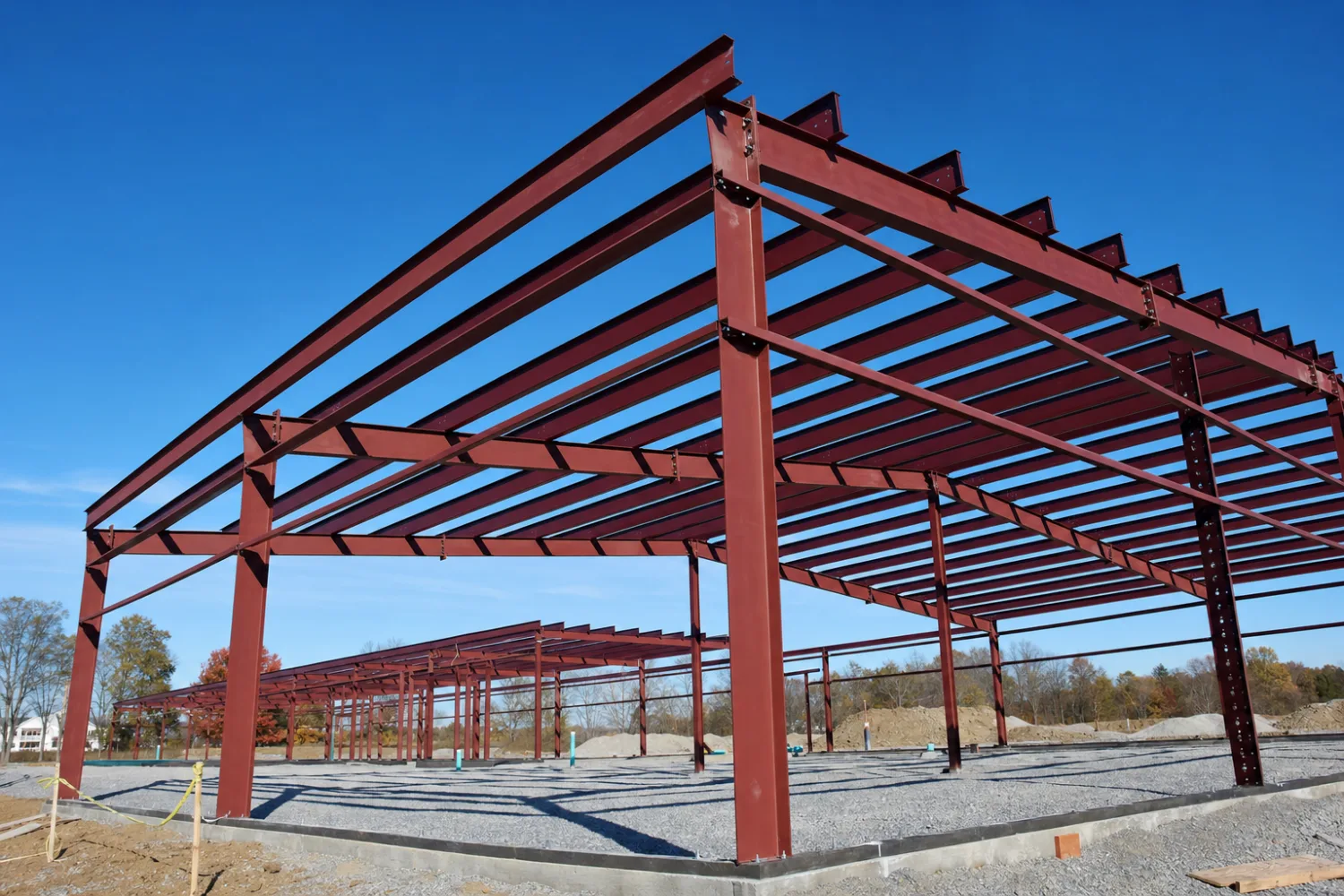
Panel gauges show up on the roof and wall sheets of almost every metal building, tube or red iron. The common range is 29-gauge as a budget standard and 26-gauge as the step up, with 24-gauge available where you want the thickest skin. A 26-gauge panel is much stiffer than a 29, which is why it dents less and lies flatter on the wall. The coating on those panels matters as much as the gauge, which is its own decision.
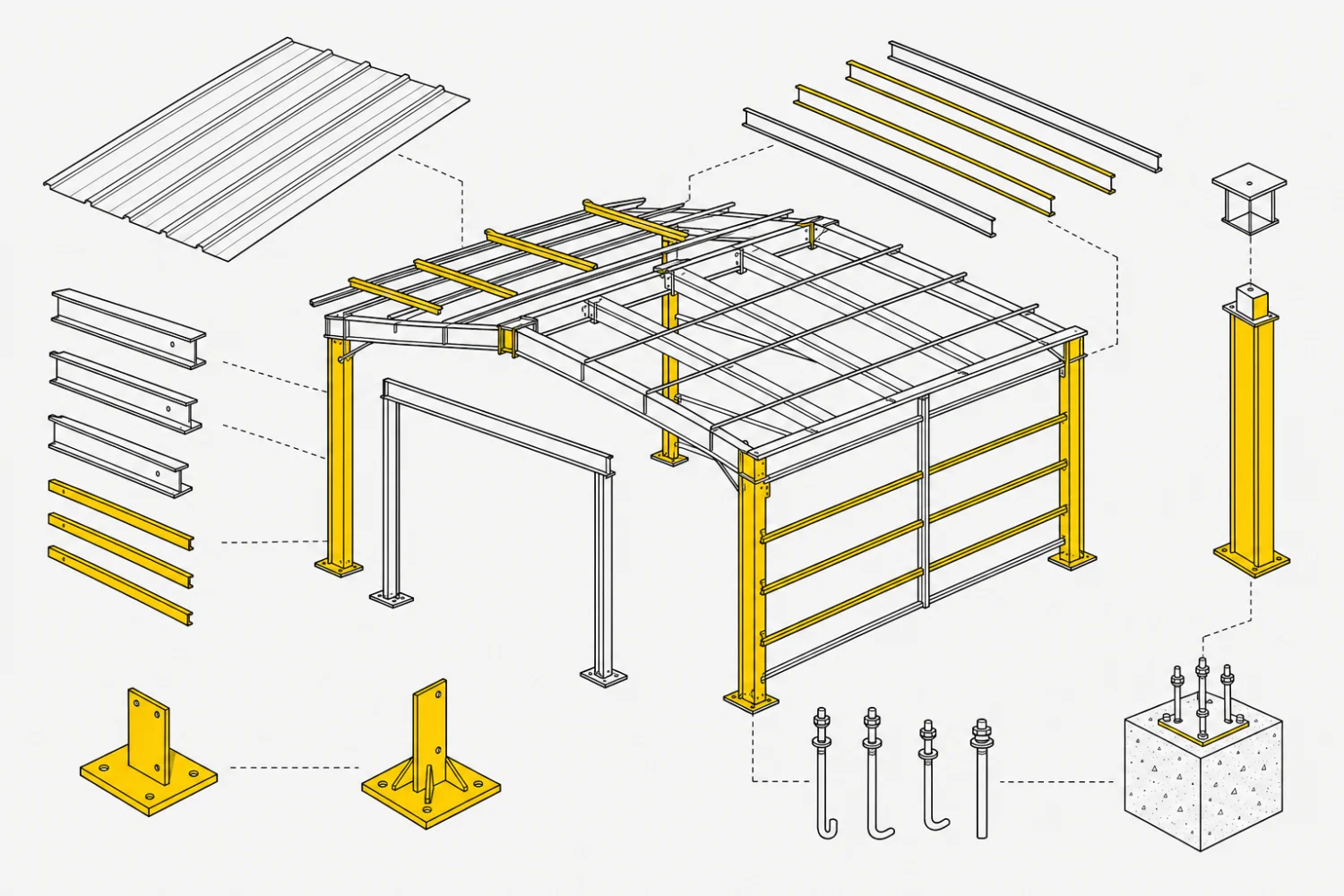
So when you read a spec, sort the numbers first. Frame numbers (12, 14) describe the skeleton. Panel numbers (24, 26, 29) describe the skin. Comparing a frame gauge to a panel gauge is comparing a beam to a bedsheet. The metal building glossary defines each term if a spec sheet throws one you do not recognize.
At a glance
Common gauges and where they show up
Here are the gauges you will meet most often, what part of the building each describes, and what the number tells you. Read it as a map, not a rulebook, because the right gauge depends on your loads, not on a chart.
| Gauge | Where it is used | What it means |
|---|---|---|
| 29-gauge | Roof and wall panels (budget standard) | Thinnest common panel. Fine for mild climates and covered walls, more prone to denting and oil-canning. |
| 26-gauge | Roof and wall panels (step up) | Thicker, stiffer skin. Resists dents and waviness better, a common upgrade on shops and homes. |
| 24-gauge | Roof and wall panels (premium) | Thickest common panel. Flattest look and most impact resistance, often standing-seam roofs. |
| 14-gauge | Tube frame (lighter builds) | Lighter frame tubing for carports and small covers with modest loads. |
| 12-gauge | Tube frame (heavier builds) | Thicker frame tubing for garages and covers in wind or snow country. |
A general map of common gauges. Match the gauge to your loads, not to a number on a chart.
Thicker is not always better
A heavier gauge costs more and adds weight, and past a point it buys capacity you will never load. A 29-gauge panel on a covered porch wall or a 14-gauge tube on a small carport can be the right call. The goal is not the thickest steel you can buy. It is the gauge that matches the loads your building will see.
What thicker buys
What thicker steel buys, and where it is overkill
Thicker steel buys three things on the panels: dent resistance, less oil-canning, and a bit more load. Dent resistance is the obvious one, since a heavier panel shrugs off hail and ladder knocks that would mark a thin sheet. Oil-canning is the visible waviness you see on large flat panels, and a stiffer gauge lies flatter. The load gain is real but small, because most panel strength comes from the rib profile and the purlin spacing, not the sheet alone.
On the frame, thicker tube buys load capacity and stiffness. A 12-gauge frame holds more snow and resists more wind than a 14, which is why colder and windier sites step up. Past the limits of tube, the answer is not a thicker tube but a different frame: red iron, sized for the span. That choice gets stamped against your snow and wind loads, not picked off a gauge chart.
Overkill is real, and it costs you twice: once in steel and once in handling. A 24-gauge panel on a detached carport wall that never sees weather is money spent on a spec nobody will notice. A 12-gauge frame under a 10-foot cover in a mild climate is the same. Spend the gauge where the load lives, the roof in snow country, the windward wall, the frame on a wide span, and keep the standard gauge where the building is doing light duty.
Match the gauge to the load, not to the brochure. The thickest steel on a light-duty wall is wasted money, and the thinnest steel under real snow is a failure waiting for winter.
On the quote
How gauge shows up on a quote
Gauge is one of the first lines a low price hides. When two quotes look far apart, the cheaper one is often thinner steel: a 29-gauge panel against a 26, or a 14-gauge frame against a 12. The building looks identical in the rendering. The difference is in the spec sheet, and the spec sheet is where you have to look.
A few tells separate a real spec from a vague one:
- Panels list a gauge. Look for “26-gauge” or “29-gauge” on the roof and wall sheets, stated separately if they differ.
- Frames list a gauge or a beam. Tube buildings read “12-gauge” or “14-gauge tube.” Red iron reads “structural steel” or “I-beam,” sized by shape, not gauge.
- The cheap number is missing. A quote that names a price but not a gauge is asking you to assume the thicker one. Ask, and get the gauge in writing before you compare.
When the gauge is vague, ask two plain questions: what gauge are the panels, and what gauge or beam is the frame? A supplier who answers without hesitating is selling a known spec. One who cannot is selling a number on a banner. The quote-reading guide walks the rest of the line items, and the coatings guide covers the finish that protects whatever gauge you choose.
FAQ
Steel gauge: common questions
What gauge steel is best for a metal building?
There is no single best gauge, because framing and panels use different scales and your loads decide the right one. For panels, 26-gauge is a strong all-around choice and 29-gauge suits lighter, milder-climate builds. For tube frames, 12-gauge handles more load than 14. Match the gauge to your snow, wind, and use, not to the lowest or highest number on a chart.
Is 26 gauge better than 29?
For most buildings, yes. A 26-gauge panel is thicker than a 29, so it resists dents and oil-canning better and lies flatter on the wall. A 29-gauge panel is fine for mild climates and light duty, and it costs less. The upgrade to 26 is worth it on shops, homes, and anything in hail or wind country.
What gauge are the frames?
On tube-steel buildings, frames are usually 12-gauge or 14-gauge square tubing, with 12 being the thicker, stronger option. Heavier buildings skip gauge entirely and use hot-rolled red iron, which is sized by beam shape rather than sheet thickness. So a frame is described either by a gauge number or by a beam size, depending on the build.
Does thicker steel last longer?
Not on its own. Corrosion is what shortens a panel life, and that is fought by the coating, galvanized or Galvalume, more than by raw thickness. A thicker gauge resists dents and physical wear, but a well-coated 29-gauge panel can outlast a poorly coated 26. Gauge buys stiffness; the finish buys longevity.
What gauge steel for a garage?
For the panels on a one or two-car garage, 26-gauge is a solid choice and worth the upgrade over 29 if you are in wind or hail country. For a tube frame, 12-gauge gives more strength than 14 and is the common pick for an enclosed garage. Confirm both numbers against your local loads before you order.
What does gauge mean in steel?
Gauge is a measure of steel thickness on a backwards scale, where a lower number means thicker steel. It comes from the old wire trade, where more drawing passes thinned the metal and raised the number. A 12-gauge tube is thicker than a 14, and a 26-gauge panel is thicker than a 29.
Related guides
Keep reading
Gauge is one spec on the sheet. These guides cover the ones next to it:
- Metal building kits: the complete guide (the parent pillar).
- Red iron vs tube steel framing (where gauge stops and beam shape begins).
- Galvanized vs Galvalume vs painted steel (the coatings that protect any gauge).
- What is included in a metal building kit (every part the gauge applies to).
- How to read a metal building quote (where gauge hides on the price).
- Metal building glossary (every spec term defined).