To insulate a metal garage, you line the inside of the steel shell with a heat-resisting layer, roof first, then walls, behind a vapor barrier that keeps moist air off the cold metal. Four materials do this work: batt or blanket, rigid foam board, spray foam, and a reflective radiant barrier. Handle the roof, the walls, the garage door, and airflow together and a bare steel box turns into a garage you can heat, work in, and store things in without rust dripping off the ceiling.
This guide sits under the metal garage kits pillar and covers the hands-on side: how to do the work, in what order, and where a weekend job ends and a pro starts. If you are still choosing a building, the insulated metal garage kits guide covers buying it pre-specified from the factory; this one is the install. For the four materials compared head to head on R-value, the metal building insulation guide goes deeper.
Start here
Insulate during the build, or retrofit later?
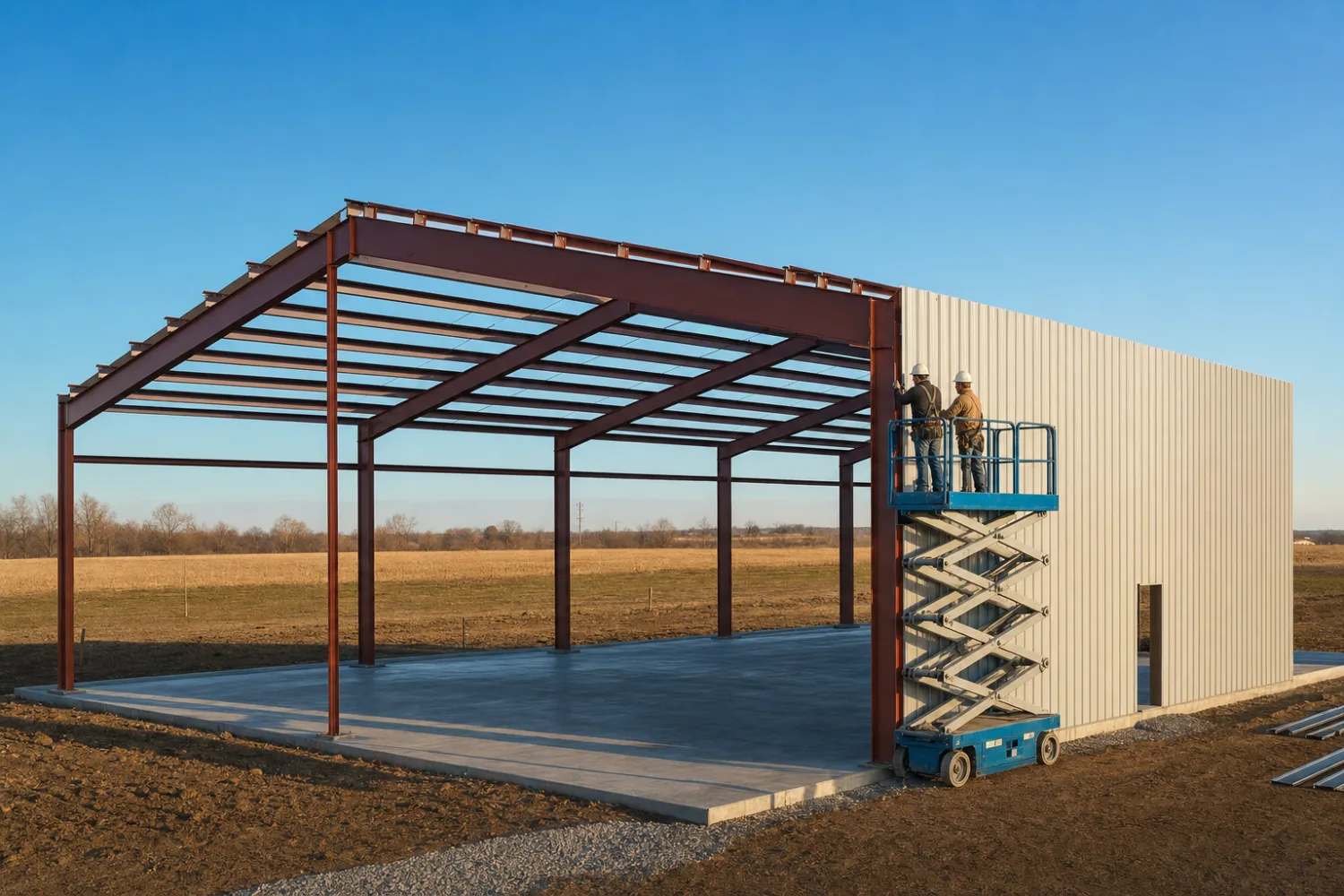
The easiest time to insulate a metal garage is while the panels are still off, before the shell closes in. Batt and radiant barrier drape over the framing and get pinned as the steel goes on, so the insulation hides behind the walls with no extra labor later. If you are ordering a new building, decide the insulation now and let the kit be engineered for the added weight.
Most owners come to this with a garage already standing, and that is fine. You can insulate an existing metal garage from the inside, working between the girts and purlins, around wiring, doors, and whatever is stored against the walls. It costs more in labor than building it in, and a couple of materials get harder to fit after the fact, but every type still works on a finished shell.
If the garage is new and you are weighing a factory package against doing it yourself, settle the size and use first. A two-car garage you heat as a workshop earns a heavier insulation plan than a cold storage bay you visit twice a month.
Step 1 / Pick the material
Step 1: pick insulation that fits how you use the garage
Pick the insulation by how you use the garage, not by the cheapest roll. A garage you only park cold cars in needs little; one you heat into a shop needs a real thermal layer.
You will choose among four materials. Batt or blanket is fiberglass faced with a vapor barrier, the lowest cost and the friendliest to install yourself, and it is what most garages get. Rigid foam board cuts to fit between the framing and holds more warmth per inch. Spray foam expands to seal every gap and the steel itself, the warmest option and the priciest. A reflective radiant barrier is a thin foil layer that bounces summer roof heat, useful as a supplement in hot, sunny country. The metal building insulation guide weighs all four if you want the long version.
How much you need follows the climate and whether you heat the space. An unheated garage in a mild region does its job with a thin faced blanket, while a heated garage in cold country often targets something in the R-13 to R-19 range ‹confirm› in the walls and more in the roof ‹confirm›. If you sit in real snow, start with the best metal garages for cold climates guide before you lock a number.
Step 2 / Map the garage
Step 2: insulate the roof, walls, and door in order
Insulate the garage top-down: roof first, then the walls, then the door. The roof takes the most sun in summer, loses the most heat in winter, and is where condensation drips from, so it earns the first dollar.
Each surface wants a slightly different approach. Here is how the zones map:
| Zone | What to use | Why it matters |
|---|---|---|
| Roof / ceiling | Faced batt, or spray foam on the underside of the deck | Biggest temperature swing and the source of most dripping |
| Walls | Faced batt between the girts, or rigid board cut to fit | Holds heat once the roof is handled, and the easiest surface to DIY |
| Garage door | A door insulation kit, or rigid foam cut to the panels | A bare steel door undoes much of the wall work |
| Slab edge / floor | Rigid board at the perimeter, a sealed floor finish | An uninsulated slab leaks heat no wall layer can recover |
A garage-specific map, not a ranking. Insulate top-down and seal the openings.
The garage door is the surface most people forget. A bare steel door is one large uninsulated panel, so a door insulation kit or rigid foam cut to the sections keeps your wall work from leaking out the front. The floor counts too; an insulated, sealed slab stops the cold that climbs up through bare concrete.
Step 3 / Vapor barrier
Step 3: face the vapor barrier the right way
Face the vapor barrier toward the inside of the garage, the warm side in winter. That facing is what stops humid indoor air from reaching the cold steel and condensing inside the wall.
Faced batt has the barrier built into one side, so you install it with the facing toward the room, never against the panel. Spray foam acts as its own air and vapor seal, which is part of why it performs so well. Rigid board and radiant barrier often need a separate vapor layer, and getting the placement wrong can trap moisture in the wall, which is worse than skipping it. When the assembly is in doubt, check the placement against your climate with a local installer.
The mistake that rusts a garage
Installing faced batt backwards, with the vapor barrier against the cold panel, traps moisture between the insulation and the steel and rusts the shell from the inside. The facing always goes toward the heated room. The same logic is why galvanized, Galvalume, and painted steel resist corrosion differently once moisture gets through.
Step 4 / Add airflow
Step 4: pair the insulation with ventilation
Insulation and the vapor barrier solve half the moisture problem; airflow solves the rest. Even a tight, insulated garage needs ventilation to carry damp air out, more so if you run a heater, weld, or park a wet car inside.
Ridge vents, gable vents, and intake low on the walls let the building breathe so moisture never builds to the point of dripping. The full plan lives in the condensation and ventilation guide, and it is the step most DIY jobs skip. Insulation without airflow can sweat as badly as bare steel.
Insulate the roof, seal the vapor barrier the right way, and let the building breathe. Skip any one of the three and the garage still sweats.
DIY or hire
Should you insulate it yourself or hire it out?
You can insulate a metal garage yourself if you stick to batt or rigid board; spray foam is the one job most owners hire out. Faced blanket and foam panels need hand tools, patience, and care with the vapor facing, all within reach of a weekend.
Spray foam wants professional equipment and training to mix and apply, so it is rarely a DIY material. As a dated 2026 orientation, a DIY batt job on a single garage runs in the low hundreds to low thousands of dollars in materials ‹confirm›, while a professional spray-foam package can add several thousand ‹confirm›. Treat those as illustrative ranges, not a quote; the metal garage kit prices and metal building cost guide set insulation next to the other line items.
Whichever route you take, plan it before you finish the walls. Retrofitting around a lined, wired garage costs more than doing it open. Size and spec the building first with the metal building size chart and the buying checklist, then insulate top-down: roof, walls, door, and airflow, in that order.
FAQ
How to insulate a metal garage: common questions
What is the best way to insulate a metal garage?
Work top-down. Insulate the roof first, then the walls, then the garage door, with a vapor barrier facing the heated room and ventilation to carry damp air out. Faced batt is the common DIY choice, while spray foam gives the tightest seal for a heated shop. Match the material to how you use the garage and the climate it sits in.
Can you insulate a metal garage yourself?
Yes, if you use batt or rigid board. Faced blanket and foam panels install with hand tools and care with the vapor facing, well within a DIYer’s reach. Spray foam is the exception, since it needs professional equipment and is usually hired out. Either way, get the vapor barrier facing the heated side, never the cold panel.
What is the best insulation for a metal garage?
There is no single best one. Faced batt suits a storage garage, rigid board fits a heated garage with finished walls, and spray foam wins for a shop or a cold-climate build because it seals air leaks as well as resisting heat. A radiant barrier helps against summer roof heat in hot climates. Match the type to your use and your climate.
Do I need a vapor barrier in a metal garage?
In most climates, yes. A vapor barrier keeps humid indoor air from reaching the cold steel and condensing inside the wall, which is the main cause of a metal garage dripping. Faced batt has it built in; install it with the facing toward the room, never against the panel, or you trap moisture and rust the shell.
How do I insulate a metal garage door?
Use a garage door insulation kit sized to the panels, or cut rigid foam board to fit each section. A bare steel door is a large uninsulated panel that bleeds the heat your walls hold, so insulating it is worth the modest effort. The garage door options and sizes guide covers door types if you are still choosing one.
Will insulating my metal garage stop condensation?
It stops most of it. Insulation keeps the steel above the dew point so it sweats less, and a vapor barrier blocks humid air from reaching the panel. The last piece is ventilation to carry the remaining moisture out, so insulation, vapor barrier, and airflow work together to keep the garage dry.
How much does it cost to insulate a metal garage?
It varies by material and garage size. A DIY batt job runs in the low hundreds to low thousands of dollars in materials ‹confirm›, while a professional spray-foam package can add several thousand ‹confirm›. Treat any figure as a dated 2026 illustrative range and confirm it with a local installer for your exact building.
Related guides
Keep reading
Insulating a garage connects to the rest of the build. Follow these next:
- Metal garage kits: the complete guide (the parent pillar).
- Insulated metal garage kits (buying it pre-specified from the factory).
- Best metal garages for cold climates (specs that hold heat and snow).
- Metal garage door options & sizes (insulating the biggest opening).
- Condensation & ventilation (the airflow half of a dry garage).
- Metal garage kit prices (where insulation lands on the total).
- Metal building size chart (size the garage before you spec it).