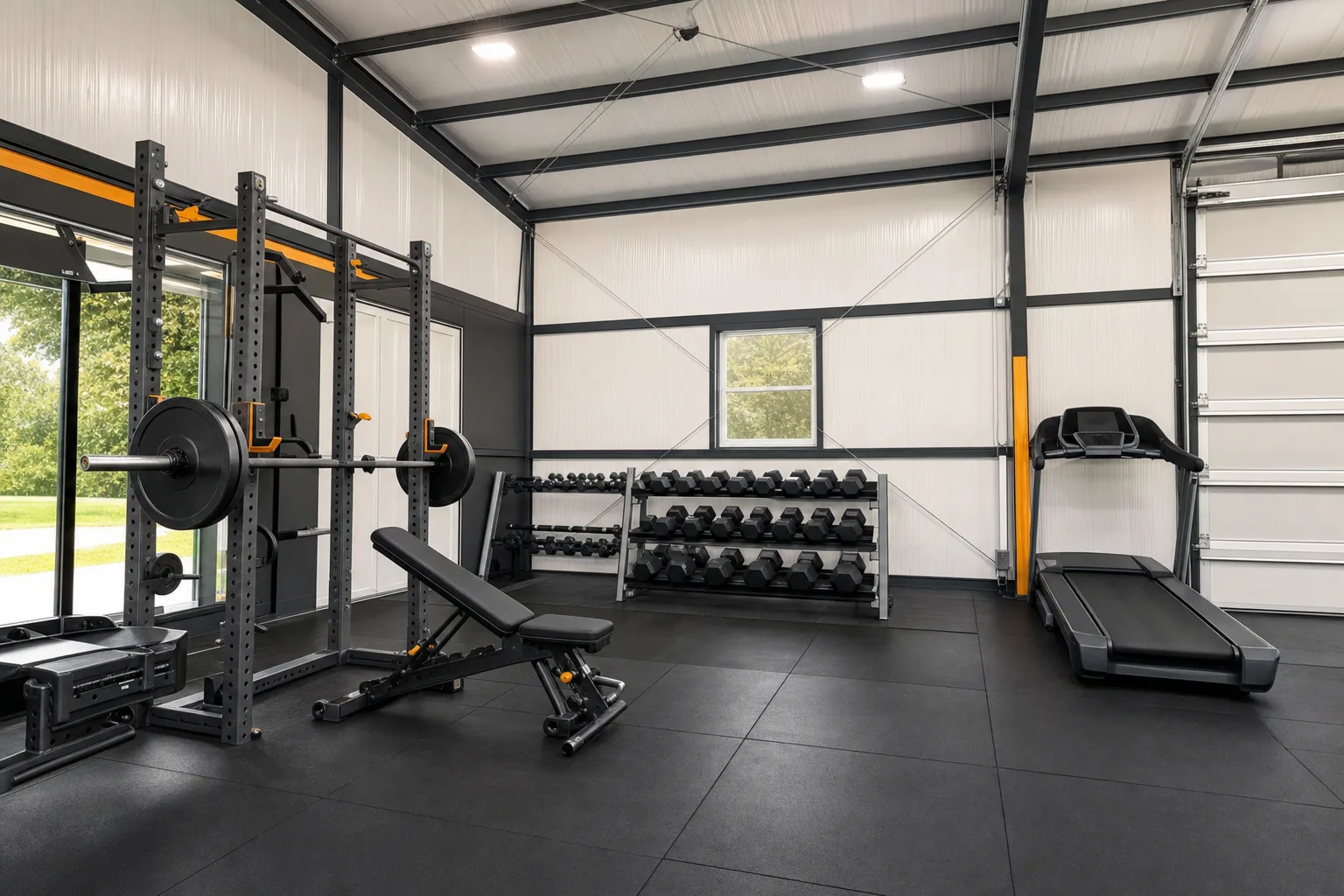
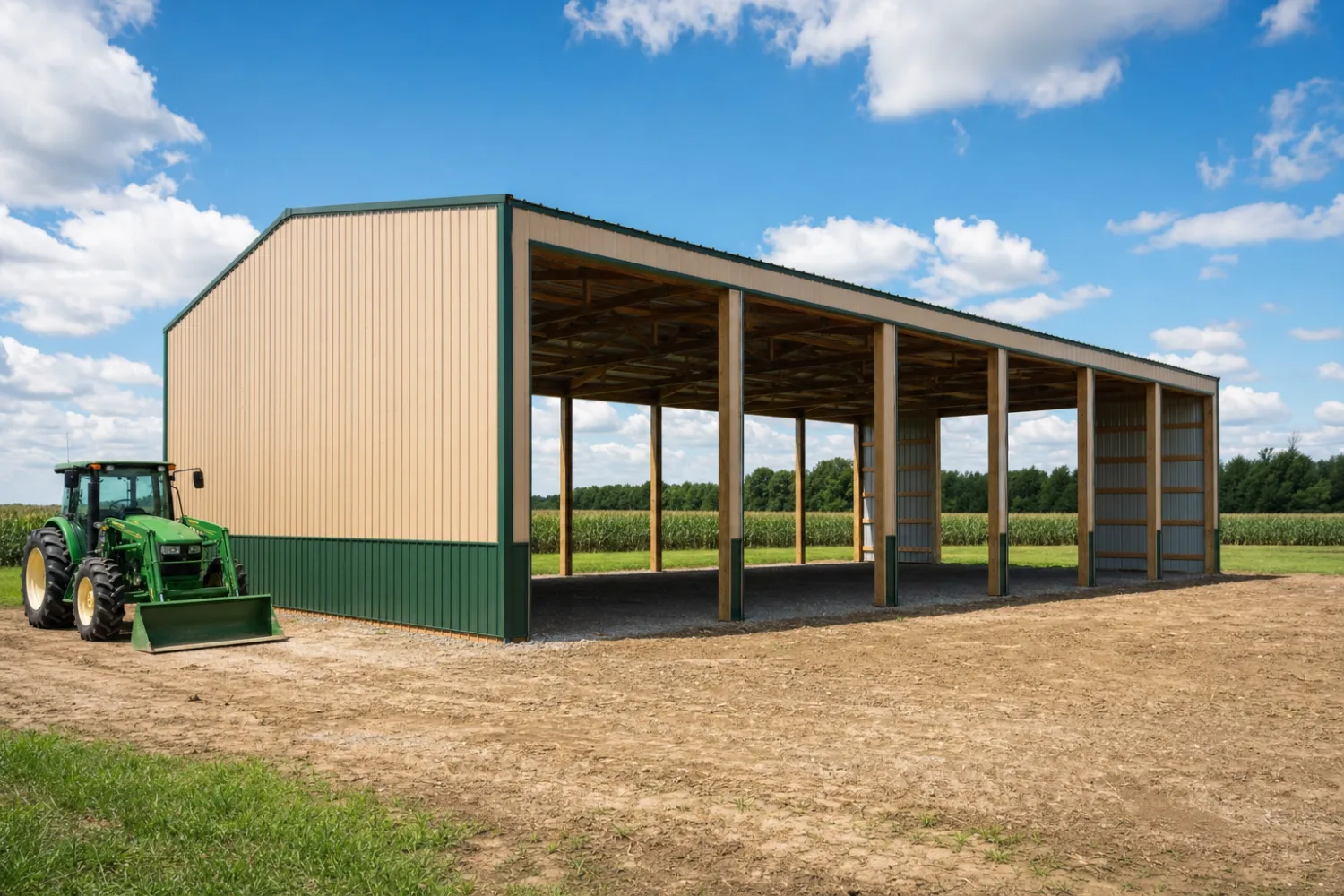
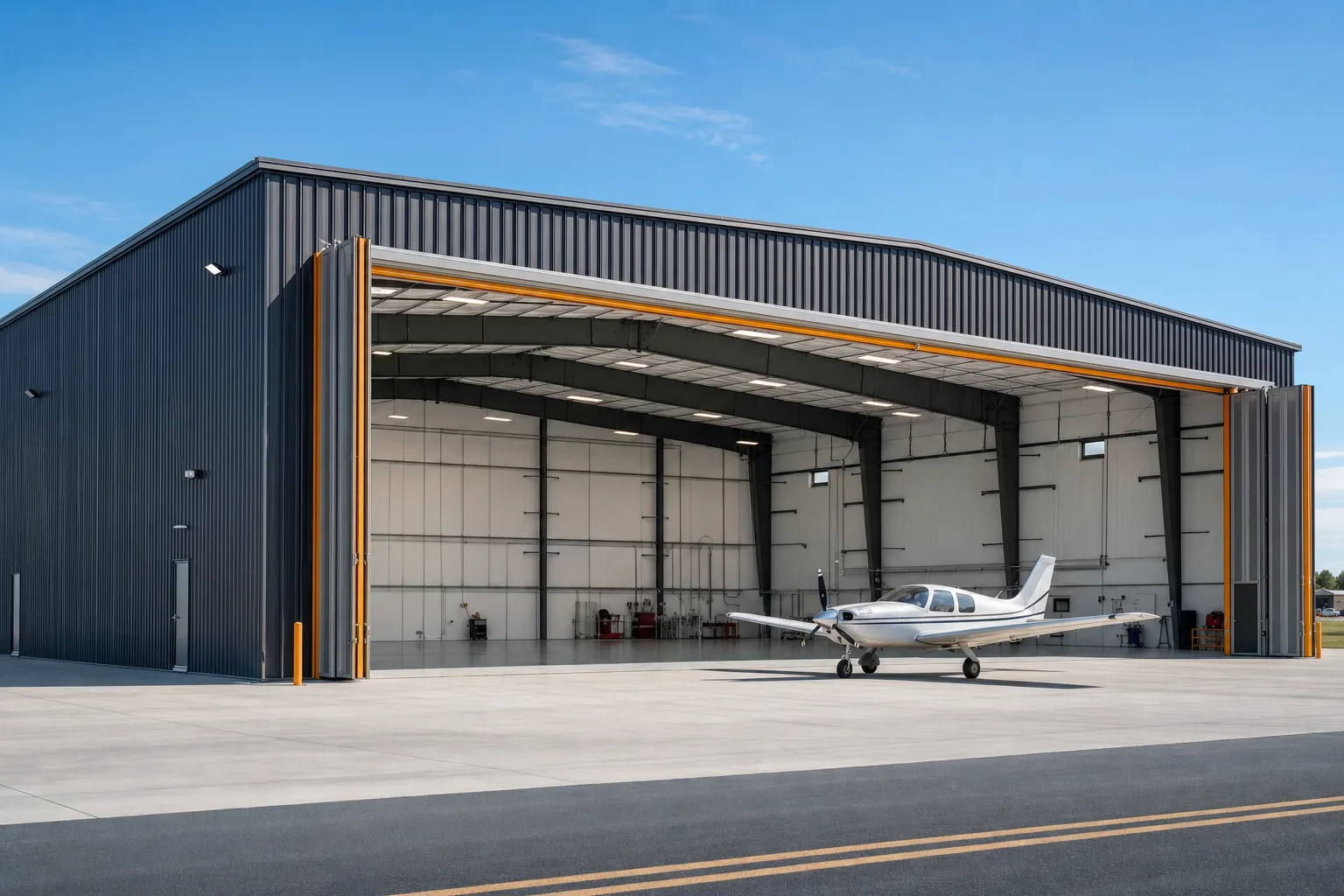
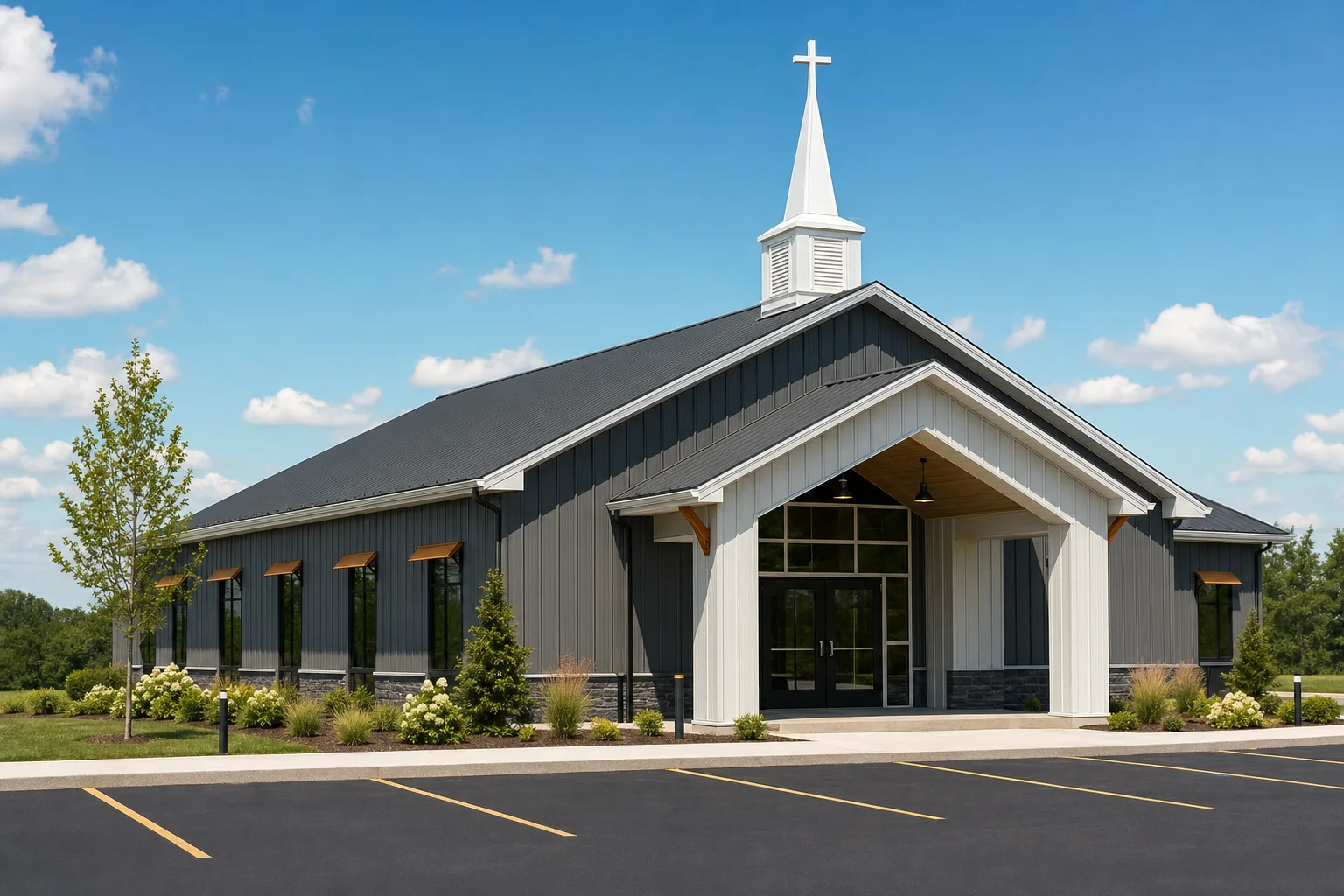
Yes, a metal building can be a business, and steel is the default frame for commercial buildings across the country. Shops, retail stores, offices, auto bays, breweries, gyms, and self-storage all run out of pre-engineered steel because it spans wide, finishes any way you want, and meets commercial code the same as any other structure. The building type does not limit the business; your zoning, occupancy, and layout do.
This page sits under the metal building uses pillar and answers the business question on its own terms: which businesses fit a steel building, how zoning and commercial occupancy work, what a customer-facing layout needs, and what it costs to open. For the build-it-out detail, our shop, business, and brewery building guide goes deeper on storefronts, taprooms, and service bays. Here the question is whether the structure fits a real business, and it does.
What fits
What kind of business can you run in a metal building?
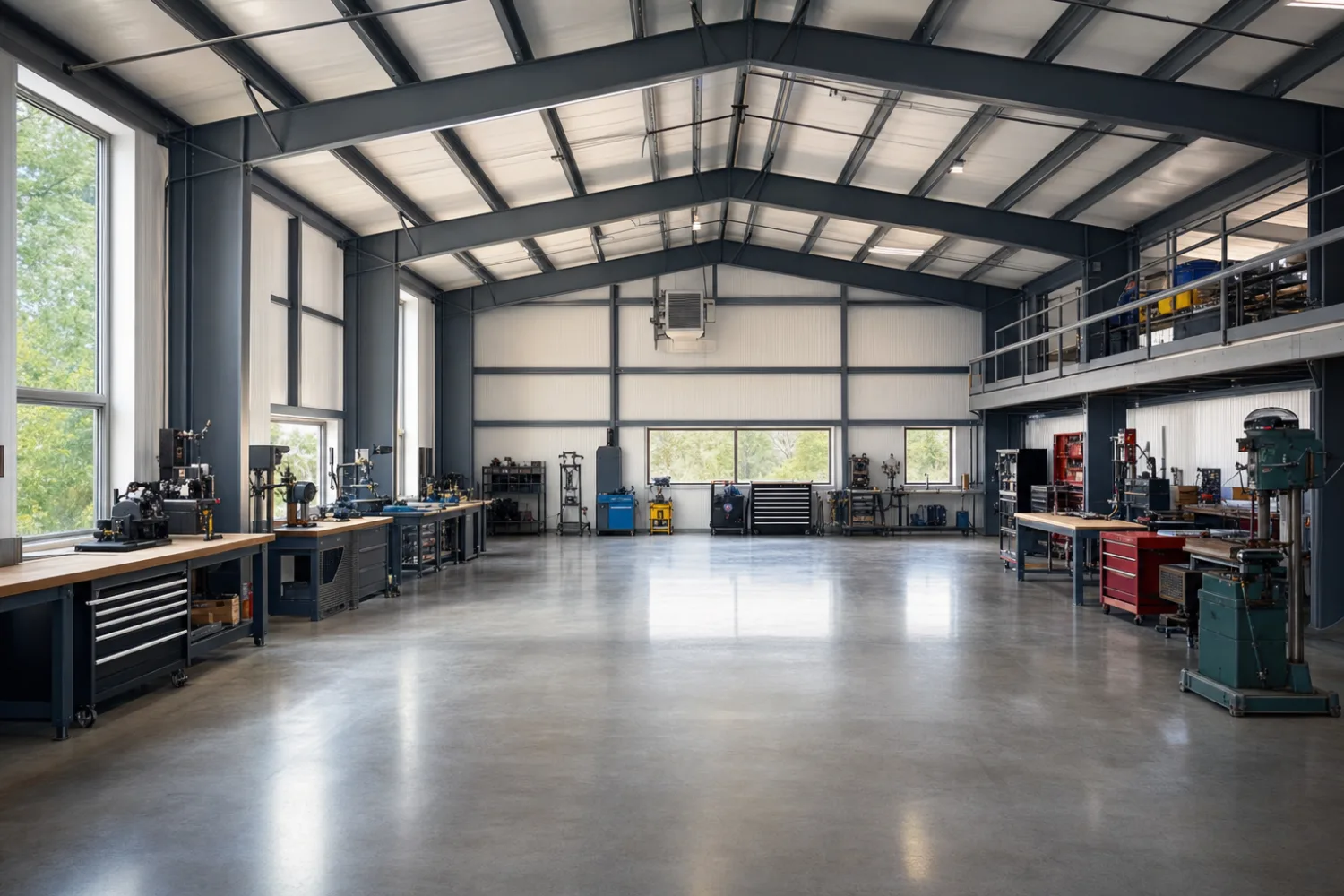
Almost any business that needs floor space fits a metal building. The open clear-span frame is a blank interior you can divide into a showroom, an office, a kitchen, work bays, or rentable units, so the same shell serves trades, retail, hospitality, and storage. The list below covers the uses owners put steel to most.
- Trades and auto. Mechanic bays, body shops, welding and fabrication, contractor yards. Tall doors and a clear floor suit lifts and equipment. See fleet and shop garages.
- Retail and showroom. Storefronts, equipment dealers, furniture and appliance floors. A finished facade and glass front turn a steel shell into a customer-facing store.
- Office and professional. Insulated, drywalled office space with restrooms and HVAC, on its own or as the front of a shop. Our metal office building kits guide covers the buildout.
- Hospitality and craft. Breweries, taprooms, distilleries, and event spaces. The brewery and business guide walks the production-plus-taproom layout.
- Storage and service. Self-storage, boat and RV storage, gyms, dog daycare, and trade schools all run out of the same flexible frame.
Zoning and code
Do you need special permits to run a business from a metal building?
Yes, but the permits follow the business use, not the steel. A building open to customers or staff is a commercial occupancy in the code, with its own rules for parking, exits, restrooms, accessibility, and fire safety. A metal building meets every one of those the same way a wood or block building does. The two things to settle first are zoning and occupancy.
Confirm the use group before you design
Your local building code assigns each business an occupancy group (business, mercantile, assembly, storage, factory) that drives exits, sprinklers, restroom count, and ADA access. Zoning then decides whether commercial use is allowed on your parcel at all. Check both with your local authority before you finalize the building, because a customer-facing store and a back-lot fabrication shop carry different requirements. A commercial building is permitted as a commercial structure, not as a backyard shed.
None of this is unique to steel. Pour the parking, plan the exits and restrooms, meet the structural code for your wind and snow loads, and a metal building passes commercial inspection on the same path as any other construction type. The frame is the easy part; the site work, accessibility, and use approval are where the real planning lives.
Layout
What does a business metal building need inside?
A working business building needs a finished, divided interior, not a bare shell. That means insulation, a customer or office zone, restrooms, climate control, and the doors and parking the use demands. The table sets out what most commercial buildouts include and why each piece matters.
| Feature | Typical business range ‹confirm› | Why it matters |
|---|---|---|
| Clear-span width | 30 to 80+ ft | Open floor you divide into showroom, office, and work zones without interior posts |
| Eave height | 12 to 20 ft | Headroom for lifts, racking, mezzanine offices, or a storefront facade |
| Insulation | Full wall and roof package | Year-round comfort for staff and customers, plus condensation control |
| Restrooms and ADA | Per occupancy and head count | Required for customer-facing and staffed commercial use |
| Storefront or doors | Glass front, or overhead bays | Customer entry for retail; drive-in access for trades and service |
| Parking and site | Per local zoning ratio | Paved, striped, and accessible parking is part of the permit |
Common business buildout features. Confirm spans, occupancy, and parking against your use and local code.
Most owners split the building. A front zone holds the office, showroom, or taproom and gets the insulation, drywall, and finish a customer sees, while the back stays open for work or storage. A multi-use building that pairs a public front with a working rear is the common pattern for a shop, a brewery, or a service business. The metal building sizes pillar covers how width and height translate into the square footage each zone needs.
Cost
How much does it cost to open a business in a metal building?
The steel shell runs roughly $20 to $40 per square foot ‹confirm›, but a finished, code-compliant business building costs more once you add the slab, insulation, restrooms, storefront, HVAC, parking, and electrical. Budget the whole project, not the kit. Steel earns its place by holding down the shell cost and the build timeline so more of your budget goes to the buildout.
Price the business, not the building. The frame is the cheapest line on a commercial project; the slab, the finish, the parking, and the code work are where the real number lives.
On financing, a metal building used for business is a commercial asset, and a steel shell on owned land often qualifies for a commercial mortgage, an SBA loan, or equipment financing the same as any building. The metal building kit prices pillar breaks down what drives the steel cost, and the metal building companies pillar covers how to vet a supplier and a stamped quote before you commit. Get a quote for your size, occupancy, and door schedule, then build the rest of the budget around it.
Related
Read more
This answer connects to the buildouts, sizing, and cost that make steel the default commercial frame. Follow these next:
- Metal building uses: the complete guide (the parent pillar).
- Shop, business, and brewery buildings (the buildout guide for storefronts, taprooms, and bays).
- Commercial metal building kits (the wider commercial-use family).
- Metal office building kits (finished office and professional space).
- Multi-use buildings (pairing a public front with a working rear).
- Metal building kit prices (what drives the cost of the steel).