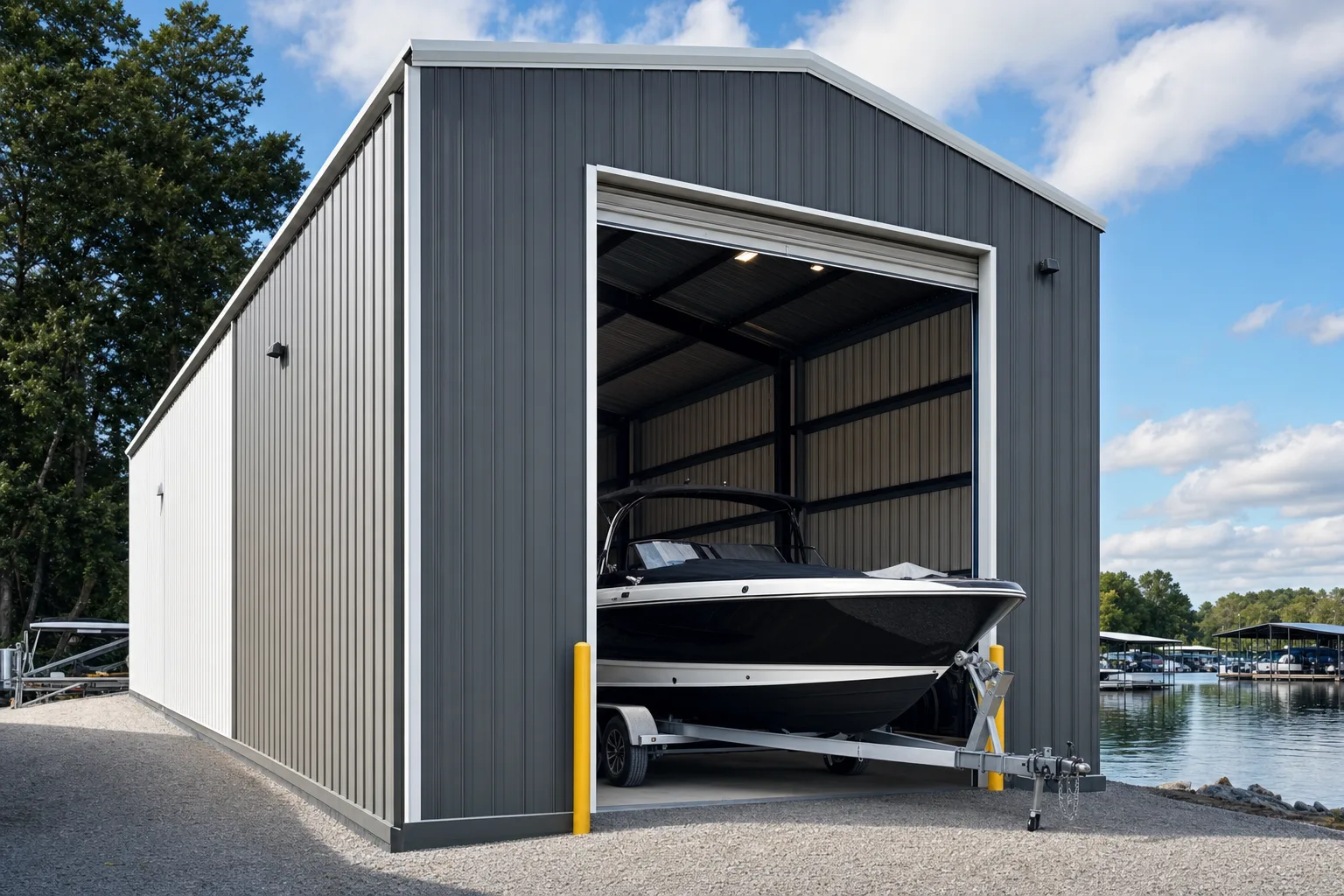
A boat storage building is an enclosed steel building sized to hold a boat on its trailer, with the length, width, and door height a trailered hull needs. Most pull-in boat buildings run 20 to 30 feet long and 12 to 20 feet wide, with a tall door to clear a windshield, T-top, or wakeboard tower. The kit ships as labeled steel that bolts onto a slab, and it locks your boat away from sun, hail, and freeze-thaw between seasons. The size is set by the trailer, not the boat alone.
This guide sits under the metal garage kits pillar. Below: how to measure a boat on its trailer, the door height that trips most buyers, the common building sizes, when an enclosed building beats an open cover, and what it costs. Size this wrong and your boat sits in the driveway; size it right and it slides in with room to work.
The building
What a boat storage building is
A boat storage building is an enclosed metal garage built around the footprint of a boat on its trailer, not the hull on its own. The trailer adds length at the tongue and height at the bunks, so the building you need is longer and taller than the boat’s spec sheet suggests.
Steel suits the job because a boat is a long-season, low-use asset. You park it for weeks, sometimes months, and you want it dry, locked, and out of UV. An enclosed steel shell does that without the upkeep of wood, and it takes the snow and wind loads that an open cover cannot. The frame is the same family of building behind any metal garage kit, sized and doored for a hull on wheels.
The choice that drives everything else is enclosed versus open. A roofed cover shades the boat and sheds rain for less money. A fully enclosed building locks it away, blocks UV on every side, and lets you winterize in a heated space. We weigh that trade in depth in the carport vs enclosed garage guide; this one assumes you want walls and a door.
Sizing
How to size a building for a boat on a trailer
Size the building from the trailered length, the beam plus a walkway, and the tallest point on the rig. Get those three numbers and the footprint falls out. Skip them and you buy a building your boat does not fit.
- Length. Measure bumper of the trailer tongue to the tip of the outboard or swim platform, then add 4 to 6 feet so the door closes behind the rig and you can walk the stern. A 20-foot boat often needs 28 to 30 feet of building.
- Width. Take the trailer’s widest point, usually the fender-to-fender beam, and add room to open a hatch and walk one side. A single boat bay is comfortable at 12 to 14 feet wide; 16 to 20 feet lets you store gear or walk both sides.
- Height. Measure ground to the tallest fixed point with the boat on the trailer: the windshield, a T-top, a radar arch, or a folded wakeboard tower. This number sets the door and the wall, and it is the one buyers miss most.
Length is where the trailer surprises people. A boat listed at 21 feet can sit on a trailer that measures 26 feet tongue to platform, and you still need clearance to shut the door. Round up to the next stock length rather than buying to the inch, and check the footprint against the size chart before you order.
Measure the rig, not the brochure
Boat length on a spec sheet is the hull, often without the outboard, the bow pulpit, or the swim platform. The trailer adds the tongue. Walk a tape down the whole rig as it sits hitched, write down length, width, and height, then size the building to those numbers plus working room. Confirm any door opening against the garage door sizes guide.
Sizes
Common boat storage building sizes
Pull-in boat buildings cluster around a few footprints, set by how long the trailered rig is and whether you want to walk one side or two. Here is how the common sizes land:
| Size (W x L) | Door fits | Good for |
|---|---|---|
| 12 x 24 | Single bass or jon boat rig ‹confirm› | Small trailered boat, tight clearance |
| 14 x 30 | Runabout or bowrider to ~22 ft ‹confirm› | Mid-size boat plus walk-around room |
| 18 x 30 | Boat plus gear or a second trailer ‹confirm› | Wide bay, storage along one wall |
| 20 x 35 | Cruiser, pontoon, or boat plus shop ‹confirm› | Large rig or boat plus workbench |
| 20 x 40 | Tall tower boat or two trailers ‹confirm› | Cruiser with tower, or boat and second toy |
Illustrative boat-building footprints. Confirm the exact length, width, and door height a supplier quotes against your trailered rig.
Notice that length climbs faster than width. You buy width for a walkway or a second item, and length for the trailer. Pontoons and cruisers push you toward the 20-by-35 and 20-by-40 range, where the footprint starts to overlap a small RV building. If you store a boat now and might add an RV later, size for both and read that guide first.
Door and clearance
The door height most boat buyers get wrong
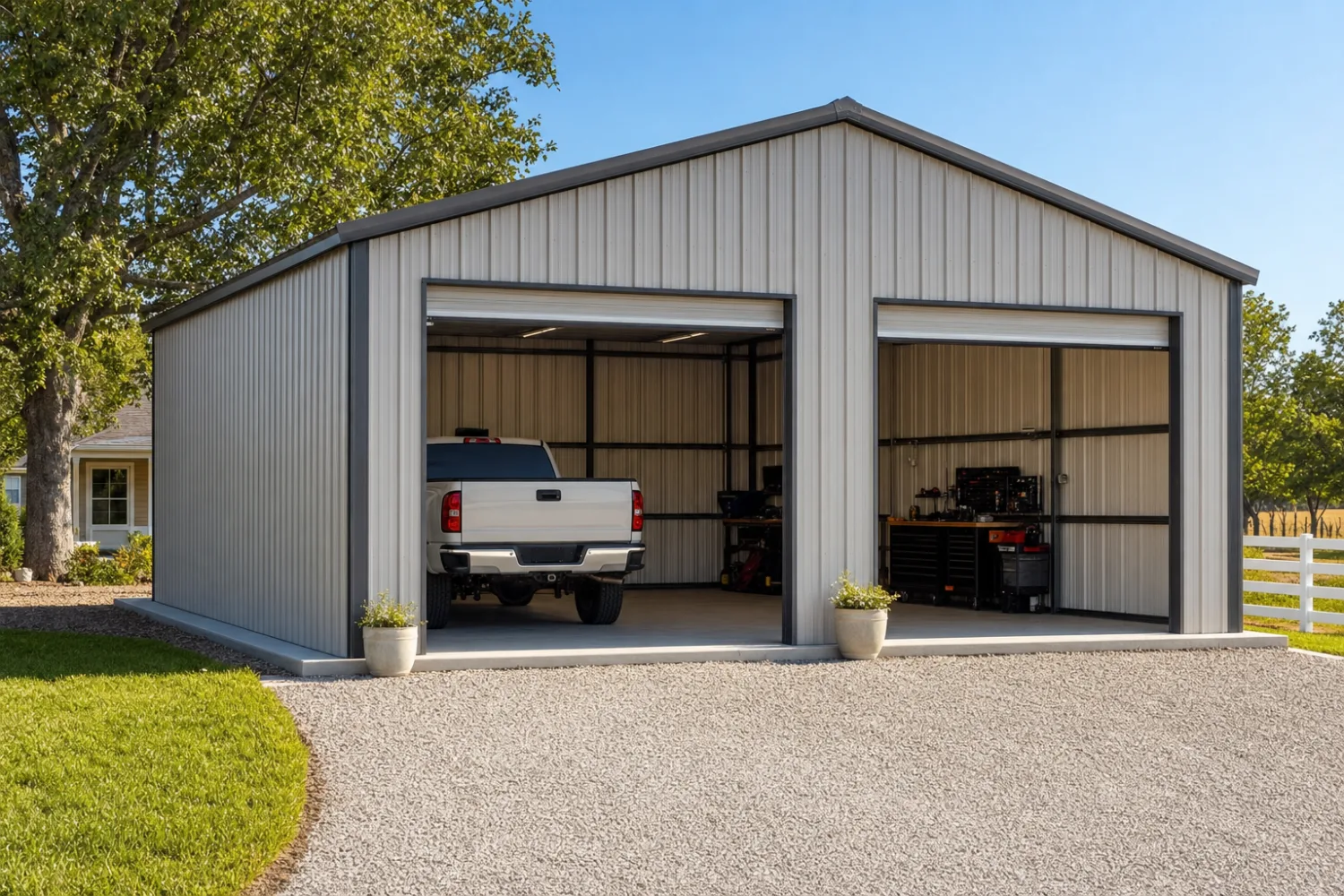
The door, not the hull, is what stops a boat at the threshold. A standard 7-foot garage door clears a car and stops a boat on a trailer cold, because the rig sits high on its bunks before you add a windshield or a tower.
Plan the opening around the tallest fixed point on the rig, then add clearance. Many trailered boats want a door 8 to 10 feet tall, and a boat with a hard top, radar arch, or fixed tower can need 12 feet or more ‹confirm›. The wall has to be tall enough to carry that door, so leg height and door height move together. Our garage door options and sizes guide walks the openings and the rough wall height each one needs.
Width matters at the door too. A trailered boat tracks a few inches wide of the tow vehicle, and you steer it in slowly, so a door an inch wider than the beam is a daily fight. Give yourself a door at least a foot wider than the widest fender, and more if you back the trailer in rather than pull it through.
Folding towers and the door you still need
A wakeboard tower folds down for the road, and you can fold it to clear a shorter door. But you fold and unfold every time you store the boat, and a tower left up by mistake meets the header hard. If the boat wears a tower, price the taller door before you decide to fold it for the life of the building.
Enclosed or open
When an enclosed building beats a cover
An enclosed building wins when you want security, full UV protection, and a place to winterize; an open cover wins on price and ventilation. The boat and the climate decide which one earns its cost.
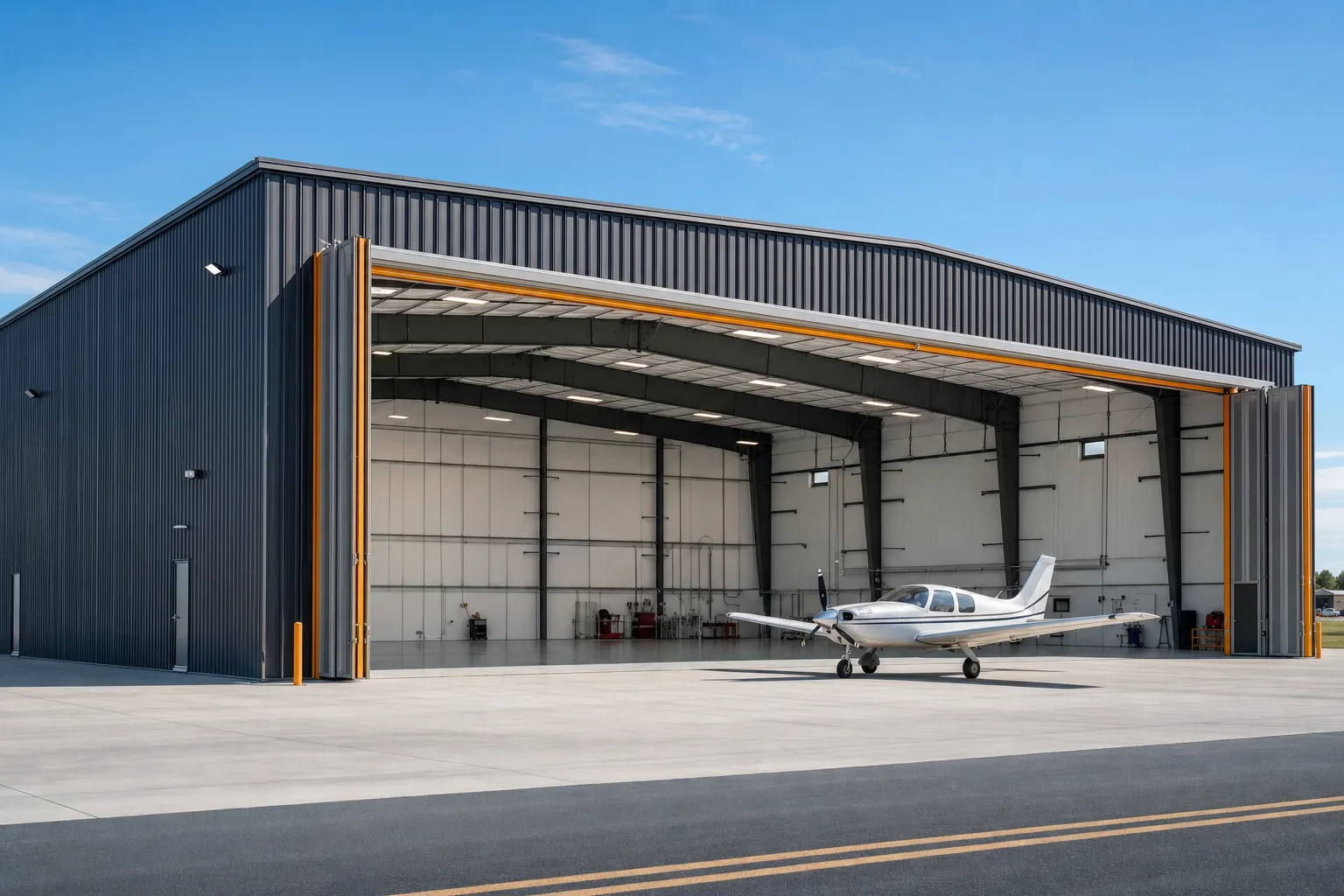
- Enclosed steel building. Locks the boat away, blocks sun and blowing rain on every side, and gives you a dry space to shrink-wrap or service it. The choice for a valuable rig, a theft-prone area, or a hard winter. Add insulation and it doubles as a workshop.
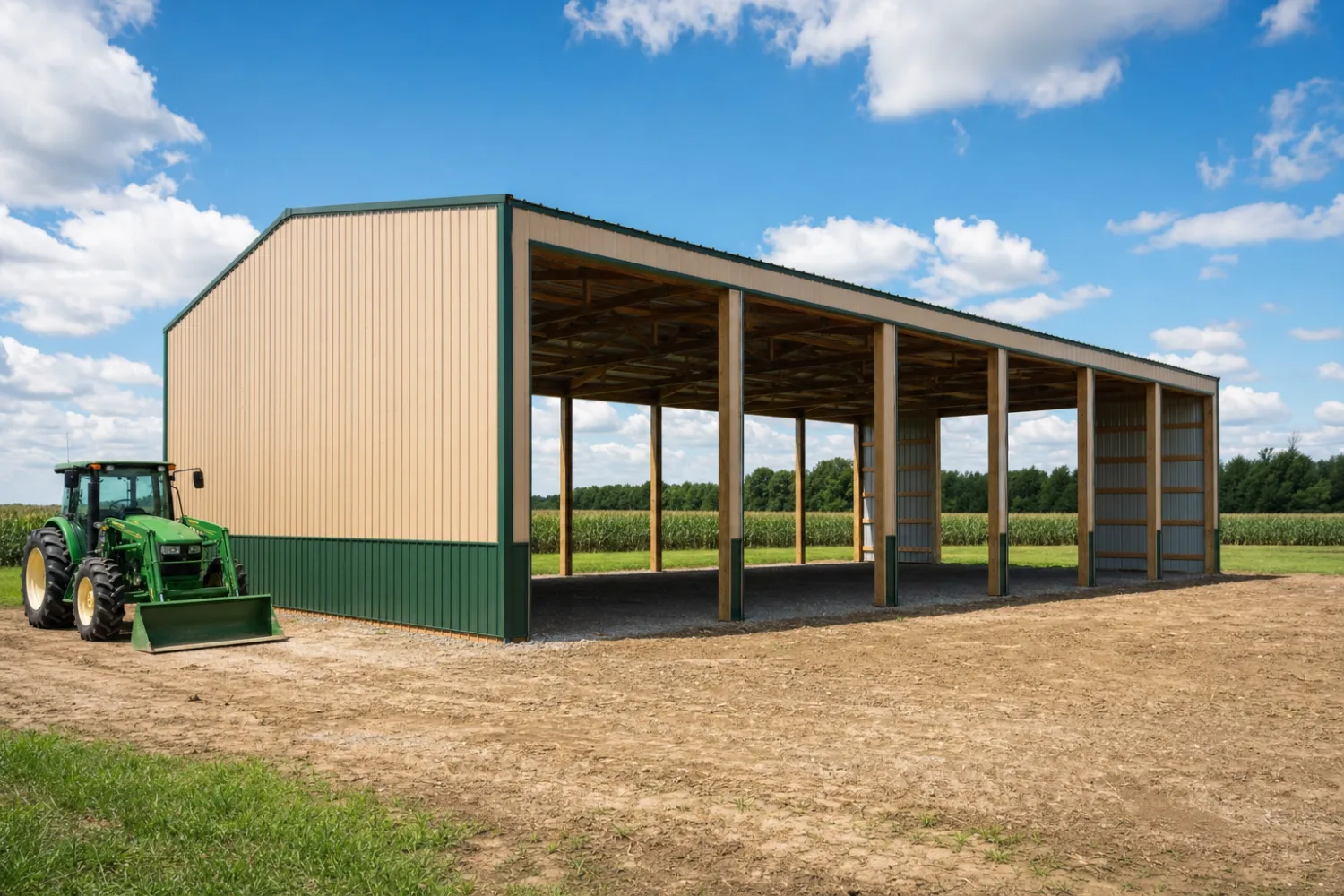
- Open cover or carport. Shades the deck and sheds rain for less money, with airflow that helps a wet boat dry out. Good in mild climates or as a budget first step. The RV and boat cover guide covers the open-roof route.
- Climate is the tiebreaker. Hard freeze-thaw, heavy snow, or salt air pushes you toward walls and a door. A dry, mild climate makes an open cover an easy call.
Size the building to the trailer and the tallest point on the rig, not to the hull on the brochure. The boat that does not clear the door is the most expensive building you can buy.
Cost and slab
What a boat storage building costs to buy and build
A boat storage building costs more than a same-length car garage, because the tall door and the wall height to carry it add steel. As a 2026 illustrative range, an enclosed pull-in boat building runs roughly $7,000 to $18,000 ‹confirm› for the kit alone, before concrete, the door opener, and insulation. Width, leg height, gauge, door size, and your local wind and snow rating move it inside that band.
The kit price is not the project price. Budget the slab as a separate line, a poured pad matched to the footprint with a thickened edge where the frame anchors down. A longer boat building means more concrete, so plan the floor before you order, including any drain for a boat that comes home wet. The garage kit prices guide shows where boat sizes sit, and the cost guide stacks up the whole project.
Most pull-in boat buildings bolt up the same way any single-bay garage kit does, though the taller wall and door want a careful crew and a lift for the top panels. Get the slab square and level, keep the stamped plans on site, and confirm the door framing matches the opening you measured. For everything to verify before you sign, run the buying checklist.
FAQ
Boat storage building kits: common questions
What size building do I need to store a boat?
Size it from the trailered rig, not the hull. Measure tongue to swim platform for length, fender to fender for width, and ground to the tallest fixed point for height. Add 4 to 6 feet of length to close the door behind it. A 20-foot boat often needs a building around 14 by 30 with a tall door, but the trailer and any tower set the real numbers.
How tall does the garage door need to be for a boat?
Taller than a standard 7-foot car door in almost every case. A trailered boat sits high on its bunks, so many rigs want an 8 to 10-foot door, and a boat with a hard top, radar arch, or fixed tower can need 12 feet or more ‹confirm›. Measure the tallest fixed point on the rig and size the door and wall to clear it.
How much does a boat storage building cost?
As a 2026 illustrative range, an enclosed pull-in boat building runs roughly $7,000 to $18,000 ‹confirm› for the steel alone, before the slab, the door opener, and insulation. The tall door and the wall height that carries it add cost over a same-length car garage. Width, gauge, and your local wind and snow rating set where it lands.
Is an enclosed building or an open cover better for a boat?
An enclosed building locks the boat away, blocks UV on every side, and gives you a dry space to winterize, which suits a valuable rig or a hard climate. An open cover shades and sheds rain for less money with good airflow, which suits a mild climate or a tight budget. Climate and security usually decide it.
Do I need a concrete slab for a boat storage building?
For an enclosed building, yes. The slab anchors the frame and carries the wind and uplift loads, so it has to be poured to the engineer’s spec. Plan the floor before you order, and add a drain if the boat comes home wet, since a trailered hull sheds water and a sloped, drained pad keeps the floor dry.
Can I store a boat and a trailer in a regular metal garage?
You can, if the garage is long enough for the whole rig and the door is tall enough to clear it. A standard car garage usually falls short on both, because the trailer adds length at the tongue and height on the bunks. Size a building to the trailered rig from the start rather than forcing a boat into a car bay.
Should I insulate a boat storage building?
Insulate it if you will work in it, heat it, or fight condensation that drips on the boat. A bare steel shell sweats when warm, damp air meets a cold panel, and that moisture lands on your deck. Even a basic insulation layer controls it. See the insulated garage kits guide for the options.
Related guides
Keep reading
Sizing a boat building touches doors, floors, price, and the open-versus-enclosed call. Follow these next:
- Metal garage kits: the complete guide (the parent pillar).
- RV garage and cover kits (the open-roof and RV route).
- Carport vs enclosed metal garage (cover or walls and a door).
- Metal garage door options & sizes (the tall door a boat needs).
- Metal garage flooring options (slab and drain before you order).
- Metal garage kit prices (where boat sizes sit on the list).
- Metal building size chart (footprints and clearances by use).