A metal garage works in a cold climate when it is built for the weather it has to stand in: a roof rated for your county’s snow load, a frame stamped for that load, insulation under the panels, and a plan for condensation. Get those four right and steel handles deep cold, heavy snow, and a hard freeze as well as any building does. Get them wrong and you have a cold box that drips every thaw. The garage itself is not exotic. The spec is what makes it cold-ready.
This guide sits under the metal garage kits pillar and stays on one job: the cold-weather spec, what to add, what to confirm on the quote, and where the money matters most. It pairs with the silo’s insulation and load guides, which go deeper on each piece. Read it before you order, because most cold-climate trouble starts as a spec choice made before the steel ever ships.
What changes
What makes a metal garage cold-climate ready
A cold-climate metal garage is a standard kit with five things specified up front. None is exotic, and none can be bolted on cheaply once the building is standing, so each one belongs on the order, not on a wish list for next spring.
- Snow-rated structure. The roof and frame are engineered to your local ground snow load, not a generic catalog number. This is the single line you cannot upgrade later, so confirm it against your snow and wind loads.
- Insulation. A heated or even a freeze-protected garage needs insulation under the steel, both to hold warmth and to keep the panels above dew point.
- A condensation plan. Bare steel in cold weather sweats. A vapor barrier plus ventilation is how you stop the roof from raining on your truck.
- A frost-aware foundation. Footings below the frost line and a vapor barrier under the slab keep the building from heaving and the floor from wicking cold.
- Tight doors and seals. An insulated overhead door and good weatherstripping decide how much of your heat stays inside.
You will notice these overlap. Insulation and a vapor barrier solve cold and condensation together, and a snow-rated frame protects everything under it. That is why the cheapest cold-climate garage is the one specified correctly the first time, not the one re-worked after a bad winter. The insulated metal garage kits guide covers the package version of this, where the insulation is engineered into the kit.
Snow & frame
Snow load and roof design come first
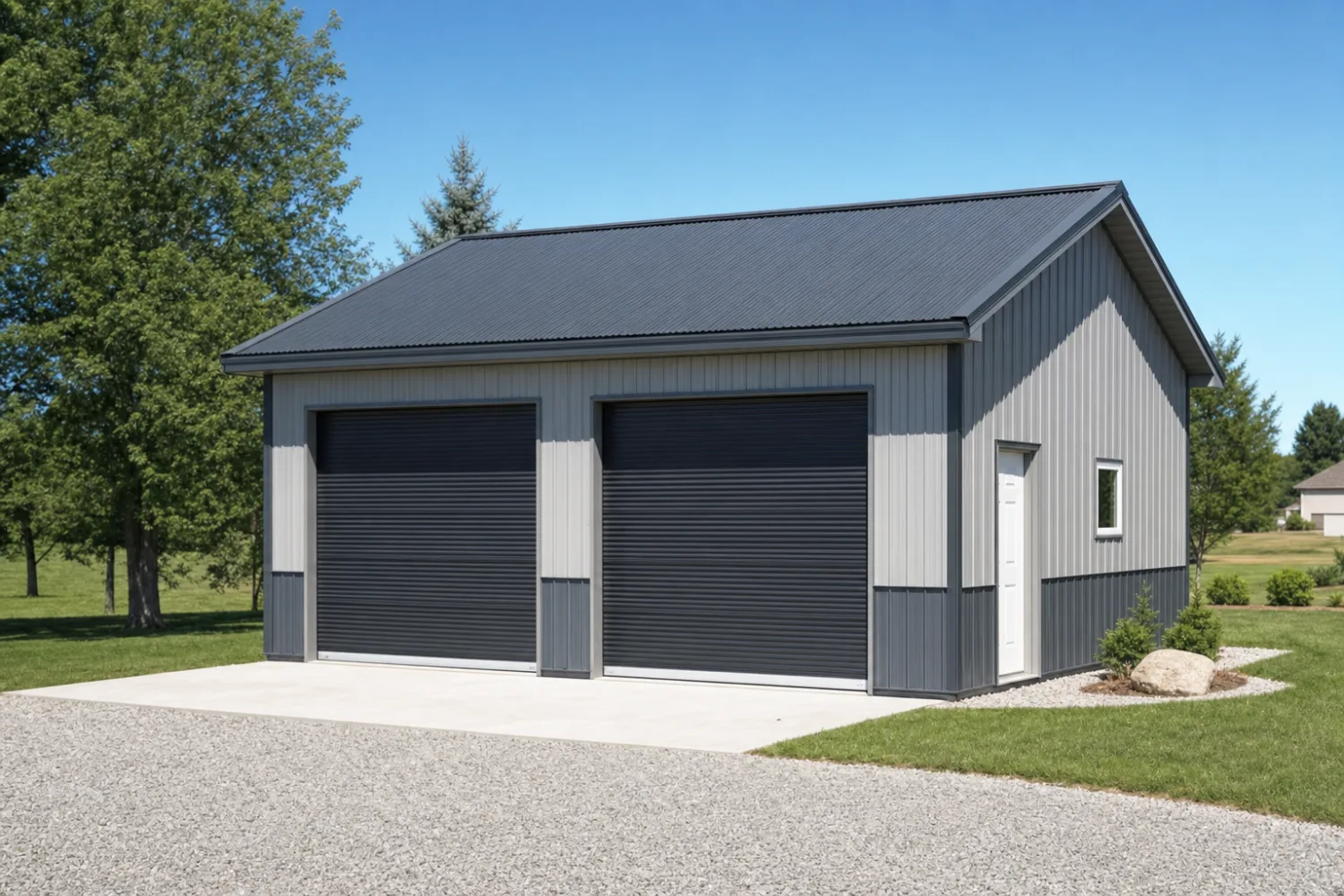
Snow load is the first number that matters, because it decides whether the building stands at all. Your county sets a ground snow load, and the kit has to be engineered to meet or beat it, with the roof and frame sized to carry that weight plus drift where the wind piles it.
Three choices drive how a garage handles snow. The first is the load rating itself: a garage stamped for a 20 psf load ‹confirm› is a different building from one stamped for 50 or 60 psf ‹confirm›, and only the engineered drawing tells you which you are buying. The second is roof style. A vertical roof, where the panels run ridge to eave, sheds snow far better than a horizontal roof, which is why it is the standard pick in snow country. The third is pitch: a steeper roof sheds load instead of holding it. None of this is guesswork on a kit, because the price of the garage scales with the load it is stamped for.
Buy the roof for the worst winter your county has on record, not the average one. Snow is the one load that arrives without warning and does not leave on its own.
The frame underneath has to match. Heavier snow asks for heavier steel and tighter spacing on the framing members, and your engineer sizes it to the same load number. Do not let a quote separate a low headline price from a low load rating, because the two travel together. When you compare bids, read the stamped load on each, then the rest of the spec. The table below sorts the cold-climate priorities so you know what to confirm on each line.
| Spec element | Why it matters in the cold | What to confirm |
|---|---|---|
| Ground snow load | Decides if the roof and frame can carry winter weight | The stamped psf rating meets your county number ‹confirm› |
| Roof style & pitch | Sheds snow instead of holding it | Vertical roof and adequate pitch for your area |
| Frame & gauge | Heavier load needs heavier steel | Member sizes match the stamped load, in writing |
| Insulation | Holds heat and keeps panels above dew point | Type and R-value suited to a heated space ‹confirm› |
| Vapor barrier & vents | Stops condensation under the steel | Barrier behind insulation plus working ventilation |
| Foundation | Resists frost heave and floor chill | Footings below frost line, vapor barrier under slab |
| Doors & seals | Keep warmth in and drafts out | Insulated overhead door and full weatherstripping |
A cold-climate spec at a glance. Confirm each line on the engineered drawing, not the headline price.
Insulation
Insulation that holds the heat
Insulation is what turns a steel shell into a usable winter space. Bare panels conduct cold straight through and give heat nowhere to gather, so an uninsulated garage in January is barely warmer than the yard. Insulation slows that loss and, just as important, keeps the inside face of the steel warm enough that it does not sweat.
Three approaches cover most cold-climate garages. Faced fiberglass batt with a vapor barrier is the common, lower-cost path, rolled against the framing before the panels go on. Rigid board adds a continuous layer with strong R-value per inch. Spray foam seals and insulates in one step and handles the vapor barrier itself, at a higher price ‹confirm›. The right pick depends on your budget and how warm you want to keep the space. The how to insulate a metal garage guide walks each method step by step.
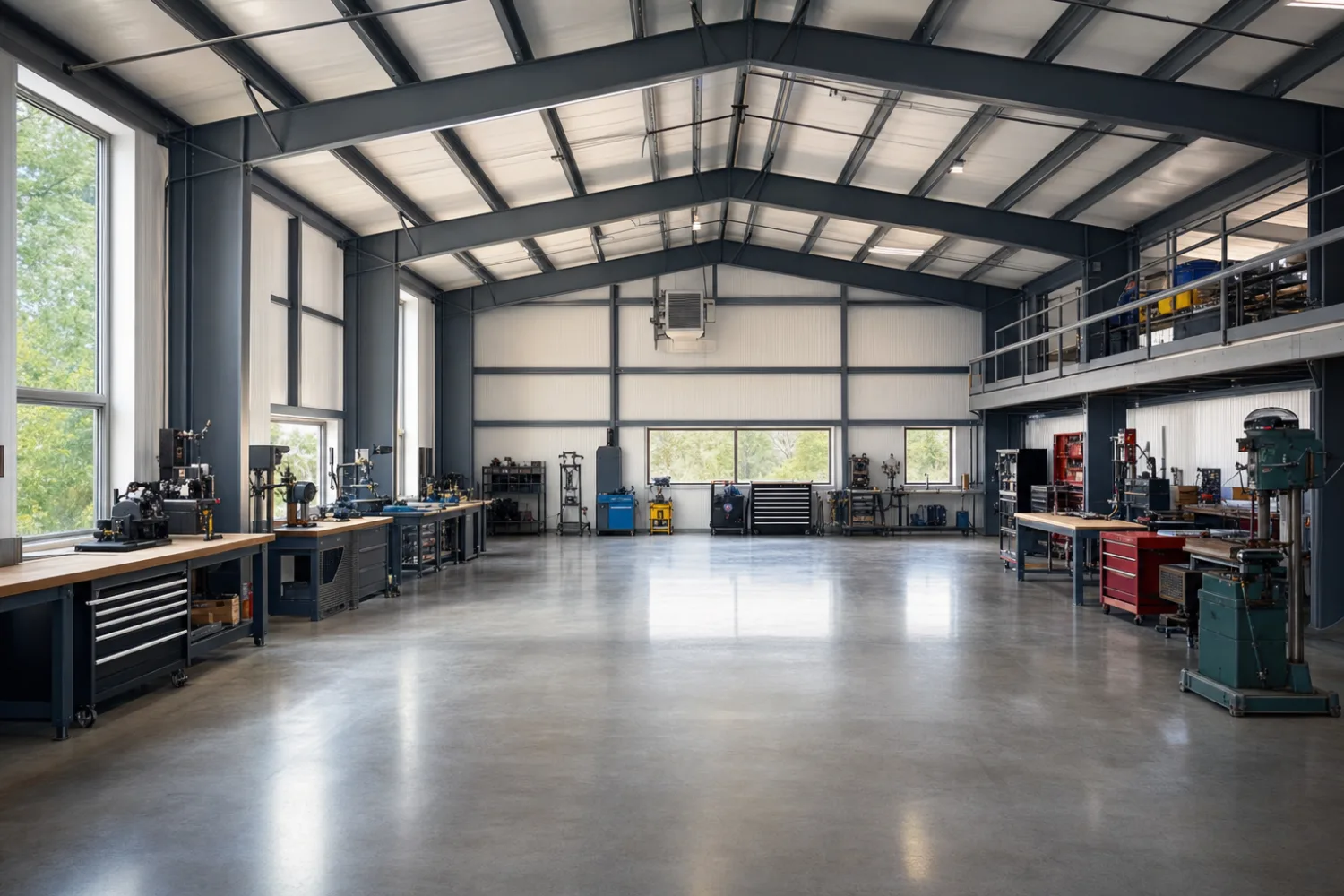
Match the insulation to the use. A garage you only park in wants enough to break the chill and stop condensation. A heated workshop you stand in for hours wants more, in the walls and the roof both, because heat escapes upward first. If your plan is a workshop and garage combo, treat the workshop side like a heated room and spec it accordingly. For the kit that arrives insulation-ready, the insulated metal garage kit bundles the package so you are not retrofitting in the cold.
Condensation
Beating condensation and frost inside
Condensation is the quiet enemy of a cold-climate metal garage. When warm, moist inside air meets a cold steel panel, the moisture turns to water on the metal, and in a hard freeze it shows up as frost that drips the moment the building warms. Left unmanaged, that water rusts fasteners, soaks insulation, and puddles on the floor.
Why a cold roof drips
A bare steel roof in winter is colder than the air inside the garage, so it pulls moisture out of that air and holds it as frost. Park a snow-covered truck inside, run a heater, and you have added the humidity and the heat that feed the cycle. The fix is two-part: a vapor barrier behind the insulation to keep moist air off the cold steel, and ventilation to carry humidity out. The condensation and ventilation guide covers the full system, and it applies to any heated steel building, not just a garage.
Ventilation matters even in deep cold, which feels backward when you are trying to keep heat in. Ridge vents, gable vents, or a powered fan move humid air out before it can condense, and a sealed vapor barrier does the heavy lifting on the panels. Build both into the plan and the inside of your roof stays dry through the worst of the season.
Foundation
The slab, the frost line, and the floor
The foundation is where cold-climate building rules bite hardest. Water in the soil expands as it freezes, and if your footings sit above the frost line, that heave can lift and crack the slab over a few winters. The fix is to carry the footings down past the depth where the ground freezes, a number your local building department publishes.
Two more details keep a cold-climate floor comfortable. A vapor barrier under the slab stops ground moisture from wicking up into the concrete, which keeps the floor drier and warmer. Rigid foam around the slab edge, or under it on a heated floor, slows the cold the ground pulls out of the building. If you plan to heat the space or run in-floor heat, those choices move from optional to essential. The flooring options guide covers what goes on top of the slab once it cures.
Size the slab before you order the kit, not after, because the foundation has to match the building’s footprint and anchor pattern exactly. Pull your dimensions from the engineered drawing and the metal building size chart so the concrete is poured square, level, and ready when the steel arrives. A foundation that is off by inches turns a clean weekend build into a fight.
Doors & heat
Doors, sealing, and keeping it warm
Doors are the largest openings in the building and the easiest place to lose heat, so in a cold climate they earn extra attention. An insulated overhead door holds warmth far better than a single-skin panel, and full weatherstripping around the door, the jambs, and the bottom seal closes the gaps where drafts and snow blow in.
Plan the openings for winter use. A walk-in man door means you are not raising the big door, and losing all the heat, every time you step out for firewood. Size the overhead door for what truly parks inside, then seal it well. The garage door options and sizes guide covers the choices, and the insulated versions are worth the upgrade in any place that sees a real freeze ‹confirm›.
Heat is the last piece, and it follows everything above. A garage that is insulated, sealed, and vapor-protected can be warmed by a modest unit heater and hold that warmth. A leaky, uninsulated one will swallow any heater you put in it and still feel cold near the walls. Spec the shell right and the heating bill stays sane. Skip the shell work and you pay for it every month the heater runs.
FAQ
Cold-climate metal garages: common questions
Are metal garages good for cold climates?
Yes, when they are specified for it. A steel garage engineered to your snow load, insulated under the panels, and built with a condensation plan handles deep cold and heavy snow as well as any building. The material is not the question; the spec is. An uninsulated kit with a low load rating struggles, while a properly ordered one performs for decades.
How much snow can a metal garage hold?
As much as it is engineered to hold, and not a pound more. Kits are stamped to a ground snow load set by your county, often somewhere from 20 to 60 psf ‹confirm› depending on the region. That number, not the brand, decides capacity, so confirm the stamped load on the engineered drawing and match it to your local code before you order.
How do you keep a metal garage warm in winter?
Insulate the walls and roof, seal the doors and any gaps, add a vapor barrier with ventilation, and then heat the space with a unit heater sized to the building. The order matters: insulation and sealing come first, because a warm garage starts with a shell that holds heat. A heater alone in a bare steel box loses the battle.
Do metal garages get condensation in winter?
They can, if the steel is left bare. Warm, moist inside air meeting a cold panel forms water or frost on the metal. The fix is a vapor barrier behind the insulation plus ventilation to carry humidity out. Built in from the start, it keeps the inside of the roof dry. The condensation and ventilation guide explains the full system.
What insulation is best for a cold-climate metal garage?
It depends on budget and how warm you want the space. Faced fiberglass batt with a vapor barrier is the common, lower-cost choice. Rigid board adds strong R-value per inch, and spray foam seals and insulates in one step at a higher price ‹confirm›. A heated workshop wants more in the roof than a park-only garage does. The insulation guide compares each method.
Do I need a special foundation for a metal garage in cold country?
You need footings carried below your local frost line so the ground freezing and thawing cannot heave the slab, plus a vapor barrier under the concrete to keep it dry. If you plan to heat the space or run in-floor heat, add rigid foam at the slab edge. Your building department publishes the frost depth for your area, so confirm it before you pour.
Will a metal garage rust in snow and road salt?
A quality steel kit resists corrosion well, because the panels are coated and the frame is primed and sheltered inside the shell. The bigger rust risk in a cold climate is condensation, not the snow outside. Manage moisture with a vapor barrier and ventilation, keep road salt rinsed off the floor, and the building holds up for the long run.
Related guides
Keep reading
Cold-climate readiness touches insulation, doors, the floor, and the load rating. Follow these next:
- Metal garage kits: the complete guide (the parent pillar).
- Insulated metal garage kits (the package built to hold heat).
- How to insulate a metal garage (batt, board, and spray foam, step by step).
- Metal garage door options & sizes (insulated doors and sealing).
- Metal garage flooring options (what goes on the slab).
- Workshop & garage combo buildings (when one side is a heated shop).
- Snow load & wind load explained (the number that sizes the frame).
- Metal building size chart (size the slab and the kit together).