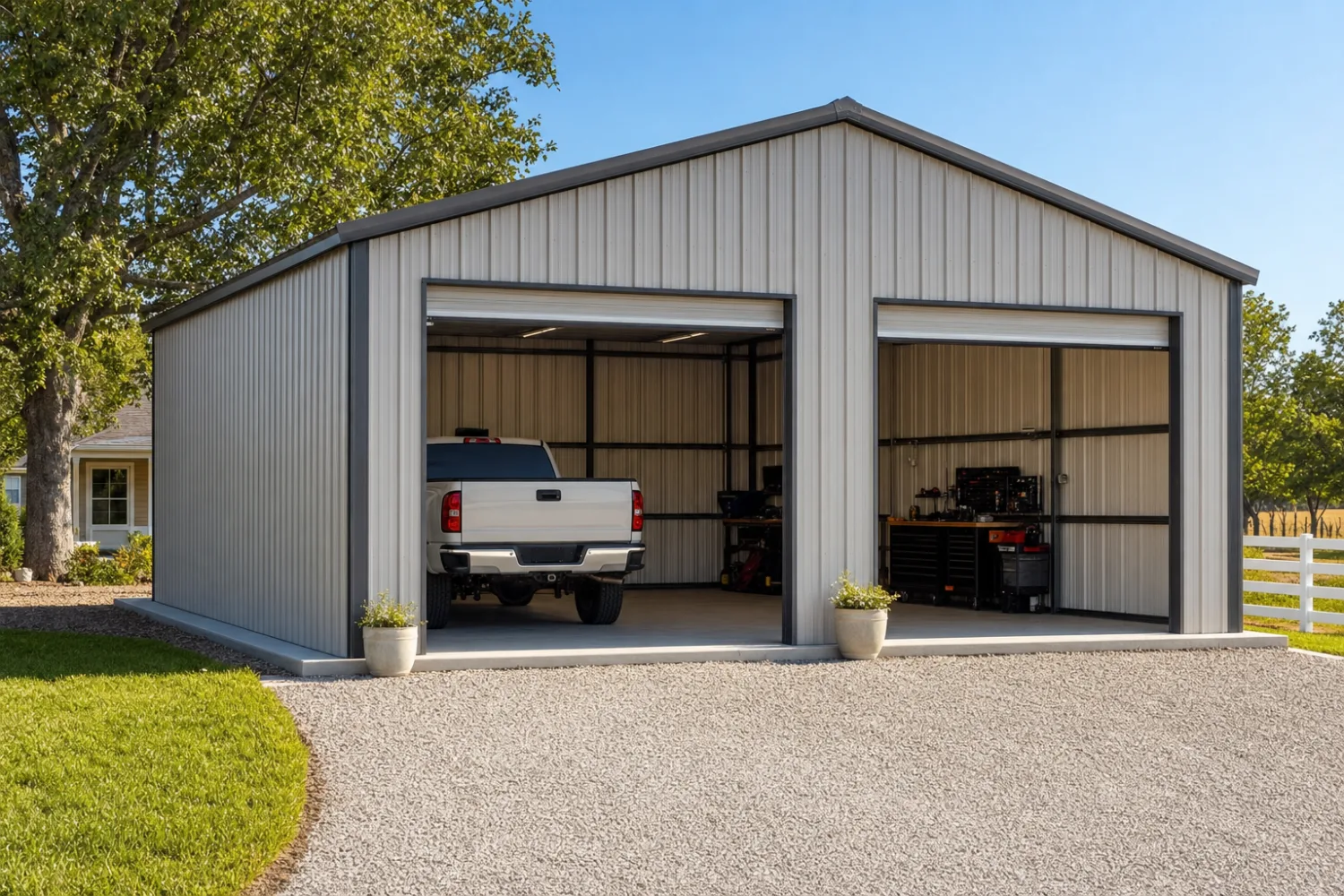
An insulated metal garage kit is a steel garage package that ships with an insulation system already specified for the walls and roof, or is pre-engineered to accept one. The insulation does two jobs: it slows heat moving through the steel shell, and it keeps warm, moist air from hitting cold panels and dripping. That is the difference between a garage you can heat, work in, and store things in safely, and a bare steel box that bakes in summer and sweats in winter. “Insulated” is a spec line on the kit, not a single product, so the real question is which insulation the kit includes and whether it suits how you use the building.
This guide sits under the metal garage kits pillar and covers the comfort, moisture, and energy side of buying a garage. Below: what “insulated” means on a kit, the four insulation options you will be offered, how much you need for a garage, what it adds to the price, and what to check before you sign. If you only ever park cold cars under it, you may not need much. If you heat it or run a shop in it, this is the part of the spec that decides whether the building is pleasant or miserable.
What it means
What “insulated” means on a garage kit
On a kit, “insulated” means the package includes a material that controls heat transfer and condensation across the roof and walls, plus the trim or fasteners to hold it in place. It is a line item, not a sealed product, so two kits both sold as “insulated” can be far apart in real performance.
The most common factory option is a single layer of vinyl-backed blanket insulation rolled out under the panels as the building goes up. It is cheap, it adds a clean white finish, and it cuts the worst of the sweating. It is also thin, so it does not turn a garage into a heated workshop on its own. For a two-car garage that mostly stores vehicles, that single layer is often enough.
A fully insulated build is a different spec. There you are adding wall and ceiling insulation thick enough to hold a temperature, usually paired with an interior liner panel. That path costs more and changes how the kit is framed, which is why it pays to decide up front rather than retrofitting later. The how to insulate a metal garage guide walks the install side if you plan to do it yourself.
One caution: a kit advertised as insulated is not automatically a sealed, conditioned space. Insulation slows heat and fights condensation, but airflow finishes the job. Pair any insulation plan with the venting covered in our condensation and ventilation guide so the panels stay above the dew point and dry.
Options
Insulation options for a metal garage kit
You will be offered four main types, and they trade cost against warmth and against how well they stop sweating. There is no single best one. The right pick depends on whether you heat the garage, the climate it sits in, and your budget.
Batt or blanket is the entry option: rolls of fiberglass faced with vinyl or foil, laid under the panels. Rigid board is foam sheets cut to fit between framing, with a higher warmth per inch. Spray foam is sprayed on and expands to seal every gap, which makes it the strongest against both heat and air leaks and the most expensive. Reflective or radiant barrier is a thin foil layer that bounces radiant heat, best in hot, sunny climates as a supplement rather than a standalone.
| Relative R per inch | Relative cost | Condensation control | Best for | |
|---|---|---|---|---|
| Batt / blanket | Low to moderate | Lowest | Good with a vapor facing | Storage garages, mild climates |
| Rigid board | Moderate to high | Moderate | Good | Heated garages, finished walls |
| Spray foam | Highest | Highest | Best, seals air leaks | Shops, cold climates, full comfort |
| Reflective / radiant | Adds little R | Low | Limited on its own | Hot, sunny climates as a supplement |
A relative comparison, not a verdict. Match the type to how you use the garage and the climate it sits in.
Match the material to the goal. A garage you only store cars and tools in is fine on a faced blanket. A workshop and garage combo you heat through winter earns rigid board or spray foam, and a build in genuine cold country leans hard toward spray foam for the air seal it brings.
How much
How much insulation a garage needs
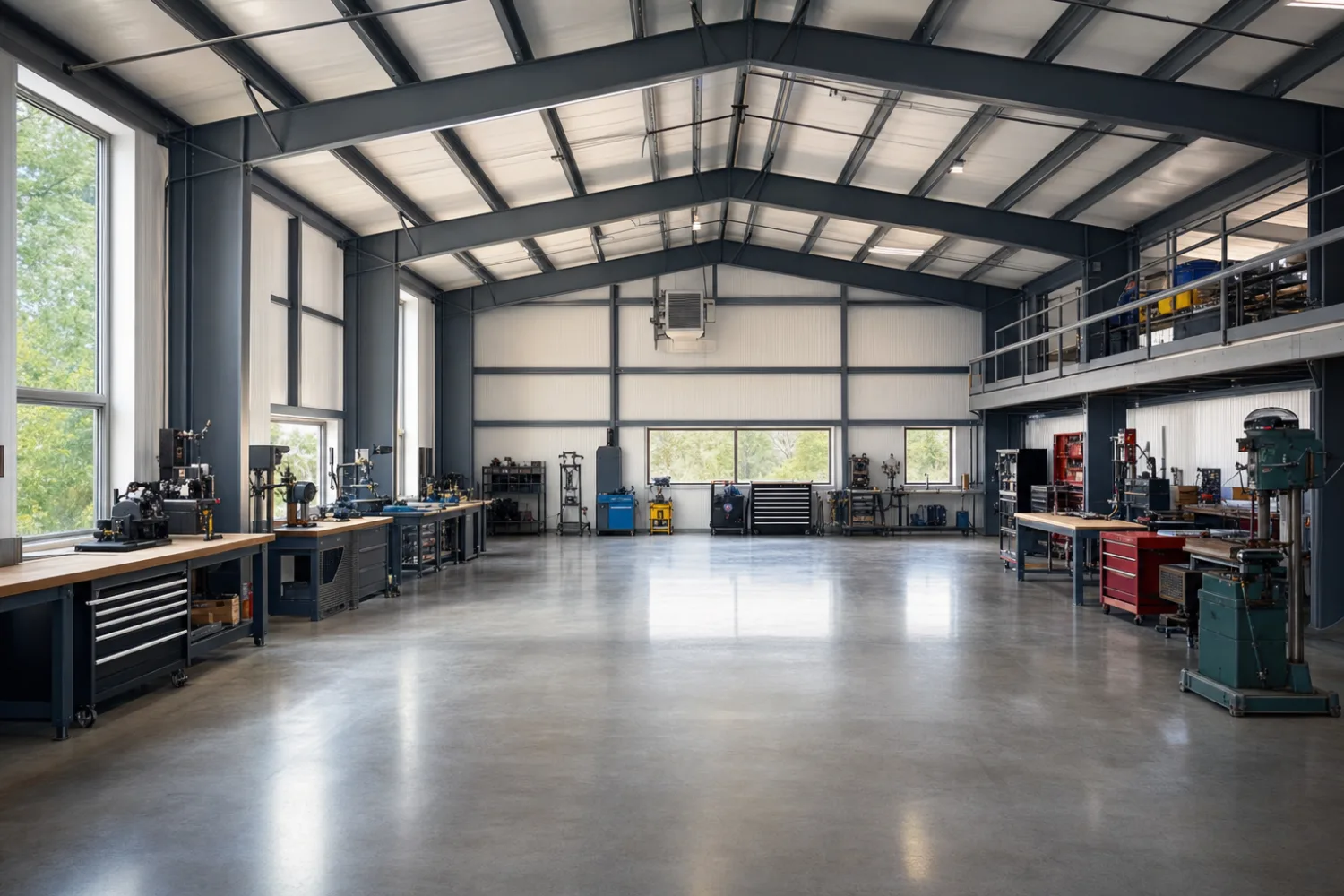
Insulation is rated by R-value, the measure of how well it resists heat flow, where a higher number means more resistance. How much you need depends on the climate and on whether you heat or cool the space, not on a single right answer for every garage.
As a rough orientation, an unheated storage garage in a mild climate does its job with a thin faced blanket, while a heated garage in a cold region often targets something in the R-13 to R-19 range ‹confirm› in the walls and more in the roof ‹confirm›. The roof carries the bigger temperature swing, so it usually wants the higher number. If you sit in real snow country, start with the cold-climate garage guide before you lock a target.
Roof first, then walls
If your budget forces a choice, insulate the roof before the walls. The roof takes the most sun in summer and loses the most heat in winter, and it is where condensation drips from. Pair that with a moisture-tolerant floor and good airflow, and even a partly insulated garage stays far more usable than a bare shell.
Loads matter too, not warmth alone. Adding a heavy insulation system and an interior liner puts weight on the frame, so it belongs in the engineering from the start. Confirm the kit is stamped for your local snow and wind loads with the insulation package included, not as an afterthought.
Cost
What insulation adds to a garage kit price
Insulation is one of the larger options on a garage quote, and the spread is wide because the four types cost different amounts. A single faced blanket layer is a modest add; a full spray-foam-and-liner package can be a meaningful share of the shell price.
As a dated 2026 orientation, expect a basic blanket package to run in the low hundreds to low thousands of dollars ‹confirm› depending on building size, while a fully insulated build with rigid board or spray foam and an interior liner can add several thousand ‹confirm›. Those are illustrative ranges, not a quote. For the full picture, see the metal garage kit prices guide and the broader metal building cost guide.
Insulate for how you will use the garage, not for the lowest line on the quote. A bare shell you later heat costs more to fix than the insulation would have cost to build in.
The expensive mistake is skipping insulation on a garage you later decide to heat or finish. Retrofitting around stored gear, wiring, and a finished wall costs more than specifying it at order time. Size the building right first with the metal building size chart, then decide the insulation spec while the kit is still on paper.
On the quote
What to check before you buy
Two kits sold as “insulated” can mean two different buildings, so read the spec, not the headline. A few checks tell you what you are paying for:
- Type and thickness. Blanket, rigid board, spray foam, or reflective, and how thick. “Insulated” with no R-value or thickness on the line is a flag.
- Roof and walls, or just one. Confirm whether the price covers both, or only the roof. The buying checklist lists the rest of the spec lines worth pinning down.
- Vapor facing and liner. Ask whether the insulation has a vapor barrier facing and whether an interior liner panel is included, since both affect condensation and finish.
- Engineered with it included. Make sure the kit is stamped for your loads with the insulation weight counted, and that the door openings are flashed to seal around the insulated walls.
When the line is vague, ask one plain question: what insulation type, what thickness, on the roof and the walls, and is it engineered into the kit. A supplier who cannot answer that in plain terms is not one to buy from. If you are weighing a smaller single-bay garage against a larger build, settle the size first, then the insulation follows from how you will use it.
FAQ
Insulated metal garage kits: common questions
Do metal garage kits come insulated?
Some do and some do not. Many kits are sold bare and let you add an insulation package as an option, while others quote a single faced blanket layer as standard. “Insulated” is a spec line you choose, so check what type and thickness the quote names rather than assuming the word means a finished, conditioned space.
What is the best insulation for a metal garage?
There is no single best one. A faced blanket suits a storage garage in a mild climate, rigid board fits a heated garage with finished walls, and spray foam wins for a shop or a cold-climate build because it seals air leaks as well as resisting heat. Match the type to how you heat the space and the climate it sits in.
How much does it cost to insulate a metal garage kit?
It varies widely by type and building size. A basic faced blanket layer is a modest add, while a full rigid-board or spray-foam package with an interior liner can add several thousand dollars ‹confirm›. Treat any figure as a dated 2026 illustrative range and get a written quote for your exact building.
What R-value do I need for a metal garage?
It depends on the climate and whether you heat the space. An unheated storage garage in a mild region needs little, while a heated garage in cold country often targets something in the R-13 to R-19 range ‹confirm› in the walls with more in the roof ‹confirm›. Insulate the roof first if the budget is tight, since it carries the biggest temperature swing.
Can I add insulation to a metal garage later?
Yes, but it costs more and works around stored gear, wiring, and finished walls. Specifying insulation at order time lets the kit be engineered for the added weight and flashed to seal properly. If you do retrofit, the how to insulate a metal garage guide covers the steps and the order to do them in.
Does an insulated garage stop condensation?
It helps, but insulation alone does not finish the job. Insulation keeps the steel above the dew point so it sweats less, while airflow carries the remaining moisture out. Pair the insulation with the venting in our condensation and ventilation guide to keep the building dry.
Is an insulated garage kit worth it?
If you heat the garage, run a shop in it, or sit in a hot or cold climate, the insulation pays back in comfort, lower energy bills, and protected stored goods. If you only park cold vehicles under it in a mild region, a thin faced blanket to control sweating may be all you need. Decide by how you will use the building, not by the cheapest line on the quote.
Related guides
Keep reading
This insulation decision connects to the rest of the garage spec. Follow these next:
- Metal garage kits: the complete guide (the parent pillar).
- How to insulate a metal garage (the install steps, DIY or hired).
- Best metal garages for cold climates (specs that hold heat and snow).
- Metal garage flooring options (the floor side of a comfortable garage).
- Metal garage kit prices (what the whole build costs, insulation included).
- Metal building size chart (size the garage before you spec the insulation).