What drives metal building prices is the amount of steel a building contains, plus the engineering and freight that come with it. Every line on a quote, the size, the gauge, the frame type, the clear span, the eave height, and the design loads, either adds steel or removes it, and the total tracks that weight. The steel market sets the base cost of every pound, then your spec decides how many pounds you buy. Read a price as a sum of those drivers and two quotes that looked random start to make sense.
This guide sits under the metal building kit prices pillar and isolates one question: what moves the number. Below you will find the master driver behind a steel price, a drivers-at-a-glance table, the steel market you cannot control, how gauge and frame type change the weight, why span and height swing the cost, what design loads add, and the openings and finishes that round out a quote. The dollar figures here are dated 2026 illustrative ranges to verify against a live quote.
The core
What sets a metal building’s price
A metal building costs what its steel weighs, plus the engineering to stamp it and the freight to ship it. That single idea explains most of a quote. A pre-engineered building is a kit of frame, panels, fasteners, and trim, priced close to the pound, so any spec that calls for more steel raises the number and any spec that calls for less lowers it. Hold that frame in mind and every driver below becomes a way of adding or subtracting weight.
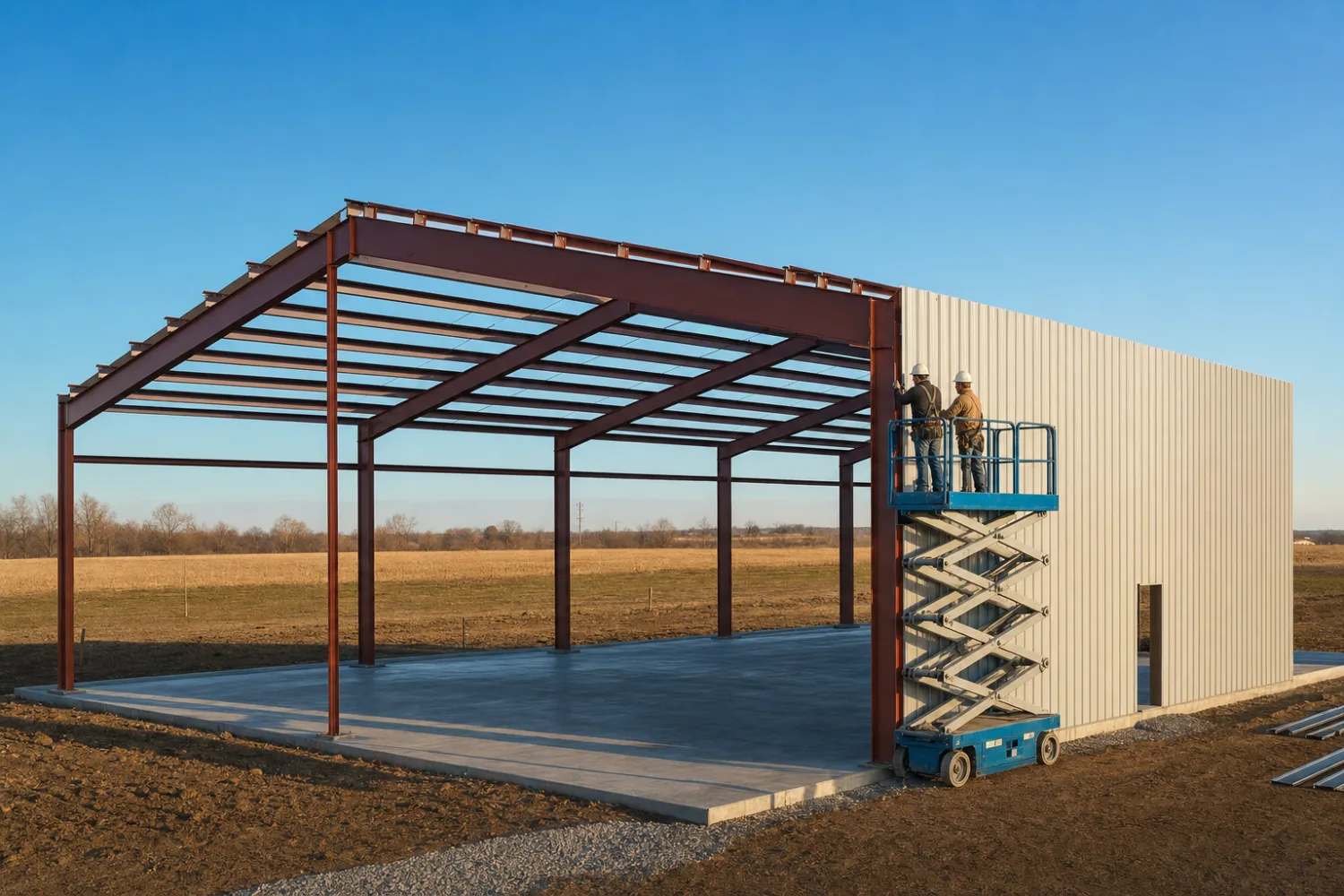
The drivers split into two groups. One group you cannot move: the steel market and the freight distance from the mill. The other group is yours to set: the size, gauge, frame, span, height, loads, and openings. Knowing which is which is how you control a budget. You will not argue the mill price down, but you can right-size the spec so you are not paying for steel you never load. For the total-cost view that these drivers add up to, see how much metal building kits cost.
| Driver | How it moves price | Why |
|---|---|---|
| Steel market | Up and down over time | Sets the base cost of every pound |
| Building size | Up with floor area | More square feet means more steel |
| Gauge / thickness | Up as steel thickens | Heavier panels and frame weigh more |
| Frame type | Up for red iron vs tube | Structural steel costs more per pound |
| Clear span / width | Up sharply on wide spans | Wide, post-free spans need heavier frames |
| Eave height | Up with wall height | Taller columns and more wall panel |
| Design loads | Up in severe climates | Heavier members to pass local code |
| Openings | Up per door or window | Framed openings plus the unit |
| Coating & color | Modest | Upgraded finishes cost more |
| Delivery distance | Up with miles | Freight from the mill to your site |
Illustrative direction, not fixed dollars. The first two rows are outside your control; the rest are spec choices you make.
Size is the biggest single lever
Footprint moves the total more than any other driver, because it scales the steel and everything bolted to it. The catch is that bigger buildings cost less per square foot, since fixed costs spread over more floor. That is its own topic, so see metal building cost per square foot, and for the dollars by footprint, the prices by size chart.
Steel
The steel market: the driver you do not control
Steel is a traded commodity, so its price moves with demand, energy costs, tariffs, and mill capacity. That is why the same building can quote thousands of dollars apart from one season to the next, and why a price you were given last year is a memory, not a budget. The shell is mostly raw steel by weight, so when the mill index rises, every quote in the country rises with it.
This driver sets the floor under all the others. Gauge, span, and height decide how many pounds you buy, but the market decides what each pound costs. You cannot negotiate the commodity itself, yet you can read its direction. When mill pricing softens, a quote stretches further; when it climbs, the same spec buys less building. Timing an order to a softer market is one of the few ways to spend less without touching the spec.
You set the pounds; the market sets the price per pound. A smart buyer right-sizes the steel, then watches the calendar for when that steel is cheapest.
Because the market has a shelf life, lock a quote in writing with a stated expiry, and re-quote if you stall past it. The number is honest only on the day it is given. For ways to work the timing and the spec together without cutting corners, see how to save money on a metal building kit.
Gauge & frame
Gauge and frame type: how much steel goes in
After size and the market, the next driver is how heavy the steel itself is, set by two choices: panel gauge and frame type. Both decide pounds, and pounds decide price. A lighter spec drops the cost and a heavier one raises it, and each one also changes how long the building lasts and how much load it carries.
Gauge is the thickness of the steel sheet, and the scale runs backward: a lower number is thicker. A 26-gauge panel is heavier and stiffer than a 29-gauge panel ‹confirm›, so it costs more and resists dents and wind better. The frame follows the same logic, with heavier framing members adding both cost and capacity. When one quote undercuts another for the same footprint, a thinner gauge is one of the first places the steel, and the price, went missing.
| Steel choice | Lighter / cheaper end | Heavier / dearer end |
|---|---|---|
| Panel gauge | 29-gauge ‹confirm› | 26-gauge or thicker ‹confirm› |
| Frame type | Tube steel | Red iron structural frame |
| Best fit | Carports, light covers, small garages | Shops, barns, wide-span and commercial |
| Effect on price | Lower per square foot | Higher per square foot |
| Effect on capacity | Light to moderate loads | Heavy snow, high wind, wide clear span |
Illustrative steel choices, not a rule for every building. Match the gauge and frame to your real loads, not to the lowest sticker.
Frame type is the bigger of the two swings. A red iron structural frame uses hot-rolled I-beams that carry wide, post-free spans, while tube steel is lighter and cheaper but tops out on shorter spans. Paying for red iron under a carport buys reach you will never use; saving with tube under a wide shop buys a building that needs interior posts or fails inspection. For the framing and gauge mechanics in depth, see the construction types pillar, and to compare a steel shell against a timber alternative, the metal building vs pole barn cost guide.
Span & height
Span, width, and eave height
Geometry is a price driver because it changes how hard the steel has to work. Two buildings with the same floor area can quote far apart once you change the clear span or the wall height. Width and height are where buyers are surprised most, since a small change on the drawing turns into a large change in pounds.
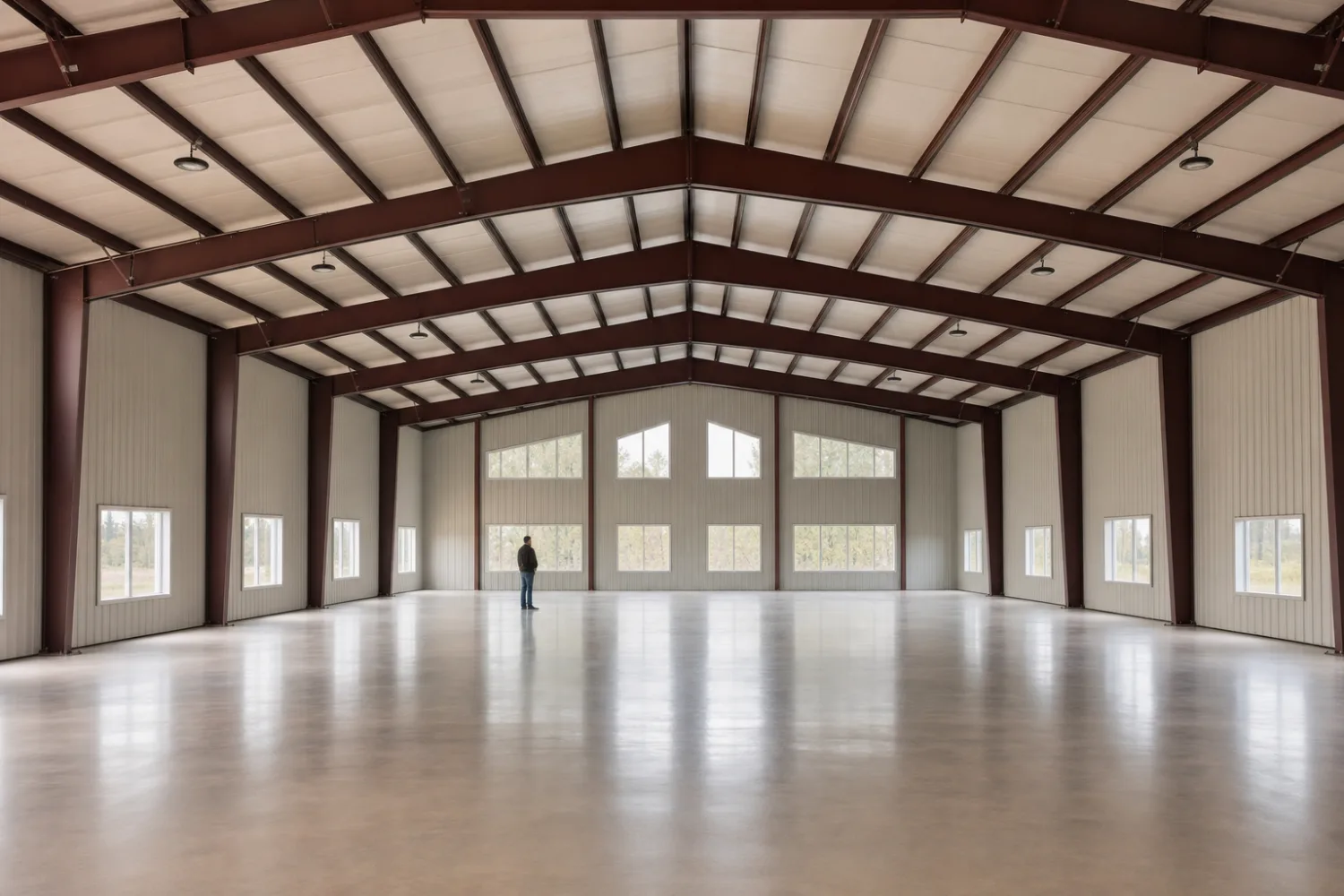
Clear span is the headline. A frame that holds the roof up with no interior columns has to grow heavier as it gets wider, and the cost rises faster than the width. Going from a 30-foot to a 50-foot clear span is more than a 60 percent jump in steel for that frame ‹confirm›, not a tidy one-to-one. Length is gentler, since adding bays repeats a proven frame, so a long, narrow building is cheaper per square foot than a short, wide one.
Eave height works the same way on the vertical. Every extra foot of wall adds steel to every column and more wall panel all the way around, so a jump from a 12-foot to a 16-foot eave costs more than the four feet suggests ‹confirm›. Order the width and height your use truly needs, not the largest on the page. For how footprint and dimensions translate into both price and usable space, the metal building sizes pillar lays out the geometry, and the prices by size guide turns it into dollars.
Loads & code
Design loads: snow, wind, and local code
Where you build is a price driver, because your county sets the loads the steel has to survive. A building stamped for heavy snow or high wind needs heavier members, more bracing, and stiffer connections than the same shell in a mild climate, and that extra steel shows up on the quote. This is not an upsell. It is the engineering that keeps the building standing and the permit approved.
Three local factors move the design most. Snow load adds weight the roof must hold; wind load and the exposure of your site decide how hard the building is braced; and seismic or soil conditions can stiffen the frame further. A quote priced for a flat, sheltered lot in a warm state will not hold in snow country or on an open coastal site, so a low number from elsewhere is not a number you can spend.
Confirm the loads before you compare
The fastest way to misread two quotes is to compare a building stamped for your local loads against one that is not. Ask each supplier what snow, wind, and exposure values the design carries ‹confirm›, and make sure both match your county. A cheaper quote that is under-rated is not cheaper; it is a different, weaker building. The permit and engineering lines ride alongside the loads on the same quote.
Because loads are local and non-negotiable, treat them as a fixed part of your spec, not a place to trim. You can choose your gauge and your eave; you cannot choose your county’s snow map. Build the right loads in from the start, and lean on the buying checklist so the stamp and the load values are verified before you sign.
Add-ons
Openings, coatings, and accessories
The last group of drivers is everything you add to the basic shell. None of them changes the frame much, but together they move a quote, and they are the lines where two builds of the same size drift apart. Each opening cuts into the steel and adds a framed surround plus the unit itself, and each finish upgrade adds cost per square foot of surface.
- Doors and windows. Every roll-up, walk door, and window needs a framed opening plus the unit, so a quote with three roll-ups is not the quote with one ‹confirm›. Openings are the most common reason two same-size quotes differ.
- Coating and color. Upgraded paint systems, premium colors, and longer finish warranties cost more than a standard coat, a modest line that still adds up over a large surface ‹confirm›.
- Insulation. A heated shop or living space needs insulation the cold shell does not, and the method you pick moves the number. Weigh it in the insulation costs guide.
- Accessories. Skylights, vents, gutters, wainscot, and trim packages each add steel or material, so a loaded shell costs more than a plain one of the same dimensions ‹confirm›.
- Erection labor. Whether a crew raises the shell or you do it yourself is one of the largest swings of all. See cost with vs without installation for the split.
Add-ons are where you have the most freedom and the most discipline is needed. Order the openings and finishes your use requires, then stop. If the budget is tight, a cheaper, affordable kit can trim the shell as long as the gauge and stamped drawings hold up, but cutting structure to fund accessories is the wrong trade every time.
FAQ
What drives metal building prices: common questions
What drives metal building prices the most?
Size and the steel market drive the price the most. Footprint sets how much steel the building needs, and the commodity market sets what each pound costs. After those two, gauge, frame type, clear span, eave height, and design loads move the number, since each one adds or removes steel. Every figure has a shelf life, so confirm against a current quote.
Why do two quotes for the same size differ so much?
Because the spec behind each number is different. One quote may use a lighter gauge, a tube frame instead of red iron, a lower eave, fewer openings, or loads rated for a milder climate. Read both spec sheets line by line before you trust the totals. The full cost breakdown shows what each line should include.
Does steel gauge change the price a lot?
It changes both the price and the strength. A lower gauge number means thicker steel, so a 26-gauge panel costs more than a 29-gauge panel ‹confirm› and resists dents and wind better. The frame follows the same rule, with heavier members adding cost and load capacity. Match the gauge to your real loads rather than chasing the thinnest, cheapest steel.
Why does a wider building cost more than a longer one?
Because a wide clear span needs a heavier frame to hold the roof up with no interior posts, and that frame cost rises faster than the width. Adding length repeats a proven frame across more bays, which is gentler on the price. A long, narrow building is cheaper per square foot than a short, wide one of the same area ‹confirm›.
Do snow and wind loads raise the price?
Yes. A building stamped for heavy snow or high wind needs heavier members and more bracing than the same shell in a mild climate, so your county’s loads move the quote. Those loads are set by code, not by choice, so build them in from the start. See hidden costs for the permit and engineering that ride alongside.
Can you negotiate a metal building price?
Often, yes. Three quotes for the same gauge, frame, eave, and door package give you leverage and reveal which supplier is sharpest. You cannot move the steel market, but you can time an order to a softer one and right-size the spec. See how to save money on a metal building kit.
What part of the price can I control?
Everything except the steel market and the freight distance. You set the size, gauge, frame, span, eave height, openings, and finish, and those choices decide how many pounds of steel you buy. Right-size each one to your real use and loads. The cost guide worksheet helps you compare specs without getting fooled by a low headline.
Related guides
Keep reading
Price drivers connect to the rest of the money question. Follow these next:
- Metal building kit prices & cost (the parent pillar).
- How much do metal building kits cost? (the full total-cost breakdown).
- Metal building cost per square foot (the per-foot method).
- Metal building kit prices by size (dollars by footprint).
- How to save money on a metal building kit (the levers you control).
- Hidden costs (foundation, permits, and delivery).
- Metal building cost guide (the site-wide cost reference and worksheet).