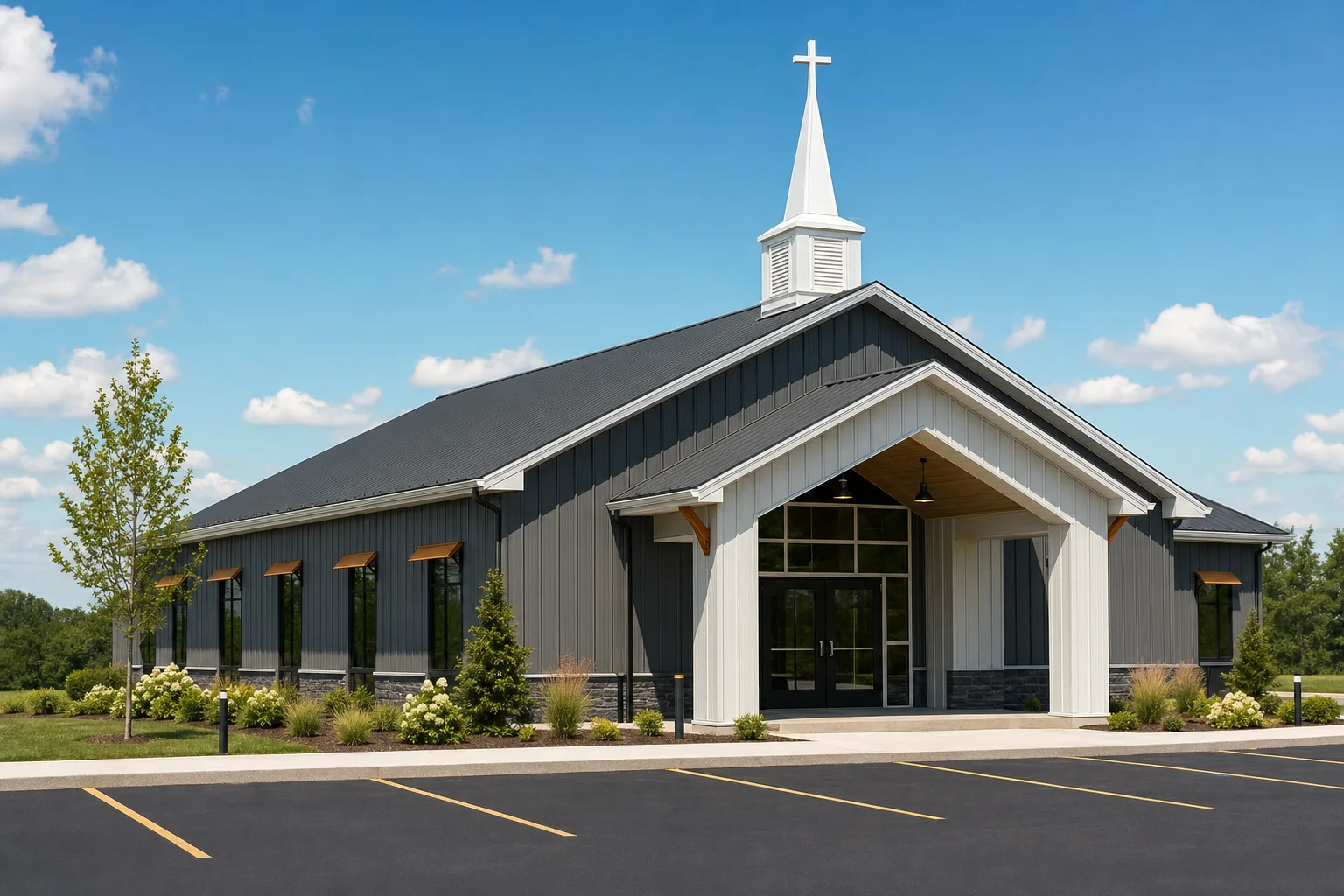
Metal building cost with installation runs higher than the kit price alone, because installation adds a crew to raise the steel that you would otherwise raise yourself. As an illustrative 2026 figure, professional erection often adds roughly 25 to 50 percent of the shell price ‹confirm›, so a $20,000 shell can land near $25,000 to $30,000 once it is up ‹confirm›. The kit price is the steel. The installed price is the steel plus the labor and equipment to stand it on your slab. Knowing which number a quote describes is the difference between a budget that holds and one that does not.
This guide sits under our Metal Building Kit Prices pillar and answers one question: what does installation add, and when is it worth paying for? Below you will find what an installed price covers, how big the gap is, what moves it, a side-by-side budget for the same building bought both ways, and a plain test for whether to hire the crew or raise it yourself. Every dollar figure is a dated 2026 illustrative range to verify against a live quote, since steel and labor pricing both move through the year.
Two prices
What metal building cost with installation means
An installed price is the shell plus the labor to erect it. A kit or shell price is the steel only: the frame, panels, fasteners, trim, and stamped drawings, delivered to your site in a stack. The installed price, sometimes called a turnkey or erected price, adds the crew, the lift equipment, and the time to bolt that stack into a standing building. The two numbers can sit thousands of dollars apart for the same footprint, so the first thing to do with any quote is ask which one it is.
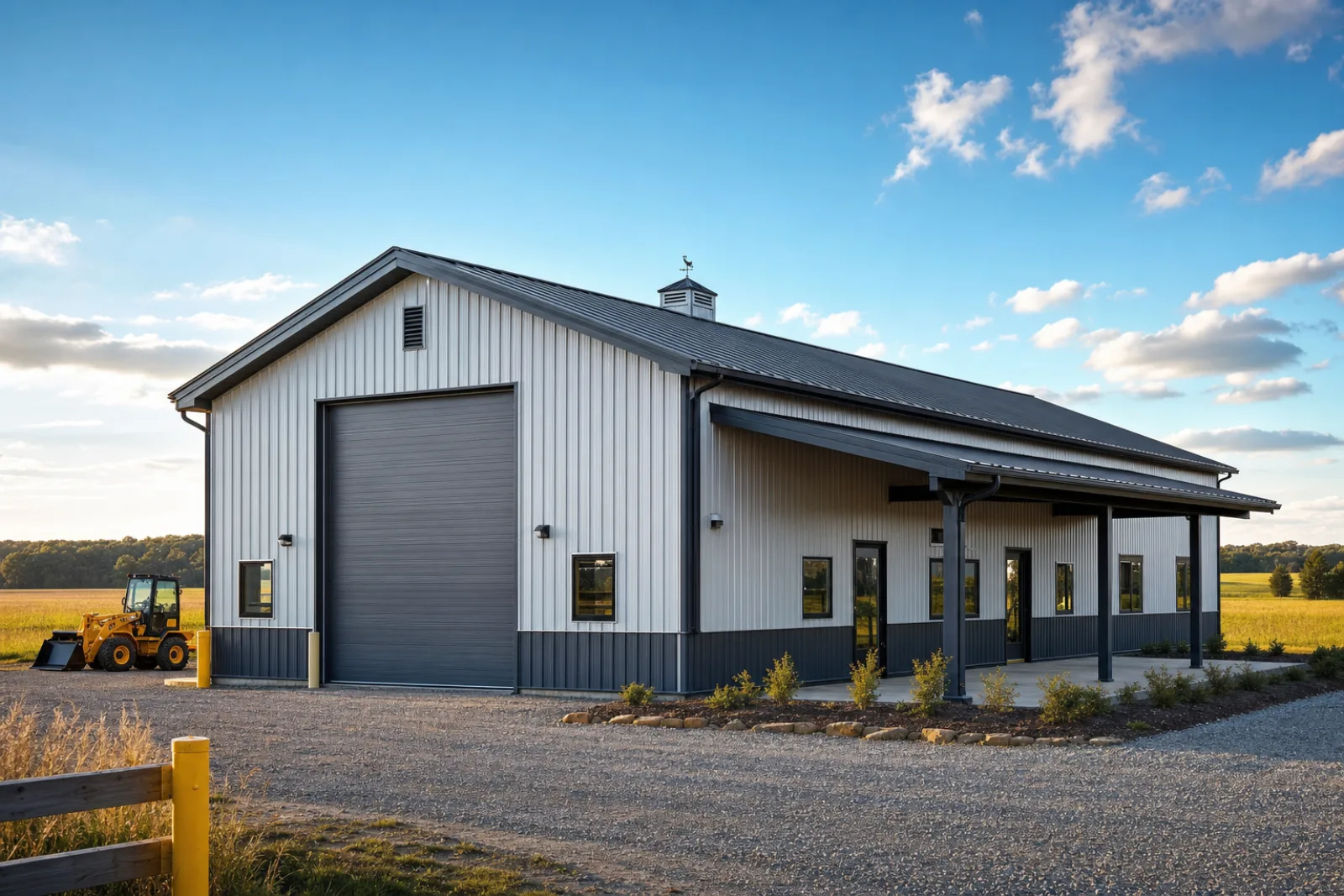
The confusion is built into how buildings are sold. One supplier advertises a low shell number and leaves erection to you. Another advertises a finished, installed figure and folds the crew in. Compare the two totals without reading what each includes and the cheap one looks like a steal when it is just a smaller scope. For the full picture of every line that turns a shell into a finished building, see our full cost breakdown.
Installed is not the same as turnkey
Watch the word turnkey, since some suppliers use it to mean only the erected shell while others fold in the slab, doors, and permit. Always ask exactly what a turnkey or installed price includes before you compare it to a bare kit. The hidden costs guide lists the lines that quietly sit outside even an installed number.
The gap
How much installation adds to the price
Installation labor commonly adds roughly 25 to 50 percent of the shell price as an illustrative 2026 range ‹confirm›, which on a per-foot basis often works out near $2 to $6 per square foot for erection alone ‹confirm›. The share is higher on small buildings, because a crew still has to mobilize, set up, and travel for a job that finishes fast. It falls as a share on larger buildings, where the labor spreads over far more steel. The table below shows the shape of that gap across common footprints.
| Footprint | Sq ft | Shell range (2026) | Erection add (illustrative) | Installed range (2026) |
|---|---|---|---|---|
| 24×30 | 720 | $9k–$16k ‹confirm› | $3k–$6k ‹confirm› | $12k–$22k ‹confirm› |
| 30×40 | 1,200 | $14k–$24k ‹confirm› | $4k–$9k ‹confirm› | $18k–$33k ‹confirm› |
| 40×60 | 2,400 | $26k–$45k ‹confirm› | $7k–$16k ‹confirm› | $33k–$61k ‹confirm› |
Shell plus erection labor only. Slab, permit, doors, insulation, and freight are separate. Illustrative 2026 ranges to confirm against a live quote.
Read the table as a shape, not a quote. The erection add is labor to raise the shell, not the slab or the finish work, which carry their own lines. A taller eave, a steeper roof, or a remote site pushes the add toward the high end, while a small, low, single-slope building on flat ground sits near the low end. For how the shell number itself is set before any crew shows up, see the cost per square foot guide.
What you pay for
What installation labor covers
Installation is more than bolting steel together, and a good erected price reflects the full job. When you pay for it, you are buying the work, the equipment, and the liability that come with standing a building correctly the first time. The lines below are what a professional erection price typically folds in:
- The crew and the hours. Trained erectors who square the base, set columns plumb, raise rafters, and torque every bolt to the engineered spec, on a schedule a DIY build rarely matches.
- Lift equipment. A telehandler, boom, or crane to set heavy frames safely. Renting and running this gear is a real cost most homeowners do not carry.
- Panel and trim install. Screwing down roof and wall panels straight and weather-tight, then fitting the trim, ridge cap, and closures that keep water out.
- Safety and insurance. Fall protection, a method for working at height, and the contractor’s liability and workers’ comp coverage, so a mistake is not on your homeowner policy.
- Cleanup and a standing handoff. A finished shell, anchored and signed off, ready for doors, insulation, and inspection rather than a pile you still have to figure out.
Notice what installation usually does not cover. The concrete slab is almost always a separate trade and a separate line, the same way the permit, the doors, and the insulation are. A quote that says installed often still means the steel is up, not that the building is finished. Read the scope, line by line, so you know where the crew’s job ends and yours begins.
What moves it
What drives the cost of installation
Two installed quotes for the same footprint can differ by thousands, and the spread is readable once you know the levers. Erection is priced on time, risk, and access, so anything that adds hours or hazard adds dollars. Five factors move the number most:
- Building size and weight. More square feet and heavier framing mean more steel to lift and fasten, so labor scales with the building. A red iron frame takes more crew and equipment than a light tube one.
- Eave height and roof pitch. Working higher and on a steeper roof is slower and more hazardous, which raises both the hours and the safety cost. A 16-foot eave costs more to erect than a 10-foot one.
- Site access and ground. A flat, open, dry lot a truck can reach is cheap to work. A tight, sloped, or muddy site that fights the lift equipment is not.
- Local labor rates. Erection crews bill regional wages, so the same building costs more to raise in a high-cost metro than in a rural county. This is the lever you cannot negotiate, only compare, which is why three quotes matter.
- Complexity and openings. Lean-tos, multiple roll-up doors, framed openings, and custom trim all add fitting time. A plain rectangular shell is the fastest, cheapest thing to stand up.
Installation is priced on time and risk, not on the steel. A tall, complex building on a tight, sloped lot can cost more to raise than a larger plain one on flat, open ground.
Side by side
With vs without installation: the same building, two budgets
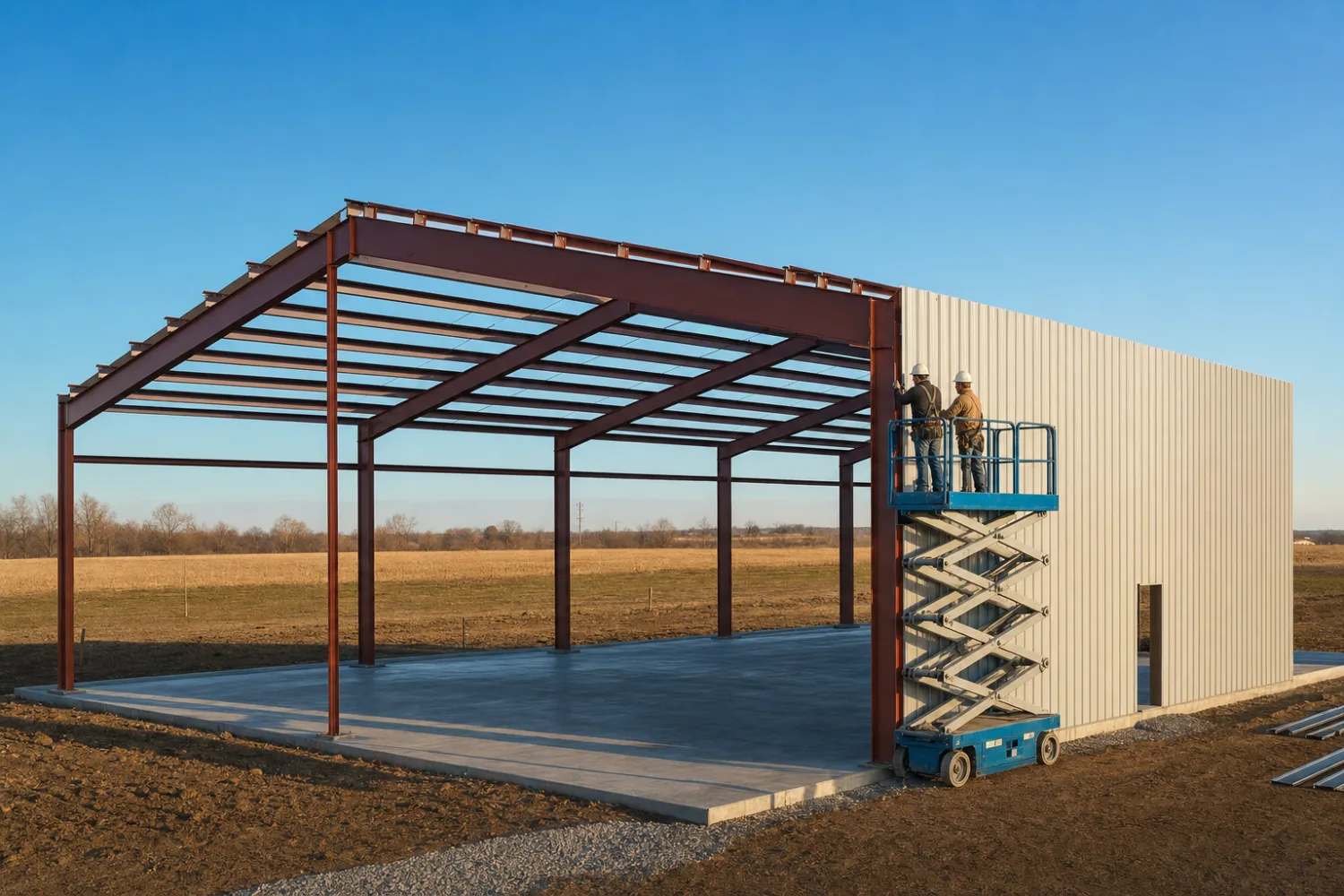
Numbers land better on a real building, so here is one 30 by 40 shop, 1,200 square feet, budgeted two ways from the same kit. The first column buys the shell and raises it yourself. The second pays a crew to erect it. Everything else, the slab and the openings, is the same in both, so the only line that changes is the erection labor. The figures are illustrative 2026 ranges to show the shape of the choice, not a quote for your site.
| Line | Without installation (DIY raise) | With installation (crew raise) |
|---|---|---|
| Kit / shell | $14k–$24k ‹confirm› | $14k–$24k ‹confirm› |
| Erection labor | Your own time and tools | $4k–$9k ‹confirm› |
| Lift equipment | Rented by you, if needed ‹confirm› | Included in the crew price |
| Foundation (slab) | $4.8k–$9.6k ‹confirm› | $4.8k–$9.6k ‹confirm› |
| Doors & openings | $1k–$4k ‹confirm› | $1k–$4k ‹confirm› |
| Permit & delivery | Hundreds to a few thousand ‹confirm› | Hundreds to a few thousand ‹confirm› |
| Steel up, total swing | Lowest cash, most of your labor | Higher cash, no DIY risk |
Illustrative 2026 ranges for a 30 by 40 shop, not a quote. Only the erection line truly changes between the two paths.
Read the two columns and the trade is plain. Doing your own raise keeps the most cash in your pocket and puts the labor, the equipment rental, and the risk on you. Paying for installation adds a few thousand dollars but hands you a standing shell with a crew’s speed, safety, and insurance behind it. Neither is wrong; they are different jobs for different buyers. The DIY vs installed comparison walks the labor-and-risk side of that decision in full.
Worth it?
When paying for installation is worth it
The installed price earns its premium when the build is too big, too tall, or too risky to raise without a crew, and it wastes money when the building is small enough to handle yourself. There is no universal answer, only a test against your building, your site, and your tolerance for a few weekends of heavy work. Use the lines below to sort your project:
- Lean toward installation on a wide-span, red iron building, a tall eave, a steep roof, a tight or sloped site, or any job where heavy frames have to go up high. The labor add is cheap next to a dropped beam or an injury.
- A DIY raise can pencil out on a small, low, light-gauge building on flat, open ground, where two or three capable people with rented gear can stand the shell over a few weekends. A single-car garage or a carport is the classic case.
- Either way, do not skimp on the slab. A building stamped for your snow and wind loads needs a foundation to match, installed or not, so price the concrete alongside the steel. The buying checklist keeps every line in view.
Count the hidden cost of your own time
A DIY raise is not free just because no crew invoices you. Tool and lift rental, a stack of weekends, the slower path to a usable building, and the risk of a costly mistake all carry real value. Weigh that honestly against the erection quote before you call the DIY path the cheaper one. The cost guide worksheet helps you total both sides.
FAQ
Common questions about installation cost
How much does installation add to a metal building?
As an illustrative 2026 range, professional erection often adds roughly 25 to 50 percent of the shell price ‹confirm›, or about $2 to $6 per square foot for the labor alone ‹confirm›. The share runs higher on small buildings and lower on large ones, and a tall eave, steep roof, or remote site pushes it up. Confirm any figure against a live quote, since labor rates vary by region.
What is the difference between a kit price and an installed price?
A kit or shell price is the steel only: frame, panels, fasteners, trim, and stamped drawings, delivered in a stack. An installed or erected price adds the crew and equipment to stand that steel into a building on your slab. The two can sit thousands apart for the same footprint, so always ask which one a quote describes. See our full cost breakdown.
Does installation include the concrete slab?
Usually not. Erection labor raises the steel, but the foundation is almost always a separate trade and a separate line, the same as the permit, doors, and insulation. A price that says installed often means the shell is up, not that the building is finished. The hidden costs guide covers the slab, permit, and delivery lines.
Can I install a metal building kit myself to save money?
On a small, low, light-gauge building on flat ground, yes, and skipping erection labor removes the largest single add-on. On a wide-span, tall, or red iron building, a crew’s speed, equipment, and insurance usually earn their cost. Weigh the labor and risk in the DIY vs installed comparison before you decide.
Why is one installed quote so much higher than another?
Erection is priced on time, risk, and access, so building size, eave height, roof pitch, site conditions, and local labor rates all move it. A tall, complex building on a tight lot costs more to raise than a plain one on open ground, even at the same footprint. Three quotes for the same scope reveal the spread. See what drives prices.
Is a turnkey price the same as an installed price?
Not always. Some suppliers use turnkey to mean only the erected shell, while others fold in the slab, doors, or permit. The words are not standardized, so ask exactly what a turnkey or installed number includes before you compare it to a bare kit. The buying checklist lists what to confirm.
Does installation cost more per square foot on a small building?
Yes. A crew still has to mobilize, travel, and set up for a small job that finishes fast, so the labor spreads over fewer square feet and costs more per foot. On a larger building the same fixed effort spreads over more steel, so the per-foot erection cost falls. The cost per square foot guide explains that math.
Related guides
Keep reading
This installation question connects to the rest of the money decision. Follow these next:
- Metal building kit prices (the parent pillar, every cost guide in one place).
- How much do metal building kits cost (the full shell-to-finished breakdown).
- DIY vs installed cost comparison (the labor and risk side of the choice).
- Hidden costs (foundation, permits, delivery).
- Metal building cost per square foot (the per-foot method).
- Construction types & DIY (the build silo, if you plan to raise it yourself).
- Metal building cost guide (the reference worksheet to total both paths).