For simple open cover, a pole barn usually costs less to put up than a metal building; for a finished, wide-span building you plan to keep for decades, a metal building kit often costs less once you total the whole job and the whole lifespan. As an illustrative 2026 range, a bare pole barn shell runs about $15 to $30 per square foot ‹confirm›, while a steel kit shell runs about $20 to $40 per square foot ‹confirm›, before either gets a slab, doors, or insulation. The cheaper sticker is not the cheaper building. The real comparison is two finished structures, priced to the same spec, over the same years.
This guide sits under our Metal Building Kit Prices pillar and answers one money question: when does a metal building beat a pole barn on cost, and when does the pole barn win? Below you will find a per-square-foot comparison, why a bare pole barn quote misleads, what drives the gap, the cost over the life of each building, and a plain test for which is cheaper for your project. For how the two systems differ beyond price, see the metal building kits overview. Every dollar figure here is a dated 2026 illustrative range to verify against a live quote.
The short answer
Is a metal building or a pole barn cheaper?
For a bare, open structure, a pole barn is usually the cheaper way to get a roof up. For a finished, wide-span building meant to last, a metal building kit often costs less once the whole project and the years of ownership are on the page. Both can be the right call. The deciding factor is what you are building and how long it has to stand.
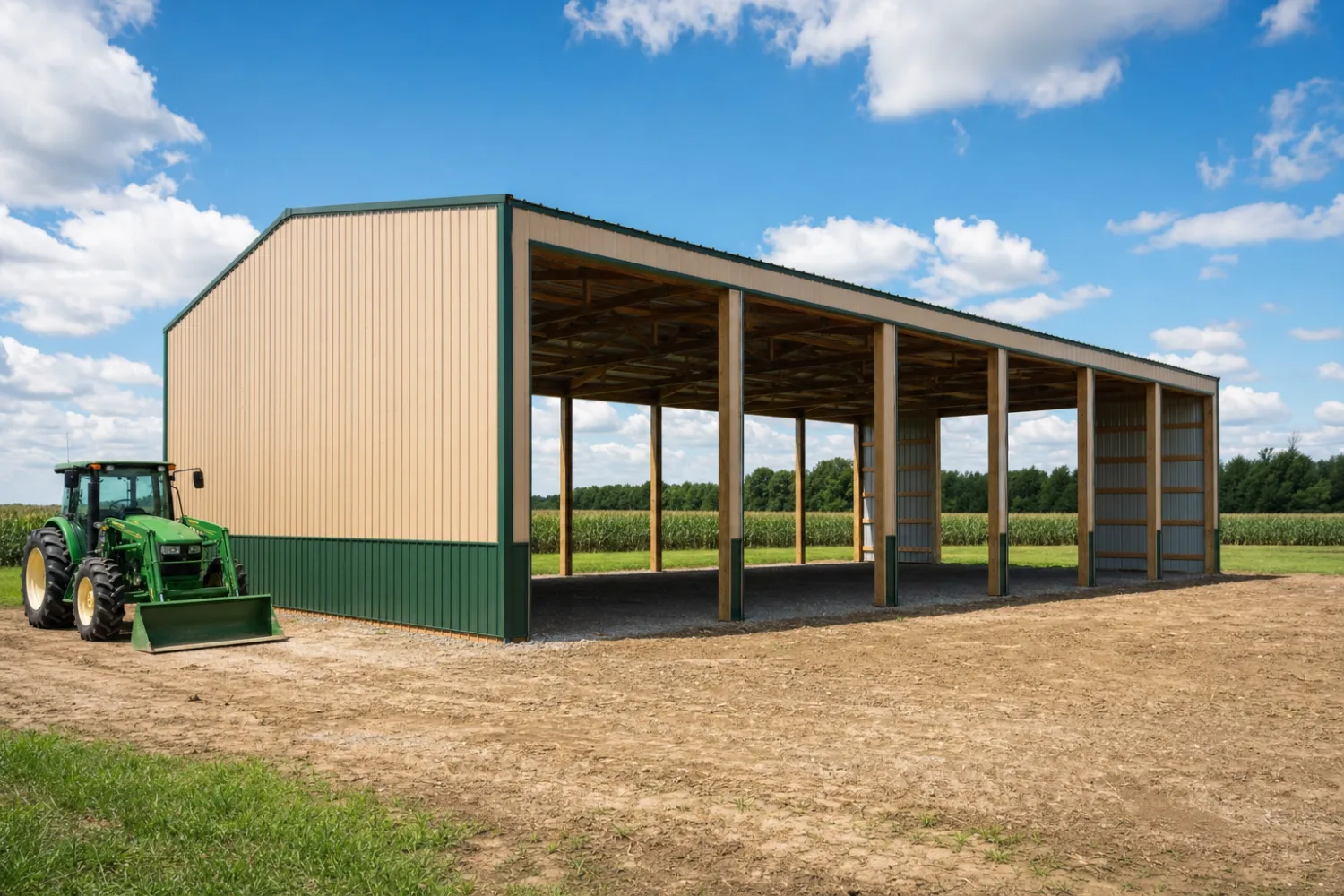
A pole barn starts cheaper for a reason. Wood posts and trusses are inexpensive material, the structure is light enough that a small crew can frame it, and a basic ag shed can skip a full concrete slab. That keeps the upfront number low for open hay cover or an equipment shelter. Those same savings drive a chunk of the price gap that the what drives prices guide breaks down line by line.
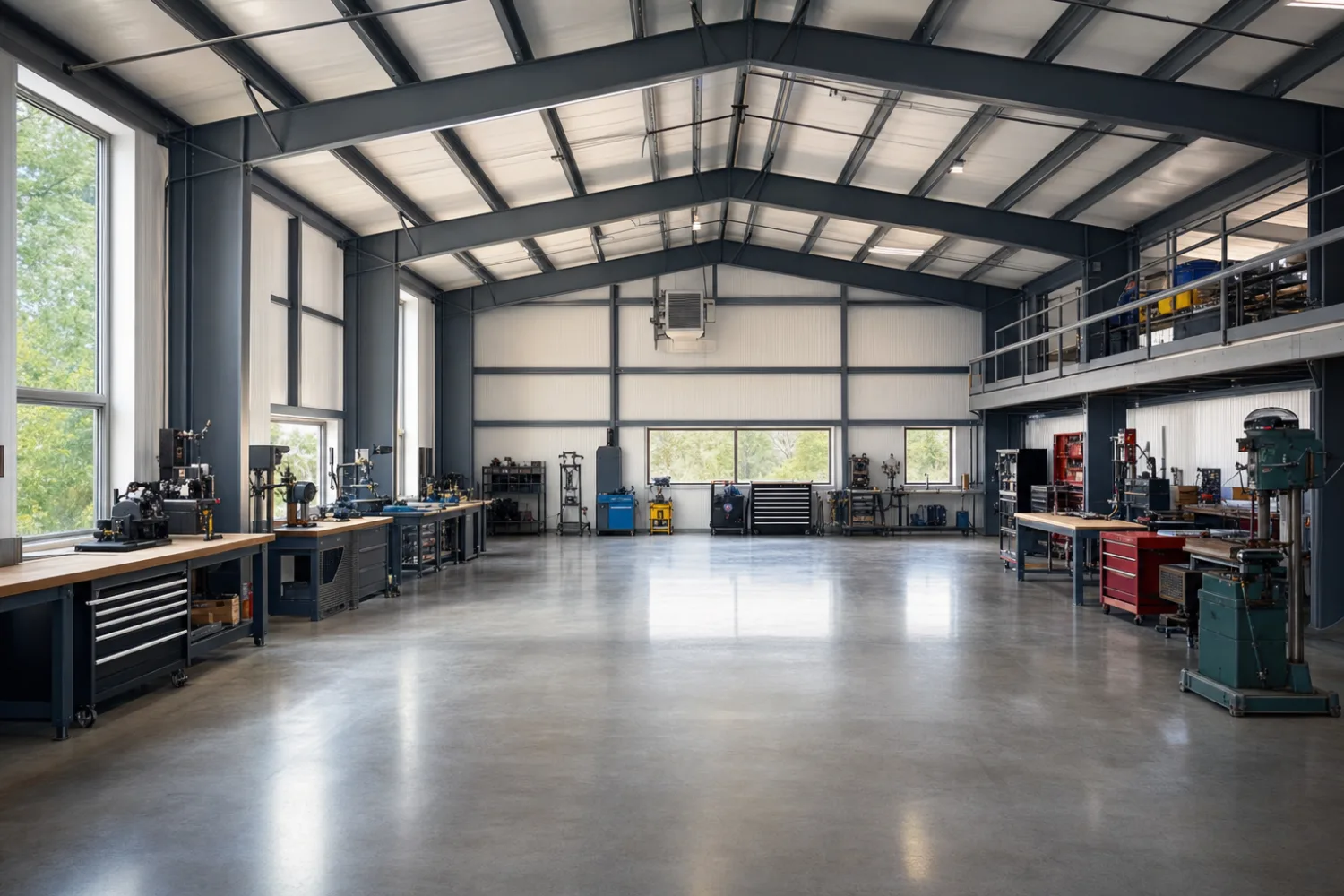
A metal building kit closes that gap, then passes it, the moment you want span, finish, and longevity. The engineered steel frame clears a wide floor with no interior posts, it does not rot or feed termites, and it asks for little upkeep over decades. Add the cost of finishing a pole barn to the same standard and the totals converge fast, which is the math the full cost breakdown walks through.
Cost per square foot
Metal building cost vs pole barn cost per square foot
On a bare shell, a pole barn typically prices a few dollars per square foot under a comparable steel kit, but the order can flip once you add a slab and a finished interior. Per-square-foot numbers are the cleanest way to compare, as long as you compare the same level of finish on both. The table below shows the shape of that gap as an illustrative 2026 range, not a quote for your site.
| Finish level | Pole barn ($/sq ft) | Metal building kit ($/sq ft) |
|---|---|---|
| Bare shell, no slab | $15–$30 ‹confirm› | $20–$40 ‹confirm› |
| Shell plus concrete slab | $25–$45 ‹confirm› | $30–$55 ‹confirm› |
| Finished, insulated, doors | $45–$75 ‹confirm› | $45–$80 ‹confirm› |
| Wide clear span (50 ft+) | Needs interior posts ‹confirm› | Clears it on the base frame ‹confirm› |
Illustrative 2026 ranges to confirm against a live quote. The gap is widest on the bare shell and narrowest once both are finished.
Read the table top to bottom and the story is clear. The pole barn lead is largest on the bare shell, shrinks once both get a slab, and nearly vanishes at a finished, insulated interior, where the steel frame’s clean bays save labor. On a wide clear span the comparison changes shape, because a pole barn needs interior posts that a steel frame does not. For the method behind these figures, see the cost per square foot guide.
Bare vs finished
Why a bare pole barn quote looks cheaper than it is
The most common pricing mistake is comparing a bare pole barn shell to a more complete steel building quote. A pole barn number often covers an open structure on gravel, while a steel kit quote may already fold in the engineered frame, fasteners, and stamped drawings. Stack those two totals side by side and the pole barn looks like a steal when it is just a smaller scope.
Price both to the same finish
Before you call one cheaper, build both quotes to the same building: same slab, same doors, same insulation, same eave height. A pole barn and a steel kit priced to identical finish often land within a few thousand dollars ‹confirm› on a mid-size shop. The hidden costs guide lists the slab, permit, and delivery lines that hide outside a headline shell number.
The lines that close the gap are the ones buyers forget. A finished pole barn needs the same slab, the same overhead and entry doors, the same insulation, and the same wiring as a steel shop, and framing those around wood posts can add labor a steel kit has already engineered out. Whether you raise the building yourself or hire a crew also swings the total, which the cost with vs without installation guide covers for steel.
What drives the gap
What drives the cost difference
Five levers move the price gap between a pole barn and a metal building, and most of them trace back to materials and span. Once you know which lever your project pulls hardest on, the cheaper system is usually obvious. Here is where the dollars come from:
- Frame material. Wood posts and trusses cost less per pound than an engineered steel frame, so the pole barn starts ahead on bare structure. The wider and taller you build, the more steel earns that premium back.
- Clear span. A pole barn holds wide spans only by adding interior posts, while a steel frame clears the same floor on its base design. If you need an open shop floor, span is where the steel cost case strengthens.
- Foundation. A basic pole barn can sit on gravel or a partial slab; a finished shop in either system wants a full slab. Decide the floor first, because it is often the single biggest shared line.
- Finish and use. An open ag shelter and a heated, code-finished workshop are different price tiers in both systems. Match the comparison to the use, and lean on where you can trim cost without cutting the structure.
- Region and labor. Local wages, lumber and steel pricing, and your building department all move the total, so the cheaper system in one county can be the pricier one in the next. Get three quotes for the same scope.
Lifetime cost
The cost over the life of the building
Upfront price is half the comparison; the other half is what each building costs you over twenty or thirty years. This is where a metal building often pulls ahead, because steel asks for less maintenance and carries less structural risk than buried wood posts. A low sticker that needs post repairs in fifteen years is not the cheaper building.
Compare the totals over the lifespan, not the stickers on day one. A pole barn can win the purchase and still lose the decade once you count upkeep, repairs, and resale.
Three long-run lines favor steel. Maintenance is lower, since a protected steel frame does not rot, warp, or invite termites the way a post in soil can. Resale tends to read stronger, because a steel shop presents as a permanent structure to the next buyer. Insurance can run lower on a non-combustible steel building than on a wood-framed one ‹confirm›, though that varies by carrier and region, so confirm it with your own insurer. For ways to keep the upfront number down without giving up those gains, see how to save on a kit.
None of this brands a pole barn a poor value. A well-built post-frame shed can serve a long time for little money, and for the right use it is the cheaper building start to finish. The point is to count the years, not only the invoice, so the number you compare reflects what you pay to own the building.
Which is cheaper
Which is cheaper for your project
Let the use decide which one pencils out cheaper. Simple, open, short-life cover points to a pole barn; a finished, wide-span, long-term building points to a steel kit. Here is how the common projects land on cost:
- Open hay shed or equipment cover. Pole barn is usually cheapest. No slab, no finish, light frame, lowest upfront number.
- Basic livestock or storage shelter. Pole barn often wins on cost, and it is the traditional choice for simple ag use.
- Finished shop or garage. Close on price, with the steel kit’s clean bays and lower upkeep tipping the lifetime cost its way. Compare totals by footprint in the prices by size guide.
- Wide-span or commercial building. Steel kit is the cheaper honest quote, since a pole barn needs added posts to span the same floor. If you plan to raise it yourself, weigh the DIY vs installed cost first.
FAQ
Metal building cost vs pole barn cost: common questions
Is a metal building cheaper than a pole barn?
It depends on the build. For a bare, open structure, a pole barn is usually cheaper to put up, because wood posts are inexpensive and it can skip a full slab. For a finished, wide-span building you keep for decades, a metal building kit often costs less once you total the whole job and the years of lower upkeep. Price both to the same finish before you decide.
How much does a pole barn cost vs a metal building per square foot?
As an illustrative 2026 range, a bare pole barn shell runs about $15 to $30 per square foot ‹confirm› and a steel kit shell about $20 to $40 per square foot ‹confirm›. The gap shrinks once both get a slab and a finished interior, where steel’s clean bays save labor. Confirm any figure against a live quote, since lumber and steel pricing both move. See the cost per square foot guide.
Why is a pole barn cheaper upfront?
A pole barn uses inexpensive wood posts and trusses instead of an engineered steel frame, the light structure is faster to frame, and a basic ag version can sit on gravel rather than a full concrete slab. Those three savings keep the bare shell number low. They shrink once you finish the building to the same standard as a steel shop.
Does a metal building cost less over time?
Often, yes. A protected steel frame does not rot, warp, or feed termites, so maintenance runs lower than on buried wood posts, and a steel shop tends to resell as a permanent structure. A pole barn can win the purchase and still cost more across twenty or thirty years of upkeep and repairs. The cost guide helps you total both paths.
Is a pole barn cheaper to insure than a metal building?
Usually it is the other way around. A non-combustible steel building can carry a lower premium than a wood-framed pole barn, because it resists fire, rot, and insects ‹confirm›. Insurance pricing varies by carrier, use, and region, so the only reliable answer is a quote from your own insurer for both structures on your site.
What is the cheapest way to build covered space?
For simple, open cover with no finished interior, a basic pole barn on gravel is typically the lowest upfront cost. If you need a wide clear span, a finished interior, or a building meant to last decades, a steel kit usually delivers the lower cost over the life of the building. Match the cheapest option to how you will use the space.
Do metal buildings hold resale value better than pole barns?
Generally, yes. A steel shop or garage reads as a durable, permanent structure to a buyer, while an aging pole barn with weathered posts can read as deferred maintenance. Resale is not a line on your quote, but it is part of the true cost of ownership. For the full money picture, see the full cost breakdown.
Related guides
Keep reading
This cost comparison connects to the rest of the money decision. Follow these next:
- Metal building kit prices (the parent pillar, every cost guide in one place).
- How much do metal building kits cost (the full shell-to-finished breakdown).
- Metal building cost per square foot (the per-foot method behind these numbers).
- Hidden costs (the slab, permit, and delivery lines that close the gap).
- What drives metal building prices (the levers behind every quote).
- Metal building cost guide (the reference worksheet to total both systems).