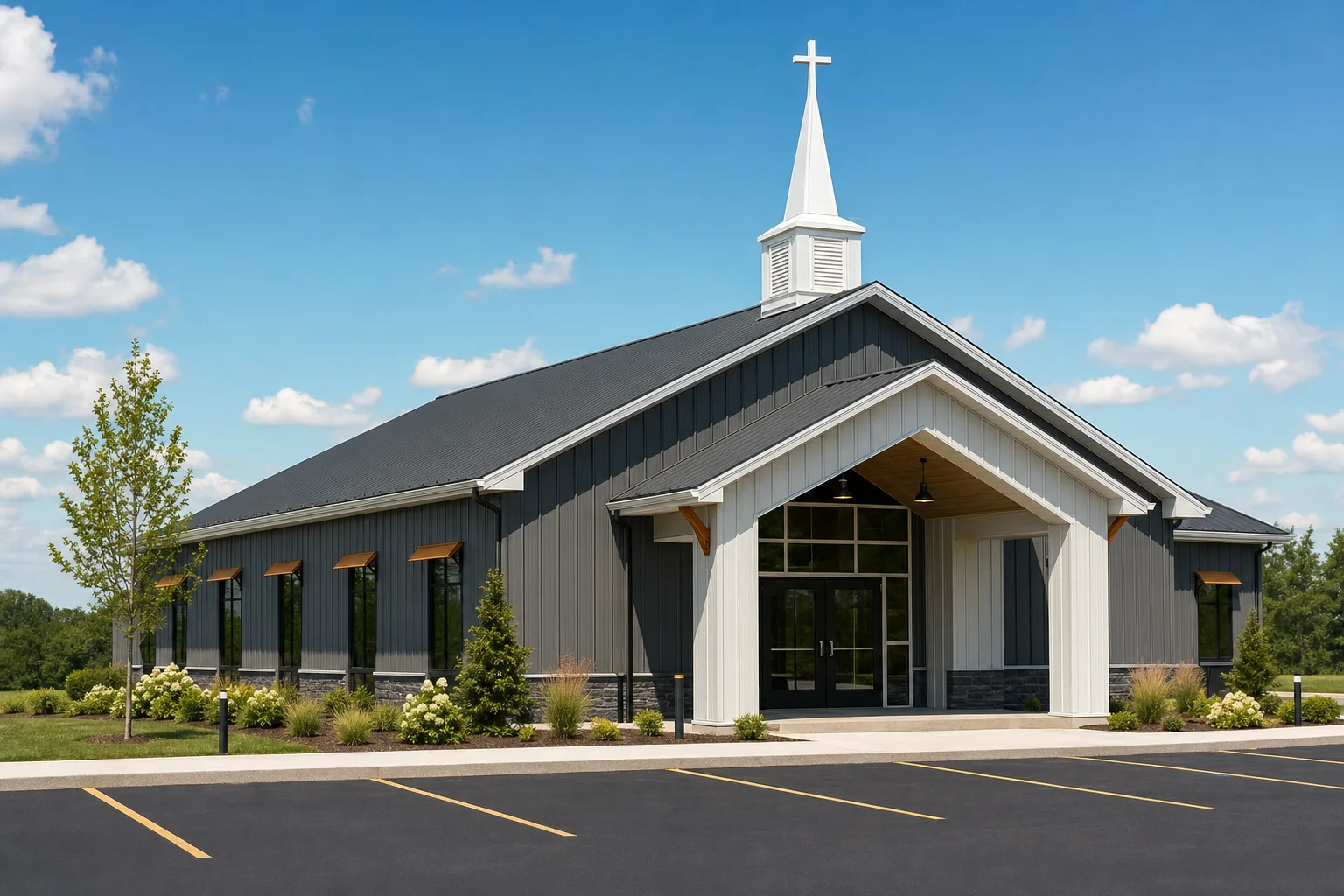
The best way to save money on a metal building is to right-size it, do your own assembly, and buy the bare shell from the right source at the right time. Those three levers move the total far more than haggling over the sticker price. Everything else, from foundation prep to financing terms, trims the bill at the edges. Get the big three correct first and the small savings add up on top.
This guide sits under the metal building kit prices pillar. Below: where your money goes, the levers that cut the most, and the corners that look like savings but cost you later. Use it as a planning checklist before you ask for a single quote, so you know which numbers you can push and which ones protect the building.
Start here
Know where the money goes before you cut it
You cannot save on a price you do not understand, so the first move is to break the total into parts. A delivered, installed metal building is rarely one number. It is the steel shell, the foundation, the labor to erect it, the permits, and the delivery, each priced on its own.
The steel shell is the largest single piece on most projects, but it is not the only place money hides. Site work and the slab can run a real fraction of the build, and foundation, permit, and delivery costs catch buyers who only compared shell prices. Before you chase a discount, see what drives metal building prices so you know which line you are cutting and what it pays for.
Splitting the total this way changes how you save. A 5 percent discount on the shell ‹confirm› is small next to the labor you avoid by erecting it yourself, or the slab cost you trim by prepping the site before the crew arrives. For the full picture of how the pieces stack, the metal building cost guide lays out each line and a realistic 2026 range for it.
Size and spec
Right-size the building so you do not pay for steel you will not use
The cheapest square foot is the one you do not build. Buyers routinely round up on width, length, and height, and steel scales with every foot, so an oversize building quietly inflates the bill before any crew shows up.
Start with the use, not a round number. A workshop that needs 14 feet of clear height is a different price than one that needs 16, and a few feet of length you will never fill is pure cost. Because steel buildings price closely with the size you order, the cost per square foot math rewards a tight footprint. If you genuinely need room to grow, leaving the gable end ready for a future extension is cheaper than buying empty bays now ‹confirm›.
Spec is the second lever. Heavier gauge, taller walls, and a wider clear span all add steel, and not every project needs the strongest frame on the lot. Match the frame and the load rating to the job, not to the catalog’s flagship. The trap is over-spec, where you pay for capacity you will never load, and the savings there come straight off the top without weakening the building you put to work.
One honest oversize
There is one place where buying bigger saves money: ordering a slightly larger building now instead of a small one you outgrow in two years. A second building means a second foundation, a second delivery, and a second permit. If your plans are firm, size for them once. If they are not, size for today and read how to buy an affordable kit for the lean-build approach.
Labor
Do your own assembly to cut the biggest single cost
Labor is the largest avoidable cost on most kits, so handling the assembly yourself is the single biggest lever you control. A bolt-up kit ships pre-cut, pre-drilled, and numbered, which is what makes a DIY raise realistic for a small to mid-size building.
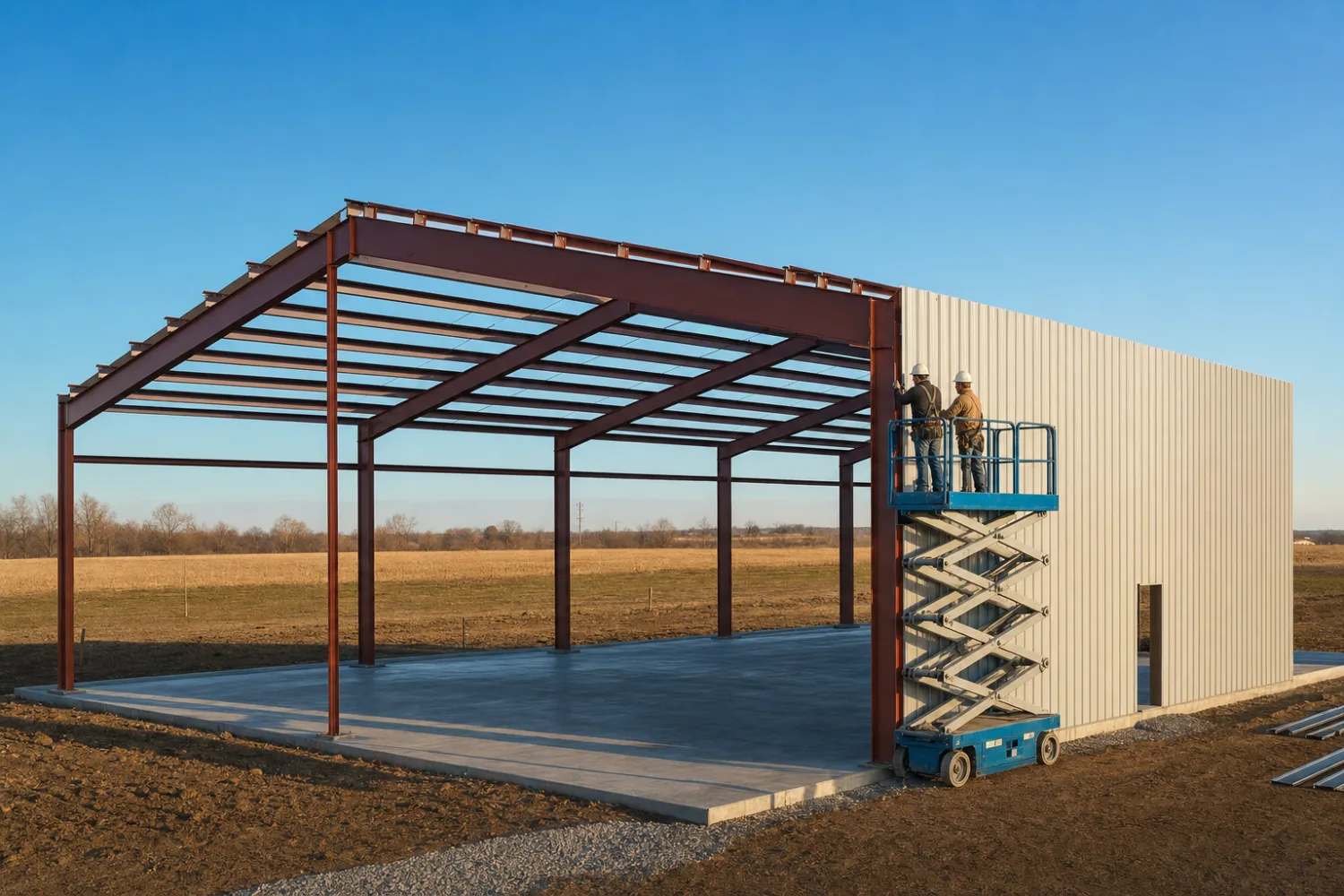
How much you save depends on the building and your skills. The gap between a kit you erect and one a crew installs can be a meaningful share of the project on a small building ‹confirm›, which is exactly the comparison the DIY vs installed cost comparison walks through. For the same building priced both ways, cost with vs without installation shows where the line lands.
Be honest about scope. A carport or a single-car garage is a weekend for two capable people with the right tools. A 50-foot clear-span shop with heavy red iron wants equipment and a crew, and a botched raise costs more than the labor you tried to save. Rent the lift, read the plans twice, and do not skip the parts that need a professional. Partial DIY counts too: pour your own slab prep, or set anchor bolts yourself, and hire out only the frame raise.
Where to buy
Buy from the right source at the right time
Where and when you buy can move the price as much as what you buy. The same square footage of steel sells through several channels, and each one trades a lower price for some compromise on selection, lead time, or finish.
| Buying route | What you trade | When it saves |
|---|---|---|
| New from a manufacturer | Full price, full choice | Custom size, exact spec, warranty matters |
| Wholesale / direct | Less hand-holding, larger order | You know the spec and skip the markup |
| Clearance or overstock | Limited sizes on hand | A listed size fits your plan |
| Used or relocated | Inspection and re-engineering needed | Local, you can verify the steel |
Illustrative trade-offs, not a ranking. The cheapest route is the one whose compromise you can live with.
Each route has a deeper guide. Wholesale and direct buying cuts the dealer markup when you already know your spec. Clearance and discount kits move standard sizes at a lower price when a listed building matches your plan. And used metal building kits can be the cheapest steel on the market, as long as you have the frame inspected and re-engineered for your site loads before you commit.
Timing is the quiet part. Steel pricing moves with the market, and many suppliers run slower seasons, so a quote in a quiet month can beat the same building in peak demand ‹confirm›. Get two or three quotes on the identical spec, ask each to match the lowest line by line, and let them compete. The point is not to grind one supplier down; it is to pay the real market price instead of the first number you are handed.
Compare quotes on the same spec, or you are comparing nothing. A lower headline number that drops the right gauge or the snow rating is not a discount, it is a different building.
Tactics
Stack the smaller savings on top
Once the big three are set, a handful of smaller moves trim the rest. None of these is a windfall on its own, but together they take a real bite out of the total.
- Prep the site yourself. Clear, level, and provide access before the crew arrives, and you pay for steel work instead of dirt work.
- Pour a simple, correct slab. An over-built foundation wastes concrete; an under-built one fails. Match the slab to the load and skip the extras.
- Pull your own permits. Handling the paperwork yourself avoids a markup, and it forces you to confirm setbacks and codes before you order.
- Order standard colors and trims. Custom finishes carry a premium; a standard color package is the same steel for less.
- Bundle delivery. Take the building in one drop on an accessible site, and you avoid re-delivery and access fees.
Financing is its own lever. The cheapest building is the one you do not pay interest on, so paying cash beats every plan. When you do finance, the terms matter more than the headline: a longer plan lowers the monthly payment but raises the total. Compare how to finance a metal building kit against the payment plans and no money down options before you sign, and read the total cost, not the monthly.
False economy
Where cutting costs more than it saves
Some savings are not savings. A handful of cuts look good on the quote and then cost you in repairs, failed inspections, or a building that does not last, so this is the line you do not cross.
- The frame and load rating. Under-buying gauge or skipping a stamped snow and wind rating to shave the shell price risks the whole building. Match the steel to your site loads.
- The foundation. A slab that is too thin or poured on bad prep cracks under the building you set on it. This is not the line to trim.
- Insulation and ventilation. Skipping them invites condensation that rusts steel and ruins what you store. Spend here and the building lasts.
- A real warranty and a reputable supplier. The lowest number from an unknown seller can cost the most when a panel fails and no one answers.
The rule is simple to state: cut labor, size, and markup, not structure. Before you sign anything, run the spec against the metal building buying checklist so a low number never hides a missing line. Real savings make the same building cheaper. False economy makes a cheaper building.
FAQ
Saving money on a metal building kit: common questions
What is the single best way to save money on a metal building?
Handle the assembly yourself when the building is small enough to be realistic. Labor is the largest avoidable cost on most kits, and a bolt-up kit ships pre-cut and numbered for a DIY raise. Right-sizing the building so you do not over-buy steel runs a close second.
Is it cheaper to build a metal building yourself?
For a carport, a garage, or a small shop, yes, because you skip the install labor. For a wide clear-span building with heavy steel, the savings shrink and the risk grows, so weigh the DIY versus installed comparison for your size before you commit. Partial DIY, like prepping the site, saves money at lower risk.
Are used metal building kits worth it?
They can be the cheapest steel on the market, but only after an inspection and a re-engineering check for your site loads. A relocated frame designed for a mild climate may not pass in snow country. See used metal building kits for what to verify before you buy.
Does buying wholesale cost less?
It can, when you already know your spec and do not need a dealer to walk you through it. You trade hand-holding for a lower markup. If you are sure of your size, gauge, and loads, wholesale and direct buying removes a layer of cost.
When is the cheapest time to buy a metal building?
Steel pricing moves with the market, and many suppliers slow down in off-peak months, so a quote in a quieter season can beat the same building in peak demand ‹confirm›. Lock a quote on an exact spec, then ask two or three suppliers to compete on the identical building.
Where should I never cut costs?
On the frame and load rating, the foundation, and basic insulation and ventilation. Trimming those to lower the headline price risks the whole building. Cut labor, size, and markup instead, and check the spec against the buying checklist before you sign.
How do I make two quotes comparable?
Hand every supplier the same size, gauge, height, and load rating, then compare line by line. A lower number that drops a gauge or a snow rating is a different building, not a discount. The cost guide lists the lines a complete quote should include.
Related guides
Keep reading
Saving money is a planning decision, so line these up before you order:
- Metal building kit prices: the complete guide (the parent pillar).
- What drives metal building prices (the levers behind every quote).
- DIY vs installed cost comparison (the biggest single saving, sized).
- Used metal building kits and clearance and discount kits (lower-cost sourcing routes).
- Hidden costs: foundation, permits, delivery (the lines that catch shell-only shoppers).
- Metal building cost guide (every line and a 2026 range).