Metal building insulation cost runs roughly $0.50 to $3.00 per square foot for the material as a 2026 illustrative range ‹confirm›, and climbs to about $2 to $6 per square foot installed once a contractor handles the spray foam or board work ‹confirm›. On a 30 by 40 shop with both walls and roof covered, that puts the insulation line somewhere near $1,500 for a budget batt to $9,000 or more for a full spray-foam package ‹confirm›. The number you land on depends on the type, the R-value, how much of the shell you cover, and whether you install it yourself. The type you pick swings the bill more than anything else.
This guide sits under our Metal Building Kit Prices pillar and answers one question: what does insulation add to a metal building, in dollars? Below you will find a price-per-square-foot table by insulation type, the factors that move your total, why insulating during the build beats retrofitting later, and where the line sits inside the whole building budget. For which type fits your climate and the R-value math behind it, see our metal building insulation guide. This page stays on the money. Every figure is a dated 2026 illustrative range to confirm against a live quote, since insulation and labor pricing both move through the year.
The number
What does metal building insulation cost?
Insulation is a separate line on your build, not part of the bare shell price, and most owners spend somewhere between a few hundred and several thousand dollars on it. The wide spread comes down to one choice: a thin reflective layer over a carport is a different purchase than a full spray-foam envelope on a steel home. A useful way to budget is per square foot of surface you cover, then add labor if you are not installing it yourself.
Material alone tends to run $0.50 to $3.00 per square foot in 2026 terms ‹confirm›, and a professional install pushes the in-place figure to roughly $2 to $6 per square foot for the higher-end products ‹confirm›. Remember you are covering walls and roof, so the insulated area is larger than the floor footprint. A 1,200 square foot shop can have 2,500 or more square feet of shell to cover once you count the roof and four walls ‹confirm›. That surface math, not the floor size, drives the total. For how the shell price itself is set before insulation, see our full cost breakdown.
Insulation is never in the bare kit price
A shell or kit quote covers the steel: frame, panels, fasteners, and trim. Insulation is its own line, the same way the slab, doors, and permit are. When you compare two kit prices, check whether either includes an insulation package before you call one cheaper. The hidden costs guide lists the lines that sit outside the headline shell number.
By type
Metal building insulation cost by type
The type you choose moves the bill more than any other single factor, because the four common products sit at sharply different price points. Batt or blanket is the budget default, a reflective radiant barrier is comparable and simple, rigid board sits in the middle, and spray foam costs the most because it buys the highest performance and the tightest air seal in one step. The table below shows the shape of those prices, material and installed, as 2026 illustrative ranges.
| Insulation type | Material $/sq ft (2026) | Installed $/sq ft (2026) | Cost tier |
|---|---|---|---|
| Batt / blanket | $0.50–$1.50 ‹confirm› | $1.00–$2.50 ‹confirm› | Lowest |
| Reflective / radiant | $0.50–$1.50 ‹confirm› | $1.00–$2.50 ‹confirm› | Low |
| Rigid board | $1.00–$2.50 ‹confirm› | $2.00–$4.00 ‹confirm› | Middle |
| Spray foam | $1.50–$3.00 ‹confirm› | $3.00–$6.00 ‹confirm› | Highest |
Illustrative 2026 ranges per square foot of shell covered, not a quote. Confirm against a live estimate for your building and climate.
Read the table as a ladder, not a verdict. Spray foam costs the most, but it doubles as your air and vapor seal, so on a heated home or a climate-controlled shop the higher price can pay back through lower energy bills. Batt costs the least and installs the easiest, which is why most kits offer it as the default option. The right rung depends on how you use the building, not on the lowest number, and that decision lives in the insulation options guide. This page only tells you what each rung costs.
Two more cost notes ride along with type. Batt and reflective barrier are DIY-friendly, so you can skip the install labor and stay near the material price. Spray foam almost always needs a contractor and equipment, so its installed figure is the honest one to budget. If you are weighing the whole project as a self-build, the DIY vs installed comparison covers where your own labor saves real money and where it does not.
What moves it
What drives your insulation cost
Two insulation quotes for the same building can differ by thousands, and the spread is readable once you know the levers. Price scales with the surface you cover, the performance you ask for, and who does the work. Five factors move the number most:
- Type and R-value. The product sets the base price, and a higher R-value within a type means more thickness or density, which costs more. A thick, high-R spray foam is the top of the range; a thin batt is the bottom.
- How much you cover. Roof only, walls only, or the full shell, walls and roof, changes the square footage you pay for. A roof-and-wall package can be double a roof-only one on the same building.
- Building size. More square feet of shell means more material and more labor, so insulation scales with the building the same way the cost per square foot of the shell does.
- DIY or installed. Doing your own batt or radiant layer removes the labor line entirely. Hiring out a spray-foam or board job adds the crew and equipment, which is most of the installed-versus-material gap.
- Region and access. Spray-foam contractors bill regional rates, and a tight or tall building is slower to cover, so the same package costs more in a high-cost metro than a rural county.
Insulation is priced on surface area and performance, not on the floor size. A tall building with a big roof costs more to insulate than a low one with the same footprint, because there is more shell to cover.
Now vs later
Insulate during the build or retrofit later?
Insulating as the building goes up is almost always cheaper than adding it after the panels are on. The reason is access. While the frame is open, batt and radiant barrier drape over the framing before the panels close them in, so the labor is fast and the material is ordered with the kit. Once the shell is sealed, a retrofit has to work around finished walls, which costs more and limits your options.
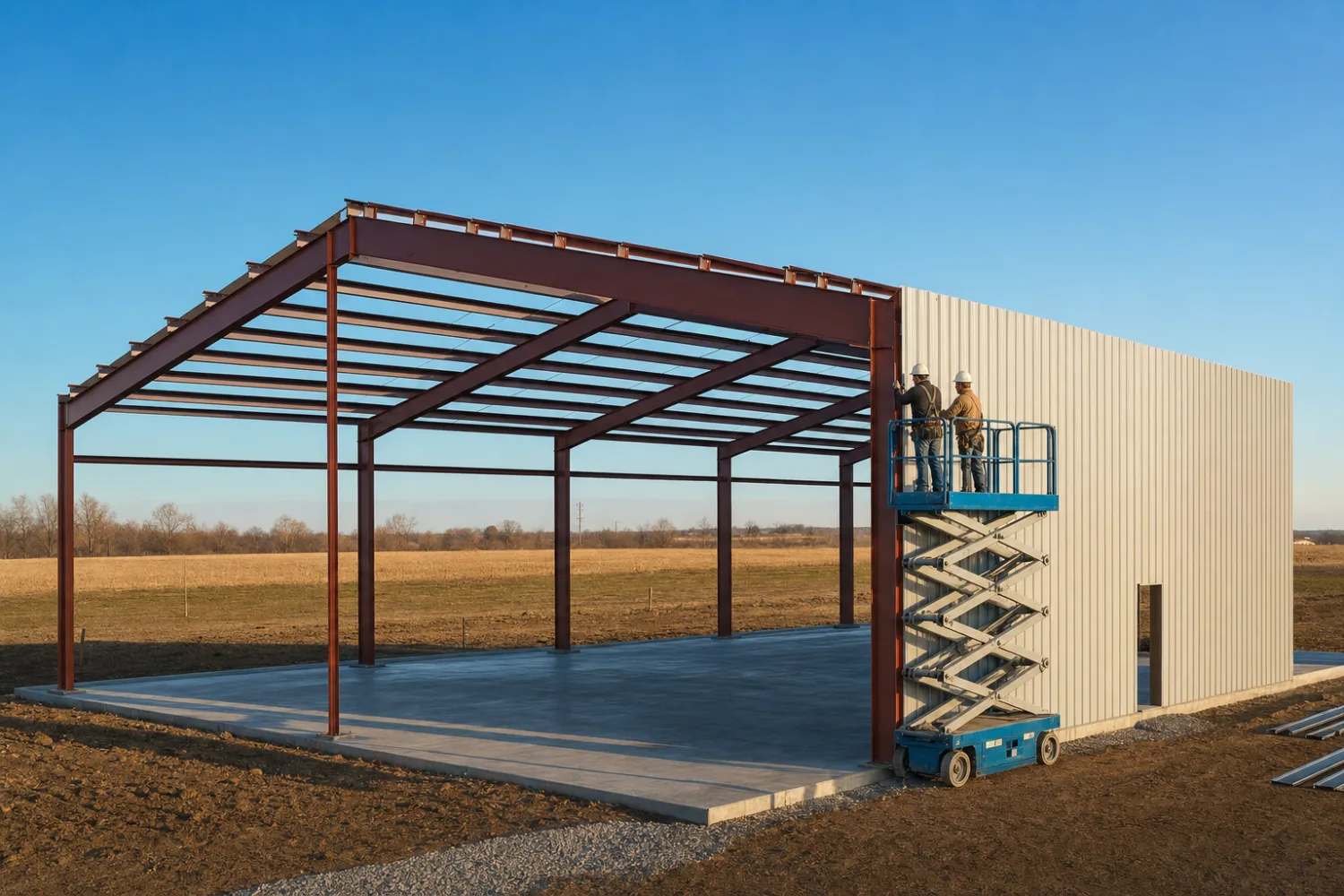
The cost gap is real. A batt or reflective layer ordered with the kit and installed during erection rides near the material price. The same building insulated two years later means a contractor, more hours, and sometimes spray foam as the only product that retrofits cleanly, which is the most expensive option of all. If you think you will ever heat, cool, or finish the space, decide the insulation before the panels go on. That single timing call can save more than any product choice. For the rest of the order-time decisions that affect price, see what drives metal building prices.
The retrofit trap on a bare shell
A bare metal building sweats when warm air meets cold steel, and that condensation can rust contents and ruin stored goods. Owners who skip insulation to save money often pay later for both the retrofit and the water damage. Adding a basic layer at order time is the cheaper path in nearly every climate. The condensation and ventilation guide explains the moisture side that insulation only half solves.
In the budget
Where insulation fits in the total building cost
On a conditioned building, insulation is a small slice of the total that earns its keep every month, so it belongs in the budget from the start rather than treated as an extra. As a rough 2026 orientation, the insulation line often lands at a single-digit to low-double-digit percentage of the shell price, more on a fully sealed home and less on a cold shop ‹confirm›. Put it next to the slab, the doors, and the freight, and it is rarely the line that breaks a budget.
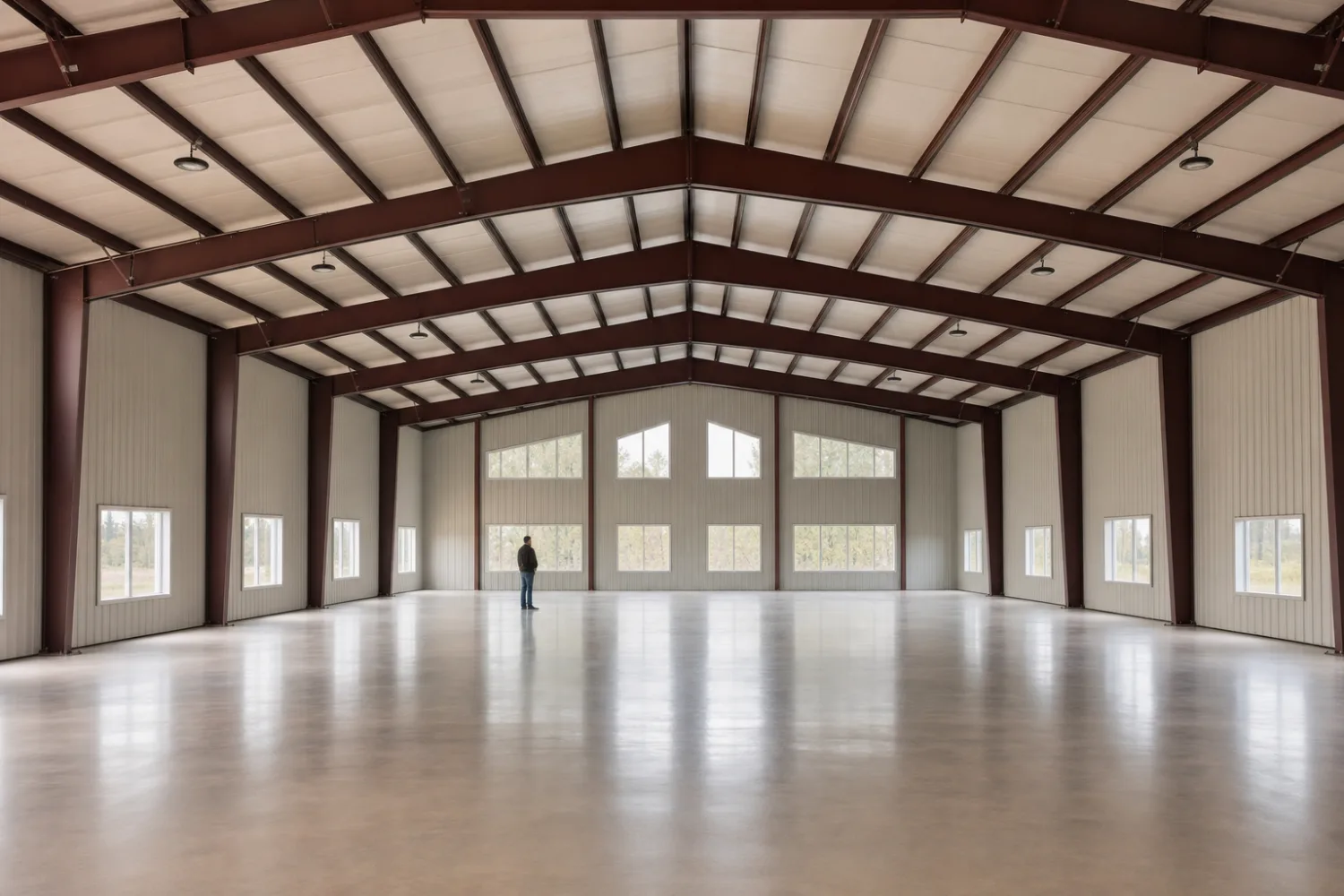
Spend where it pays back. On a building you heat or cool, better insulation lowers the energy bill every month you own it, so a higher upfront cost returns over the years. On an unheated shed or carport, the math flips and a basic layer is the honest choice. The cost guide puts insulation next to every other line item, and the money-saving guide shows where to trim without buying a building that sweats.
The expensive mistake is skipping it on a building you will condition. A bare shell that sweats stays unusable half the year and rusts its own contents, so the cheapest insulation almost always beats none. Match the type to how you use the space, install it while the frame is open, and confirm any specific cost or R-value figure with a local installer before you sign. That is how the insulation line stays a smart spend instead of a regret.
FAQ
Common questions about metal building insulation cost
How much does it cost to insulate a metal building?
As a 2026 illustrative range, material runs roughly $0.50 to $3.00 per square foot of shell covered ‹confirm›, and a professional install pushes the in-place figure to about $2 to $6 per square foot for the higher-end products ‹confirm›. On a 30 by 40 shop covering walls and roof, that is roughly $1,500 to $9,000 depending on the type ‹confirm›. Confirm any figure against a live quote, since material and labor prices vary by region.
What is the cheapest way to insulate a metal building?
Batt or blanket insulation, installed yourself as the building goes up, is the lowest-cost path, and a reflective radiant barrier is comparable. Both ride near the material price because they are DIY-friendly and need no contractor. Spray foam delivers the most performance but costs the most. For which cheap option suits your climate, see our insulation guide.
Is spray foam insulation worth the extra cost?
It can be on a heated home or a climate-controlled shop, where its high R-value and tight air seal lower energy bills enough to pay back the premium over years. On an unheated shed or carport, the math rarely works and a basic batt is the honest choice. Spray foam also doubles as an air and vapor seal, which can save a separate vapor-barrier step.
Is insulation included in a metal building kit price?
No. A kit or shell price covers the steel: frame, panels, fasteners, and trim. Insulation is a separate line, the same as the slab, doors, and permit, so a low kit price may leave it out entirely. Always ask whether a quote includes an insulation package before comparing it. The hidden costs guide lists the other lines that sit outside the shell number.
Is it cheaper to insulate during construction or after?
During construction, in nearly every case. While the frame is open, batt and radiant barrier drape over the framing before the panels close them in, so labor is fast and the material orders with the kit. A retrofit on a sealed shell costs more and often forces spray foam, the priciest option. Decide it before the panels go on. See what drives prices.
How much insulation cost per square foot should I budget?
Budget by the shell area you cover, not the floor size, since you are insulating walls and roof. A 2026 working figure is $0.50 to $1.50 per square foot for a DIY batt and $3 to $6 per square foot for installed spray foam ‹confirm›. Multiply by total shell square footage, which is usually larger than the floor footprint, and confirm with a local installer.
Does insulation add resale value to a metal building?
On a building used as a shop, office, or home, an insulated, conditioned space reads as more usable and more valuable to the next buyer than a bare shell. The energy savings while you own it are the bigger return, but resale is a real secondary benefit. The cost guide puts insulation next to the other value-adding lines.
Related guides
Keep reading
This insulation cost question connects to the rest of the money decision. Follow these next:
- Metal building kit prices (the parent pillar, every cost guide in one place).
- How much do metal building kits cost (the full shell-to-finished breakdown).
- Metal building cost per square foot (how shell and finish pricing scales with size).
- Hidden costs (the lines that sit outside the bare shell price).
- How to save money on a metal building kit (where to trim without buying a building that sweats).
- Metal building insulation (which type and R-value fits your climate).
- Metal building cost guide (the reference worksheet for every line).