A metal garage is a steel kit building; a wood garage is a stick-framed or pole-barn structure built from lumber. A metal garage resists fire, rot, and termites, clears a wide bay with no interior posts, and asks for almost no upkeep over its life. A wood garage is easy to finish inside, blends with a house, and can cost less on a small footprint. The right choice for your garage comes down to durability, your fire and pest risk, how you plan to finish the inside, and what you want to spend now versus over the years.
This guide sits under the metal garage kits pillar and settles one question before you pour a foundation: should you build your garage out of steel or wood? Below you will find what each garage is, how they compare on strength, fire, and upkeep, which one fits your project, and the real cost gap between them. If a builder steers you toward the material they know best, this is the context that lets you choose on your own terms.
Metal garage
What a metal garage kit is
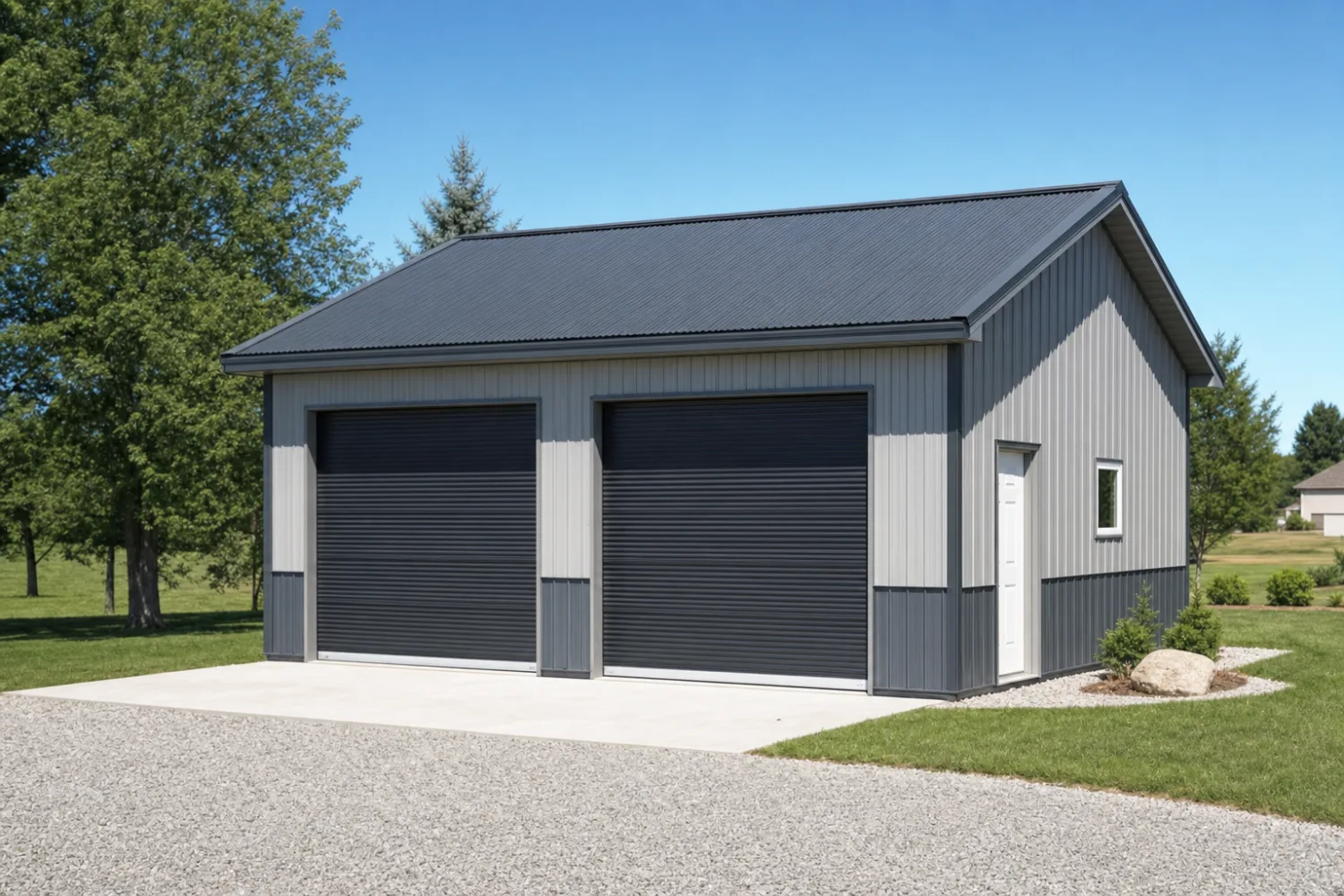
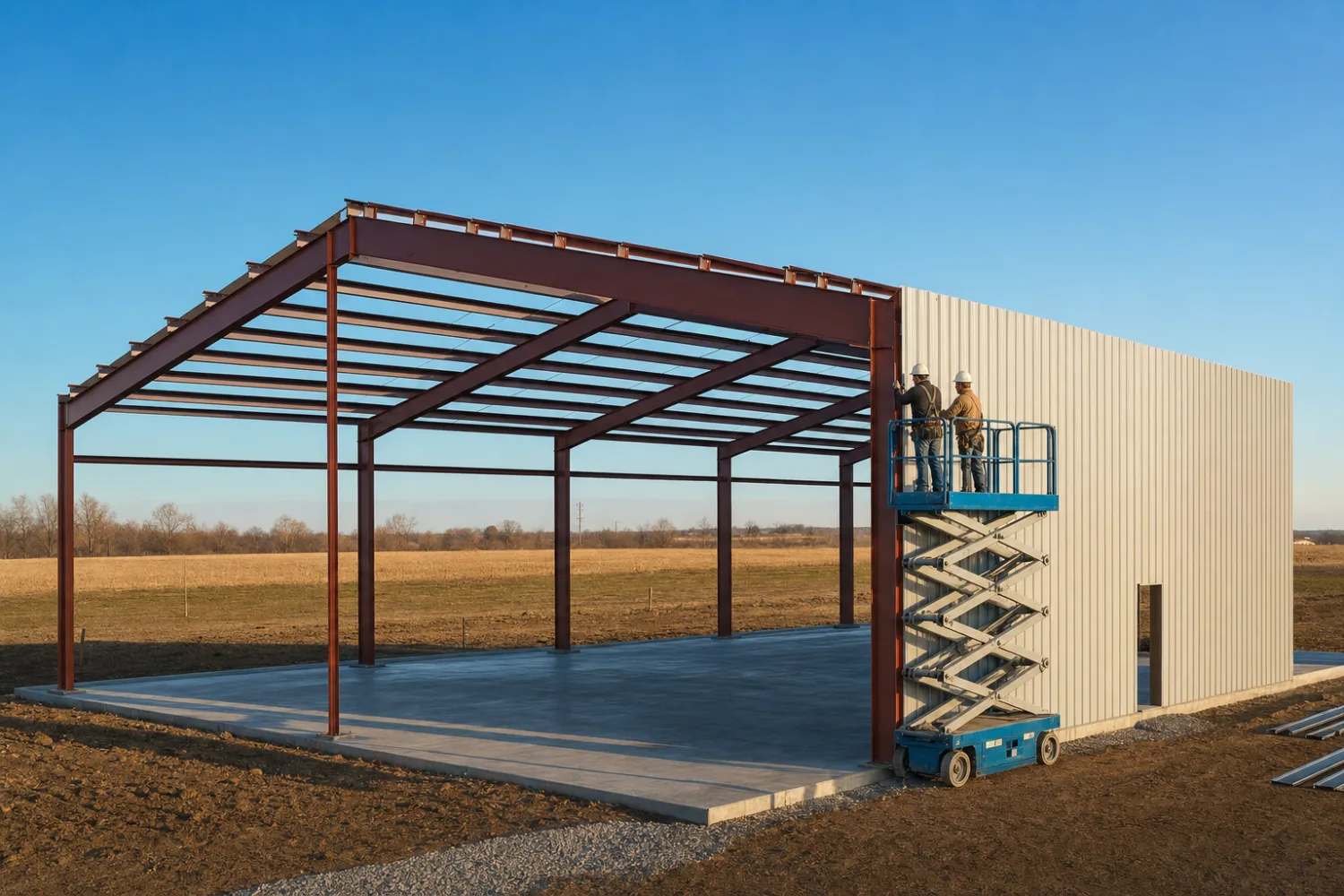
A metal garage is a steel building that ships as a labeled kit of frame, wall panels, roof, and fasteners, then bolts onto a concrete slab you pour. The frame is engineered and stamped for your local wind and snow before it leaves the plant, so the parts arrive cut to length and ready to assemble. That is the core of the metal garage kit model: a building delivered as a system, not framed board by board on your lot.
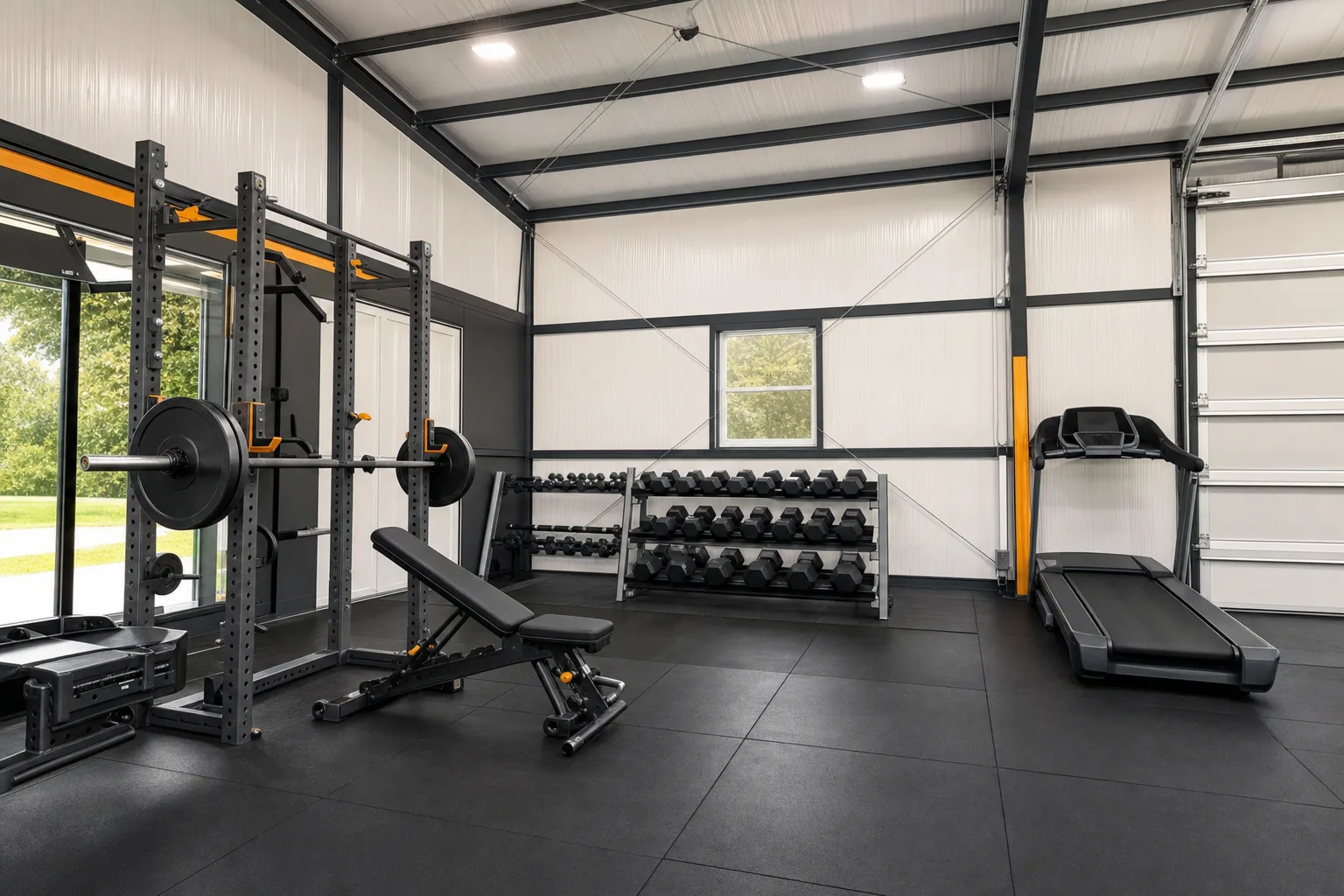
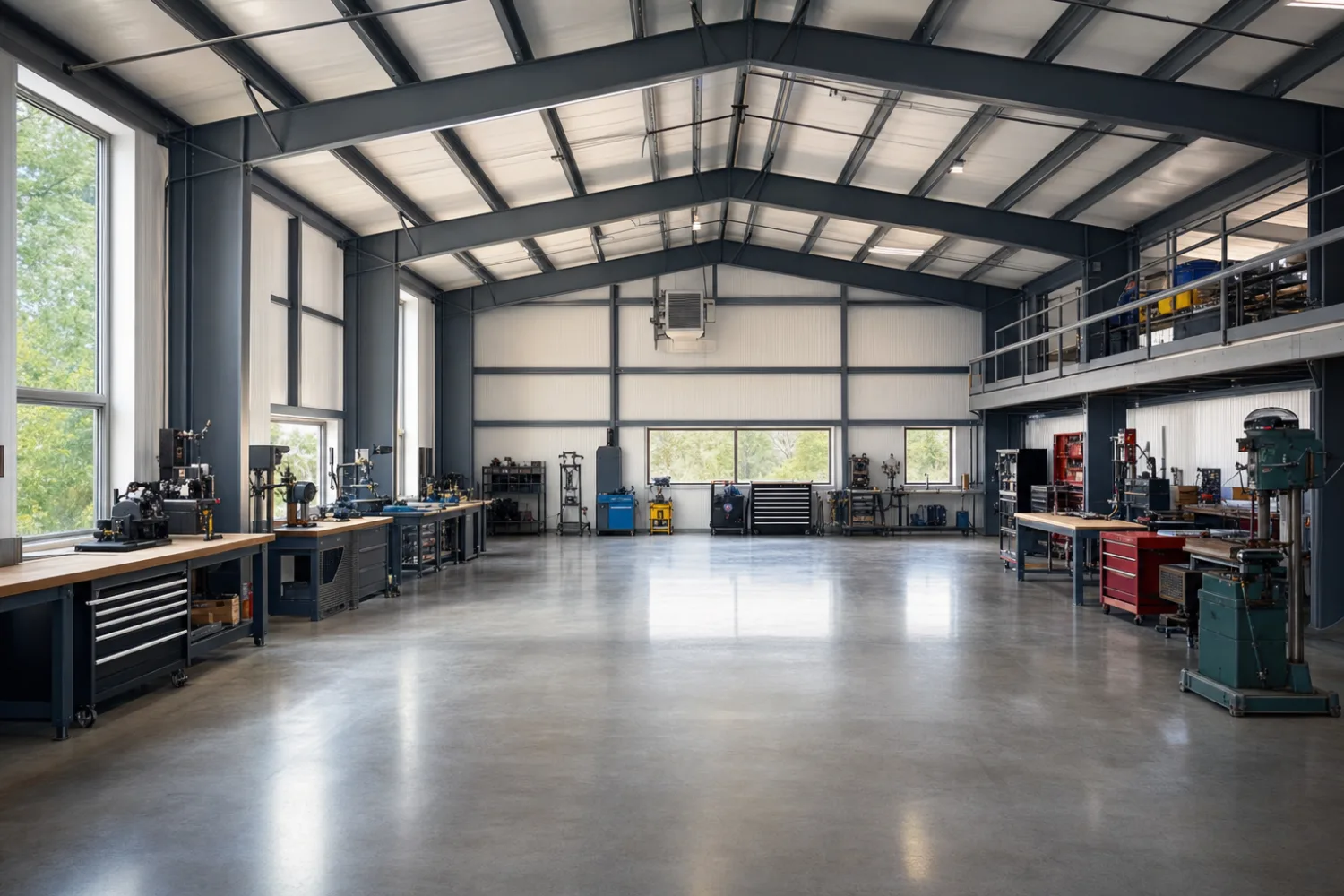
The draw is durability and reach. Steel will not burn, rot, or feed termites, and a steel frame spans a wide bay with no posts in the middle of the floor, so a two-car garage parks both vehicles clean. The shell shrugs off the weather and the frame holds its line for decades. You can still insulate it, run power, and pour a finished floor, so a metal garage works as a shop or storage as readily as a wood one.
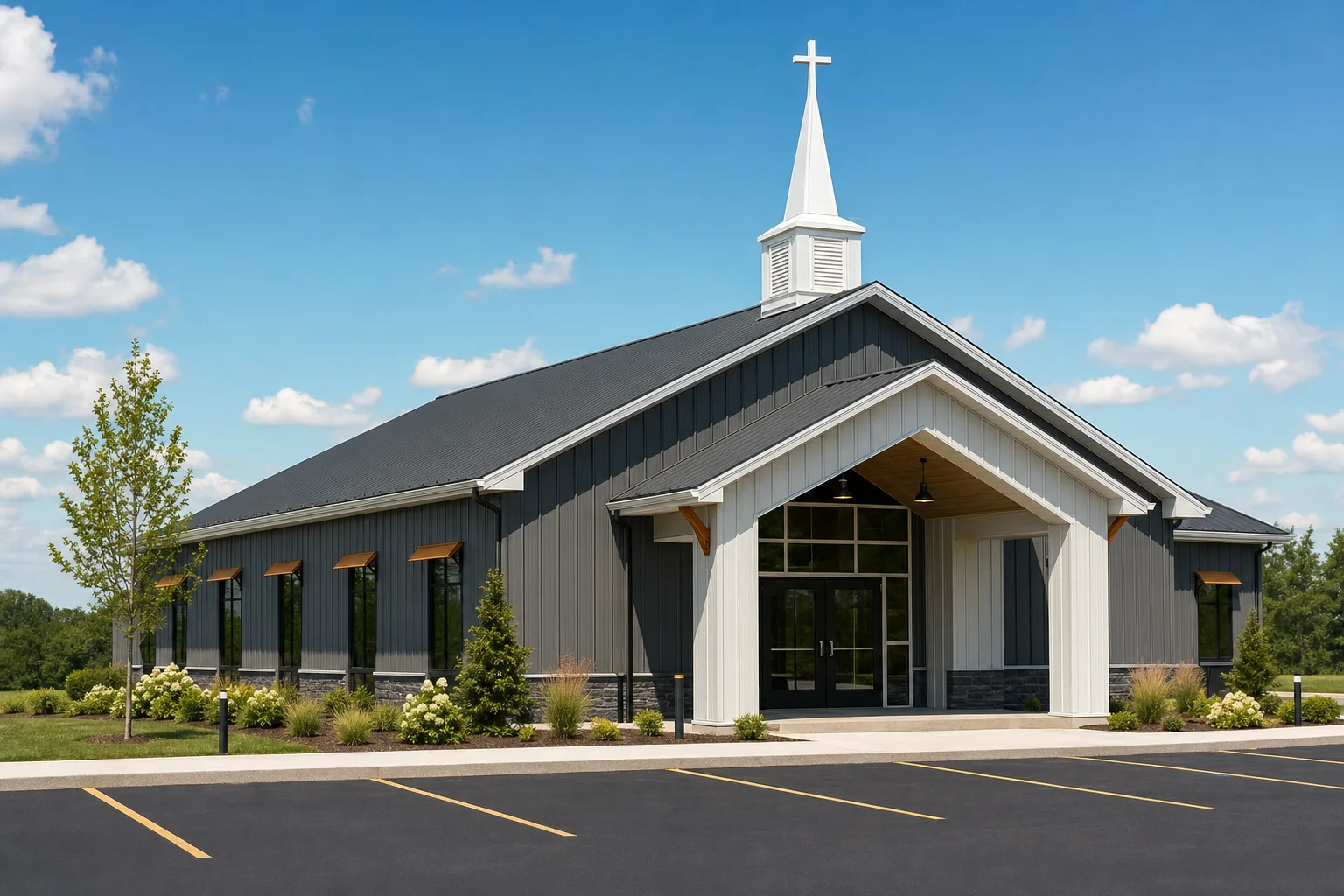
The trade is the look and the finish work. A bare steel shell reads as a metal building, not a house, though trim, wainscot, and color narrow that gap. To hang drywall and cabinets you add furring or light framing inside, since steel does not give you ready stud bays the way lumber does. None of that changes the structure; it is finish layered onto a frame that is already up. The buyer's guide walks the full decision before you order.
Wood garage
What a wood or pole-barn garage is
A wood garage is a structure framed from dimensional lumber, built one of two ways: stick-framed with studs and trusses like a house, or pole-barn style with posts set in or on the ground and girts spanning between them. Either way a crew cuts and nails the frame on site, then sheathes and finishes it. It is the traditional way most home garages have been built, and it is still the default many local builders reach for.
The appeal is familiarity and finish. Lumber is easy to cut, drill, and shape, so a wood garage takes drywall, insulation, wiring, and trim in its stud bays with no extra framing. It can be sided and roofed to match the house, which is why an attached or street-facing garage is often wood. A small, short-span wood garage is also light enough for general carpenters to raise with hand tools and a familiar set of methods.
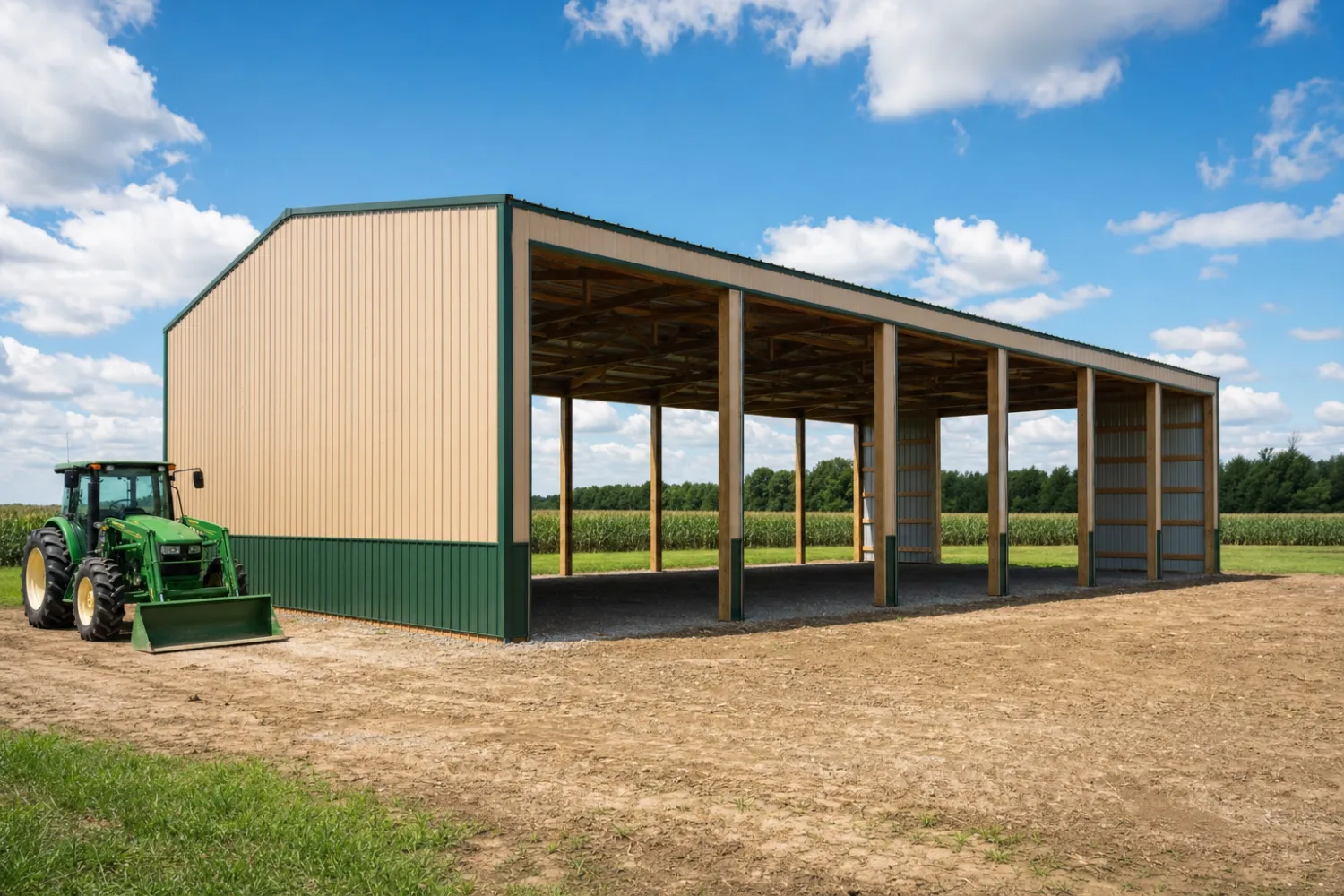
The limits show up in span, fire, and upkeep. Wood burns, can be eaten by termites and borers, and rots when it stays wet, so a wood garage depends on paint, sealing, and pest control to last. Push it past a modest width and the roof needs interior posts or engineered beams that eat the open floor. For the frame-material side of this question on its own, the construction types pillar runs steel framing against lumber in depth.
Head to head
Metal garage vs wood garage: the comparison
The two garages split along the lines that decide most builds: how wide they span, how they handle fire and pests, what they ask of you in upkeep, how you finish the inside, and what they cost. Read them together, because a strength on one line is often the reason for the price or the work on another.
| Metal garage (steel kit) | Wood / pole-barn garage | |
|---|---|---|
| Structure | Engineered steel kit, bolts to a slab | Lumber, framed and nailed on site |
| Clear span | Wide bay, no interior posts | Limited without added posts or beams |
| Fire | Non-combustible | Combustible |
| Pests & rot | Will not feed termites or rot | Vulnerable to termites, borers, and rot |
| Upkeep | Almost none over the years | Paint, seal, and pest control |
| Interior finish | Add furring for drywall and cabinets | Stud bays ready to insulate and finish |
| Build speed | Fast bolt-up from labeled parts | Slower, cut and nailed on site |
| Curb appeal | Reads as steel; trim narrows the gap | Sides and roofs to match a house |
| Relative cost | Competitive, wins at wide span ‹confirm› | Lower on small footprints ‹confirm› |
| Best for | Durability, low upkeep, wide bays | Matching a house, small finished garages |
A garage comparison, not a verdict. The right pick matches your durability needs, your climate, and how you will finish it, not the lowest sticker.
Build the garage for the decades it has to stand, not the sticker on day one. A wood garage can win the quote and still lose the years to paint, rot, and repairs a steel shell never needs.
Over the years
Fire, rot, and what each garage costs to own
The clearest line between the two garages is how they age. A garage holds vehicles, fuel, tools, and sometimes a workshop, so fire and durability are not abstract. This is where the steel shell pulls ahead, because it takes fuel and food off the table that a wood frame puts back on.
Fire is the headline. A steel garage is non-combustible, so the structure adds no fuel to a fire, which matters in a building that often stores gas cans, a mower, or a welder. A wood garage is combustible by nature, and while siding and detailing manage that, the frame itself burns. In some regions a non-combustible garage can also carry a lower insurance premium than a wood-framed one ‹confirm›, though that varies by carrier, so confirm it with your own insurer.
Upkeep is the quiet cost. A wood garage wants periodic paint or stain, sealed penetrations, and pest control in termite country, and any post set near soil is a long-run rot risk. A steel garage asks for almost none of that: rinse the panels, keep the building dry and ventilated, and the frame holds for decades. Most moisture trouble in a metal garage traces to condensation, not the steel, and good insulation handles it.
Resale follows the same logic. A steel garage that stands straight and clean reads as a permanent, low-maintenance structure to the next buyer, while an aging wood garage with weathered siding can read as deferred work. Neither point is a knock on a well-built wood garage; it is a reminder to count the years of ownership, not only the day-one invoice, when you weigh the two.
Which to choose
Which garage your project needs
Let the use, the site, and the look decide. Start with how durable the garage has to be, how wide a bay you need, and whether it has to match a house, then the material follows. Here is how the common projects land:
- A wide, low-upkeep garage or shop. Metal. You get the clear bay and a shell that asks for almost nothing over the years. Size it in the two-car kits guide.
- A street-facing or attached garage that must match the house. Wood often wins on looks, though steel with the right trim and color can come close. Weigh placement in detached vs attached garages.
- A garage in termite or high-fire country. Metal. A steel shell takes fuel and food off the table no matter the size, and may ease insurance ‹confirm›.
- A small, heavily finished garage or hobby room. Wood holds its own, with stud bays ready for drywall and trim. Compare an enclosed bay against a cover in carport vs enclosed garage.
- A budget-first first building you want fast. Metal bolts up quickly and prices competitively; see where it lands in the garage kit prices guide.
A pole-barn garage is still a wood garage
When a quote says “pole barn,” it means a post-frame wood structure, not a steel kit. It can be the cheapest way to get a simple garage up, but it carries the same fire, rot, and pest profile as any wood frame. Price a steel kit against it to the same finish, slab, and floor before you decide, so you compare two real garages and not a shell against a finished build.
Cost
The cost difference
On a small footprint, a basic wood or pole-barn garage can be the cheaper way to get a structure up; on a wide-span or long-term garage, a steel kit often wins once you total the whole job and the years of lower upkeep. As an illustrative 2026 range, a metal garage shell runs roughly $20 to $40 per square foot ‹confirm›, while a finished wood garage lands around $25 to $50 per square foot ‹confirm›, before either gets a slab, doors, or insulation. The cheaper sticker is not always the cheaper garage.
The honest comparison prices both to the same garage. A finished wood garage needs the same slab, the same garage door, the same insulation and wiring as a steel one, and framing those around posts can add labor a steel kit has already engineered out. Lumber pricing also swings more with the market than steel, so a wood quote today may not hold next season. For the full money picture by size, see the garage kit prices guide and the wider cost guide.
Then there is the cost over time. A steel garage carries no termite treatment, no repaint cycle, and no rot repair, so the years run cheap after the build. A wood garage can win the purchase and give some of it back to upkeep across a decade. Right-size the garage to the bay and the use, price both to the same finish, and check the line items against the construction types pillar so you know exactly what each number buys.
FAQ
Metal garage vs wood garage: common questions
Is a metal garage better than a wood garage?
Neither is better on its own. A metal garage wins on durability, fire resistance, wide clear spans, and low upkeep, so it suits a long-term, low-maintenance, or wide-bay garage. A wood garage is easy to finish inside and easy to match to a house, so it holds its own on small, street-facing, or heavily finished builds. Match the material to your durability needs, your climate, and the look you want.
Is a metal garage cheaper than a wood garage?
It depends on the build. On a small footprint a basic wood or pole-barn garage can be cheaper to put up. On a wide-span or long-term garage a steel kit often costs less once you total the whole job and the years of lower upkeep. As a 2026 illustrative range, a metal shell runs about $20 to $40 per square foot ‹confirm› and a finished wood garage about $25 to $50 ‹confirm›. Price both to the same finish before you decide.
Do metal garages last longer than wood garages?
Generally, yes. A steel frame will not rot, warp, or feed termites, so it holds its shape and strength for decades inside a dry shell. A wood garage can last just as long when it is kept painted, sealed, and free of pests, but it is more vulnerable to fire, moisture, and insects over time. The gap widens in damp or termite-heavy regions where wood needs the most care.
Is a metal garage cheaper to insure than a wood garage?
Often it can be, but not always. A non-combustible steel garage resists fire, rot, and insects, which some carriers reward with a lower premium than a wood-framed building ‹confirm›. Insurance pricing varies by carrier, use, and region, so the only reliable answer is a quote from your own insurer for both structures on your site.
Can you insulate and finish a metal garage like a wood one?
Yes. You can insulate the walls and roof, run power and lights, hang drywall, and pour a finished floor in a metal garage, so it works as a shop or a heated room. The one difference is that steel does not give you ready stud bays, so you add furring or light framing for drywall and cabinets. See how to insulate a metal garage for the method.
Is a pole-barn garage the same as a wood garage?
Effectively, yes. A pole-barn garage is a post-frame structure built from wood posts and girts rather than studs, but it is still a wood frame and carries the same fire, rot, and pest profile. It can be cheaper to raise for a simple building, but it is not a steel kit. Compare it to a metal garage priced to the same finish before you choose.
Which adds more value to a home, a metal or wood garage?
It depends on the property and the buyer. A wood garage that matches the house can read as seamless added space, which helps on a traditional home. A steel garage reads as a durable, low-maintenance structure, which appeals when the buyer wants a workshop or storage that holds up. On a detached or rural lot the metal garage often presents at least as well as wood.
Related guides
Keep reading
This steel-or-wood choice connects to the rest of the garage decision. Follow these next:
- Metal garage kits: the complete guide (the parent pillar).
- Metal garage buyer's guide (the full decision, start to finish).
- Two-car metal garage kits (the size most buyers land on).
- Carport vs enclosed metal garage (open cover against a closed-in garage).
- Insulated metal garage kits (how a steel garage holds climate).
- Metal garage kit prices (the cost gap by size).
- Metal building size chart (footprints, clearances, and where permits start).