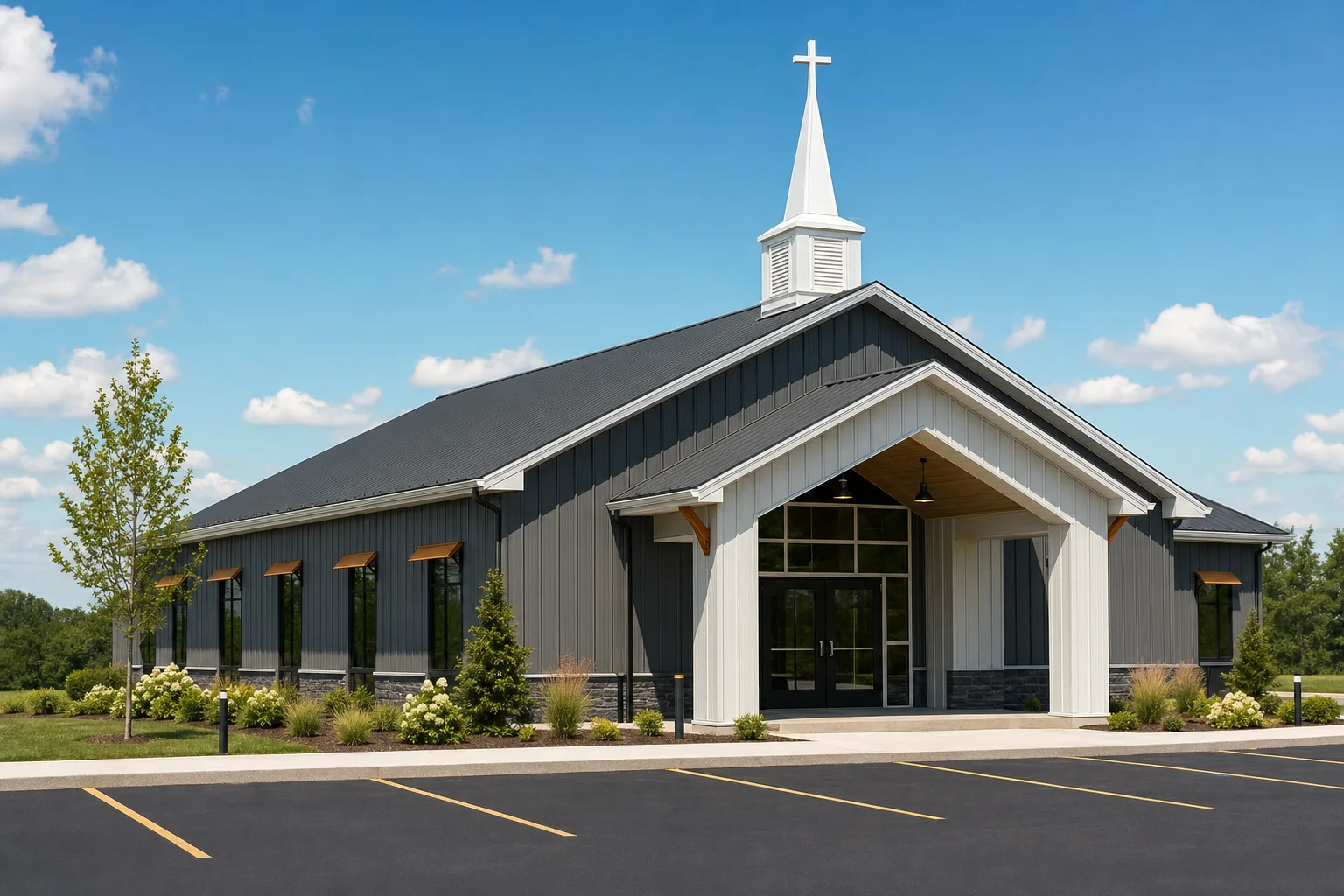
Metal building financing works like any large purchase loan: you borrow the cost and pay it back over a set term. The common paths are dealer or supplier-arranged financing, an unsecured personal loan, a home-equity loan or HELOC, an RV-style secured loan, and a commercial or equipment loan for a working building. Which one fits comes down to your credit, how much you borrow, and whether you can pledge the building or your home as collateral. The cheapest option is rarely the one with the lowest monthly payment.
This guide sits under our Metal Building Kit Prices pillar and covers the money side of the purchase: the loan types that fit a steel building, what lenders check before they approve you, how a rate turns into a real monthly cost, and how to read two offers against each other. For the no-down-payment and rent-to-own route, our payment plans and no-money-down guide goes deeper; this page is about borrowing the money and paying it back well.
Your options
How to finance a metal building kit
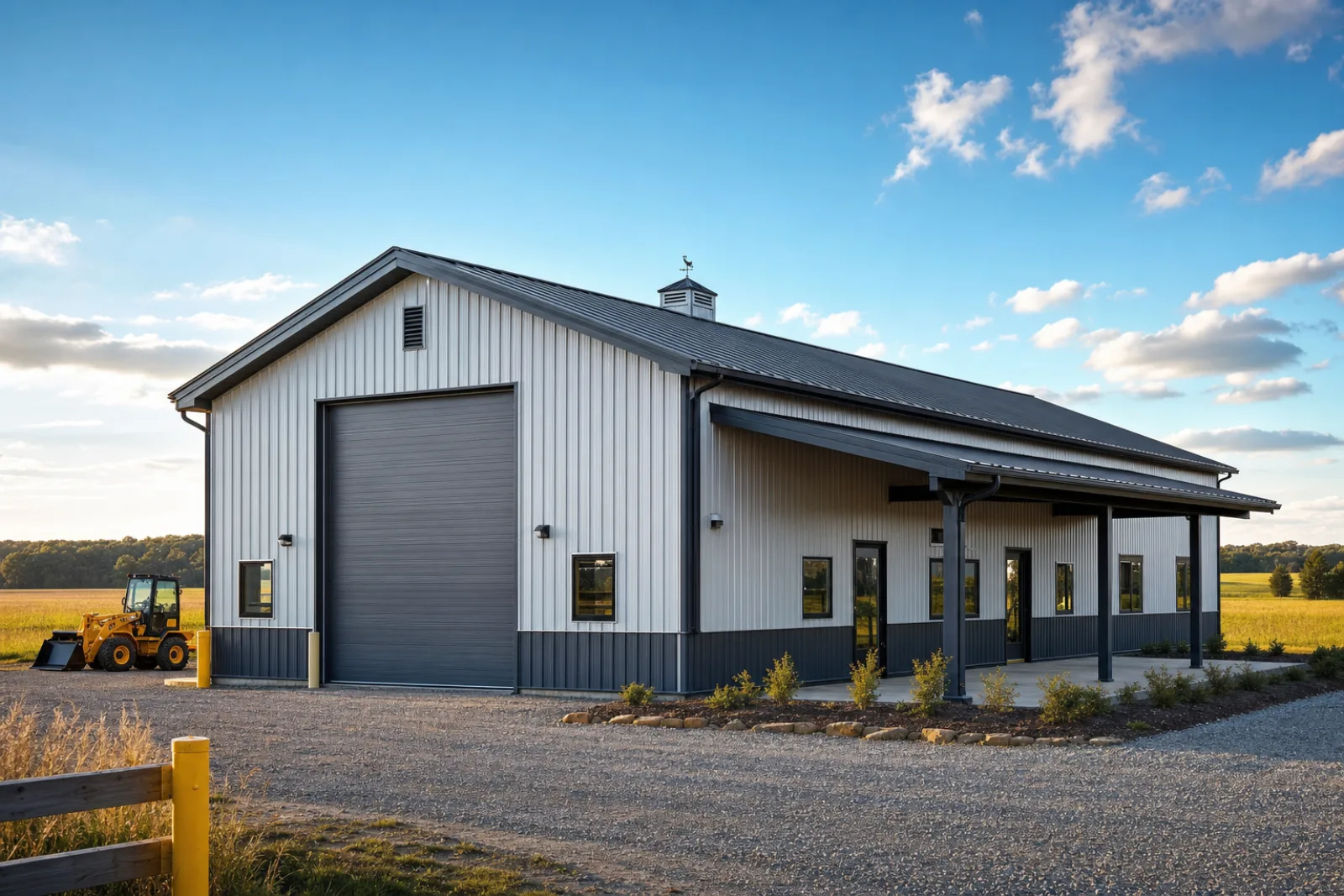
You have five realistic ways to finance a metal building, and they split on one question: is the loan secured by collateral or not? A secured loan, backed by your home or the building itself, carries a lower rate but puts an asset on the line. An unsecured loan costs more in interest but risks no property. Your credit, your equity, and how the building will be used decide which path is open to you.
| Financing path | Secured by | Best for | Trade-off |
|---|---|---|---|
| Dealer / supplier financing | Often the building | Fast approval at point of sale | Convenient, but compare the rate ‹confirm› |
| Personal loan | Nothing (unsecured) | Smaller kits, good credit | Higher rate, shorter term |
| Home-equity loan / HELOC | Your home | Large builds, homeowners | Lowest rate, your house is collateral |
| RV / secured-property loan | The structure | Detached garages, shops | Lower rate than unsecured, longer term |
| Commercial / equipment loan | The building or business | Income-producing buildings | Paperwork heavy, may need a business |
Illustrative 2026 financing paths, not lender quotes. Terms and rates vary by lender, credit, and state. Confirm each offer.
Dealer financing is the path most buyers meet first, because the supplier offers it at the moment you order. It is convenient, and for a smaller building it can be the right call, but a convenient rate is not always a competitive one. Pull a second quote from your own bank or credit union before you sign, the same way you would line up three kit price quotes before buying the steel.
The real cost
What financing a metal building truly costs
The monthly payment is not the cost of the loan. The cost is the total interest you pay over the full term, and a low monthly payment usually means a longer term and more interest, not a cheaper loan. Two numbers tell the real story: the annual percentage rate, or APR, and the term in months. Hold the amount steady, and a lower APR or a shorter term means you pay less to borrow.
Here is the math on a single borrowed amount, shown across a few terms and rates so you can see how the levers move. The figures are illustrative for 2026 to show the shape of the trade-off, not an offer; your real rate depends on your credit and your lender.
| Amount financed | APR | Term | Monthly (illustrative) | Total interest (illustrative) |
|---|---|---|---|---|
| $20,000 | 9% ‹confirm› | 36 months | $636 ‹confirm› | $2,896 ‹confirm› |
| $20,000 | 9% ‹confirm› | 60 months | $415 ‹confirm› | $4,910 ‹confirm› |
| $20,000 | 13% ‹confirm› | 60 months | $455 ‹confirm› | $7,309 ‹confirm› |
| $20,000 | 7% ‹confirm› | 84 months | $302 ‹confirm› | $5,357 ‹confirm› |
Illustrative 2026 amortization on a $20,000 loan, rounded. Lower APR and shorter term cut total interest; a longer term lowers the payment but costs more overall. Confirm your real rate with a lender.
Read the table top to bottom and the lesson is plain. Stretching the same $20,000 from three years to five drops the payment by about $221 a month ‹confirm› but adds roughly $2,000 in interest ‹confirm›. Push to seven years and the payment looks great while the interest climbs again. A longer term is a tool for fitting a payment into a budget, not a way to make a building cheaper. If the payment only works at 84 months, the honest move may be a smaller or more affordable kit.
Watch the APR, not the rate
A quoted “rate” can hide origination fees, while the APR folds those fees into one comparable number. Always compare offers on APR, the figure lenders are required to disclose. Two loans with the same headline rate can carry different APRs once fees are in, and the APR is the one that tells you what you truly pay.
Qualifying
What lenders check before they approve you
A lender is answering one question: how likely are you to pay this back? Four things drive that answer, and knowing them lets you fix the weak one before you apply. None of them are mysteries, and a buyer who shows up with a clean file gets a better rate than one who does not.
- Credit score. The single biggest lever on your rate. Stronger credit unlocks lower APRs and longer terms; thin or damaged credit means a higher rate or a secured loan. Check your report and fix errors before you apply.
- Income and debt. Lenders weigh your monthly debt against your income, the debt-to-income ratio. A new building payment has to fit inside that ratio, so pay down a card or two first if you are close to the line.
- Collateral. A secured loan, backed by your home or the building, lowers the rate because the lender has something to recover. An unsecured loan risks no property but costs more in interest.
- Down payment. Money down shrinks the loan, the rate, and the risk. Some buyers want none, which is its own path covered in the no-money-down guide, but even a small down payment improves your terms.
If one of these is weak, you have moves before you borrow. Raise the down payment, add collateral, or pay down revolving debt to lower the ratio, and the rate follows. The same discipline that gets you a clean quote on the steel, covered in our how to save money guide, gets you a clean loan on top of it.
How much to borrow
Finance the project, not just the kit
The most common financing mistake is borrowing for the steel and forgetting the rest of the build. A kit price is the shell only. The finished building also needs a foundation, a permit, delivery, doors, and often a crew, and those lines can add as much again as the kit. Borrow for the shell alone and you are short the day the slab gets poured.
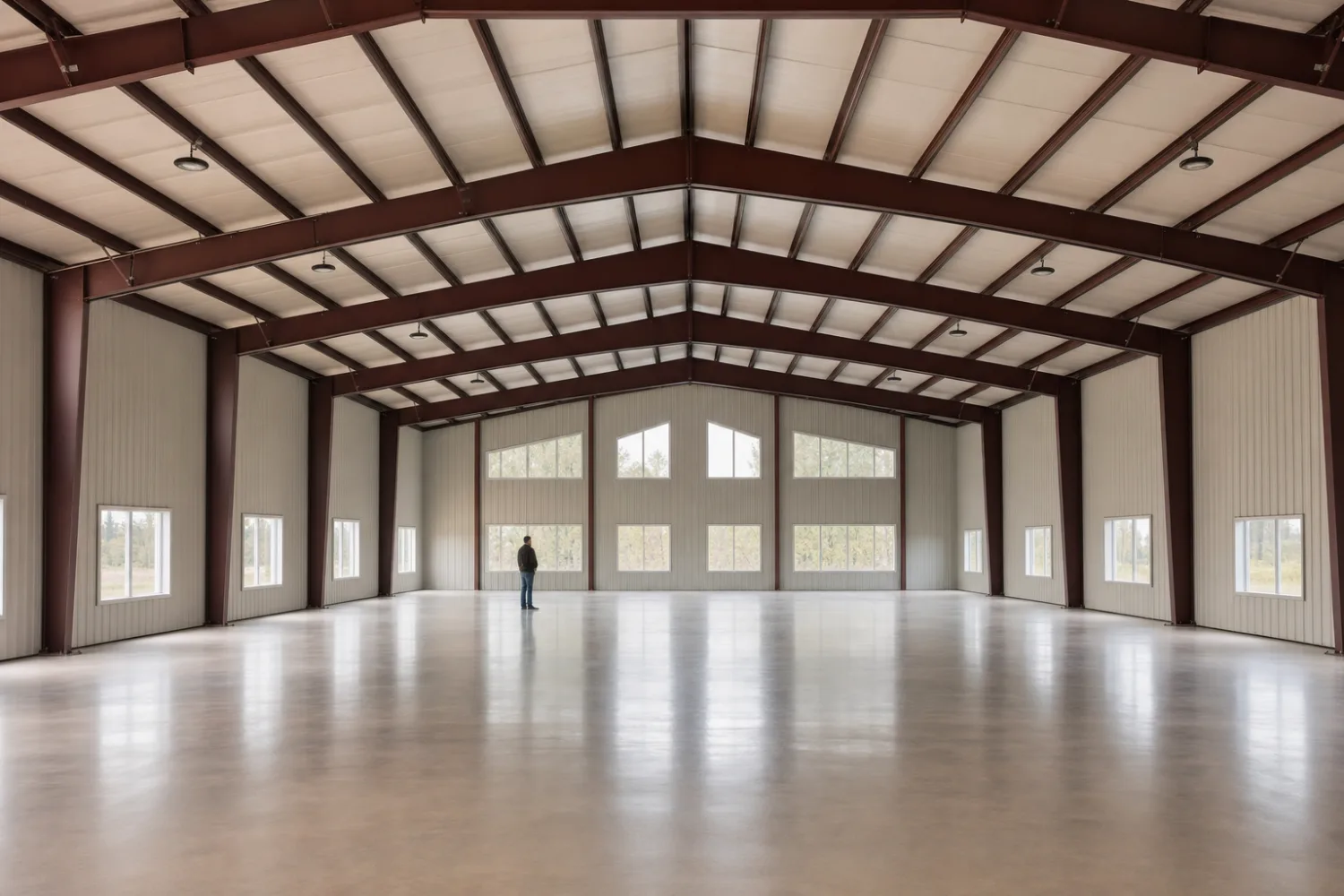
Build a real number before you ask for a loan. Add the shell, the foundation, the permit, the freight, the openings, and labor if you are not raising it yourself, then borrow against that total. Our hidden costs guide walks each line, and the full cost breakdown shows how the shell and the site work stack into a finished price. Borrowing the right number once beats topping up a loan halfway through a build.
Used and clearance kits change the math
If the loan you qualify for is tight, a lower purchase price does more than a longer term. A used or relocated kit or a well-timed order when steel prices soften cuts the amount you finance, which cuts both the payment and the total interest. Reduce the principal before you stretch the term.
Comparing offers
How to compare two financing offers
Two loans can look identical on the monthly payment and cost you thousands apart. The headline number hides the term, the fees, and the fine print, so line up offers on the parts that move the total. Get every offer in writing, then read the same five lines on each:
- APR, not the rate. The APR folds in fees, so it is the only fair way to compare. A lower rate with high origination fees can lose to a higher rate with none.
- Term length. A longer term lowers the payment and raises the total interest. Compare offers at the same term, or compare total cost, not the monthly figure.
- Fees. Origination, documentation, and processing fees come off the top or get rolled into the balance. Ask for the full fee schedule.
- Prepayment penalty. Some loans charge you for paying early. If you might pay the building off ahead of schedule, a no-penalty loan is worth a slightly higher rate.
- Collateral and recourse. Know exactly what backs the loan and what the lender can claim if you fall behind. A home-equity loan puts your house on the line; weigh that against the lower rate.
Compare loans on the total you repay, not the payment you make each month. The cheapest monthly figure is often the most expensive loan once the term and the interest are counted.
Once you have the offers side by side, the best one is usually obvious, and it is rarely the first one handed to you. Treat the loan like a line item on the build, the same way the buying checklist treats the doors and the slab. The money you save on a sharp loan is real money, the same as money saved on the steel.
Cash or finance
Should you finance or pay cash?
Pay cash if you can do it without draining the reserve you would want for the foundation, a permit surprise, or a delivery delay. Cash carries no interest and no lender, and it is the cheapest building you will ever buy. The trouble is that few buyers have the full finished cost sitting idle, and stretching to pay cash can leave you short on the site work that turns steel into a building.
Finance when the alternative is buying too little building. A loan that lets you put up the right-sized shop now, on a proper slab, often beats waiting two years and paying a higher steel price for a smaller building. The trade is interest against time and inflation. Run both numbers honestly, lean on the cost guide worksheet, and pick the path that gets you a building you will not outgrow.
FAQ
Common questions about metal building financing
Can you finance a metal building kit?
Yes. The common paths are dealer or supplier-arranged financing, an unsecured personal loan, a home-equity loan or HELOC, an RV-style secured loan, and a commercial loan for a working building. Which one fits depends on your credit, the amount, and whether you can pledge collateral. Compare offers on APR and total cost, not the monthly payment.
What credit score do you need to finance a metal building?
There is no single cutoff, since it varies by lender and loan type ‹confirm›. Stronger credit unlocks the lowest rates and longest terms, while thin or damaged credit pushes you toward a secured loan, a higher rate, or a larger down payment. Check your report and fix errors before you apply, because the score is the biggest single lever on your rate.
Can you finance a metal building with bad credit?
Often, yes, but on different terms. With weaker credit you are more likely to need collateral, a co-signer, or a down payment, and the rate runs higher. Secured paths like a home-equity or RV-style loan can open a door that an unsecured personal loan will not. The payment plans guide covers rent-to-own and no-down options that some buyers use when traditional credit is tight.
Is it better to finance through the dealer or a bank?
Compare both before you decide. Dealer financing is convenient and fast at the point of sale, but the rate is not always the most competitive. Your own bank or credit union may beat it, and a home-equity loan often carries the lowest rate of all. Get the APR in writing from each, then choose on total cost, not on which one is easiest to sign.
Can you use a home-equity loan for a metal building?
Yes, and for homeowners with equity it is frequently the cheapest path, because the loan is secured by your house and carries a lower rate. The trade is real: your home is the collateral, so the payment has to be one you can hold through a rough patch. Weigh the lower rate against that risk before you choose it.
How long can you finance a metal building for?
Terms vary by lender and loan type, commonly from three to seven years on personal and secured building loans, and longer on a home-equity loan ‹confirm›. A longer term lowers the monthly payment but raises the total interest you pay. Pick the shortest term whose payment fits your budget, not the longest one available.
Does financing a metal building require a down payment?
Not always. Some lenders and dealers offer no-money-down programs for qualified buyers ‹confirm›, while others want money down to lower the loan and the rate. Even a small down payment improves your terms and cuts your total interest. For the zero-down and rent-to-own route in detail, see our no-money-down options guide.
Related guides
Keep reading
Financing is one piece of the money question. Follow these next:
- Metal building kit prices (the parent pillar, all cost guides in one place).
- Payment plans & no-money-down options (rent-to-own and zero-down paths).
- How much do metal building kits cost (the full price breakdown to size your loan).
- Hidden costs (the slab, permit, and freight to finance with the steel).
- Cheap & affordable kits (cut the principal before you stretch the term).
- How to save money on a kit (sharpen the purchase and the loan together).
- Metal building cost guide (the reference worksheet to total a finished build).