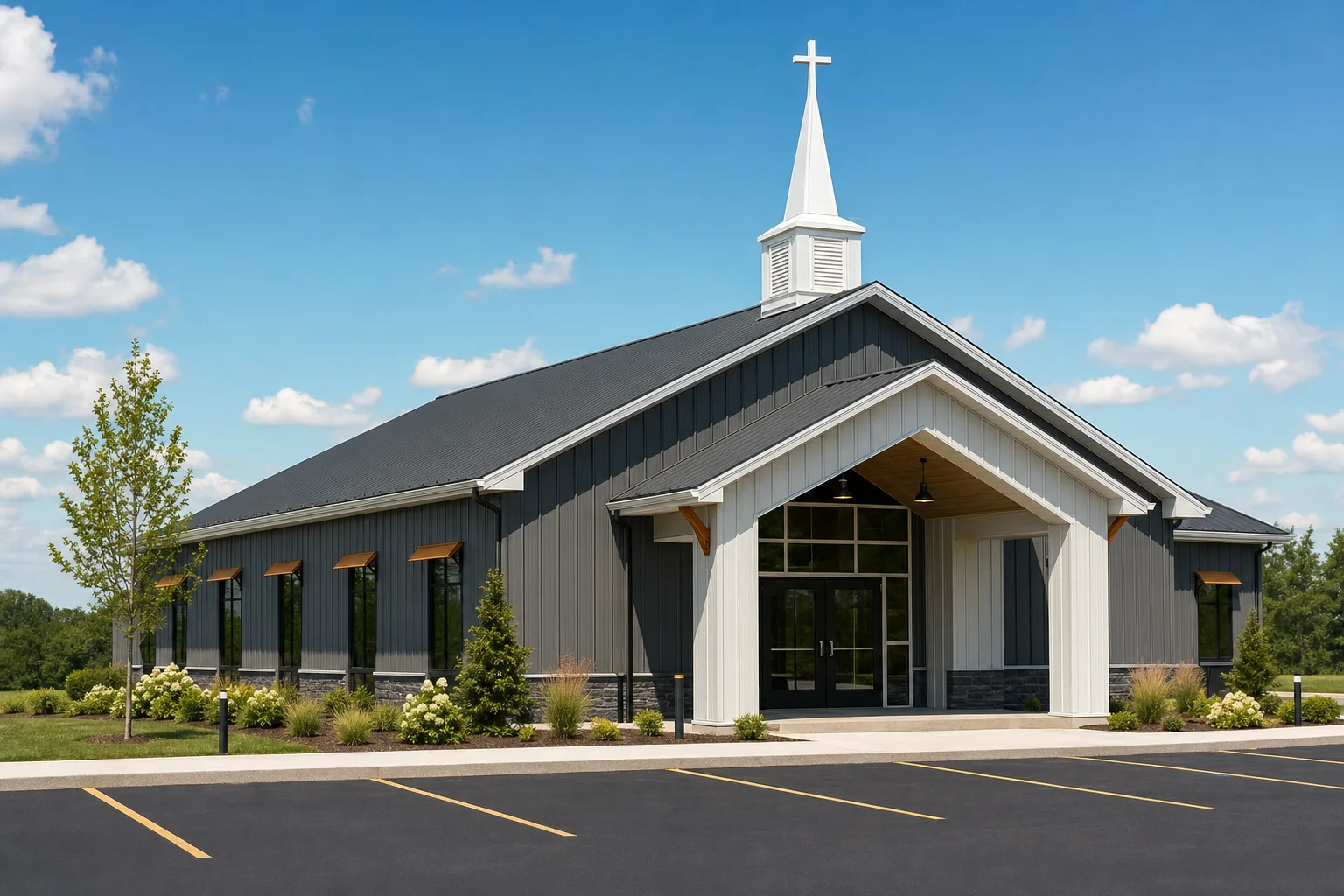
DIY vs installed metal building cost comes down to one trade: a DIY raise removes the erection labor line but loads the work, the gear rental, and the risk onto you, while an installed price adds a crew but hands you a standing shell. As an illustrative 2026 comparison, a $20,000 shell you raise yourself might still cost $2,000 to $5,000 in tool and lift rental plus weeks of your time ‹confirm›, against roughly $4,000 to $9,000 for a crew to erect the same building ‹confirm›. DIY is cheaper in cash, not in effort. The honest comparison prices both sides, including the hours and the mistakes.
This guide sits under our Metal Building Kit Prices pillar and answers the labor side of the buying decision: what a DIY raise truly costs once you count the gear, the help, and the risk, set against an installed quote. Below you will find a true total-cost comparison, the costs DIY buyers forget, what a self-build demands in skill and time, the warranty and inspection stakes, and a plain test for which path fits you. Every dollar figure is a dated 2026 illustrative range to confirm against a live quote, since steel and labor pricing both move.
Two paths
What DIY vs installed compares on cost
The choice is not steel against steel; it is who does the labor. The kit is the same either way: the same frame, panels, fasteners, trim, and stamped drawings arrive on your site in a stack. The DIY path stops there and hands you the wrenches. The installed path adds a crew, lift equipment, and the hours to bolt that stack into a building. So the comparison comes down to one line, the erection labor, plus everything that line quietly carries with it.
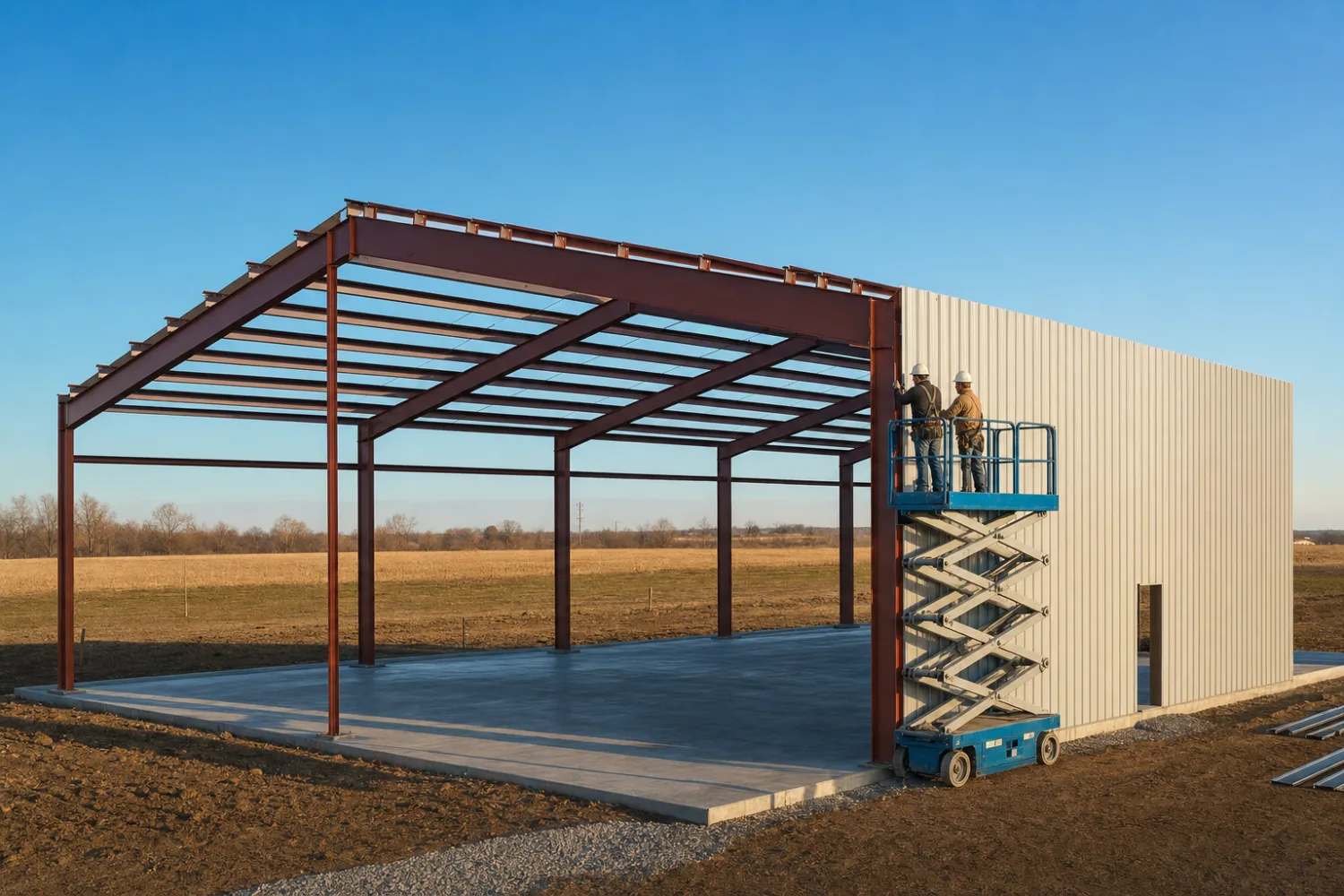
That single line looks small on a spreadsheet and large in practice. Skip the crew and you keep cash, but you take on the gear, the helpers, the schedule, and the liability they would have carried. The mistake most buyers make is treating their own labor as free, which turns a fair comparison into a lopsided one. For the supplier side of that same split, the cost with vs without installation guide breaks down what an erected price adds and why.
Same kit, different scope
A DIY quote and an installed quote can describe the exact same building and still sit thousands apart, because one includes labor and one does not. Before you call the DIY number the cheaper one, add back the gear rental, the help, and your own time. The full cost breakdown shows where erection labor sits among every other line.
DIY’s real cost
The true cost of a DIY raise
A DIY raise is never zero. You remove the crew’s invoice, but you pick up a set of costs that rarely show on the kit price, and they add up faster than buyers expect. Price these before you decide, because they are the difference between a real saving and a wash:
- Lift equipment rental. A telehandler, boom lift, or scaffold to set heavy frames safely, often a few hundred dollars a day and several days on site ‹confirm›. On a red iron building this line alone can rival a chunk of the crew price.
- Tools you do not own. Impact wrenches, a magnetic drill, fall-protection harnesses, and a generator. Buy or rent, it is real money against the saving ‹confirm›.
- Helpers. Few people raise a building alone. Two or three capable hands for several weekends is either paid help or favors you repay, and the schedule has to line up.
- Your own time. A self-build of a mid-size shell can run several weekends or more for an unpracticed crew ‹confirm›. That is time off other work or off the rest of your life, and it has value even when no one bills you for it.
- A mistake buffer. A cross-threaded bolt is cheap; a frame set out of square or a panel run that leaks is not. Budget a margin for the errors a first-time build invites, and read the hidden costs guide so none of them surprise you.
None of this makes DIY a bad call. It makes it an honest one. On a small, light building the gear is modest and the hours are few, so the saving is real. On a wide, tall, heavy building the same list grows until the crew quote starts to look like the bargain. The point is to total your side, not assume it is free.
Side by side
DIY vs installed: the true-cost comparison
Numbers land better on a real building, so here is one 30 by 40 shop, 1,200 square feet, priced both ways from the same kit. The kit, slab, and openings are identical in each column, so the comparison isolates the labor decision. The DIY column prices the gear and help most buyers forget; the installed column folds that work into a single crew line. Figures are illustrative 2026 ranges to show the shape of the choice, not a quote for your site.
| Line | DIY raise | Installed (crew raise) |
|---|---|---|
| Kit / shell | $14k–$24k ‹confirm› | $14k–$24k ‹confirm› |
| Erection labor | Your own hours, several weekends ‹confirm› | $4k–$9k ‹confirm› |
| Lift equipment | $0.7k–$2.5k rental ‹confirm› | Included in crew price |
| Specialty tools | $0.3k–$1k buy or rent ‹confirm› | Crew brings their own |
| Helpers | Paid help or favors repaid ‹confirm› | Included in crew price |
| Mistake buffer | Plan a margin for rework ‹confirm› | Crew carries the risk |
| Cash outlay swing | Lowest cash, most of your labor and risk | Higher cash, no DIY exposure |
Illustrative 2026 ranges for a 30 by 40 shop, not a quote. Only the labor block changes between the two paths; the kit, slab, and openings are equal.
Read the two columns and the trade is plain. The DIY path keeps the most cash in your pocket, then asks for it back in time, gear rental, and the risk of a costly error. The installed path spends a few thousand dollars to erase all of that and hand you a standing, square, signed-off shell. Neither column is wrong; they are different jobs for different buyers. For how the shell number itself is set before any labor decision, see the cost per square foot guide.
What DIY takes
What a DIY install demands beyond money
Cash is the part buyers price; capacity is the part they skip. A self-raise asks for skill, a crew, a schedule, and a tolerance for heavy, exact work at height. Be honest about each before you commit the budget, because the saving only holds if you can finish the job to spec:
- Skill and a stamped plan to follow. A bolt-up kit is engineered to go together in order, but it still wants someone who can read the drawings, square a base, and set columns plumb. The plan does the math; you supply the hands and the care.
- A reliable crew. Two or three dependable people across several weekends, not a different volunteer each day. Continuity matters, because the build has a sequence and a half-done frame should not sit in the weather.
- Equipment access. A way to lift heavy frames safely, level ground a truck and a lift can reach, and a place to stage the steel. A tight or sloped site fights a DIY raise harder than it fights a pro crew.
- A weather and schedule window. Open steel left standing through storms is exposed steel. Plan a run of workable days, and price the slab and site prep so the pad is cured and ready before the kit arrives.
If you have built before, own or can rent the gear, and have hands you trust, a DIY raise on a modest building is well within reach and the saving is real. If any one of those is missing, the gap closes fast. The construction types pillar in our build silo walks the bolt-up sequence and the tools in depth, which is worth reading before you commit to standing it yourself.
Risk & warranty
Risk, warranty, and inspection on a self-build
The cheapest line on a DIY budget can become the most expensive if the build goes wrong, and a few stakes never show on the spreadsheet. Weigh these next to the labor saving, because they are the reason a crew quote can be the safer buy even when it is not the lower one.
DIY saves the labor line and inherits the liability line. A crew prices in insurance, fall protection, and the cost of doing it right the first time; a self-build asks you to carry all three yourself.
Warranty is the first stake. Many kit and erection warranties hinge on the building going up to the engineered spec, so a frame set out of square or panels fastened wrong can put a claim at risk. Confirm with your supplier what a self-raise does to the coverage before you skip the crew. Inspection is the second: a permitted building has to pass, and a failed inspection means rework on your dime. Build to the stamped plan and the load rating it carries, and keep the drawings on site for the inspector.
Insurance is the quiet line
A professional crew carries liability and workers’ comp, so a dropped beam or an injury is on their policy, not your homeowner coverage. On a DIY raise that exposure is yours. It rarely shows in a cost comparison, yet it is one of the strongest reasons to pay for installation on a tall or heavy building. The saving guide covers where to cut cost without taking on that kind of risk.
Which path
Which path fits your build
There is no universal answer, only a test against your building, your site, and your own capacity. The DIY path earns its saving on small, low, light buildings you can handle; the installed path earns its premium the moment the job gets big, tall, or risky. Use these lines to sort your project:
- DIY can pencil out on a small, low, light-gauge building on flat, open ground, where a few capable people with rented gear can stand the shell over a handful of weekends. A single-car garage or a carport is the classic self-build.
- Lean toward installed on a wide-span, red iron building, a tall eave, a steep roof, or a tight, sloped site, where heavy frames go up high and a mistake is costly. The labor add is cheap next to a dropped beam.
- Split the difference where you can. Some buyers hire a crew to set the heavy primary frame, then fasten the panels and trim themselves. Ask whether your supplier or a local erector offers a frame-only raise. The installation cost guide shows what that labor line runs.
- Either way, do not skimp on the slab. A building stamped for your snow and wind loads needs a foundation to match, installed or DIY, so price the concrete alongside the steel. The hidden costs guide lists what sits outside both paths.
Total both sides before you choose. Add the gear, the help, and the value of your time to the DIY column, then set it against a real installed quote, not a guess. If the saving holds and you have the capacity, raise it yourself. If it shrinks once the gear and risk are in, the crew is the better buy. The cost guide worksheet helps you total both columns honestly.
FAQ
Common questions about DIY vs installed cost
Is it cheaper to install a metal building yourself?
In cash, usually yes, because a DIY raise removes the erection labor line, which is often the largest single add-on. As an illustrative 2026 range, that line runs roughly $4,000 to $9,000 on a mid-size shell ‹confirm›. The catch is that you take on gear rental, helpers, your own time, and the risk of a costly mistake, so the true saving is smaller than the labor line alone. Total your side before you call it cheaper.
How much does a DIY metal building raise cost in practice?
It is not zero. Even doing the labor yourself, you typically face lift-equipment rental of a few hundred dollars a day, specialty tools, helpers, and weeks of your own time ‹confirm›. On a small building those add up to a modest figure and the saving is real; on a wide or tall building the gear and help can rival a chunk of a crew quote. Price the gear, the help, and the hours, not just the kit.
What is the difference between a DIY and an installed quote?
A DIY or kit quote is the steel only: frame, panels, fasteners, trim, and stamped drawings, delivered in a stack for you to raise. An installed quote adds the crew, lift equipment, and hours to stand that steel into a building on your slab. The two can sit thousands apart for the same footprint, so always ask which one a number describes. See our full cost breakdown.
Can I install a metal building kit by myself?
On a small, low, light-gauge building on flat ground, a few capable people can raise a bolt-up kit over a handful of weekends. On a wide-span, tall, or red iron building, the weight, height, and equipment usually call for a professional crew. Be honest about your skill, your help, and your site before you commit. The construction types pillar walks the bolt-up sequence.
Does a DIY install void the warranty?
It can, depending on the supplier. Many kit and erection warranties hinge on the building going up to the engineered spec, so a frame set out of square or fasteners run wrong may put a claim at risk. Confirm with your supplier exactly what a self-raise does to the coverage before you skip the crew, and build to the stamped plan. The load rating has to be met either way.
When is paying for installation worth it?
The crew earns its premium when the building is too big, too tall, or too risky to raise without one: a wide-span red iron frame, a tall eave, a steep roof, or a tight, sloped site. On those jobs the labor add is cheap next to a dropped beam, an injury, or a failed inspection. On a small, low building you can handle, the DIY saving holds. Weigh it against your build with the installation cost guide.
Can I do part of the install myself to save money?
Yes, and many buyers do. A common split hires a crew to set the heavy primary frame, then the owner fastens the panels, trim, and closures. That keeps the riskiest lifts with the pros while you save on the lighter, slower finish work. Ask whether your supplier or a local erector offers a frame-only raise, and price it against a full install. The saving guide covers more ways to trim cost.
Related guides
Keep reading
This DIY-versus-installed decision connects to the rest of the money picture. Follow these next:
- Metal building kit prices (the parent pillar, every cost guide in one place).
- Cost with vs without installation (the supplier side of the same labor line).
- How much do metal building kits cost (the full shell-to-finished breakdown).
- Hidden costs (foundation, permits, delivery, the lines outside both paths).
- How to save money on a metal building kit (where to cut cost without taking on risk).
- Construction types & DIY (the build silo, if you plan to raise it yourself).
- Metal building cost guide (the reference worksheet to total both columns).