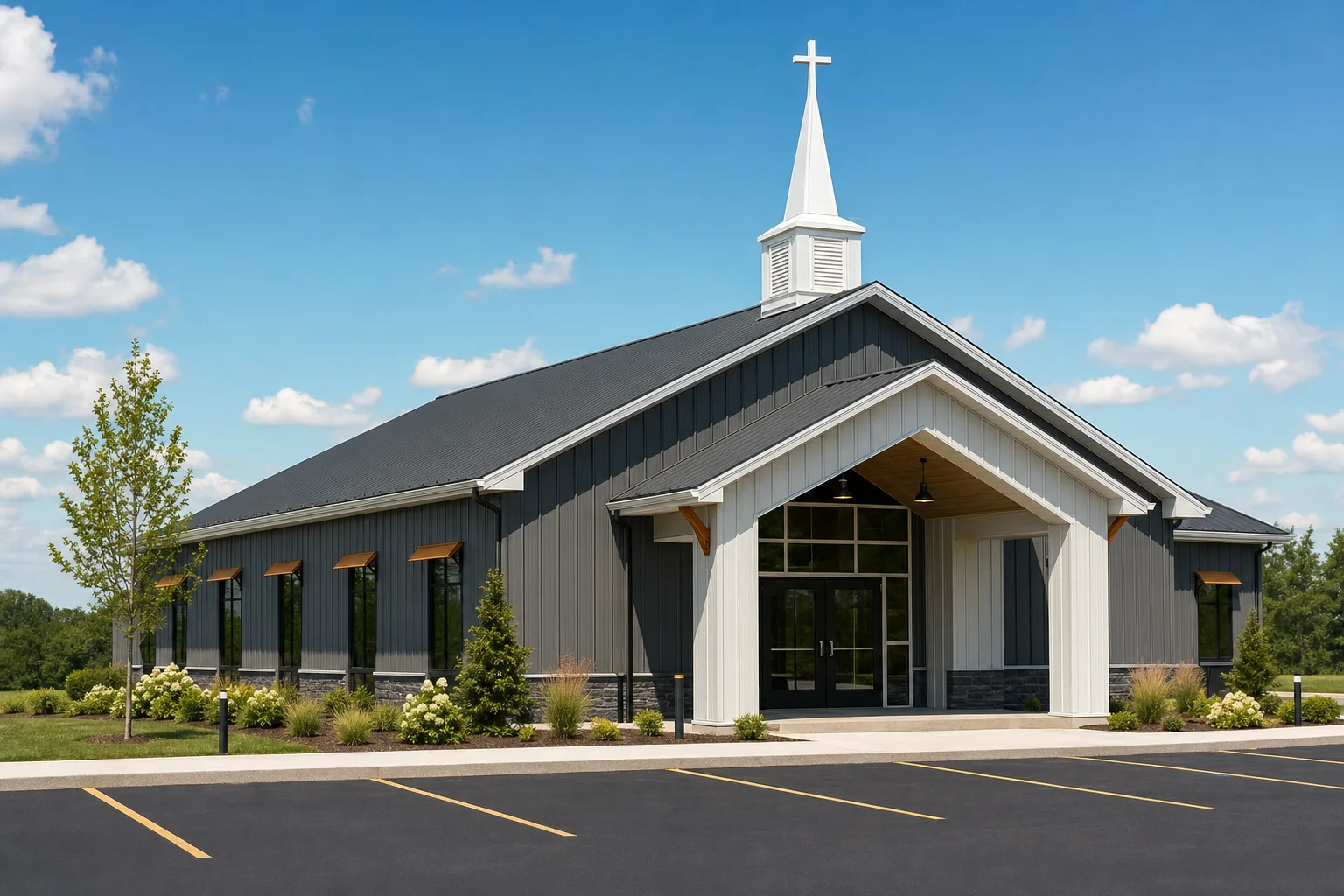
Assembling the shell of a metal building takes anywhere from a weekend for a small carport to a few weeks for a large clear-span shop ‹confirm›. Size sets the range, then crew, frame type, and weather move it inside that window. A small bolt-up garage with two capable people can stand in a few days, while a wide red iron building wants a full crew and still runs a week or more. The bolting is the fast part. What sets your move-in date is the schedule that runs before assembly even starts.
This guide sits under our Construction Types & DIY pillar. Below: a realistic timeline from the truck to a finished shell, what makes a build go faster or slower, and the separate clock for permits, slab cure, and delivery lead time that runs before the first bolt. If you are planning around a deadline, read the whole timeline, not the assembly window alone, because the steel going up is rarely the longest line on the schedule.
The short answer
How long metal building assembly takes
Plan on a weekend to a few weeks for the shell ‹confirm›, scaled to the building. A small kit goes up fast because the parts are light and few; a large kit takes longer because the steel is heavy, the spans are wide, and there is more of it to raise and fasten. The numbers below are general ranges, not promises, because the same kit moves on a different schedule with a bigger crew or worse weather.
Every figure here assumes a bolt-up kit, the pre-cut, pre-punched steel most owners buy. Bolt-up is assembly, not fabrication, so the work is predictable and the order never changes. The table sorts the common sizes against a rough shell time and the crew it usually wants.
| Building size | Rough shell assembly | Typical crew |
|---|---|---|
| Carport or small cover | About a weekend ‹confirm› | 1–2 people |
| Single or two-car garage | A few days ‹confirm› | 2–3 people |
| Workshop or mid-size shop | Roughly a week ‹confirm› | 3–4 people |
| Large shop or barn, wide span | One to a few weeks ‹confirm› | Full crew plus a lift |
| Commercial or large clear-span | Several weeks ‹confirm› | A professional crew |
General shell-assembly ranges, not quotes. Crew size and weather move every row. Confirm timing against your kit and site.
Read these as the bolting window only, the time from a staged set of parts to a weather-tight shell. They do not include the slab, the permits, or the truck. For how those sizes map to real footprints, the metal building size chart lays out the common dimensions side by side.
What changes the pace
What makes a build go faster or slower
Four things move an assembly timeline more than anything else: how big the building is, how many people are on it, what frame it uses, and the weather over the build window. Change any one and the same kit lands on a different schedule.
- Size and span. A bigger footprint is more parts, and a wider span is heavier members set higher in the air. Both add days. A 24-foot garage and a 60-foot shop are not the same job.
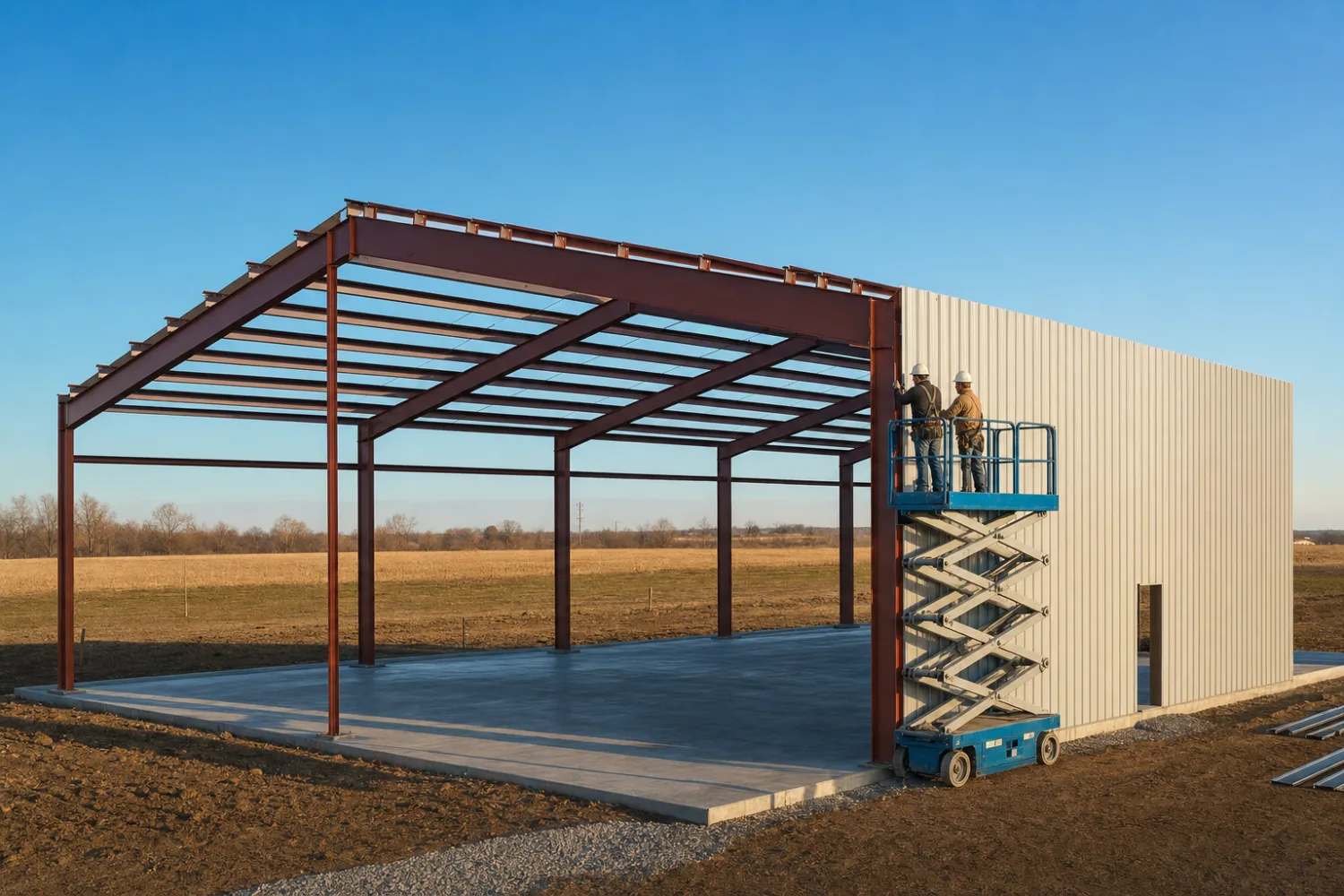
- Crew size. More hands shorten the build to a point. Two people raise a small kit; a wide frame wants three or four plus someone running the lift. Past that, extra bodies stop helping.
- Frame type. A light tube steel kit goes up by hand and moves quickly. A red iron frame is heavy structural steel that wants equipment to raise, which adds time on frame day.
- Weather. Wind stops panel and frame work for safety, rain bogs the site, and heat or cold slows a crew. A clear week builds faster than a wet one, and you cannot schedule the sky.
Experience is the quiet fifth factor. A first-time owner reading the drawings as they go moves slower than a crew that has raised a hundred shells, and that gap shows most on the primary frame. Our step-by-step assembly overview walks the order so a first build holds no surprises, and a sorted, well-staged parts pile saves more hours than any single tool.
Prep work is where the days hide. Unloading the truck, sorting the steel by the order it goes up, and reading the plan before you start are not glamorous, but a disorganized pile is the most common reason a build runs long. The bolting fastens the same way every time once the frame is true and square.
Before the first bolt
The real schedule: permits, slab, and delivery
The longest part of a metal building project is usually everything before the steel arrives. Permits, the foundation, and the delivery lead time run on their own clocks, and they often add up to weeks or months while the assembly itself is days. If you only budget for the bolting, the timeline will surprise you.
Permits come first and vary the most by location. Pulling a permit can take days in a rural county or weeks in a busy jurisdiction, and the building has to be permitted to local codes before you pour or build. Start that paperwork early, because it runs in the background while you wait on the kit.
Then the foundation. A prepared site and slab has to be poured, finished, and cured before any steel loads it, and concrete needs days to gain enough strength to bolt to ‹confirm›. You cannot rush a cure to hit a build date. Delivery lead time is the third clock: a kit is built to order, so the wait from purchase to a truck on your site is often the single longest line on the schedule ‹confirm›.
The slab and the permit are the real schedule
Owners fixate on how fast the steel goes up, but the bolting is rarely the bottleneck. Permits, the poured-and-cured slab, and the delivery lead time decide your finish date far more than crew speed does. Budget the timeline back to front: confirm the lead time, pour and cure the slab on its own clock, and treat assembly as the short, predictable step at the end. The metal building buying checklist covers the lead times and approvals to lock down before you order.
DIY vs crew
DIY pace vs a hired crew
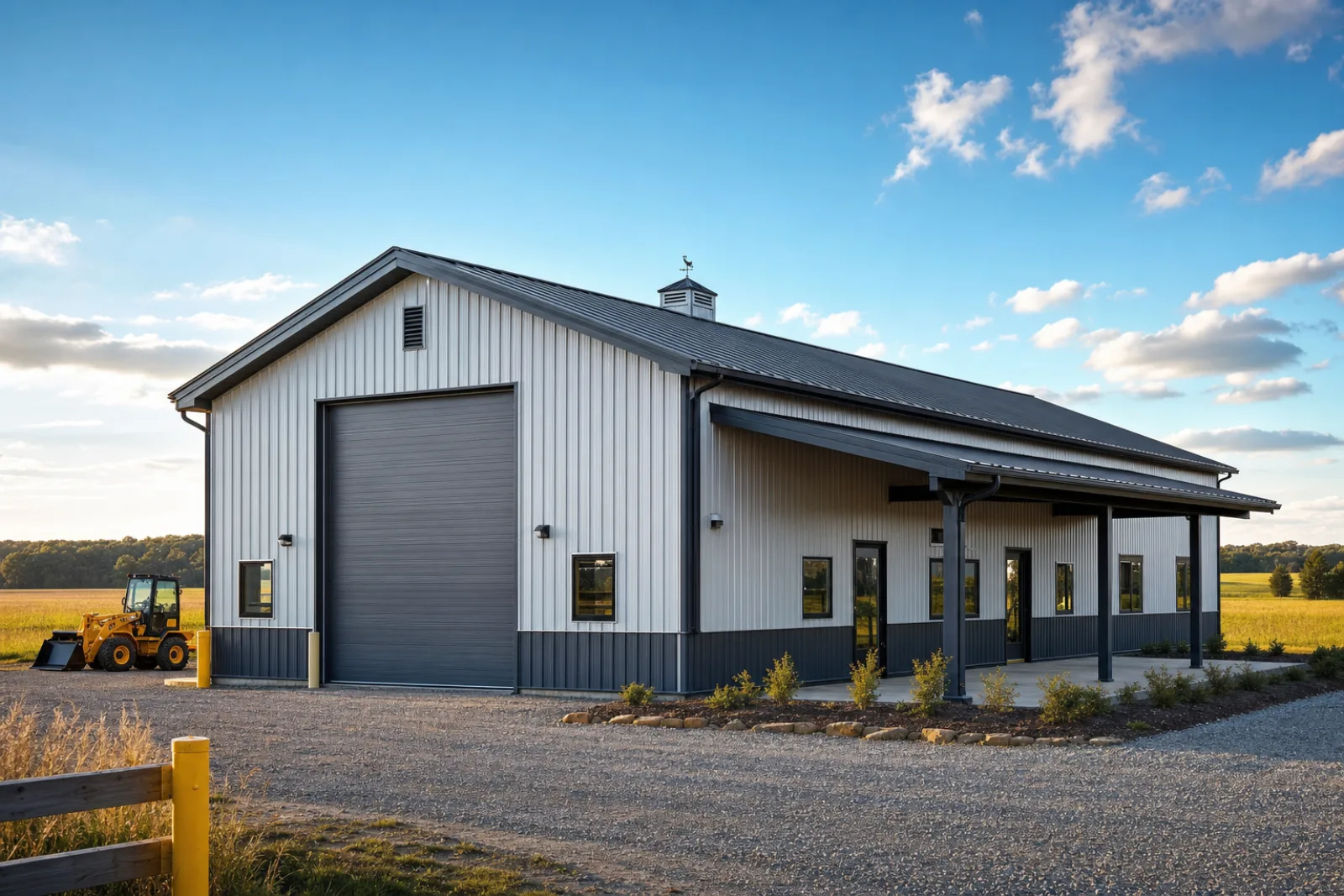
A professional crew builds faster than a do-it-yourself owner, often by a wide margin on a large building. The crew knows the order, owns the lift, and does not stop to read the plan. An owner trades speed for cost savings and control, which is a fair trade on a small kit and a harder one on a wide-span frame.
On a small building the gap is narrow. Two capable people can raise a carport or a single-car garage on a weekend, close to what a crew would charge a day or two to do. This is where do-it-yourself makes the most sense, and our can you build it yourself guide gives the honest read on which kits an owner should take on.
On a large or red iron building the gap widens fast. Heavy rafters set high in the air want equipment and practiced hands, and a first-timer can spend a week on a frame a crew raises in a day. That is the point where hiring a crew often pays for itself in time and safety, not labor alone. The bigger and taller the building, the more a crew earns its fee.
Match the build to the builder. A small kit rewards a careful weekend; a wide red iron shell rewards a crew with a lift. The expensive timeline is the one where an owner fights a frame that wanted equipment from the start.
The deeper a build runs, the more a realistic plan matters. A full DIY metal building kit guide maps the labor, the tools, and the help you will want lined up before the truck arrives, so your timeline is built on what the kit demands, not on the best-case weekend.
FAQ
How long to build a metal building: common questions
How long does it take to build a metal building kit?
Plan on a weekend to a few weeks for the shell ‹confirm›, scaled to size. A small carport or garage can go up in a weekend to a few days with two or three people, a mid-size shop runs roughly a week, and a large clear-span building takes one to several weeks with a full crew. Those are assembly windows only and do not include the slab, permits, or delivery.
How long does it take to build a 30×40 metal building?
A 30×40 shell typically runs around a week ‹confirm› for a crew of three to four, longer for first-time owners and shorter in good weather. Frame type matters: a red iron 30×40 wants a lift and more hands than a lighter build. Treat any specific day count as a rough range, and confirm it against your kit, crew, and site. The size chart shows how a 30×40 lays out.
Does a crew build faster than DIY?
Yes, usually by a wide margin on larger buildings. A professional crew knows the assembly order, owns the lift, and does not stop to read the drawings, so it raises a wide frame in a fraction of the time a first-time owner needs. On a small carport or single-car garage the gap narrows, which is where do-it-yourself makes the most sense.
What slows a metal building build down?
Weather, a heavy or wide frame, a small crew, and a disorganized parts pile slow a build the most. Wind halts frame and panel work for safety, rain bogs the site, and a tube kit goes up faster than red iron. Before the steel, permits and the slab cure are the bigger delays, and a build planned around the assembly alone almost always runs long.
How long before you can start assembly?
Often weeks to months, because permits, the foundation, and delivery run before the first bolt ‹confirm›. The building has to be permitted to local codes, the slab poured and cured, and the kit built and shipped, and a made-to-order kit’s lead time is frequently the longest wait. Start the permit and order early so those clocks run while you prepare the site and slab.
How long does concrete need to cure before you build on it?
Concrete needs several days to gain enough strength to load and bolt to ‹confirm›, and full design strength takes longer. You cannot rush a cure to hit a build date, so the slab is a fixed line on the schedule, not a flexible one. Pour it on its own clock, well before the kit is due, and let it set to spec before any steel lands on it.
Related guides
Keep reading
Your build timeline connects to the rest of the project. Follow these next:
- Construction Types & DIY (the parent pillar).
- Step-by-step assembly overview (the order a kit goes up).
- Can you build a metal building yourself? (the honest DIY read).
- Hiring a crew vs DIY assembly (when a crew pays for itself).
- DIY metal building kits guide (the full owner-build plan).
- Metal building delivery & site prep (the slab and the truck).
- Metal building permits & codes (the approval clock).
- Metal building buying checklist (lead times to confirm before you order).