The pros of a barndominium are an open, column-free floor, a non-combustible steel frame that shrugs off fire, rot, and termites, a shell that goes up fast, low long-run upkeep, and the option to put a home and a shop under one roof. The cons are tougher financing, fewer comparable sales for appraisal and resale in conventional markets, a steel shell that must be insulated to control condensation, and zoning or permit rules that some towns still write around wood-framed houses. Once you finish the interior, a barndominium lives much like any home; the real decision is whether the durability and open span are worth the extra friction at the bank, the county office, and the closing table.
This guide sits under the metal building homes pillar and lays out both sides so you can weigh them against your own lot, budget, and plans. Below you will find the case for a barndominium, the case against, a side-by-side of the trade-offs, the few places buyers get tripped up, and who the format fits. If a builder sells you only the upside, this is the context that fills in the rest.
The case for
Barndominium pros: where the format wins
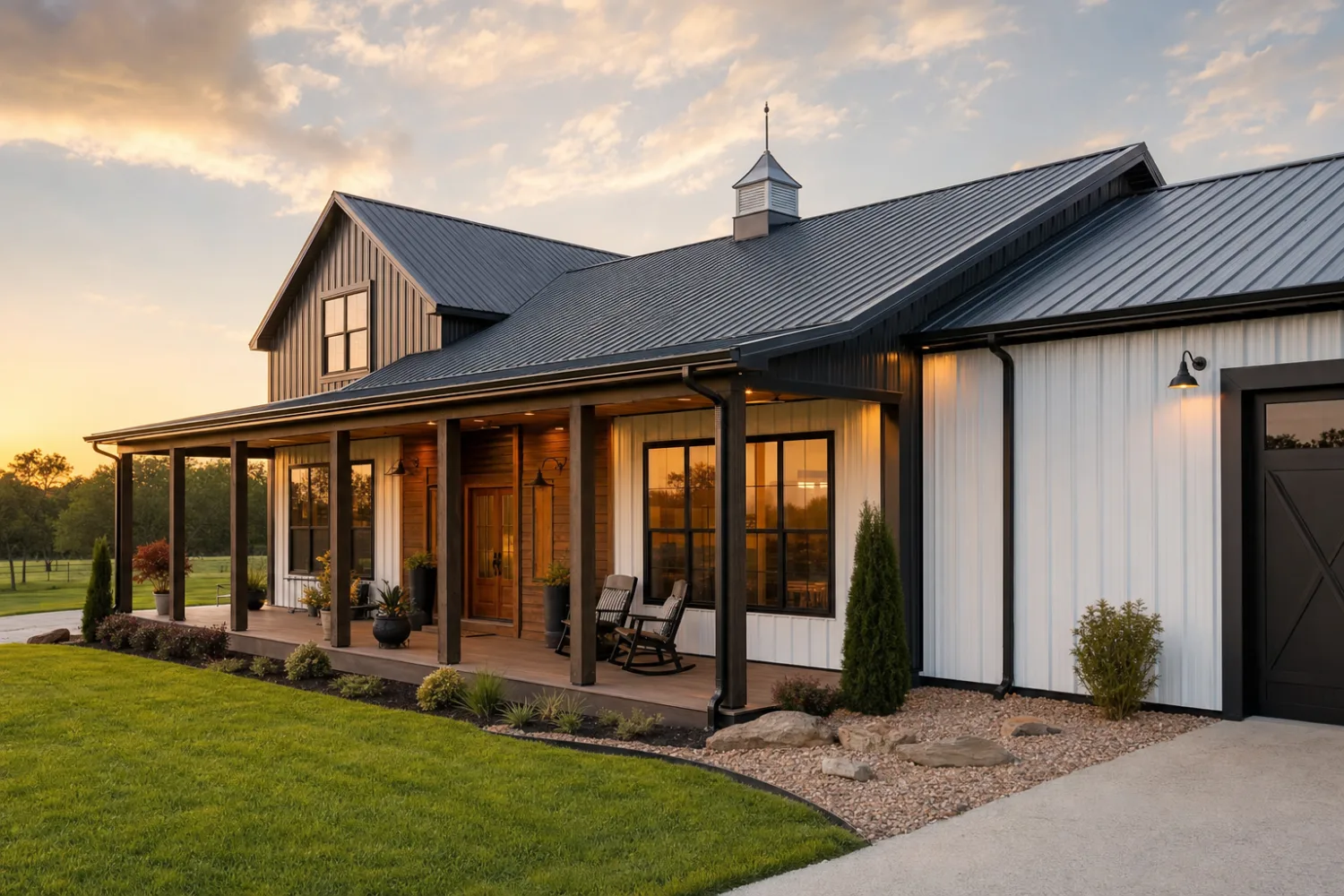
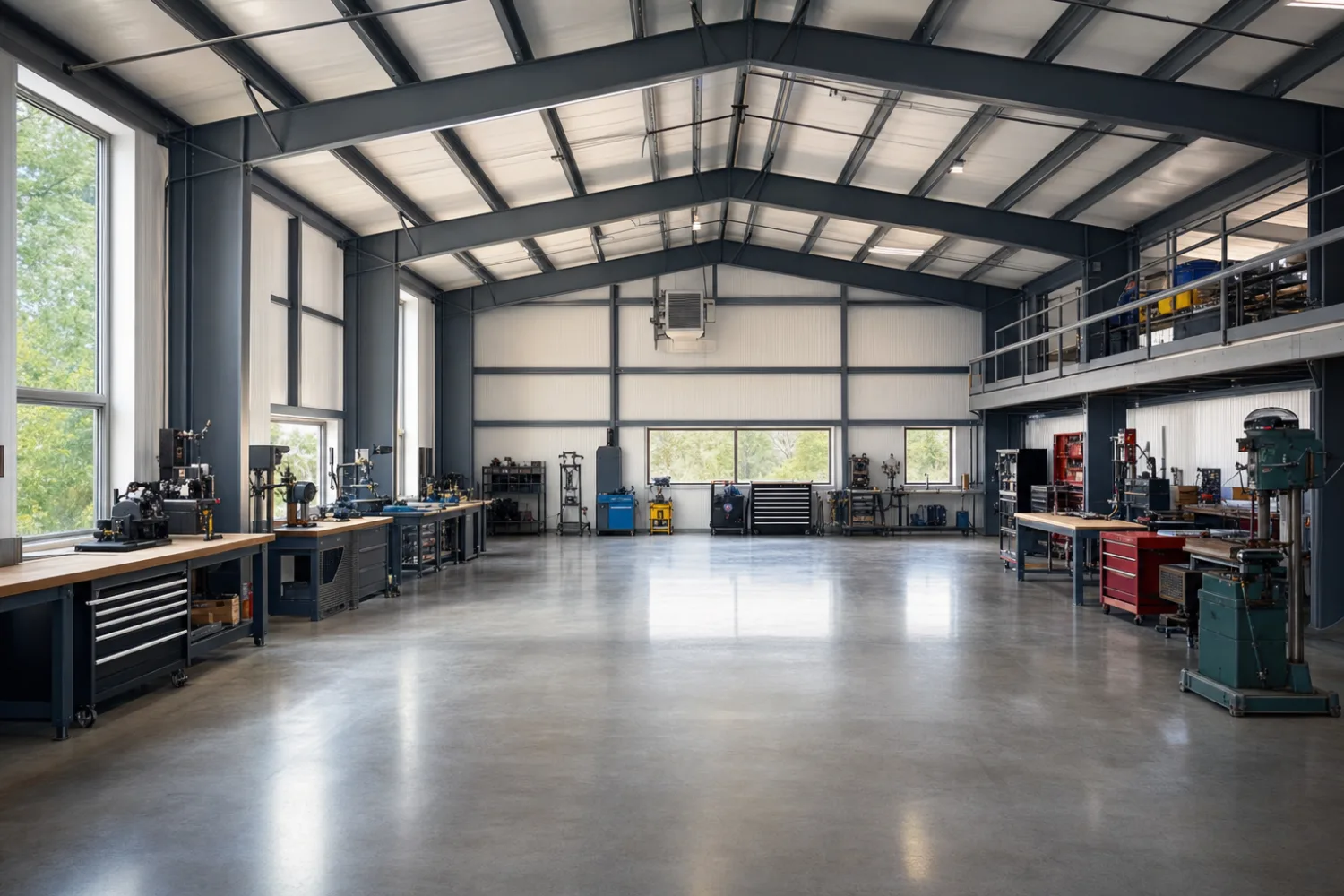
The pros of a barndominium come down to space, durability, and speed. A pre-engineered steel frame carries the roof out to the perimeter columns, so the interior holds no load-bearing walls and a 40-to-60-foot-wide home opens as one column-free floor you divide where you like ‹confirm›. That open span is the headline draw, and it is why owners reach for open barndominium floor plans that a stick frame cannot match without added beams.
Durability is the second pro, and it is structural, not cosmetic. Steel will not burn, rot, warp, or feed termites, so the frame holds its line for decades inside a dry, ventilated shell, and the years run cheap with no repaint cycle on the structure and no termite treatment. In fire or termite country that toughness can also ease your premium, though it varies by carrier; the insurance guide for metal homes covers how to confirm it. For the full case against a conventional build, see metal building homes vs traditional houses.
Speed and flexibility round out the upside. The shell bolts together from labeled parts and goes weather-tight in days rather than weeks, which shortens the window where weather, theft, and loan interest all cost you money. Because the floor is open, you can stage the finish, build out part of the home now and the rest later, or fold a shop, garage, or barn into the same building with a kit with living quarters. That live-work option is the barndominium signature.
The case against
Barndominium cons: where it gets harder
The cons of a barndominium are rarely about the steel itself. They show up at the bank, the county office, and the wall assembly. The first is financing. Because a barndominium is a shell plus a finish, many lenders treat it as new construction and want a construction loan that funds the build in stages, not a single mortgage on a finished house, so you plan and document more than a conventional buyer does ‹confirm›.
Appraisal and resale are the second con, and they track the first. In rural and acreage markets where barndominiums are common, comparable sales are easy to find and the format reads as a durable, desirable home. In a conventional subdivision with few steel homes nearby, an appraiser may have less data to value yours, which can soften the number on both the loan and the eventual sale. The resale value guide walks how to read your own market before you commit.
The third con is the wall itself. A bare steel panel sweats when warm interior air meets a cold surface, so a barndominium has to be insulated in a way that also controls condensation, and steel does not hand you ready stud bays the way lumber does. Most homes add a furring or stud wall inside for insulation and wiring, which is normal work but real cost and a step a wood frame skips. Skip the detailing and you invite moisture, drips, and cold spots; do it right and a barndominium holds climate as well as any house.
The last con is local and worth checking early. Some towns, HOAs, and lenders still write their rules around wood-framed houses, so a metal home can run into zoning limits, neighborhood covenants, or an appraiser unfamiliar with the format. None of this is a structural flaw; it is paperwork and local acceptance, and it is easier to clear before you order steel than after.
Side by side
Barndominium pros and cons at a glance
Read the two columns together, because most barndominium pros carry a matching con. The open steel shell that gives you the floor and the durability is the same shell that asks for condensation control and a lender who understands new construction.
| Factor | The upside (pro) | The trade-off (con) |
|---|---|---|
| Floor plan | Wide clear span, no bearing walls | Big open volume costs more to heat and cool ‹confirm› |
| Frame | Non-combustible, no rot or termites | Bare steel sweats without good insulation |
| Build speed | Shell goes weather-tight in days | Interior finish is the same trades and time as any home |
| Upkeep | No repaint cycle or pest treatment on the frame | Panels and fasteners still need occasional checks |
| Financing | Lower shell cost up front ‹confirm› | Often needs a construction loan, more documents ‹confirm› |
| Resale | Strong on rural and acreage lots | Fewer comparable sales in conventional markets |
| Live-work | Home and shop under one roof | Acoustic and code separation to plan between the two |
| Acceptance | Common and welcome in many rural areas | Some HOAs and towns still favor wood-framed homes |
Pros and cons of a barndominium side by side. The right answer depends on your lot, your climate, and how your bank and town treat a steel home, not on the steel alone.
Weigh the finished home, not the bare shell. The barndominium question is rarely the steel; it is the financing, the appraisal, and the insulation detailing, and all three are solvable when you plan for them up front.
The real trade-offs
The trade-offs that decide it
Most of the pros and cons net out to four decisions. Get these right and a barndominium is a strong home; ignore them and the cons are the ones you feel. Here is where the choice lives.
First, money. The steel shell is a fraction of the finished home, and that gap is where the savings myth starts. As an illustrative 2026 range, a barndominium shell runs roughly $20 to $40 per square foot ‹confirm›, while a finished, move-in home tends to land around $100 to $200 per square foot ‹confirm› once you add the foundation, interior build, systems, and fixtures. Budget to move-in, not to the kit price, and the cost to build a barndominium from a kit guide breaks the line items down.
Second, energy and comfort. A barndominium is not cold by nature; the wall and roof assembly decides comfort and bills, not the frame. A well-detailed steel home holds climate as well as a stick-built one, but the big open volume and the condensation risk make the insulation choice matter more than in a conventional house. The metal home energy efficiency guide covers the assemblies that make or break that line on your utility bill.
Third, the live-work split. The same open shell that lets you fold a shop into the home also means you plan the separation, fire rating, and sound control between the work bay and the living space. It is a genuine pro for an owner who wants both under one roof, and a non-issue for one who does not, so let your actual use decide how much of the floor goes to which side.
Plan the financing and the permit before you order steel
The two cons that surprise buyers most are both paperwork, and both are easier to clear early. Line up a construction loan that funds the build in stages and confirm your lender and appraiser are comfortable with a steel home, then check zoning, setbacks, and any HOA covenants with your county before the kit ships. Reading the barndominium kit basics first helps you ask the right questions, and the metal building cost guide sets the full budget in context.
Who it fits
Who a barndominium is right for
Let your lot, your plans, and your tolerance for a little extra paperwork decide. The pros land hardest for some buyers and the cons bite hardest for others. Here is how the common cases fall:
- You own rural or acreage land. Strong fit. Barndominiums are common there, so financing, appraisal, and resale all run smoother; start with floor plans and layouts.
- You want a home and a shop together. Strong fit. A kit with living quarters puts work and living space under one roof.
- You build in fire or termite country. Strong fit. A non-combustible frame takes fuel and food off the table and may ease your premium ‹confirm›.
- You are on a conventional subdivision lot. Check first. HOA covenants and thin comparable sales can add friction; read the steel home vs traditional house comparison before you commit.
- You want the simplest possible mortgage. Weigh it. A standard stick-built house is the path of least resistance for many lenders; a barndominium asks for a construction loan and more planning.
FAQ
Barndominium pros and cons: common questions
What are the main pros and cons of a barndominium?
The main pros are an open, column-free floor, a non-combustible steel frame that resists fire, rot, and termites, a shell that goes up fast, low upkeep on the structure, and the option to combine a home and a shop. The main cons are tougher financing, fewer comparable sales for appraisal and resale in conventional markets, a steel shell that must be insulated to control condensation, and zoning or HOA rules that some areas still write around wood-framed houses. Plan for the cons up front and the pros carry the home.
Are barndominiums a good investment?
On the right lot, yes. In rural and acreage markets where barndominiums are common, they read as durable, low-maintenance, open-plan homes and hold value well. In a conventional subdivision with few steel homes nearby, an appraiser may have less data to value yours, which can soften resale ‹confirm›. Quality of finish matters more than the frame, so a well-built barndominium presents at least as well as a traditional home in the markets that know the format.
What is the biggest disadvantage of a barndominium?
For most buyers it is financing and appraisal, not the steel. Because a barndominium is a shell plus a finish, many lenders treat it as new construction and want a construction loan in stages, and appraisers in some markets have fewer comparable sales to work with ‹confirm›. The fix is to line up financing and confirm your appraiser is comfortable with a steel home before you order the kit.
Do barndominiums have condensation or moisture problems?
Only when the shell is detailed poorly. Bare steel sweats when warm interior air meets a cold panel, so a barndominium needs insulation and a vapor strategy that controls condensation. Done right, with the correct insulation and ventilation, a steel home stays dry and comfortable. Skip it and you invite drips, cold spots, and rust over time, so this is one detail not to cut.
Are barndominiums cheaper to build than a regular house?
Sometimes on the shell, rarely on the whole project. The steel frame is a fraction of the finished cost and goes up fast, but the interior build, systems, and fixtures are the same trades regardless of the frame. As a 2026 illustrative range, a finished barndominium tends to run about $100 to $200 per square foot ‹confirm›, similar to a stick-built house at the same finish level ‹confirm›. The savings come from speed and the open plan, not the steel alone.
Are barndominiums energy efficient?
They can be. The wall and roof assembly decides comfort and energy bills, not the frame, so a well-insulated barndominium holds climate as well as a conventional home. The large open volume and the condensation risk mean the insulation choice matters more than in a stick-built house. Detail it correctly and a barndominium runs efficiently; under-insulate it and any home, steel or wood, struggles.
Will a town let me build a barndominium?
Usually, but check first. Many rural counties welcome them, while some towns, HOAs, and covenants still favor wood-framed houses and may limit a metal home. Confirm zoning, setbacks, and any neighborhood rules with your county before you order steel, since clearing the paperwork early is far easier than after the kit arrives.
Related guides
Keep reading
Weighing the pros and cons is the first step. These guides take the decision the rest of the way:
- Metal building homes: the complete guide (the parent pillar).
- Metal building homes vs traditional houses (the head-to-head on cost and durability).
- Cost to build a barndominium from a kit (the full money breakdown).
- Financing a barndominium (how the construction loan works).
- Resale value of metal building homes (how the next buyer sees it).
- Insulating and finishing a metal home interior (the assembly that controls condensation).
- Metal building cost guide (where the shell price sits in the bigger budget).