Yes, a metal building home can be as energy efficient as a well-built wood house, and often more, but the steel frame does not earn that on its own. Energy performance in a steel home is decided by the envelope around the frame: how well you break the thermal bridge through the steel, how tightly you air-seal the shell, and how the roof and windows handle the sun. Build that envelope right and a metal home holds temperature with a small, cheap-to-run system. Build it loose and the same house leaks heat fast, sweats on the panels, and runs up a bill. The efficiency lives in the shell, not in the steel.
This guide sits under the metal building homes pillar and answers one question: are metal homes energy efficient, and what makes the difference. Below: why steel conducts heat, the four envelope levers that set your efficiency, how a steel home compares to a stick-built one, and how all of it shows up on the power bill. Insulation methods and HVAC sizing are their own builds; this guide links to them and keeps to the efficiency verdict.
The verdict
Are metal building homes energy efficient?
A metal building home is as energy efficient as the envelope you wrap around it, no more and no less. The pre-engineered steel frame is a structural choice, not an insulation one, so two identical shells can perform worlds apart depending on how they are insulated and sealed. The frame brings no built-in penalty and no built-in advantage; it is a blank wall waiting for an envelope.
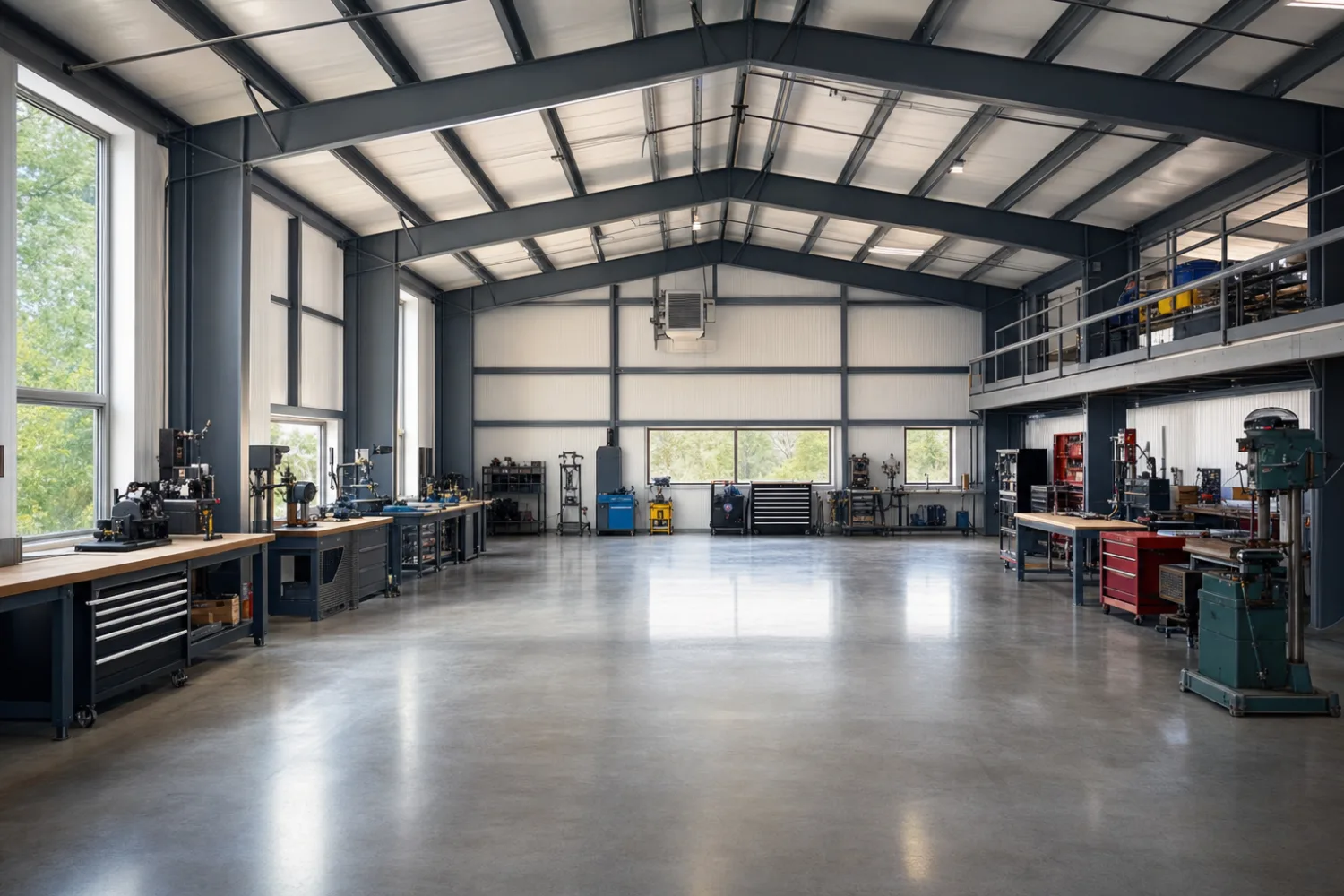
What people mean when they ask is whether steel is a handicap, and the honest answer is that it can be if you ignore it, because raw steel moves heat far faster than wood. Address that one trait and a steel home matches or beats a comparable wood house, partly because a clear-span shell has fewer gaps and seams to leak through. The work happens in the insulated, finished interior, where the envelope is built.
There is also an efficiency that has nothing to do with heat: steel is dimensionally stable, it does not rot or warp, and a tight steel shell stays tight for decades, so the envelope you build keeps performing instead of loosening as the structure ages. That durability is part of why a steel home holds its efficiency over time, and it ties into how a steel home compares to a traditional house on the whole.
Thermal bridging
Why steel needs the envelope done right
The one trait that sets a steel home apart on energy is thermal bridging: metal conducts heat hundreds of times faster than wood, so any steel that touches both the inside and the outside becomes a highway for heat to escape in winter and pour in during summer. Ignore it and the most expensive insulation still underperforms, because heat routes around it through the framing. Break it and the steel stops mattering.
The fix is continuous insulation: a layer that sits unbroken between the steel and the conditioned space, so no framing member touches both faces of the wall. In a steel home this usually means closed-cell spray foam against the panels, or rigid board with a thermal break, rather than batts pressed against bare metal. The method belongs to the insulation and finishing guide; what matters here is the principle. Continuity beats thickness.
The second envelope job is the air barrier. Warm, humid indoor air that reaches a cold steel panel condenses into water, the same way a cold glass beads up, which wastes energy and invites corrosion. A sealed envelope stops that air before it touches the steel, which is why air sealing and ventilation matter as much as R-value. For the moisture side of this, see condensation and ventilation.
Thermal bridging is the whole game
If you remember one thing about metal-home energy use, make it this: an unbroken insulation layer that keeps steel from touching inside and outside air is what makes a metal home efficient. Everything else, the R-value, the windows, the roof, helps at the margins. Solve the bridge first and the rest of the envelope can do its job.
The levers
The four levers that set your efficiency
Four parts of the envelope decide how efficient a steel home is, and they work together rather than in isolation. Pull all four and the home performs; skip one and it becomes the weak link the others cannot cover. Here is what each one does and how much it moves the result.
| Envelope lever | What it does | Why it matters in a steel home |
|---|---|---|
| Insulation & thermal break | Slows heat through walls and roof | Largest single lever; must be continuous to beat steel bridging |
| Air sealing | Stops leaks and panel condensation | Steel shells seal tightly, but every penetration must be closed |
| Roof reflectivity | Reflects solar heat off the roof | A cool-coated or light steel roof cuts summer cooling load ‹confirm› |
| Windows & doors | Limits heat gain and loss at openings | Glass area and quality set how much the envelope leaks at the edges |
Illustrative weighting. Insulation and air sealing carry most of the result; roof and windows trim the rest.
Insulation and air sealing are the heavy levers, and they are why a tightly built steel home can need a smaller, cheaper system than its floor area suggests. The roof is the quiet third lever: a reflective or light-colored steel roof bounces solar heat instead of absorbing it, which trims the cooling load in a hot climate, and the choices live in the roofing and porch options guide. Windows are the fourth; large glass walls look striking but leak heat at the edges, so their placement and quality matter to the whole.
None of these is unique to steel, but the order of attack is. In a wood home the framing carries some insulating value of its own; in a steel home it carries almost none, so the continuous-insulation layer does more of the work and the payoff for getting it right is larger. The heating and cooling guide covers how the equipment then rides on top of that envelope.
Metal vs wood
Steel home vs wood home on energy
Compared head to head with the same insulation budget, a steel home and a wood home land close, with the steel shell winning on air-tightness and the wood shell winning on framing R-value. The difference is small once both are built to a modern standard, which is why the frame material is rarely the deciding factor in a power bill.
Steel’s edges are tightness and stability. A pre-engineered shell goes up with consistent, machine-cut parts and few of the random gaps that creep into stick framing, so a well-sealed steel home can leak less air. It also will not rot, settle, or pull apart over the years, so the envelope stays as tight as the day it was finished. That longevity feeds into the long-run cost of owning the home.
Wood’s edge is the framing itself: a 2×6 stud carries real insulating value, while a steel member carries almost none and conducts heat through the wall unless you break the bridge. That is the gap continuous insulation closes. Solve thermal bridging and the steel home erases wood’s advantage; ignore it and wood pulls ahead. For the wider trade-offs beyond energy, see metal homes vs traditional houses.
On energy, the frame is a tiebreaker, not the decision. A tightly insulated steel home and a tightly insulated wood home cost about the same to run; a loosely built one of either material costs more.
The bill
What efficiency means for your energy bill
Your monthly energy bill in a steel home follows the envelope and the equipment, not the steel, so a well-insulated metal home runs on roughly the same money as a comparable wood house. Spend on the envelope first and the savings compound every month for the life of the home, because a tight shell lets a high-efficiency system run less to hold the same temperature.
The math has two sides. The up-front side is what the envelope costs: closed-cell spray foam, a thermal break, and good air sealing add to the build, with the insulation package on a steel home commonly running a few thousand to over ten thousand dollars depending on size and method ‹confirm›. The ongoing side is the energy you save every month against a thinly insulated shell, which is where that spend pays itself back over the years. The cost to build from a kit guide places insulation in the full finish budget.
Treat any single figure as a 2026 starting point and confirm it locally, since climate, energy rates, home size, and insulation level all move the number. The biggest lever on the bill is not the furnace brand or the window package; it is the continuous insulation and the air seal. For the wider money picture, the metal building cost guide sets the context, and the floor plan you pick shapes how much volume there is to condition in the first place.
FAQ
Metal home energy efficiency: common questions
Are metal building homes energy efficient?
They can be as efficient as a well-built wood home, and sometimes more, but only when the envelope is built to break the thermal bridge through the steel. The frame itself conducts heat fast and carries no insulating value, so efficiency comes from continuous insulation, tight air sealing, a reflective roof, and good windows. Get the envelope right and a steel home holds temperature on a small system; get it wrong and it leaks heat fast.
Why do metal homes lose heat faster?
Because steel conducts heat hundreds of times faster than wood, so any framing member that touches both the inside and the outside carries heat straight through the wall, a path called thermal bridging. Unlike a wood stud, a steel member adds almost no insulating value of its own. The fix is a continuous insulation layer that keeps the steel from touching both faces, which stops the bridge and lets the rest of the envelope work.
What is the best insulation for an energy-efficient metal home?
Most efficient steel homes use closed-cell spray foam against the panels, or rigid board with a thermal break, because both create the continuous, unbroken layer that beats thermal bridging. Batts pressed against bare steel underperform, since heat routes around them through the framing. The method and R-values belong to a fuller build, so see the insulating and finishing guide for the specifics before you spec a package.
Are metal homes cheaper to heat and cool than wood homes?
A well-insulated steel home costs about the same to heat and cool as a comparable wood home, because the bill follows the envelope and the equipment rather than the frame. A tight steel shell can edge ahead on air leakage, while a loose one falls behind on thermal bridging. The deciding factor is how well the home is insulated and sealed, not whether it is framed in steel or wood. Confirm running costs with local rates.
Does a metal roof make a home more energy efficient?
A reflective or light-colored steel roof helps in a hot climate by bouncing solar heat off the building instead of absorbing it, which trims the summer cooling load ‹confirm›. The roof is a real lever but a secondary one; insulation and air sealing move the bill far more. Pair a cool roof with a continuous insulation layer and the two work together rather than one carrying the load alone.
Do metal homes have condensation problems?
They can if the envelope is loose, because warm, humid indoor air that reaches a cold steel panel condenses into water, which wastes energy and can corrode the steel. A sealed air barrier and proper ventilation stop the warm air before it touches the panel, which is why air sealing is part of efficiency, not a separate concern. Done right, a steel home stays as dry as any other house.
Can a metal home meet energy code?
Yes. A steel home meets the same energy codes as any house when its envelope is built to the required insulation and air-sealing levels for your climate zone. Code compliance is about the finished R-value and air-tightness of the shell, not the frame material, so the path is to insulate and seal to the standard rather than to avoid steel. Confirm your local code requirements before you finalize the insulation package.
Related guides
Keep reading
Energy efficiency touches the insulation, the systems, the roof, and the budget. Follow these next:
- Metal building homes: the complete guide (the parent pillar).
- Insulating & finishing the interior (how the efficient envelope is built).
- Heating & cooling a metal home (the system that rides on the envelope).
- Roofing & porch options (the reflective roof that trims cooling load).
- Metal homes vs traditional houses (the wider steel-vs-wood comparison).
- Cost to build from a kit (where insulation sits in the finish budget).
- Metal building cost guide (the wider pricing reference).