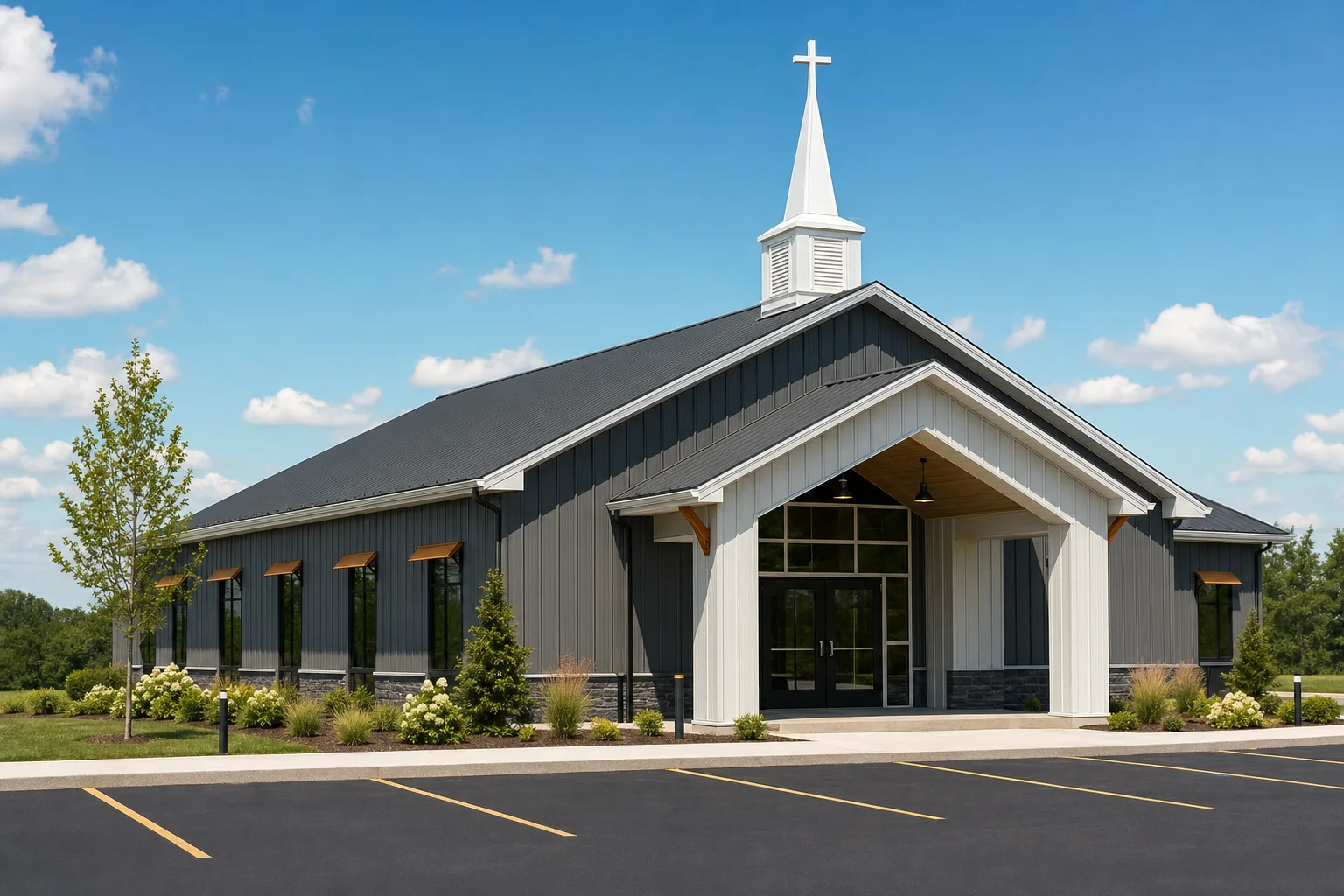
Metal home insurance is standard homeowners coverage written on a steel-frame house, and yes, a code-built metal home is insurable through the same policies as any other dwelling. The catch is finding a carrier who understands the structure. A finished barndominium on a permanent foundation reads to most insurers as a single-family home, but the steel frame, the metal roof, and the smaller pool of comparable homes mean some national carriers decline it while local and farm-and-ranch insurers write it without blinking. Where you shop matters as much as what you pay.
This guide sits under the metal building homes pillar and covers the coverage side of a steel home: whether you can insure one at all, how the premium compares to a stick-built house, the policy types a metal home needs, what drives the rate up or down, and how to insure the build itself. It is the protection layer that sits next to the money side. For the loan that pairs with it, see financing a barndominium or metal home. This page is about covering the house once it stands.
Can you insure it
Can you insure a metal home?
Yes. A metal home built to residential code on a permanent foundation qualifies for a standard homeowners policy, the same HO-3 form that covers a conventional house. The steel frame does not make it uninsurable. What it does is narrow the list of carriers willing to write it, because a metal home is still a non-standard property to an underwriter who rarely sees one.
The dividing line is how the building reads on paper. A barndominium finished as a permanent dwelling, with proper egress, a certificate of occupancy, and code-built systems, insures as a home. A bare shell with a bed in the corner, or a shop the assessor lists as an outbuilding, gets quoted as a commercial or farm structure instead, which carries different terms and often weaker contents coverage. The same residential framing that helps a steel home compare cleanly to a traditional house is what gets it a homeowners policy rather than a barn policy.
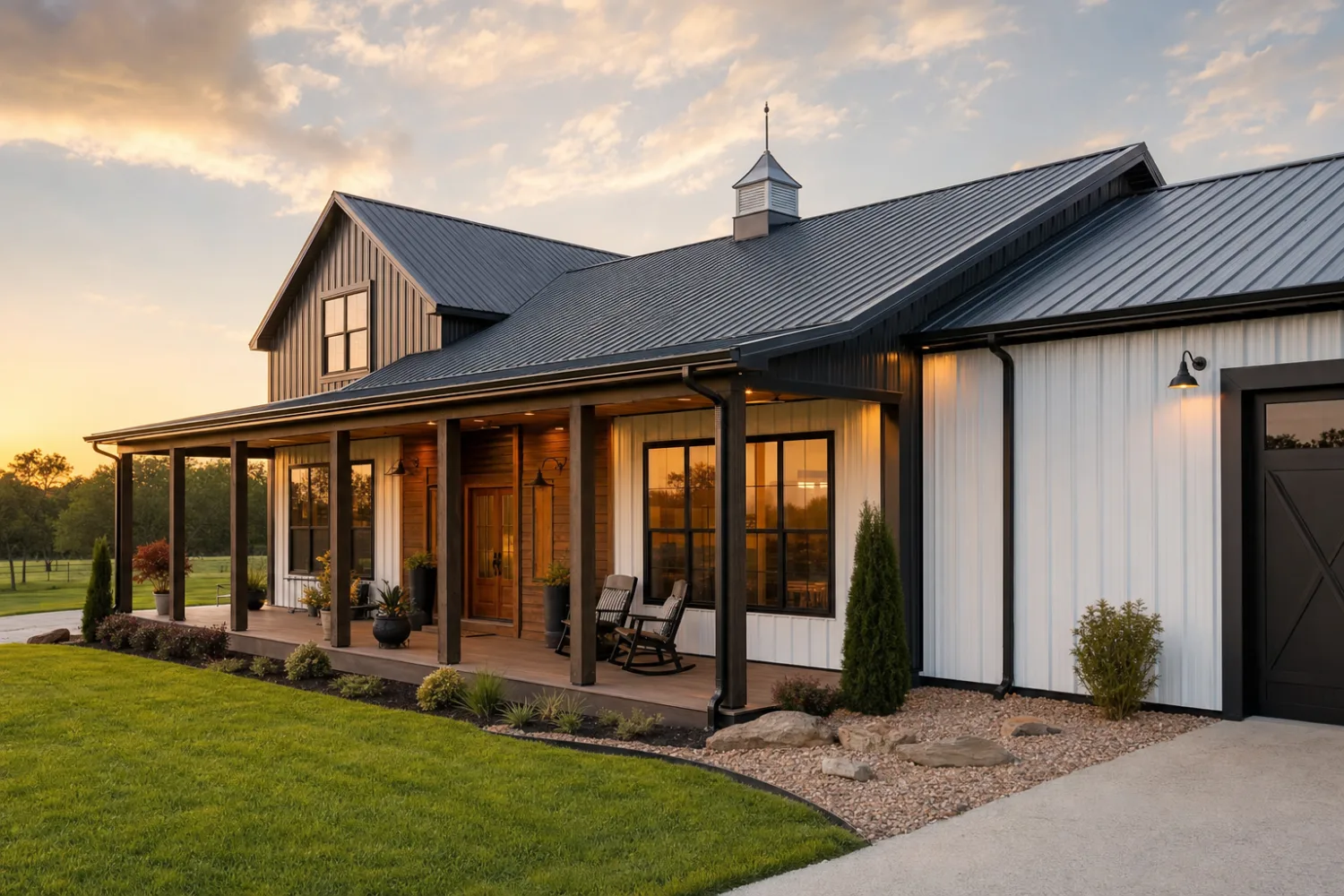
If a national carrier declines, do not read it as a verdict on the house. Local independent agents, farm-and-ranch insurers, and regional mutuals write steel homes routinely, especially in rural markets where barndominiums are common. An independent agent who can shop several carriers at once is the fastest path to a yes, because they know which companies in your state treat a metal home as an ordinary dwelling.
Cost
Does a metal home cost more or less to insure?
A metal home can cost less to insure than a comparable wood-framed house, and the reason is the steel itself. Steel does not burn and does not feed a fire, so a steel-frame home earns a favorable fire rating, and many carriers price that in. A metal roof and metal walls also stand up to wind and hail better than asphalt and wood, which can pull the premium down further in storm-prone regions. The structure that worries an unfamiliar underwriter is the same structure that lowers the claim risk.
That said, the steel discount is not automatic, and a few things can push a metal home’s premium the other way. Read the cost as a balance of factors, not a single number.
| Factor | Pushes premium down | Pushes premium up |
|---|---|---|
| Fire | Steel will not burn or feed a fire | Interior finish and contents still burn |
| Roof | Metal roof resists wind and hail | Older or damaged roof, low pitch |
| Wind / storm | Steel frame holds in high wind | Coastal or high-wind zone, weak anchoring |
| Valuation | Durable shell, long service life | Few local comps, harder replacement-cost figure |
| Carrier familiarity | Local / farm insurer knows steel homes | National carrier treats it as non-standard |
| Use | Permanent residential dwelling | Listed as a shop or outbuilding |
Illustrative 2026 factors, not a quote. Actual premiums vary by carrier, state, location, and the home itself ‹confirm›. Compare quotes before you assume a discount or a surcharge.
The honest answer is that location and the carrier move the premium more than the framing material does. A steel home in a wildfire or hail zone may still pay a high rate, and a metal home quoted by a carrier who does not understand it can come in higher than it should. Get two or three quotes from agents who write steel homes, and the fire and wind advantages tend to show up. For the wider numbers a metal home runs against, the cost to build from a kit guide sets the replacement-cost context.
Coverage types
The coverage a metal home needs
A metal home needs the same core coverages as any house, plus one extra during construction. The standard homeowners policy bundles dwelling, other-structures, personal-property, liability, and loss-of-use coverage. While the home is still going up, a builders-risk policy covers the materials and the partly built structure. Knowing which policy covers which phase keeps you from a gap on the day a claim happens.
- Dwelling (Coverage A). Pays to repair or rebuild the home itself, the frame, roof, walls, and built-in systems. This is the line that has to reflect the real cost to rebuild a steel home, not a wood one, so the replacement-cost figure matters.
- Other structures (Coverage B). Covers detached structures like a separate garage or shop. If your steel home pairs a dwelling with a {L(‘metal-building-kits-with-living-quarters’,’shop or living-quarters’)} wing, confirm how the policy splits the two.
- Personal property (Coverage C). Covers your belongings inside. A home listed as a residence gets full contents coverage; a structure listed as an outbuilding often does not.
- Liability and medical. Standard protection if someone is hurt on the property, the same as any homeowners policy.
- Loss of use (Coverage D). Pays living expenses if a covered loss makes the home unlivable while it is repaired.
Cover the build, not just the finished house
While a metal home is under construction, a homeowners policy is not in force yet, so a builders-risk policy carries the materials and the partly built structure against fire, theft, and storm. Most lenders require it before the first draw, so it overlaps with the construction loan paperwork. Line it up before the steel is delivered, not after, because a kit sitting on a slab is a target the day it arrives.
What drives the rate
What drives your premium up or down
Your metal home premium comes down to a handful of levers, and most of them are the same ones that price any house, with steel tilting a few in your favor. Pull the levers you control before you shop, and the quotes come back lower.
Insure the home you built, not the shop the assessor sees. A steel home listed and finished as a permanent residence earns the fire and wind credits; one listed as an outbuilding pays more and covers less.
- Location. The single biggest lever. Wildfire, hail, hurricane, and flood zones raise the rate regardless of framing, while distance to a fire station and a hydrant can lower it.
- The roof. A newer metal roof in good shape resists wind and hail and reads well to an underwriter. Roof age and pitch matter, which ties back to your roofing choices.
- Replacement cost vs market value. Insurers cover the cost to rebuild, not the sale price. With few local comps, agree on a documented replacement-cost figure so you are neither under-insured nor overpaying.
- Fire resistance and finish. The steel frame helps, but the interior finish and insulation still burn, so wiring done to code and a clean electrical system keep the rate down.
- Deductible and discounts. A higher deductible lowers the premium, and bundling with auto, adding monitored alarms, or impact-rated features can earn credits ‹confirm›.
- Claims history and credit. Your prior claims and, in most states, your insurance score factor into the rate the same as on any home ‹confirm›.
Notice what is not on the list: the steel frame as a penalty. The frame is the part that lowers fire and wind risk. The premium is set by where the home sits, what shape the roof is in, and how cleanly the replacement cost is documented. The same durability that keeps the rate reasonable also supports resale value years later, so the two work together.
Replacement cost
Get the replacement-cost figure right
The replacement-cost figure is where metal home insurance most often goes wrong. Insurers pay to rebuild your home, not to match its sale price, and a steel home in a market with few comparable sales is easy to value incorrectly. Set the dwelling coverage too low and a total loss leaves you short the gap; set it on a generic per-square-foot table built for wood homes and the number may not reflect a real steel rebuild.
Document the build so the figure is defensible. Keep the kit invoice, the foundation and plumbing and electrical costs, the interior finish-out, and the labor, then hand that total to the agent rather than letting a default calculator guess. As a 2026 illustration, the finish-out and systems often cost more than the bare shell ‹confirm›, so a policy priced on the kit alone under-insures the home. The metal building cost guide and the cost-to-build breakdown give you the line items to support the number.
Revisit the figure as costs move. Steel and labor prices shift, and a coverage amount set three years ago may no longer rebuild the same home. Ask your agent for an inflation-guard endorsement and a periodic review, the same discipline a buyer applies when they weigh a steel home against a traditional house. The goal is simple: enough coverage to rebuild exactly what you have, and not a dollar of premium on coverage you do not need.
FAQ
Metal home insurance: common questions
Can you insure a metal home or barndominium?
Yes. A metal home built to residential code on a permanent foundation qualifies for a standard homeowners policy, the same HO-3 form that covers a conventional house. The steel frame does not make it uninsurable. It does narrow the list of willing carriers, so if a national company declines, work with a local independent agent or a farm-and-ranch insurer who writes steel homes routinely.
Is a metal home cheaper to insure than a wood house?
It can be. Steel does not burn or feed a fire, so a steel-frame home often earns a favorable fire rating, and a metal roof resists wind and hail better than asphalt, which can lower the premium further. The discount is not automatic, though. Location, roof condition, and the carrier’s familiarity with steel homes move the rate more than the framing material does ‹confirm›. Get two or three quotes to see the real number.
Why do some insurers decline a metal home?
Usually because they treat it as a non-standard property they rarely see, or because the building is listed as a shop or outbuilding rather than a residence. A finished, code-built home on a permanent foundation insures as a dwelling; a bare shell or a structure the assessor calls an outbuilding gets quoted as a commercial or farm building instead. An independent agent who can shop several carriers is the fastest way around a decline.
What kind of policy does a metal home need?
The same HO-3 homeowners policy as a conventional house, with dwelling, other-structures, personal-property, liability, and loss-of-use coverage. During construction, a separate builders-risk policy covers the materials and the partly built structure, and most lenders require it before the first loan draw. Once the home is finished and occupied, the homeowners policy takes over.
Do I need builders-risk insurance while building a metal home?
In almost every case, yes. A homeowners policy is not in force until the home is complete and occupied, so a builders-risk policy covers the kit, the materials, and the partly built structure against fire, theft, and storm during the build. Lenders typically require it before releasing the first draw, so arrange it before the steel is delivered rather than after.
How do I set the right coverage amount on a metal home?
Base the dwelling coverage on the cost to rebuild the home, not its market value or a per-square-foot table built for wood houses. Document the kit price, foundation, systems, interior finish, and labor, then give that total to your agent. The finish-out often costs more than the shell ‹confirm›, so a policy priced on the kit alone under-insures you. Review the figure periodically as steel and labor costs change, and see the cost-to-build guide for the line items.
Does a metal roof lower home insurance?
Often, yes. A metal roof resists wind, hail, and fire better than asphalt shingles, and many carriers offer a credit for an impact-rated or fire-resistant roof, especially in storm-prone regions ‹confirm›. The credit depends on the roof’s age, pitch, and rating, and on the carrier. Ask your agent what roof discount applies, and keep documentation of the roof’s specification.
Related guides
Keep reading
Insurance connects to the money, the value, and the parts of a steel home that drive the rate. Follow these next:
- Metal building homes: the complete guide (the parent pillar).
- Financing a barndominium or metal home (the loan that pairs with coverage).
- Resale value of metal building homes (the durability that also lowers risk).
- Metal homes vs traditional houses (how a steel home compares overall).
- Metal home roofing and porch options (the roof that drives the wind and hail credit).
- Metal building cost guide (the replacement-cost reference).