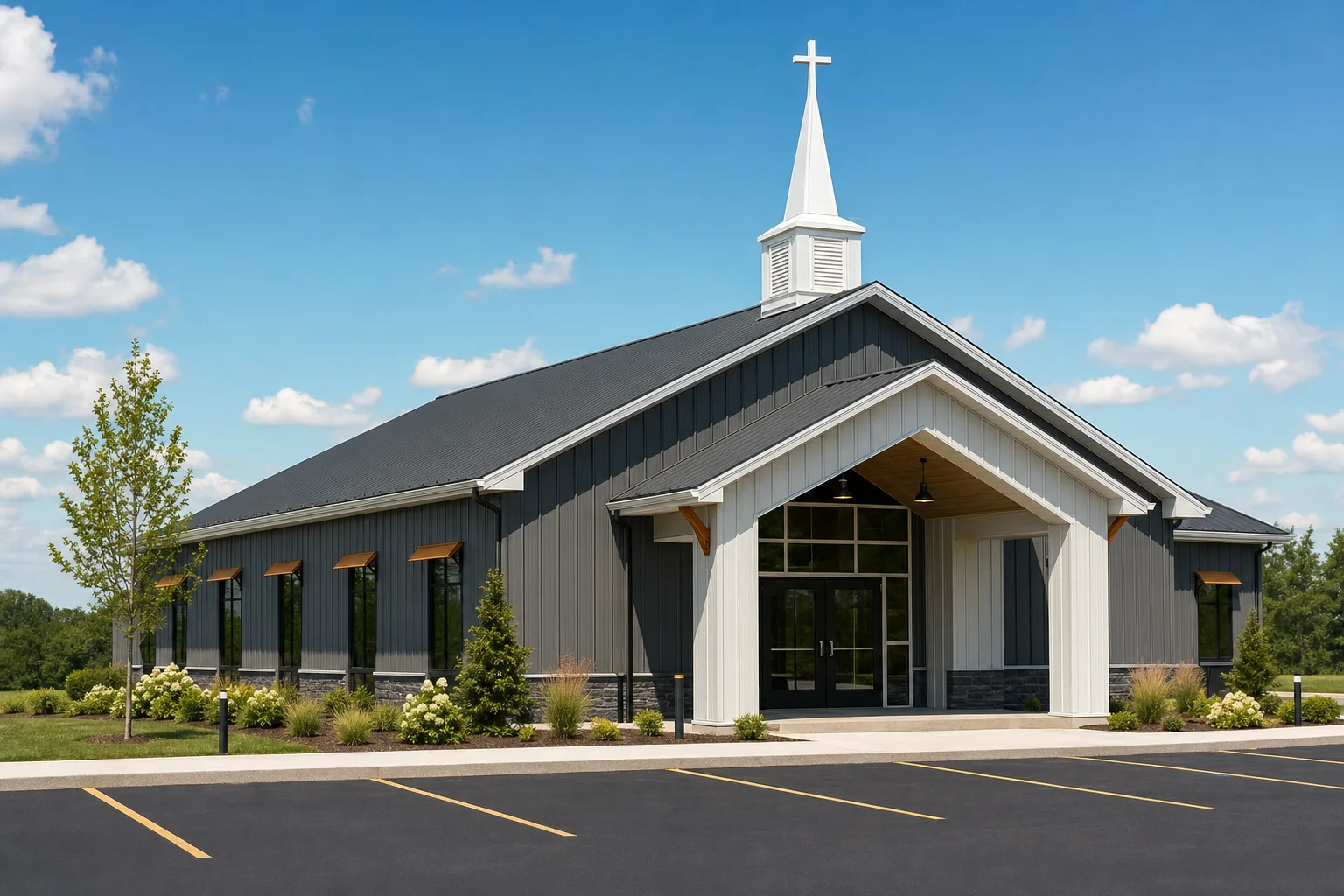
Barndominium financing is the process of borrowing to build or buy a steel-frame home, and it works differently from a standard mortgage because most lenders treat a metal home as a non-traditional, construction-first project. The common paths are a construction loan, a construction-to-permanent loan that converts into a mortgage when the home is finished, a USDA or FHA loan in qualifying rural and entry-level cases, and a land-and-build or local portfolio loan. The catch is that fewer lenders write these loans than write conventional mortgages, so where you borrow matters as much as how much you borrow.
This guide sits under the metal building homes pillar and covers the money side of a steel home: why a barndominium is harder to finance than a stick-built house, the loan types that fit, how a construction loan pays out, what lenders check before they approve you, and the appraisal problem that trips up first-time buyers. For the wider cost picture you are borrowing against, the cost to build from a kit guide sets the number. This page is about funding it.
Why it is harder
Why barndominiums are harder to finance
A barndominium is harder to finance than a conventional house for one core reason: lenders and appraisers see fewer of them, so the property is harder to value and the loan is harder for a bank to sell on the secondary market. A standard mortgage assumes a finished, conventional home with plenty of recent sales nearby to set a price. A steel home that does not exist yet, in a market with few comparable sales, breaks both of those assumptions at once.
Three things drive the friction. The build is usually construction-first, so you need a loan that funds work in stages, not a single mortgage on a finished house. The appraisal leans on comparable sales that may be thin in your area, which makes the value harder to pin down. And many big national lenders do not have a product for steel homes, so you end up at local banks, credit unions, and farm lenders who do. None of this stops the build. It just means you plan the financing as carefully as you plan the floor plan.
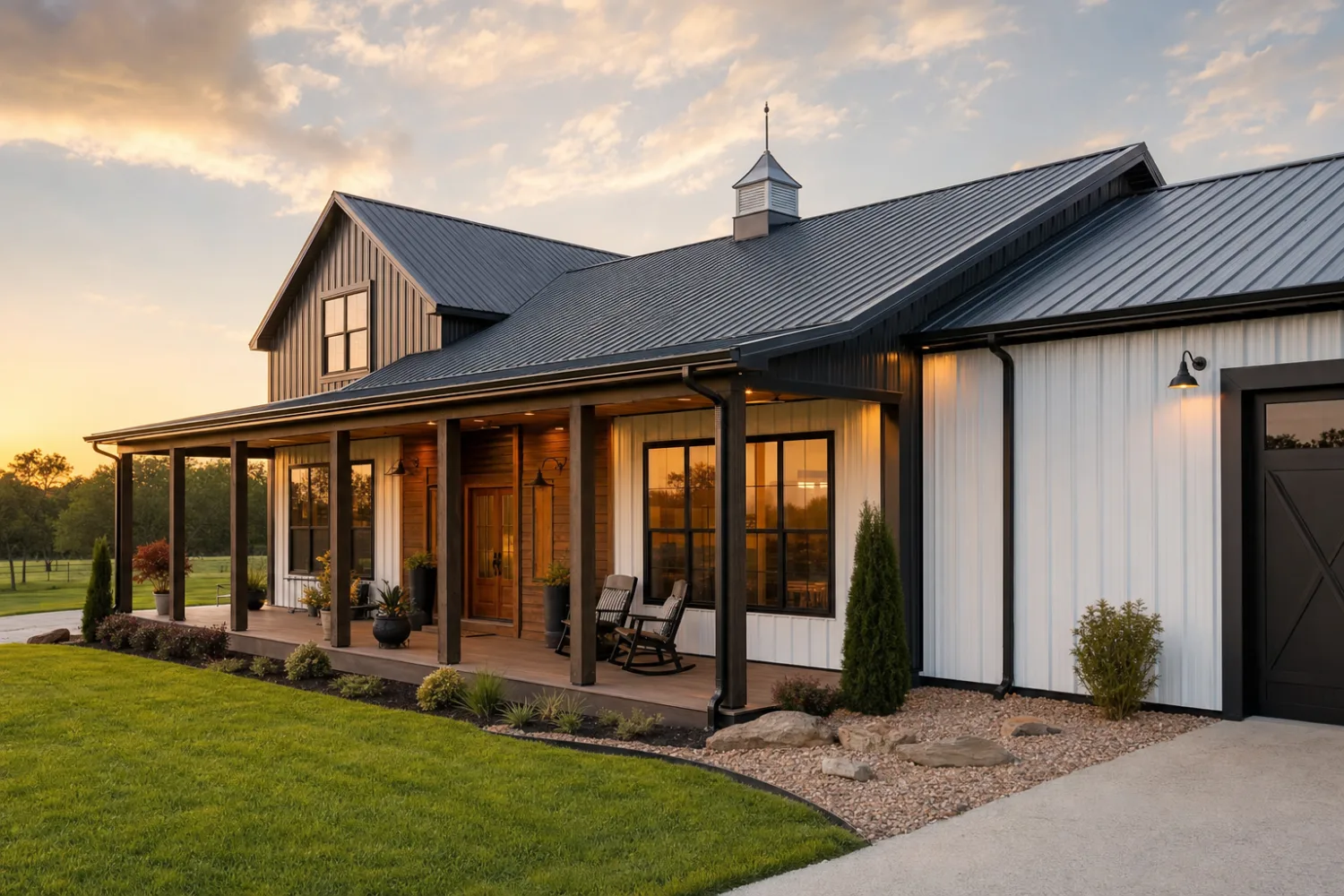
The good news is that a finished, code-built barndominium is a permanent residential dwelling, the same as any other home in the eyes of a lender. Once it is complete, on a permanent foundation, and appraised, it qualifies for a normal mortgage and refinance. The hurdle is the build phase, not the finished house. That distinction is also why a steel home holds resale value closer to a conventional home than many buyers expect.
Loan types
Loan types that fit a barndominium
There is no single barndominium loan; you match the loan to your stage and your situation. If you are building, you need a construction loan or a construction-to-permanent loan. If you already own the home or the land, a mortgage, refinance, or equity loan may be the cheaper route. The table below lays out the realistic paths and what each one is built for.
| Loan path | Best for | How it pays / secures | Watch for |
|---|---|---|---|
| Construction loan | Building from a kit | Funds released in draws as work finishes | Short term, converts or refinances at the end |
| Construction-to-permanent | Build then live in it | One closing, rolls into a mortgage when done | Fewer lenders offer it; shop locally |
| USDA Rural Development | Rural, income-qualified buyers | Backed home loan, low or no down ‹confirm› | Property and income limits apply |
| FHA loan | Entry-level, lower credit | Government-insured, smaller down ‹confirm› | Mortgage insurance; home must be complete |
| VA loan | Eligible veterans | No-down purchase of a finished home ‹confirm› | Build phase usually financed separately |
| Local bank / portfolio loan | Steel homes others decline | Lender keeps the loan in-house | Rate and terms set case by case |
| Home-equity / cash-out | You already own a home | Secured by existing home equity | Your current house is the collateral |
Illustrative 2026 paths, not lender quotes. Programs, limits, and rates vary by lender, credit, and state. Confirm each before you apply.
For most people building a barndominium from scratch, the construction-to-permanent loan is the cleanest fit, because it funds the build and becomes your mortgage with a single closing. The trade is availability: fewer lenders write them, so start with local banks, credit unions, and farm or land lenders who know steel homes in your area. National rate-shopping sites often miss them. If you are buying a finished barndominium instead of building, a standard mortgage, compared the same way you would a conventional house, is on the table.
Construction draws
How a barndominium construction loan pays out
A construction loan does not hand you the full amount at closing. It releases money in stages, called draws, as each phase of the build is finished and inspected. You pay interest only on the money drawn so far, which keeps early payments low, then the loan converts to a mortgage or gets refinanced once the home is complete. Understanding the draw schedule is the difference between a build that funds smoothly and one that stalls waiting on a check.
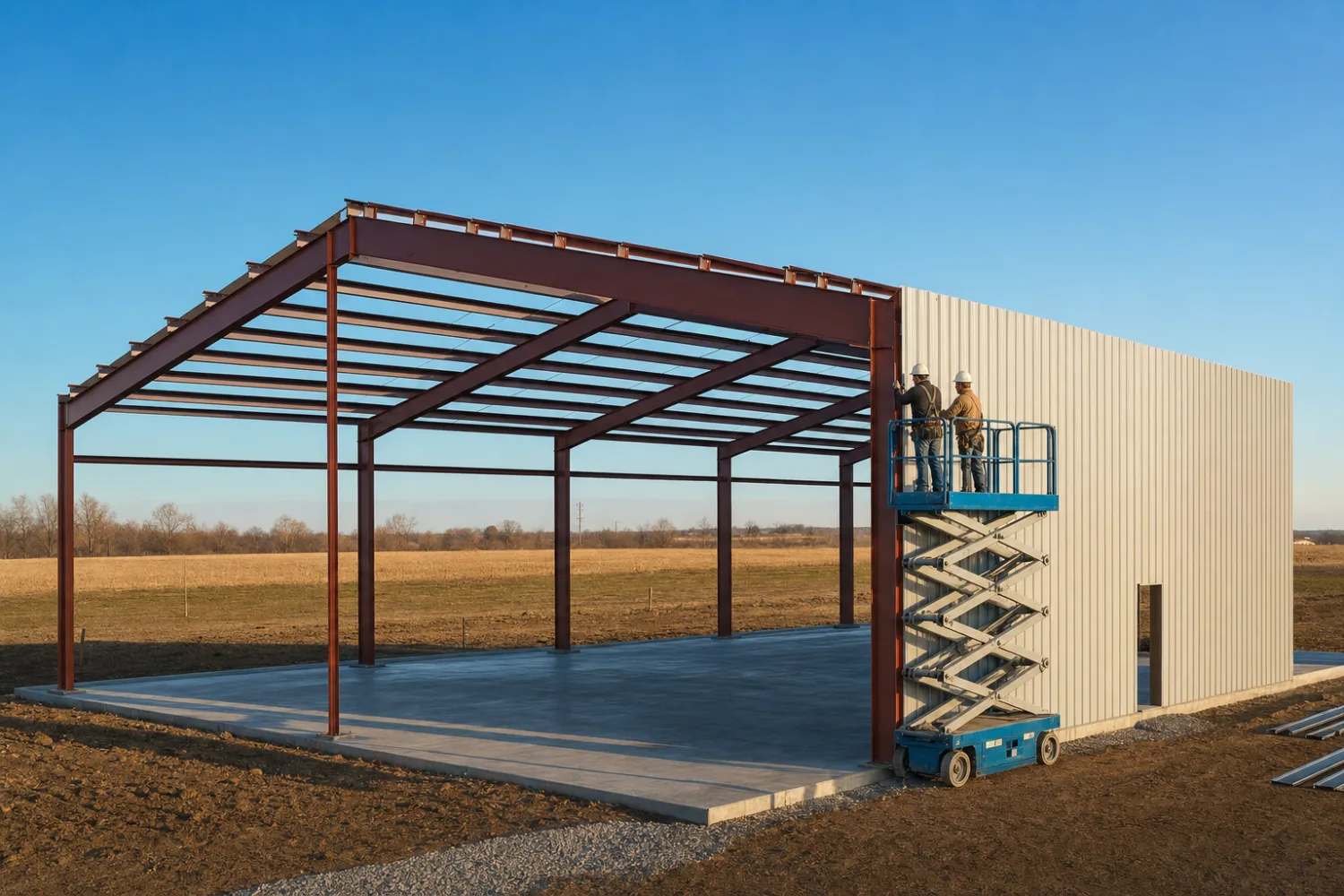
A typical schedule ties draws to milestones: the foundation and slab, the steel shell raised and dried in, the rough-ins for plumbing and electrical, then interior finish and the final certificate of occupancy. Each draw is released after an inspection confirms the work, so your builder and your timeline have to line up with the lender’s pace. A draw delay can idle a crew, which is why a clear schedule, agreed up front, belongs in the loan paperwork.
Budget for the gap, not just the build
Construction loans usually require a contingency reserve, often around 10 percent of the build cost ‹confirm›, to cover overruns between draws. Plan for it. Steel price swings, a permit surprise, or a weather delay can open a cash gap that the next draw has not yet filled. Size the loan against the finished project, not the kit shell, using the full cost-to-build breakdown.
What lenders want
What lenders check before they approve you
A lender approving a barndominium loan is answering two questions at once: can you repay it, and will the finished home be worth what they lend? The first is the usual credit-and-income review. The second is specific to steel homes, and it is where a barndominium file needs more than a conventional one. Show up with both halves covered and you turn a hard loan into a routine one.
- Credit and income. Lenders weigh your credit score and your debt-to-income ratio the same as on any mortgage. Many want a mid-600s score or better for the best terms ‹confirm›. Pay down a card or two before you apply if you are near the line.
- A permanent residential build. The home has to be built to residential code on a permanent foundation, not parked as a shop with a bed in it. A barndominium with proper egress, a certificate of occupancy, and code-compliant systems reads as a house; a bare shell does not.
- Stamped plans and a real budget. Expect to provide engineered drawings, a line-item build budget, and often a licensed builder or a vetted owner-builder plan. The clearer the size and scope, the easier the underwriting.
- A down payment or land equity. Construction lenders commonly want money down, often 10 to 20 percent of the project ‹confirm›, and land you already own can count toward it. More down lowers the rate and the risk.
- Builder’s-risk and hazard insurance. Lenders require coverage on the build and the finished home, so factor in insuring a steel home from the start.
If one of these is weak, fix it before you apply rather than hoping a lender overlooks it. Raise the down payment with land equity, tighten the budget, or pull a credit report and clear errors. A clean, complete file does more to win a good rate on a steel home than chasing a tenth of a point across ten lenders who do not write the product.
The appraisal
The appraisal and comps problem
The appraisal is where barndominium financing most often gets stuck. An appraiser values your home by comparing it to recent nearby sales, the comparables or comps. In an area with few steel homes, those comps are thin, so the appraisal can come in below the cost to build, which leaves a gap the loan will not cover. This is the single issue first-time buyers underestimate most.
Finance the build, but underwrite the appraisal. A barndominium that costs more to build than it appraises for leaves you covering the gap in cash, no matter how strong your loan looks on paper.
You have ways to manage it. Choose a lender who has financed steel homes locally and works with appraisers who understand them. Build in a market where barndominiums already sell, so comps exist. And keep the design squarely residential, because a home reads to an appraiser and a future buyer as a house, while an outbuilding with living quarters does not. That same logic protects resale value down the road, and it is part of how a steel home stacks up when you compare it to a traditional house.
How much to borrow
Finance the whole project, not just the kit
The most expensive financing mistake is borrowing for the steel and forgetting the rest of the home. A kit price is the shell only. A finished barndominium also needs land prep, a foundation, permits, the full interior finish-out, plumbing, wiring, mechanical systems, and often a builder, and those lines together usually cost more than the kit itself. Borrow for the shell alone and you are short the day the slab is poured.
Build a real number before you ask for a loan. Add the kit, the site work, the foundation, the permits, the insulation and interior finish, the systems, and labor, then borrow against that total. As a 2026 illustration, the finish-out is often the larger share of a barndominium’s cost, well above the bare shell ‹confirm›, which is why a loan sized to the kit alone falls short. The cost-to-build guide walks the line items, and the metal building cost guide sets the wider pricing context.
One more frame: a barndominium is part of the broader money question, not a loan in isolation. The same discipline that gets you a clean quote on the kit applies to the loan on top of it, and the prices and cost silo covers the purchase side in depth. Borrow the right number once, against the finished home, and the build funds without a mid-project scramble.
FAQ
Barndominium financing: common questions
Can you get a mortgage on a barndominium?
Yes. Once a barndominium is finished, built to residential code on a permanent foundation, and appraised, it qualifies for a normal mortgage and refinance like any other home. The harder phase is the build itself, which usually needs a construction loan or a construction-to-permanent loan first. Most financing trouble happens during construction, not after the home is complete.
Why are barndominiums hard to finance?
Lenders and appraisers see fewer steel homes, so the property is harder to value and the loan is harder for a bank to resell. The build is also construction-first, which needs a staged loan rather than a single mortgage, and many national lenders have no product for steel homes. Local banks, credit unions, and farm or land lenders are the ones most likely to say yes.
What credit score do you need to finance a barndominium?
There is no single cutoff, since it varies by lender and loan type ‹confirm›. Many lenders want a mid-600s score or better for the best construction-loan terms ‹confirm›, while FHA-style programs can allow lower scores with a larger down payment. Check your report, fix errors, and pay down revolving debt before you apply, because the score is the biggest single lever on your rate.
Can you use a USDA or FHA loan for a barndominium?
Sometimes, yes. A USDA Rural Development loan can fund a qualifying steel home in an eligible rural area for income-qualified buyers, and FHA financing can work on a finished, code-compliant barndominium ‹confirm›. Both come with property, location, or income conditions, and the home generally must be complete and appraised. Confirm eligibility with a lender who has closed these loans before.
How does a construction loan for a barndominium work?
It releases money in stages, called draws, as each phase of the build is finished and inspected, and you pay interest only on the amount drawn so far. Common milestones are the foundation, the shell dried in, the rough-ins, and the final finish. When the home is complete, the loan converts to a mortgage or gets refinanced. A construction-to-permanent loan combines both steps into one closing.
How much down payment do you need for a barndominium?
Construction lenders commonly want money down, often 10 to 20 percent of the project ‹confirm›, and land you already own can count toward it. More down lowers your rate and your risk. Some USDA and VA paths allow little or no down on a finished home for eligible buyers ‹confirm›, but the build phase usually still needs equity or a down payment. Confirm the figure with your lender.
Will a barndominium appraise for enough to finance?
It can, but the appraisal is the part to watch. Appraisers value your home against nearby comparable sales, which may be thin where few steel homes exist, so the value can come in below build cost. Choose a lender experienced with steel homes, build where barndominiums already sell, and keep the design residential. The same factors protect resale value later.
Related guides
Keep reading
Financing connects to the cost, the build, and the value of the finished home. Follow these next:
- Metal building homes: the complete guide (the parent pillar).
- Cost to build a barndominium from a kit (the number you finance against).
- Metal homes vs traditional houses (how the value and the loan compare).
- Resale value of metal building homes (the appraisal and comps angle).
- Insurance considerations for metal homes (coverage lenders require).
- Metal building kit prices (the prices pillar, the purchase side of the money question).
- Metal building cost guide (the wider pricing reference).