A covered arena kit is a pre-engineered steel building that puts a clear-span roof over a riding surface, so you can ride, train, and work horses out of the rain, snow, and summer sun. The frame is a wide span with no interior posts, which keeps the whole floor open for a rail, a round pen, or a roping run. You can leave the walls open for airflow or close them in for a year-round arena. What turns the shell into an arena is the width, the clear height under the frame, and the footing you put down.
This guide sits under our Metal Building Uses & Applications pillar, where the same steel shell becomes a barn, a shop, or a storage building depending on how you spec it. Below: why a clear-span frame is the whole point of an arena, how to size one to your discipline, open-sided cover versus a fully enclosed building, the footing and airflow that make it ride well, and what a covered arena kit costs to put up.
Clear span
Why a clear-span steel frame suits a riding arena
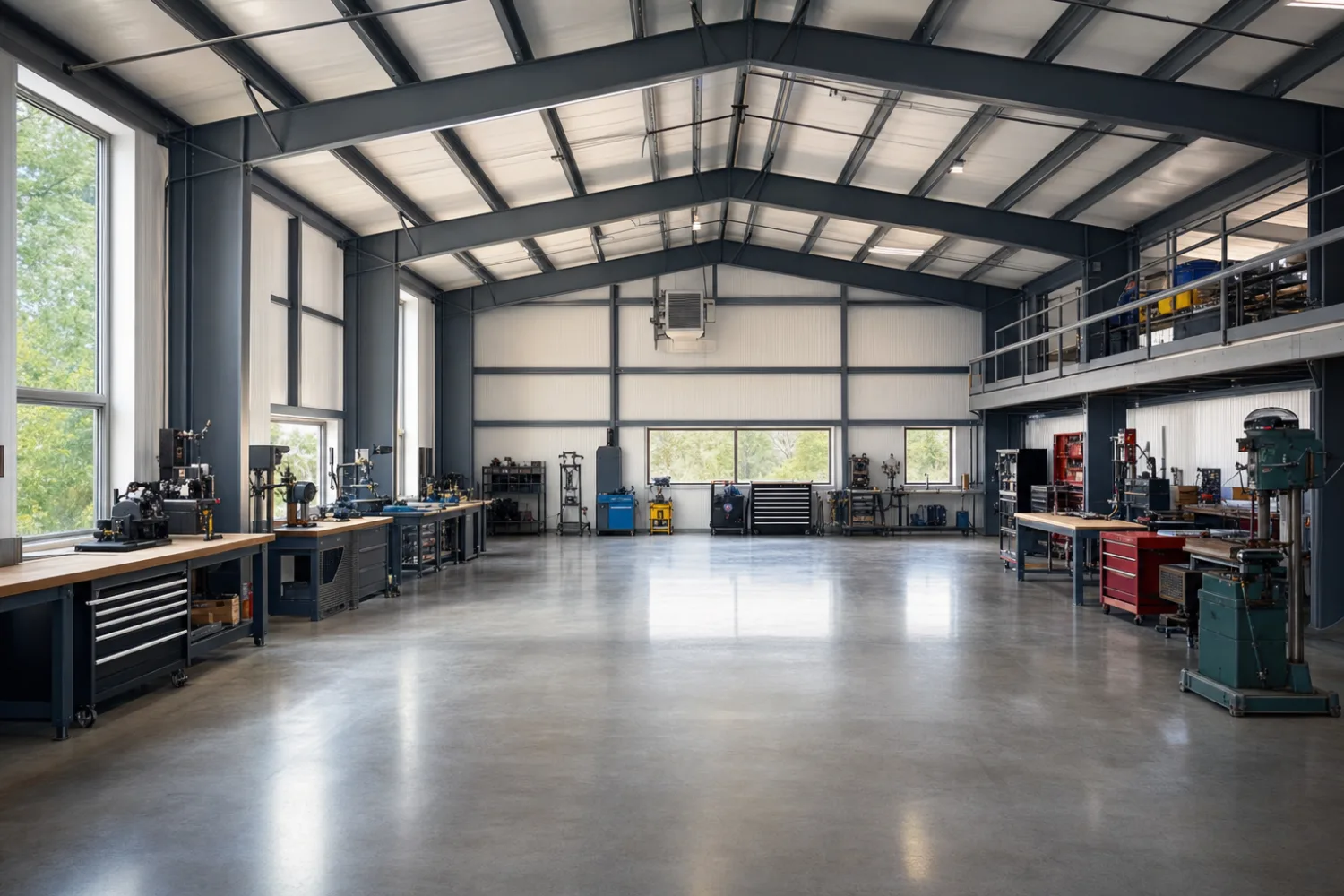
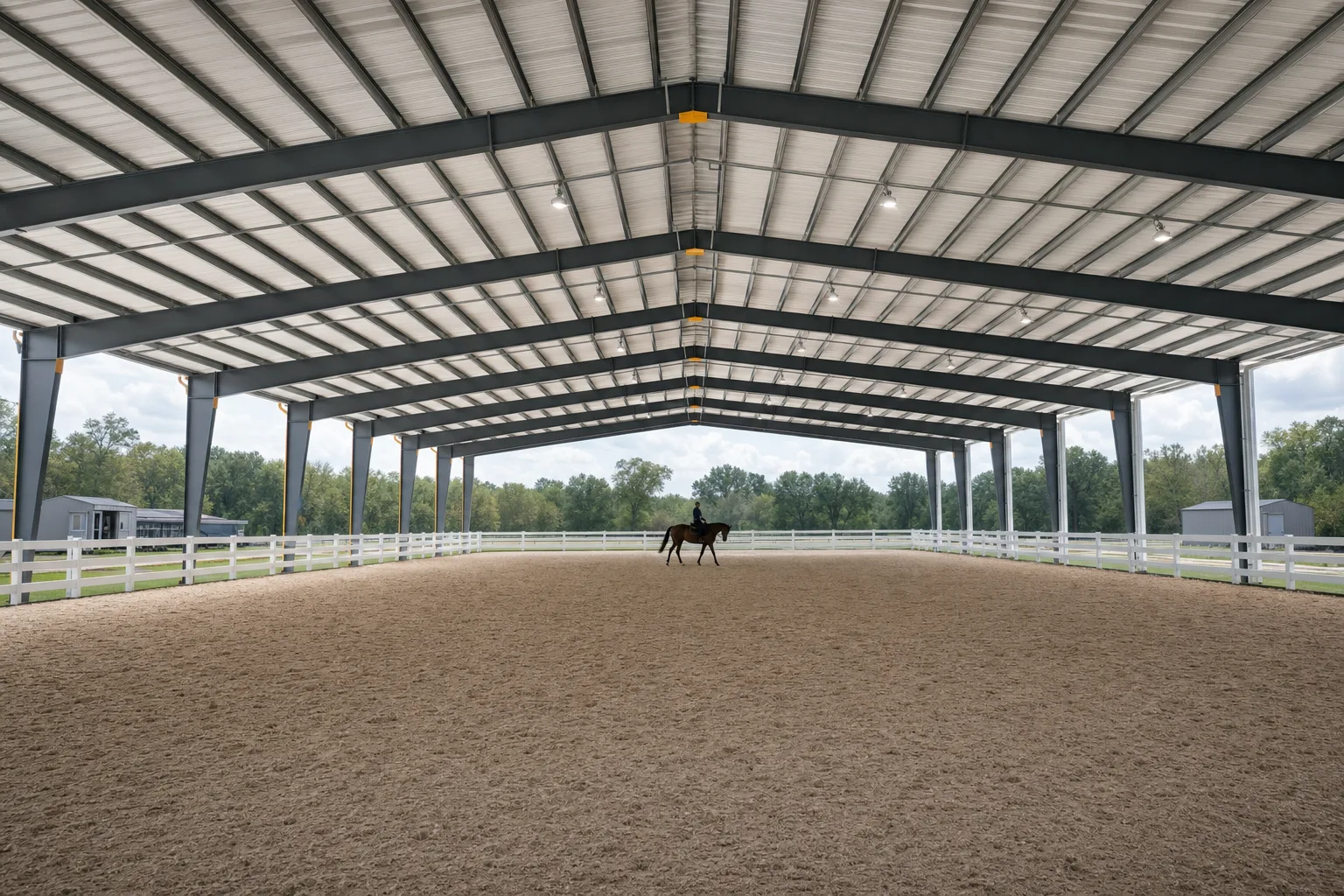
An arena lives or dies on open floor, and that is exactly what a clear-span steel frame delivers. A pre-engineered building carries its roof on the outer columns, so a 100-foot-wide arena has no posts down the middle for a horse to shy at or a rope to catch. You get the full footprint to ride, with the rail running tight to the wall and the center kept clear.
That width is the job that puts an arena into red iron territory rather than a light tube frame. A cover that spans 60, 80, or 100 feet and holds a roof full of snow needs a structural frame engineered for the load. For how those frames compare, the construction types pillar walks bolt-up, weld-up, and the frame shapes behind a wide span.
Steel also takes the weather an arena has to stand up to. The roof sheds snow and rain off the riding surface, the frame does not rot or feed termites the way a timber pole structure can, and a sealed shell shrugs off the dust and humidity of daily horse work. Match the frame and panel thickness to your climate, get the steel gauge in writing, and the building outlasts the footing you ride on.
Sizing
What size covered arena you need
Size a covered arena around the discipline you ride, because the footprint follows the work. A dressage court, a roping run, and a round pen each ask for a different width and length, and the clear height under the frame matters as much as the floor. The size chart maps these footprints to real buildings, and the metal building sizes pillar shows how width and eave height pair up.
| Use | Common footprint | Why it fits |
|---|---|---|
| Round pen / training | 60 to 80 ft wide | Room for a 50 to 60 ft round pen ‹confirm› plus a working aisle around it. |
| General riding / lessons | 60×120 ft ‹confirm› | A full rail for flatwork, with space to set a small course of poles. |
| Dressage | 66×132 to 66×200 ft ‹confirm› | Fits a 20×40 m or 20×60 m court with a margin outside the letters. |
| Roping / barrels | 100×200 ft and up ‹confirm› | A box, a score line, and a long run-out for cattle or a barrel pattern. |
Illustrative starting footprints ‹confirm›. Confirm your own dimensions against the discipline and the room you need outside the working area.
Clear height is the spec riders under-buy first. The number that matters is the headroom under the lowest frame member, not the peak, because a mounted rider needs room to sit tall and a roper needs a rope overhead. Many covered arenas run a 16-foot eave or taller ‹confirm› to keep the frame and any bracing well clear of a horse and rider. Decide that height before the frame is engineered, since raising it later is the one change you cannot retrofit. The buying checklist keeps the height and bracing on the spec sheet where you can confirm them.
Open or enclosed
Open-sided cover vs a fully enclosed arena
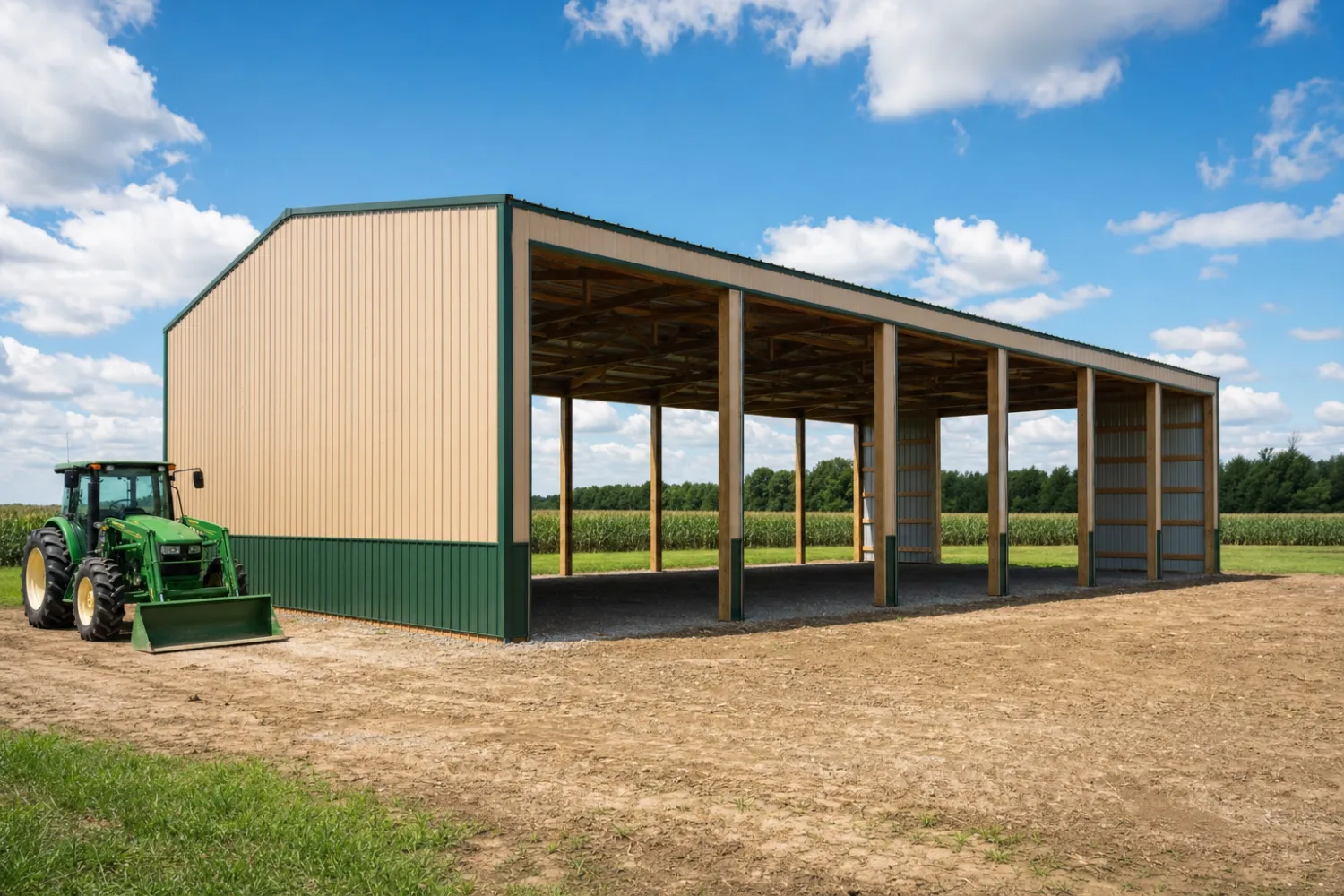
Decide early whether you want a roof-only cover or a closed building, because it changes the frame, the bracing, and the price. An open-sided cover is the cheapest way to get a roof over a riding surface: it sheds sun and rain, lets a breeze run straight through, and keeps the build simple. A fully enclosed arena adds walls, doors, and the option to insulate, which buys a windbreak and year-round riding at a higher cost.
- Open cover. Roof on columns, walls left out. Best in mild and hot climates where shade and rain protection are the goal and airflow does the rest.
- Partly enclosed. Walls on the windward side or up to a kick rail, open above. A middle path that blocks the worst wind and driving rain without closing the building in. See lean-to additions for the same idea on a smaller cover.
- Fully enclosed. Walls, end doors, and optional insulation. The choice for cold or windy country and for riding through every season, at the highest frame and panel cost.
Enclosing the building also turns the walls into a structural job. A wide open cover leans on the frame and roof bracing alone, while end walls and side walls add shear that the engineering has to account for. Either way, make sure the building is stamped for your local snow and wind loads with the door and wall package you chose, and that the rating is on paper before you order.
Footing and air
Footing, dust, and ventilation under a steel roof
A covered arena rides on its footing, not its floor, so plan the base before the building goes up. Most arenas skip a concrete slab in the riding area and build a graded, compacted sub-base topped with sand, a sand-fiber blend, or another engineered footing that gives a horse cushion and grip. The frame still sits on concrete piers or a perimeter foundation, which the foundation options guide covers along with what each base costs to pour.
Dust and airflow are the pair you manage together. A closed roof traps the dust a dry footing kicks up, so an enclosed arena wants ridge vents, eave openings, or open gable ends to keep air moving and the haze down. The same airflow fights the sweating that drips off a steel roof on a cold morning, which the condensation and ventilation guide explains in full.
Grade and drain before you ride
The cheapest time to get the sub-base right is before the footing goes down. Crown or slope the pad so water runs off, compact the sub-grade, and divert roof runoff away from the riding surface with gutters or a swale. A roof concentrates a lot of water along the eave line; send it somewhere other than your footing. The foundation guide shows how the piers tie into the frame anchors around the open floor.
Cost
What a covered arena kit costs
A covered arena kit splits into two prices: the steel and the ground. The shell, the clear-span frame, roof panels, and any walls, is the quotable part and tends to run in the rough range of $12 to $25 per square foot ‹confirm› depending on the span, the eave height, the gauge, and your snow and wind loads. Because an arena footprint is large, even a modest per-foot figure adds up, so the size you pick drives the number more than any single option. For the full breakdown, see the cost guide and the kit prices pillar.
The ground work is the line first-time buyers miss. Grading, the sub-base, the footing material, and the frame foundation land outside the shell quote and can rival the building on a large arena. An open cover saves on walls and doors; a fully enclosed, insulated arena costs more for the windbreak and the season it buys you. Spend on the span, the clear height, and the footing, since those decide how the arena rides, and trim the cosmetics.
Watch the items a low headline price tends to leave off: the foundation, the freight on a large frame, the footing, and the permit. Those surprise buyers who compare only the shell. The buying checklist lists what a complete arena quote should include so you can weigh two bids honestly.
Related builds
Arena, barn, or storage: point yourself at the right guide
An arena rarely stands alone on a horse property, and the right guide depends on what the building is for. An arena is the riding floor. A barn houses stalls, tack, and feed. A storage building parks the tractor, the trailer, and the gear. Spec the use that matches, then come back here for the arena specifics.
- Stalls, tack, and feed. If the building houses horses rather than rides them, start with metal barn kits and the agricultural & farm building kits guide.
- Tractors, trailers, and implements. For the equipment that works the property, see equipment & implement storage.
- A pole-barn look. If you want the open, post-frame style over a riding surface, compare pole-barn style metal buildings.
- Kennels or animal shelter. For dogs, livestock, or a rescue, the kennels & animal shelters guide fits better.
Buy the building for the ride, not the label. A covered arena earns its cost in clear span, clear height, and a footing planned before the first horse steps in.
FAQ
Covered arena kit: common questions
What size should a covered riding arena be?
Size it around your discipline. A round pen or training cover fits in 60 to 80 feet of width, general riding and lessons want roughly 60×120 feet ‹confirm›, a dressage court needs 66×132 to 66×200 feet ‹confirm› for a 20×40 m or 20×60 m layout, and roping or barrels run 100×200 feet and up ‹confirm›. Add room outside the working area, and confirm the dimensions against how you ride.
How tall does a covered arena need to be?
Plan the clear height under the lowest frame member, not the roof peak. A mounted rider needs room to sit tall and a roper needs clearance overhead, so many covered arenas run a 16-foot eave or taller ‹confirm› with the bracing kept well clear. Decide the height before the frame is engineered, because it cannot be raised later.
How much does a covered arena kit cost?
The steel shell tends to run roughly $12 to $25 per square foot ‹confirm› depending on the span, eave height, gauge, and local loads. Because an arena footprint is large, the size you choose drives the total more than any single option. Add grading, footing, the frame foundation, freight, and permits to compare quotes honestly.
Do I need a concrete floor in a riding arena?
Usually no. Most arenas keep the riding area on a graded, compacted sub-base topped with sand or an engineered footing that cushions a horse, while the frame itself sits on concrete piers or a perimeter foundation. A full slab is hard on legs and is reserved for aisles or attached rooms, not the riding surface.
Should my arena be open or fully enclosed?
It depends on climate and budget. An open-sided cover is the cheapest roof over a riding surface and rides well in mild, hot weather where airflow matters. A fully enclosed building blocks wind and driving rain and lets you insulate for year-round use, at a higher frame and panel cost. Many owners split the difference and wall only the windward side.
How do I control dust in a covered arena?
Manage the footing and the air together. Keep the footing watered or use a dust-controlled blend, and give a closed roof somewhere for air to move: ridge vents, eave openings, or open gable ends. Good airflow also cuts the condensation that drips off a steel roof on a cold morning.
Will a steel arena rust from horse humidity?
Not if it is built and ventilated for the job. The panels are coated to resist corrosion, and the bigger risk is trapped moisture from poor airflow rather than the steel itself. Vent the building, keep it draining, and the frame holds up for decades. Most rust problems trace to condensation, not the metal.
Related guides
Keep reading
A covered arena touches span, sizing, footing, and cost. Follow these next:
- Metal building uses & applications (the parent pillar).
- Metal barn kits and agricultural & farm building kits (stalls, tack, and the rest of the horse property).
- Pole-barn style metal buildings (the open post-frame look over a riding floor).
- Equipment & implement storage (tractors, trailers, and gear).
- Metal building size chart (match a footprint and clear height to your discipline).
- Metal building cost guide (shell plus ground work, line by line).