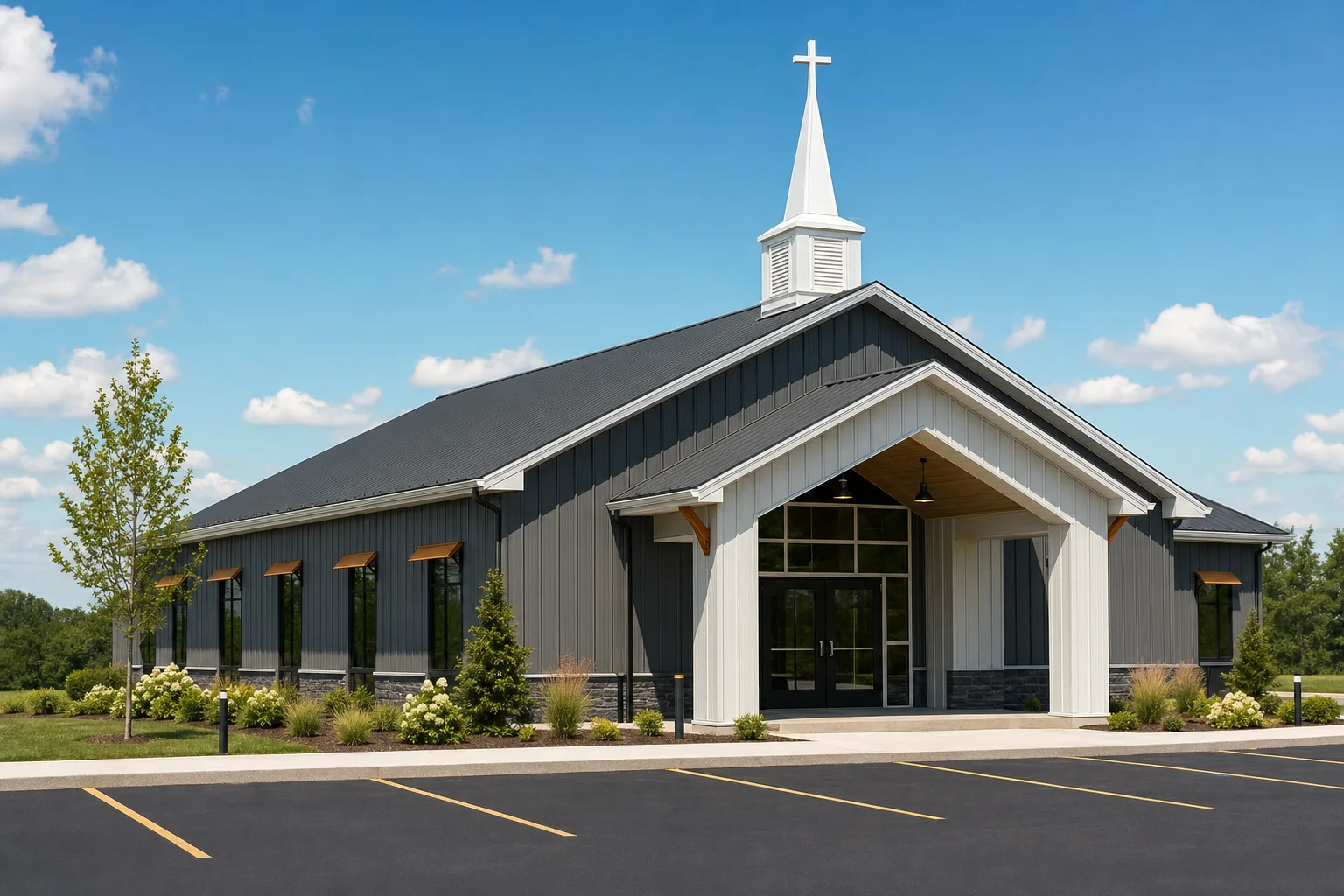
A metal building payment plan lets you spread the cost of a steel building over months or years instead of paying the full price in one lump sum. The two common forms are rent-to-own, where you pay a fixed monthly amount and own the building outright at the end of the term, and a supplier installment plan with a set schedule. No-money-down options exist for smaller buildings and qualified buyers, though paying nothing up front usually means a higher total over the full term ‹confirm›.
This guide sits under our Metal Building Kit Prices pillar and focuses on how you pay, not what you pay. Below: how a payment plan differs from a bank loan, how rent-to-own and lease-to-own work, what no-money-down covers and what it costs, and the deposit schedule on a larger custom building. For third-party lenders and loan math, the financing guide goes deeper. This page stays on the plans a supplier offers you directly.
Pay over time
What a metal building payment plan is
A payment plan is an arrangement to pay for the building in scheduled amounts over time rather than all at once. Most run through the supplier or a leasing partner the supplier works with, so the application and the monthly bill stay in one place. You take delivery of the building near the start, then pay it down on a calendar you agree to up front.
A plan is not the same thing as a loan, and the difference matters. A bank or lender hands you cash that you own and then repay; a payment plan ties the agreement to the building itself, and on a rent-to-own contract the supplier holds title until your last payment clears. That is why many plans skip the hard credit pull a loan needs. For the lender route, with its rates and underwriting, see the how to finance a kit guide; for what the building costs before any plan, start with how much a kit costs.
Two questions decide which plan fits. First, how much can you put down today. Second, how fast do you want to own the building free and clear. A larger deposit and a shorter term cut the total you pay; a small deposit and a long term lower the monthly but raise the lifetime cost. Every plan trades one against the other, so read the full number, not the monthly headline.
Rent-to-own
How rent-to-own and lease-to-own work
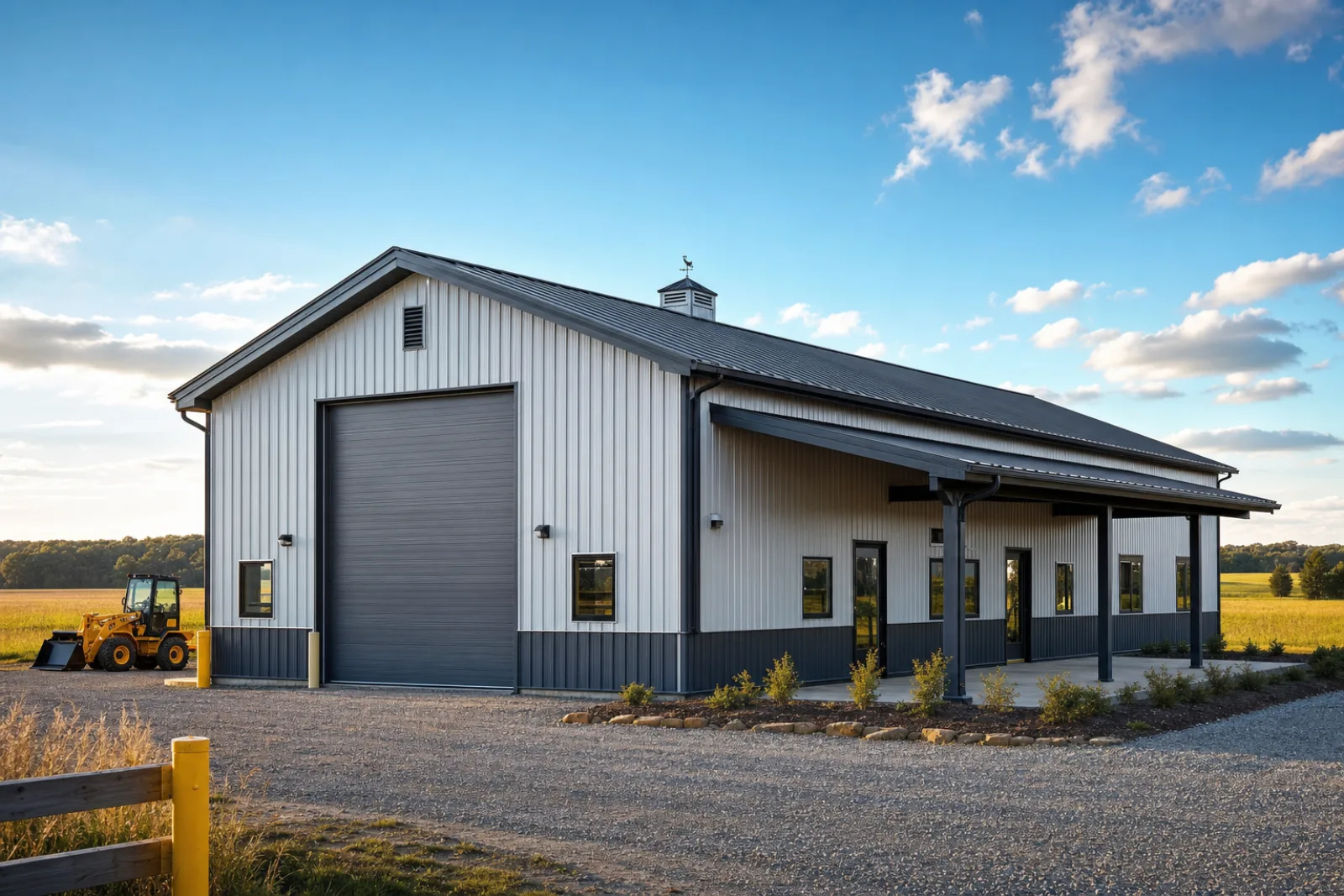
Rent-to-own lets you take delivery of a building after a first payment, then pay a fixed monthly amount until you own it, usually with no credit check. It is the most common pay-over-time route on smaller buildings, so you see it most on carports, sheds, and metal garages. The supplier or its leasing partner keeps title through the term, and ownership transfers to you with the final payment.
Terms commonly run 24 to 60 months ‹confirm›, and most contracts let you pay the balance off early, often at a discount, which is the cheapest way to use one ‹confirm›. Lease-to-own is the same idea wearing a lease: you make lease payments with a purchase option at the end. The labels vary by company, so read how and when title moves to your name.
Rent-to-own buys access, not the lowest price. Because there is no credit check and the supplier carries the risk, the total you pay across a full term sits above the cash price, sometimes well above it ‹confirm›. That premium can still be the right call if it puts a working building on your lot years before you could save the full amount. Run the total against the cash price before you sign, and treat the monthly figure as the start of the math, not the end of it.
| Rent-to-own / lease-to-own | Supplier installment plan | Cash | |
|---|---|---|---|
| How it works | Monthly payments, supplier holds title | Fixed payments through supplier or partner | Pay the full price up front |
| Credit check | Usually none ‹confirm› | Soft or hard pull varies ‹confirm› | None |
| Up-front cost | First payment, sometimes no deposit ‹confirm› | Deposit varies by program ‹confirm› | 100 percent |
| Total cost | Highest, premium for access ‹confirm› | Middle, depends on the rate ‹confirm› | Lowest |
| Ownership | Transfers with the last payment | Yours, building secures the plan | Immediate |
| Best for | Smaller buildings, no or thin credit | Mid-size buildings, decent credit | Buyers with the full amount ready |
Illustrative comparison for 2026, not a quote. Terms, deposits, and totals vary by supplier and by your state. Confirm each line before you sign.
No money down
No-money-down metal building options
No-money-down means you take delivery without an up-front deposit and pay the whole amount through the monthly schedule. It shows up most on rent-to-own contracts for smaller buildings, and on installment programs for buyers who qualify on credit ‹confirm›. The appeal is plain: you get the building now without draining your savings for a deposit.
The tradeoff hides in two places. With nothing down, you finance the entire price, so the monthly payment runs higher and the lifetime total climbs with it ‹confirm›. And a zero-down offer often pairs with a longer term, which stretches the interest or the rental premium across more months. If you can put even a modest amount down, you usually shrink both the monthly and the total. Weigh that against keeping cash on hand for the foundation, permit, and delivery the kit price never includes.
Zero down is not zero cost
A no-money-down plan moves the cost into the monthly bill; it does not remove it. Before you choose one, ask for the total you will pay across the full term and compare it to the cash price and to a plan with a deposit. The cheapest path is the one with the lowest total, not the smallest first payment. The how to save money guide covers the rest of the levers.
Payment schedule
The deposit and progress-payment schedule on a custom building
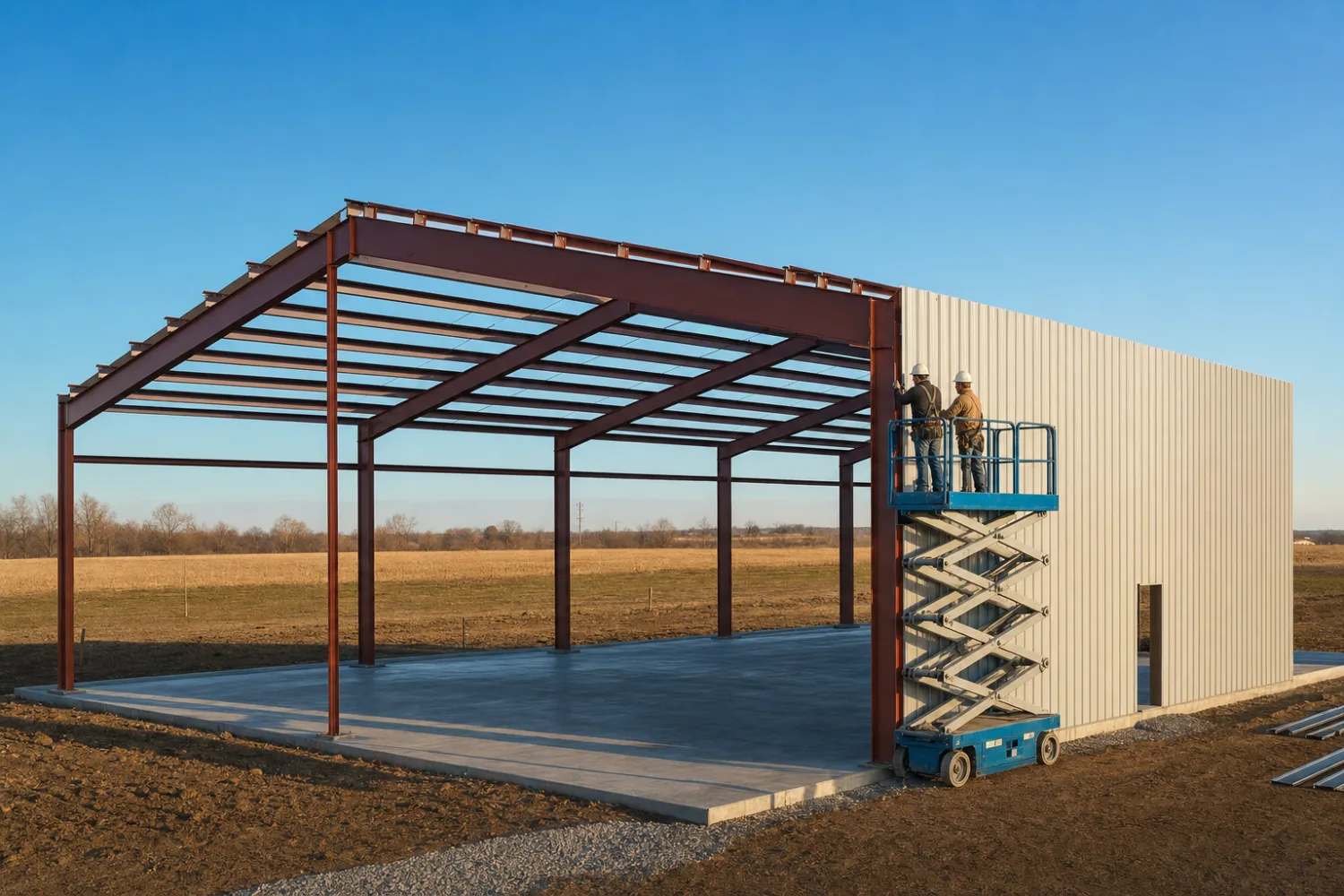
On a larger engineered building, the common structure is not a multi-year plan at all but a short payment timeline tied to the build. You place a deposit at order, make a progress payment when the steel is fabricated or ships, and pay the balance on or before delivery. This is a payment schedule, not financing, and it carries no interest because you are paying as the building is made.
Deposits on a custom order commonly land around 10 to 30 percent of the contract ‹confirm›, and the exact split varies by supplier and building size. The deposit holds your spot in the fabrication queue and locks your steel price against a moving market, which is one reason steel pricing belongs on your radar before you order. Read the schedule on the contract so you know each due date and what triggers it.
If a short schedule is more than your cash can cover at once, that is where a true payment plan or a lender steps in to bridge the gap. Some buyers pay the deposit out of pocket and finance the balance, which keeps the order moving without emptying the account. Whatever you choose, never wire a full balance before you have confirmed the parts list and stamped drawings match what you ordered.
Reading the terms
How to compare payment plans before you sign
A payment plan is a contract, so read it the way you read a quote: line by line, for what it costs and what it commits you to. The monthly figure is the bait; the full terms are the deal. Run any plan through these checks before you put your name on it:
- Total cost over the term. Multiply the monthly by the number of months and add any fees, then compare that to the cash price. The gap is what the plan costs you, and it is the only honest way to rank two offers.
- The rate or the premium. Ask for the effective rate on an installment plan, or the total markup over cash on rent-to-own. A low monthly on a long term can hide a steep number.
- Early-payoff terms. Many plans let you settle the balance early, sometimes at a discount. If yours does, paying ahead is the cleanest way to cut the premium ‹confirm›.
- Ownership and title. On rent-to-own, the supplier holds title until the last payment. Confirm exactly when the building becomes yours and what paperwork proves it.
- Missed-payment and repossession terms. On a rent-to-own contract the building can be repossessed if you fall behind, so know the grace period and the cure terms before you commit ‹confirm›.
- What the price does and does not cover. A plan covers the building, not the slab, permit, or freight. Budget those separately with the cost guide so the monthly does not blindside the rest of the project.
Rank payment plans by the total you will pay, not the monthly you will see. The smallest payment on the longest term is often the most expensive building on the page.
One more discipline saves real money: get more than one offer. A rent-to-own quote, an installment quote, and a lender quote on the same building reveal which path is cheapest for your credit and your timeline. Used and clearance buildings can shrink the amount you finance in the first place, so weigh a used kit or a budget kit against a new build before you lock a multi-year plan. The buying checklist covers the rest of what to verify before you sign.
FAQ
Common questions about metal building payment plans
Can you get a metal building with no money down?
Yes, on smaller buildings and for qualified buyers. No-money-down shows up most on rent-to-own contracts for carports, sheds, and small garages, and on some installment programs for buyers who pass a credit check ‹confirm›. The catch is a higher monthly payment and a higher total over the term, since you are financing the entire price. Ask for the full-term total before you choose a zero-down plan.
What is rent-to-own on a metal building?
Rent-to-own lets you take delivery after a first payment, then pay a fixed monthly amount until you own the building, usually with no credit check. Terms commonly run 24 to 60 months ‹confirm›, and the supplier holds title until your final payment clears. It costs more over the full term than paying cash, but it puts a working building on your lot without a lump sum or a loan.
Do metal building payment plans require a credit check?
It depends on the plan. Rent-to-own and lease-to-own usually skip the credit check, because the supplier holds title and can repossess the building if you stop paying ‹confirm›. Supplier installment plans and third-party financing more often run a soft or hard credit pull to set your rate. If your credit is thin, rent-to-own is the path most likely to approve you.
Is rent-to-own or financing cheaper?
For most buyers with decent credit, a financed loan costs less over the full term than rent-to-own, because rent-to-own builds in a premium for skipping the credit check. Rent-to-own wins on access, not on price. Compare the total cost of each, not the monthly, and see the financing guide for the lender math.
How much is the deposit on a metal building?
On a custom engineered building, the deposit commonly lands around 10 to 30 percent of the contract ‹confirm›, due at order to hold your fabrication slot and lock your steel price. On rent-to-own, the up-front cost is often just the first payment, and some plans take nothing down ‹confirm›. The exact figure varies by supplier, building size, and your state, so confirm it in writing.
Can you pay off a rent-to-own building early?
Most rent-to-own contracts allow an early payoff, and many discount the balance when you settle ahead of schedule ‹confirm›. Because the premium is spread across the term, paying early is the single best way to cut what rent-to-own costs you. Confirm the early-payoff terms before you sign, since the details vary by company.
What happens if you miss a payment?
On a rent-to-own contract, the supplier holds title, so falling behind can lead to repossession of the building after a grace period ‹confirm›. On a financed loan, a missed payment hits your credit and can trigger fees or default. Know the grace period and cure terms before you commit, and choose a monthly payment with room to spare in your budget.
Related guides
Keep reading
Payment plans are one piece of the money question. Follow these next:
- Metal building kit prices (the parent pillar, every cost guide in one place).
- How to finance a metal building kit (lenders, loans, and the rate math).
- How much do metal building kits cost (what you are paying over time).
- How to save money on a kit (cut the amount you finance).
- Used metal building kits and cheap or affordable kits (lower the price first).
- Metal building cost guide (the worksheet to compare totals).
- Metal building buying checklist (what to verify before you sign).