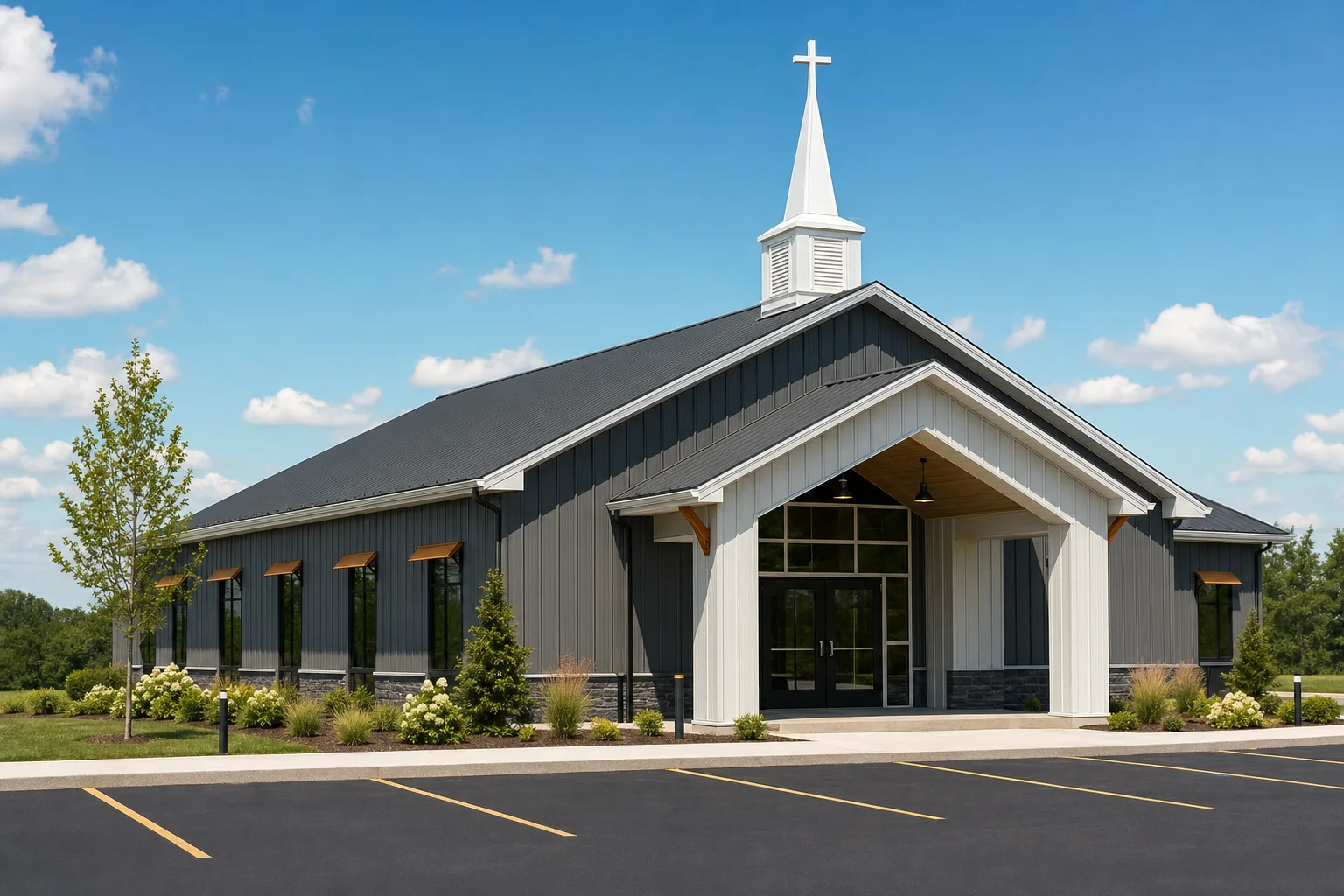
A red iron building kit is a metal building whose primary frame is hot-rolled structural steel, the I-beam columns and rafters that carry the load. The frame ships pre-cut, pre-drilled, and primed, then bolts together on your slab. Because that steel spans wide, a red iron kit clears 40, 60, even 100 feet with no posts down the middle, which is why it frames shops, barns, and commercial buildings that need open floor.
This guide sits in the metal building construction types silo and treats red iron as a product: what the kit is, what it costs you, and who it suits. The material itself, red iron against tube steel, gets its own head-to-head in the red iron vs tube steel guide, so this page stays on the kit. Read it before you sign a quote, because the frame is the line that decides what the building can do.
What it is
What a red iron building kit is
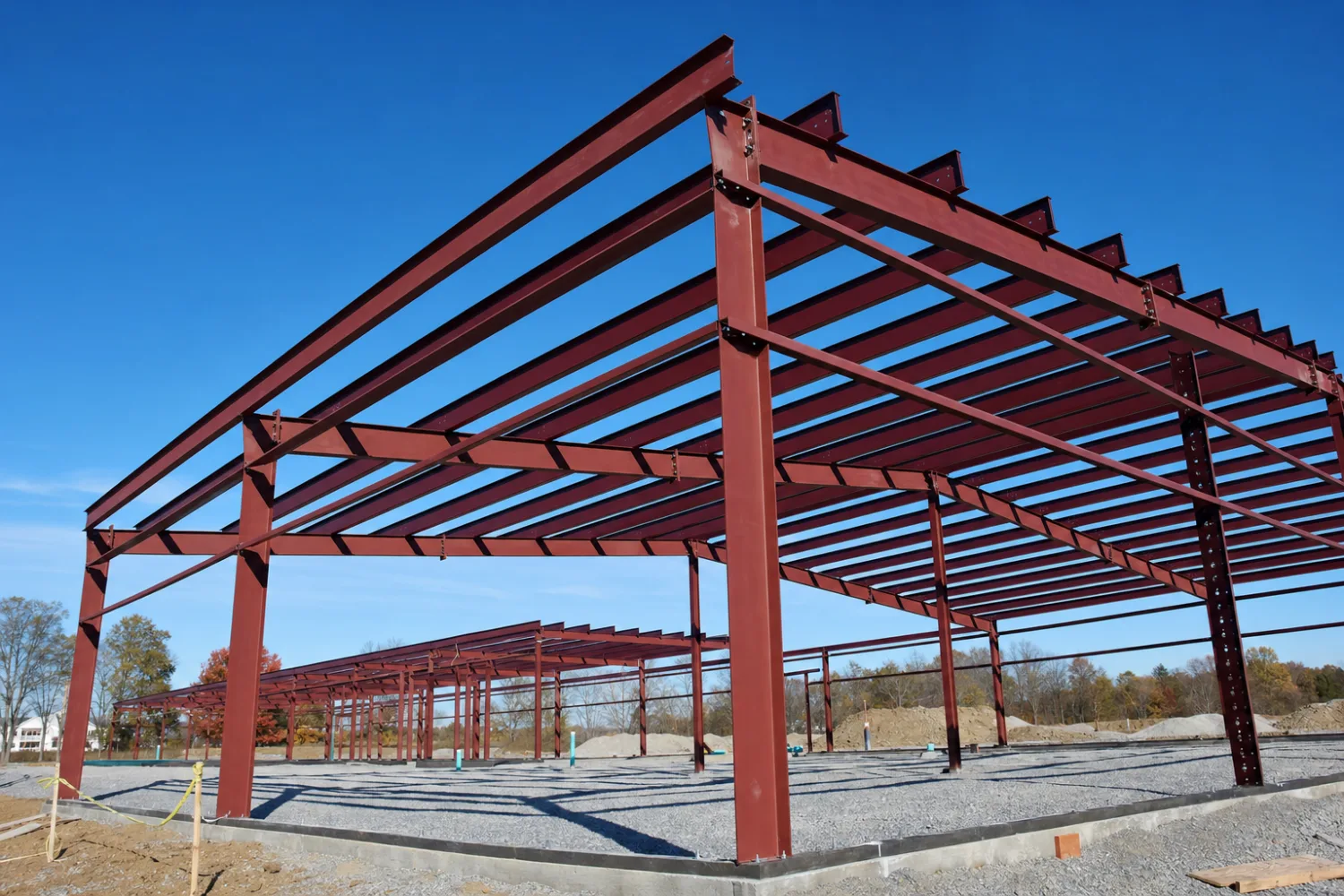
Red iron is structural steel, the same I-beam and wide-flange shape used in commercial construction, named for the red-oxide primer it wears from the mill. In a kit, it forms the primary frame: the columns that stand on the slab and the rafters that span the roof. Everything else, the wall girts, the roof purlins, the panels and trim, hangs off that frame.
A red iron kit arrives engineered. The mill cuts each member to length, punches the bolt holes, and welds on the connection plates, so the parts meet on site instead of being fabricated there. That is the difference between a bolt-up kit you assemble and a weld-up building a crew fabricates from raw steel. The red iron kit is the bolt-up path with a structural frame.
The frame is sized in real engineering, not picked off a shelf. Members get specified by web depth and flange, and the heaviness of the steel scales with your span and your snow and wind loads. That is why two kits of the same footprint can carry far different price tags: one is stamped for a heavier load. The pre-engineered building model is what makes that possible, the design is done once at the factory and repeated.
Where it fits
What people build with red iron kits
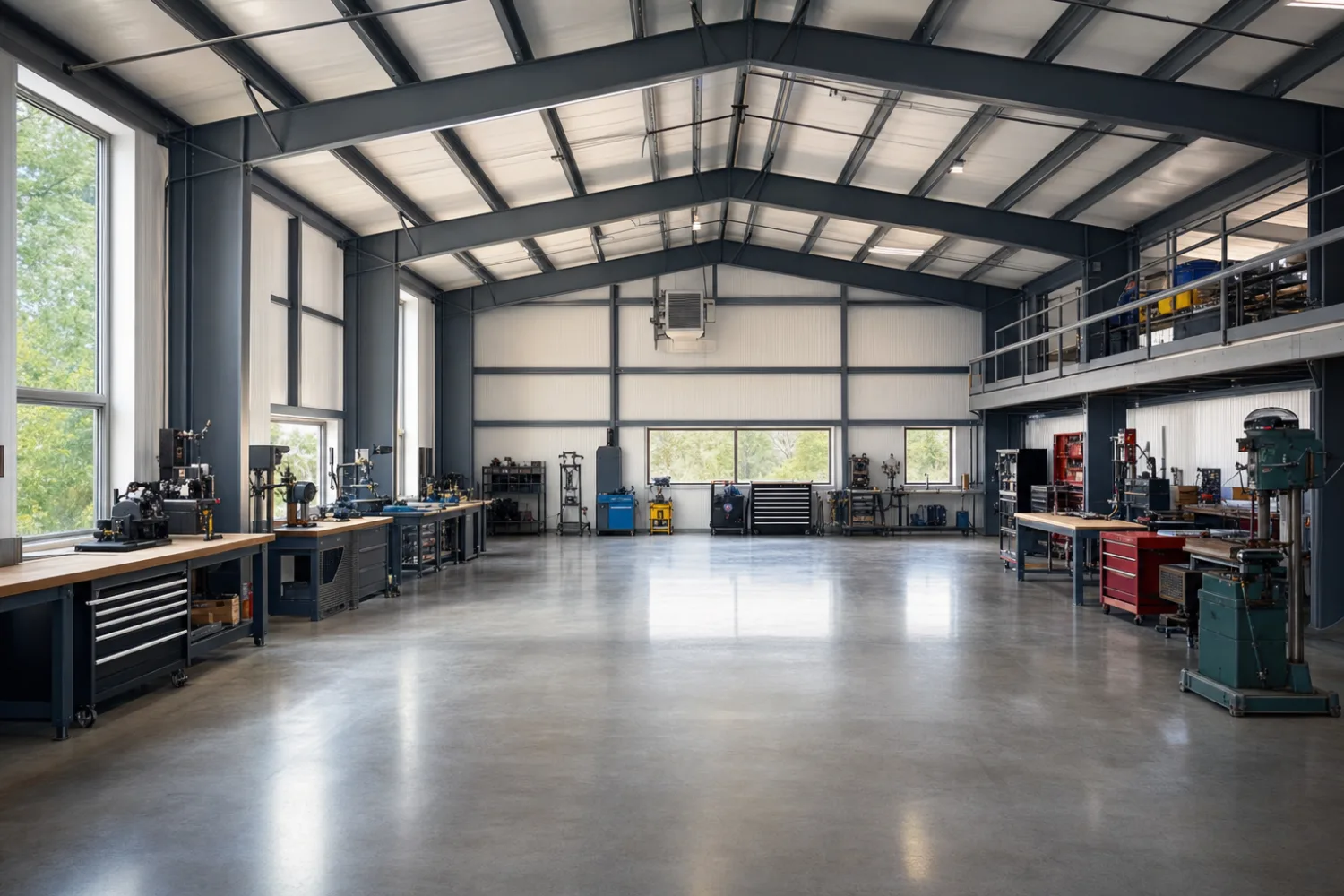
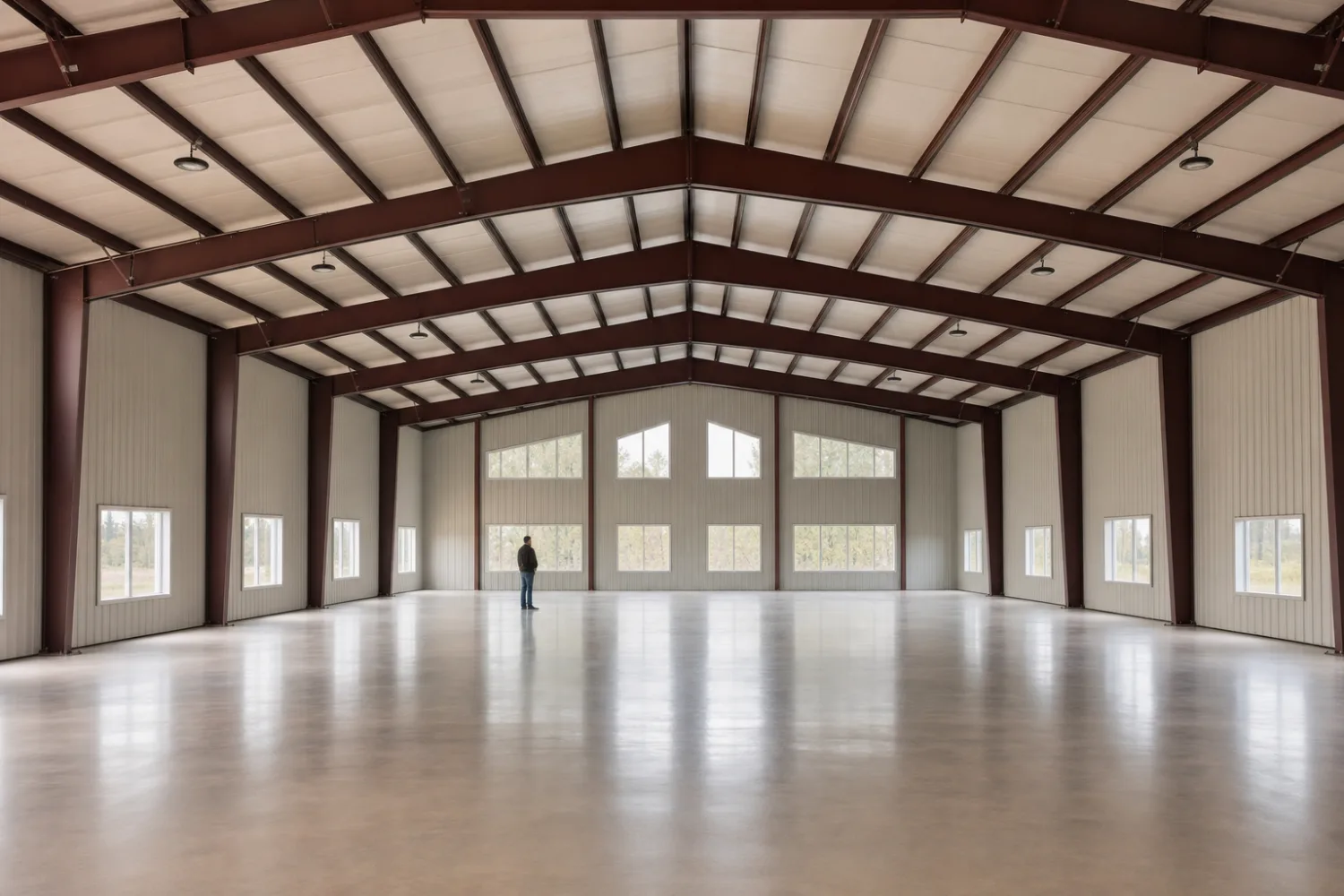
Red iron earns its keep when the building has to be wide, tall, or worked hard. The clear span is the draw: no interior columns means nothing blocks a truck, a tractor, or a production line. That single trait sets where the frame fits.
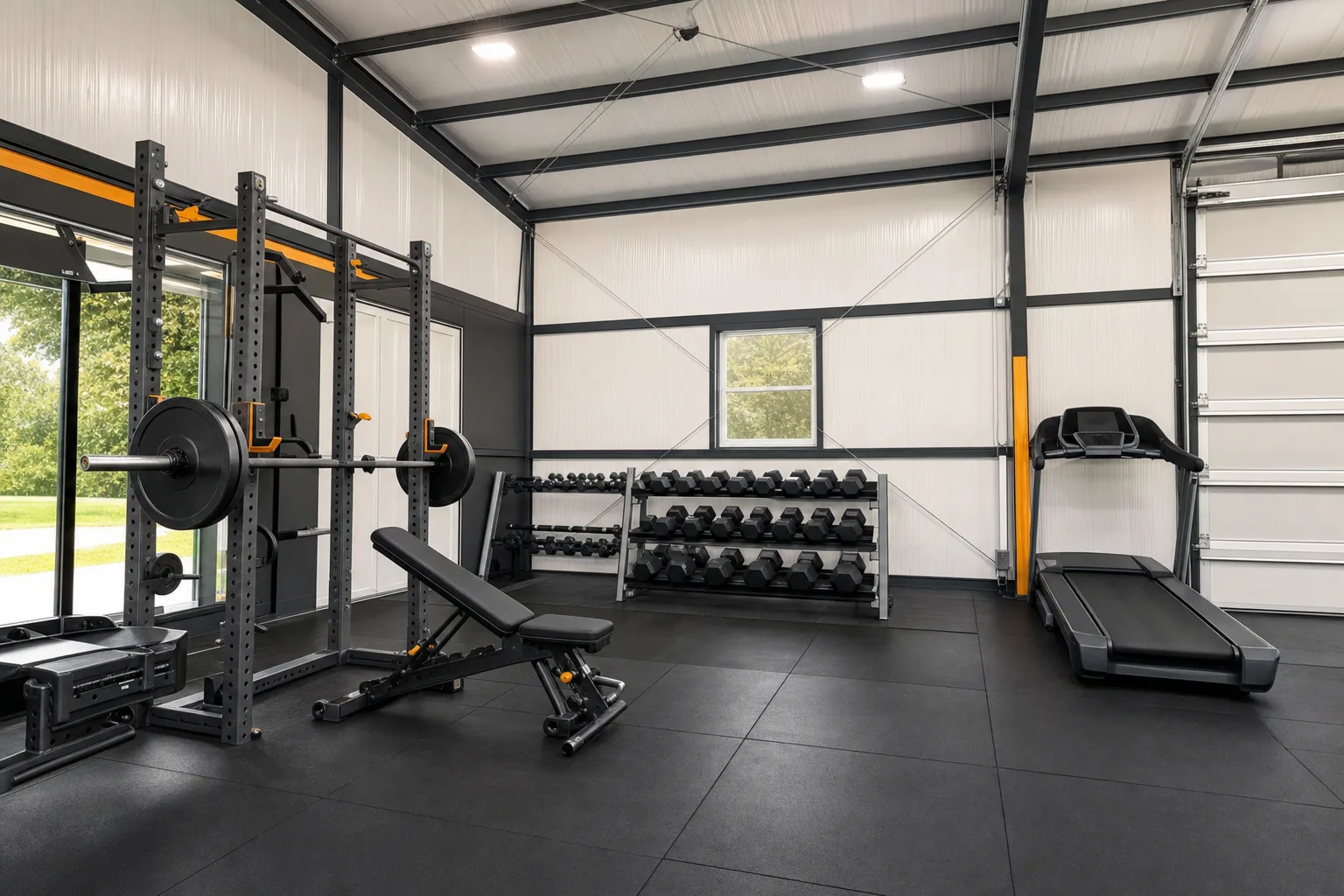
- Workshops and equipment shops. A 40 or 50-foot clear span gives you a full bay with no posts to drive around, which is why working shops lean on red iron.
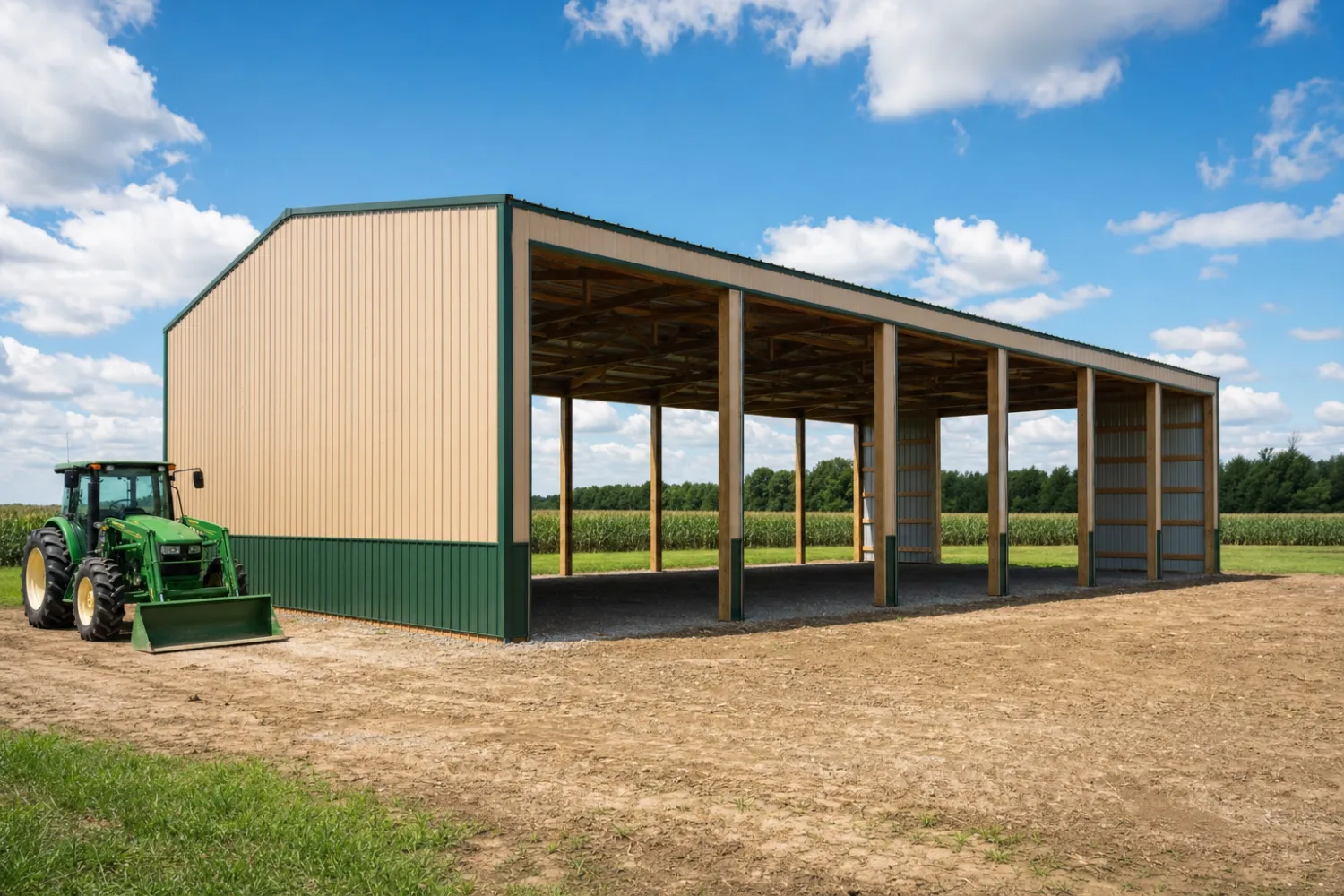
- Barns and riding arenas. Livestock, hay, and indoor arenas all want open floor and tall walls, and red iron delivers both in one span.
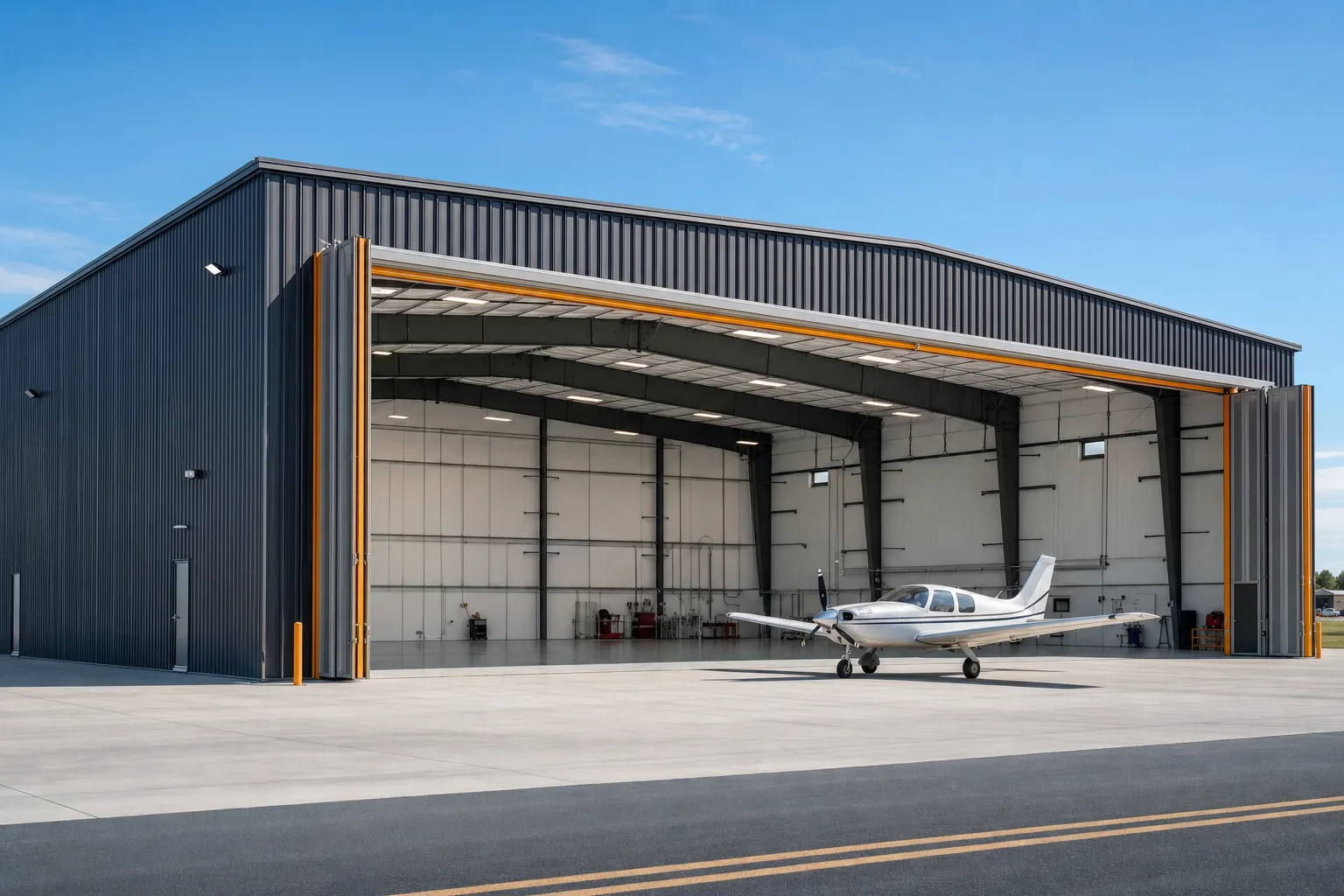
- Commercial and industrial. Warehouses, shells for retail, and light manufacturing need code-stamped structure and wide bays, the home turf of red iron.
- Large garages and storage. Once a garage passes a tube frame’s comfortable width, red iron takes over and holds the roof clear.
For the smaller end, a carport, an RV cover, a single-car garage, you usually do not need this frame, and a lighter tubular building kit costs less for the same job. Red iron starts to make sense as the building gets wide or the loads get serious. For the full range of what these buildings get used for, see the metal building uses pillar.
Strengths
Why red iron is the strong-frame choice
Red iron buys you three things tube steel cannot match at scale: span, load, and a long working life. Each one traces back to the same structural steel, and together they decide most of the buildings on the list above.
Span comes first. A rigid red iron frame carries the roof across a wide opening with no help underneath, so you get clear, usable floor wall to wall. Load is next: the same steel is rated for heavy snow and high wind, and the engineer sizes it to your county’s snow and wind numbers, not a generic guess. Longevity is the quiet third. The primed frame lives inside the shell, out of the weather, and a quality red iron frame holds up for decades.
The frame is the one part of the building you cannot upgrade later. Match the steel to the span and the loads on day one, because everything else bolts to it.
| Red iron building kit | |
|---|---|
| Primary frame | Hot-rolled structural I-beam (columns & rafters) |
| Clear span | Wide, no interior posts (commonly 40-100 ft) |
| Load capacity | High: engineered for heavy snow & high wind |
| Assembly | Bolt-up from pre-cut, pre-punched members |
| Crew & equipment | Lift equipment and a small crew on larger frames |
| Frame finish | Red-oxide primer, sheltered inside the shell |
| Best for | Shops, barns, commercial, wide-span buildings |
| Less suited to | Small carports and covers (tube is cheaper) |
A red iron kit at a glance. The numbers scale with your span and local loads, so confirm the stamp.
Tradeoffs
The tradeoffs: weight, cost, and crew
Red iron is not free strength. The same steel that spans wide is heavy, costs more, and asks for more to raise. None of that rules it out; it just means you pay for the capacity, so you want to be sure you need it.
Weight drives the rest. A red iron frame is heavy enough that the larger sizes want a forklift or a lift to set the rafters, and a small crew rather than one person with a ladder. It also costs more per pound than tube, so on a narrow building you would be paying for reach you never load. That is the exact tradeoff the red iron vs tube steel comparison walks through in full.
The frame is also the biggest single line on the price, so two quotes can look close and hide different steel underneath. Read the spec, not the headline: check the member sizes and the gauge of the secondary framing and panels, and confirm the building is stamped for your loads. A cheap red iron quote often means a lighter frame than the job needs.
Where the cost lands
On a mid-size shell, choosing red iron over a lighter frame can move the price by a few thousand dollars ‹confirm›. That gap buys clear span and load rating, not just heavier steel. If the building is small and the loads are light, that money is better saved; if it is wide or worked hard, it is the only honest frame for the job. Compare against a tubular kit before you decide.
Delivery & build
How a red iron kit ships and goes up
A red iron kit ships as a flat-packed bundle of engineered parts: the framed members banded together, the panels and trim on the same load or one behind it, and a stamped drawing set that tells you what bolts where. Nothing is fabricated on site. Your job is to assemble, not to build the steel.
On the slab, the columns get anchored to the foundation, the rafters bolt to the columns to form each rigid frame, and the frames stand in a row tied together by purlins and girts. Then the panels screw on. Because it is a bolt-up system, the work is wrench-and-bolt rather than weld, which keeps it inside reach of an experienced DIY crew on the smaller sizes and a pro crew on the large ones.
Two things decide how smoothly it goes. First, the foundation has to be right, square, level, and with the anchor bolts set to the drawing, because the frame is unforgiving of a slab that is off. Second, plan the lift: know how you will raise the rafters before the truck arrives. Get those two right and a red iron kit goes up faster than its weight suggests. The metal building glossary defines every framing term on the drawing set if a label is new to you.
FAQ
Red iron building kits: common questions
What is a red iron building kit?
It is a metal building kit whose primary frame is hot-rolled structural steel, the I-beam columns and rafters that carry the load. The frame ships pre-cut, pre-punched, and primed, then bolts together on your slab. The wide clear span it gives is why red iron kits frame shops, barns, and commercial buildings.
What is red iron steel?
Red iron is structural steel, the I-beam and wide-flange shape used in commercial construction, named for the red-oxide primer that coats it at the mill. It is the same steel behind big-box stores and warehouses, scaled to your building and engineered to your local snow and wind loads.
Is red iron worth the extra cost?
On a wide or heavily loaded building, yes, because tube steel cannot do the job and red iron is the only frame that qualifies. On a small carport or single-car garage, no, a lighter tubular kit does the same work for less. The frame should match the span and loads, not the lowest sticker price.
What sizes come in red iron building kits?
Red iron starts to make sense around 30 feet wide and scales up from there, with clear spans commonly reaching 40, 60, and 100 feet, and lengths and wall heights to match. Because every frame is engineered to its span and loads, the kit is sized to your plans rather than sold in fixed boxes. Confirm the exact clear span on the quote.
Is red iron stronger than tube steel?
Yes. As structural I-beam, red iron carries wider spans and heavier snow and wind loads than tube steel of a comparable size. Tube is strong enough for carports and small garages, but red iron is the choice once the building gets wide or the loads get heavy. The red iron vs tube steel guide compares them line by line.
Does a red iron frame rust?
The bare frame ships with a red-oxide primer, and on an enclosed building it sits inside the shell, away from the weather, where it holds up for decades. Keep the building dry and ventilated and the primed frame is well protected. Most rust trouble traces to condensation, not the steel itself.
Related guides
Keep reading
Red iron is one frame type among several. Compare it against the others and check the spec terms here:
- Metal building construction types (the parent pillar for frame and build types).
- Tubular building kits (the lighter, lower-cost frame for small buildings).
- Bolt-up metal building kits (how a red iron kit goes together on site).
- Pre-engineered metal buildings explained (the factory model behind the kit).
- Red iron vs tube steel (the material head-to-head).
- Steel gauge explained (how panel and tube thickness is measured).
- Snow load & wind load explained (the numbers that size the frame).
- Metal building uses (every job these buildings do).
- Metal building glossary (every framing term defined).