A metal building in New Jersey answers to one statewide rulebook and two strong load drivers. The state runs a single Uniform Construction Code, so the legal framework reads the same in every town ‹confirm›, while your design numbers come from Atlantic coastal wind near the shore and winter snow up in the northern highlands. Get those two loads right and the rest of the build falls into place.
This guide sits under our metal buildings by state pillar. Below you will find how New Jersey handles codes and permits, the wind and snow loads that shape a frame here, the climate zone that drives insulation, what moves price in the Garden State, and the metros where most buildings go up. Treat every number as a starting point and confirm it with your local building department before you order steel.
Codes and permits
How New Jersey codes and permits work
New Jersey is a statewide-code state. The New Jersey Uniform Construction Code, N.J.A.C. 5:23, sets one set of rules that applies in all 564 municipalities, and the Department of Community Affairs Division of Codes and Standards writes and updates it ‹confirm›. That uniformity is the headline difference from states where each county adopts its own code.
The code is built on the model ICC documents. The UCC adopts the International Building Code and the International Residential Code as subcodes, with New Jersey amendments layered on top, and the state has been moving its subcodes to the 2021 ICC editions ‹confirm›. Because editions and effective dates shift, check the current adopted version before you design. Our permits and codes guide explains how those model codes translate into a steel-building submittal.
Permits are issued locally even though the code is statewide. You file with your municipal construction office, and the local construction official and inspectors enforce the UCC for footings, framing, and final approval. For a pre-engineered metal building, plan on structural drawings sealed by a New Jersey-licensed professional engineer or architect, since most enclosed and commercial structures need a stamped set ‹confirm›. Verify the exact submittal list with your local building department, because document requirements and fees are set at the town level.
Loads
Wind, snow, and seismic loads in New Jersey
Two forces dominate a New Jersey design: coastal wind and northern snow. The Jersey Shore sits in a hurricane-exposed wind region, so a building in Atlantic, Ocean, or Cape May County is engineered for higher wind than one inland. Head north and west into the highlands and snow becomes the governing load instead. Seismic demand stays low to moderate across most of the state.
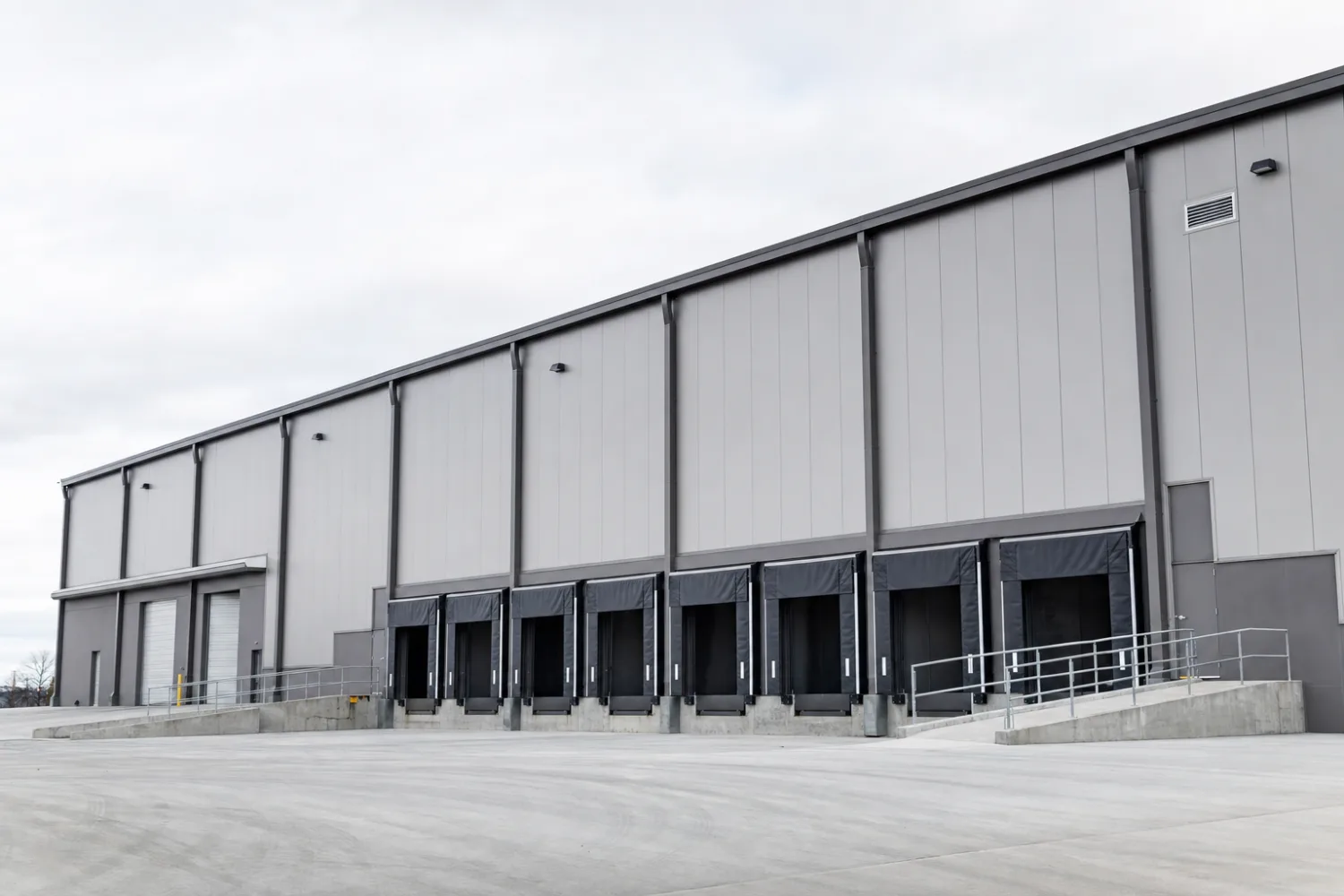
The table below gives typical ranges, not design values. Your engineer pulls the exact wind speed, ground snow load, and seismic category from the code maps for your site, and a coastal ZIP can carry a materially higher number than one a few miles inland. The snow and wind load guide walks through how those figures turn into steel gauge and frame spacing.
| Load type | Typical New Jersey range ‹confirm› | Who sets it |
|---|---|---|
| Ground snow load | About 20–35 psf, higher in the northern highlands | Local construction office, ASCE 7 maps |
| Ultimate design wind speed | About 115–130+ mph, highest along the Atlantic coast | Local code under ASCE 7 |
| Seismic design category | Low to moderate, roughly A to C in most areas | Local construction office |
Typical ranges for orientation only. Confirm the design values for your site with your local building department.
Coastal exposure matters
If your lot is near the shore, ask whether it falls in a special wind or flood zone before you finalize the frame. A higher wind speed changes anchor bolts, base plates, and bracing, and a flood zone can change the foundation you are allowed to pour. These checks happen at the local level, so confirm them early.
Climate
Climate zone and insulation in New Jersey
Most of New Jersey sits in IECC climate zone 4A, a mixed-humid zone, while the northwest highlands push into colder zone 5A ‹confirm›. That split means you plan for two things at once: humid summers that drive condensation, and real winters that reward solid R-value.
On a steel building the first job is controlling condensation. Warm, moist air meeting cold steel panels creates dripping and rust if the assembly is not detailed for it, so a vapor barrier and a continuous insulation layer matter more here than raw thickness alone. In the northern counties you then add R-value for heating cost. Our metal building insulation guide covers the systems that handle both the moisture and the cold, and what code-level R-values to confirm for your zone.
Price
What drives metal building price in New Jersey
Steel pricing is national, but the delivered and erected cost in New Jersey carries a few regional drivers. Freight is one: a kit ships from a mill or fabricator, and the haul into a dense northeastern market is a line you should see broken out. Labor is another, since construction wages and crew rates in the New York and Philadelphia orbit run higher than the national average.
Two New Jersey-specific items can move the number further. Coastal wind engineering adds steel and stronger anchorage on shore-area builds, and the permit plus engineering package in a statewide-code state is a real cost to plan for. For dated, illustrative ranges and a full breakdown of what sits inside a kit price, see our metal building kit prices guide ‹confirm›. Get every regional add-on in writing so you can compare quotes line by line.
Where they go up
Popular uses and metro building departments
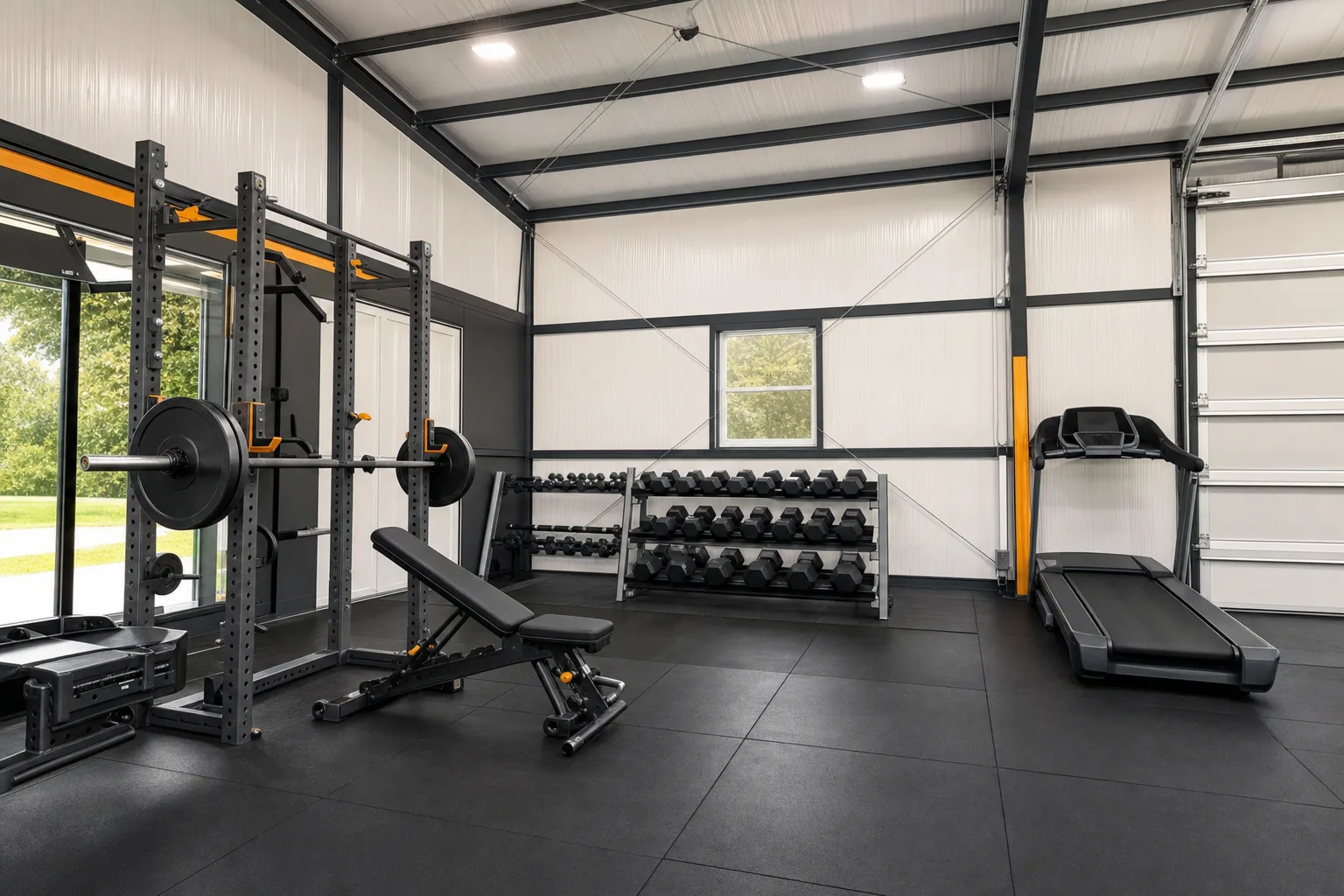
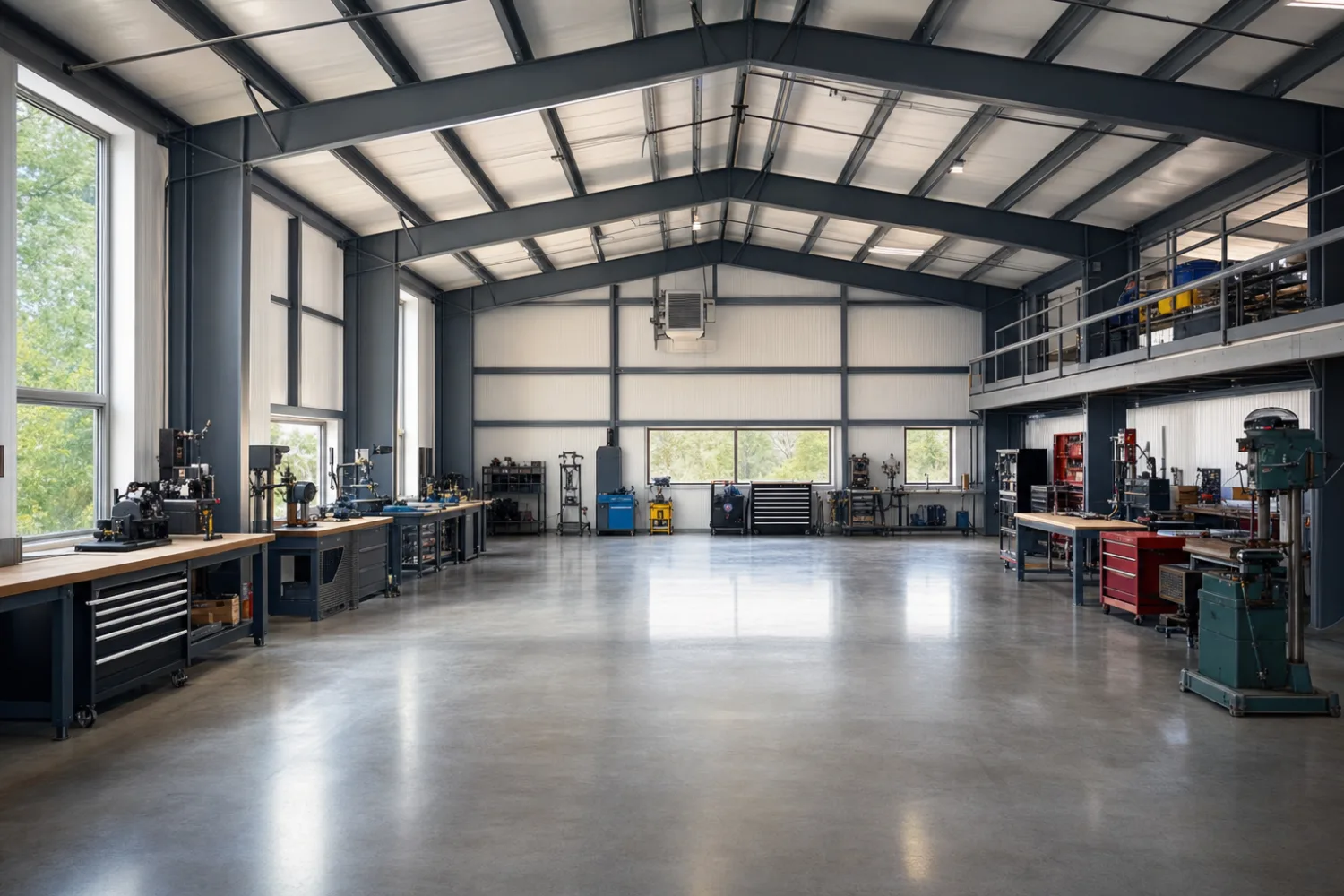
New Jersey buyers put up a wide mix. Detached garages and home workshops lead in the suburbs, storage and light commercial flex space cluster near the highway corridors, and South Jersey farms in Salem, Cumberland, and Gloucester counties raise equipment barns and pole-style agricultural buildings. Near the shore, owners favor enclosed, wind-rated steel for storage that survives a coastal storm.
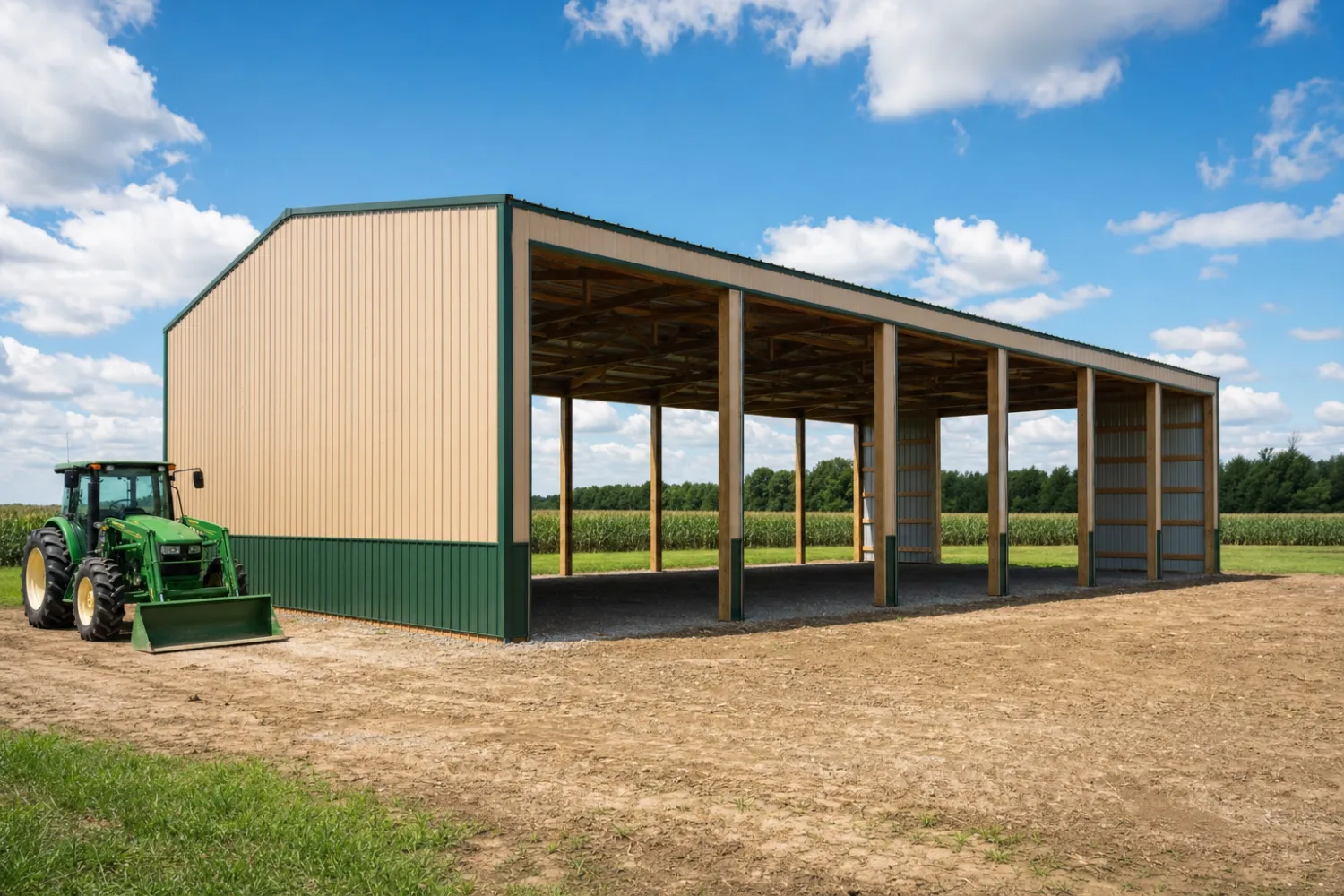
Wherever you build, the permit comes from that town’s construction office under the statewide code. The largest metros run their own busy departments: Newark, Jersey City, Paterson, Elizabeth, Edison, and the capital, Trenton, each have a municipal construction office that issues building permits and schedules inspections ‹confirm›. Confirm the exact office name, hours, and submittal list for your municipality, because the process and fees are set locally even though the code is not.
FAQ
New Jersey metal building questions
Do you need a permit for a metal building in New Jersey?
In almost every case, yes. The New Jersey Uniform Construction Code governs new structures statewide, and you file for a construction permit with your municipal construction office ‹confirm›. Small accessory structures can have lighter requirements in some towns, so confirm the threshold with your local building department before you assume an exemption.
What building code does New Jersey use for metal buildings?
New Jersey uses the statewide Uniform Construction Code, N.J.A.C. 5:23, administered by the Department of Community Affairs. It adopts the International Building Code and International Residential Code as subcodes, with state amendments, and has been moving toward the 2021 ICC editions ‹confirm›. Check the currently adopted edition before you design.
Do metal building plans need an engineer’s stamp in New Jersey?
For most enclosed and commercial steel buildings, plan on structural drawings sealed by a New Jersey-licensed professional engineer or architect ‹confirm›. Pre-engineered metal buildings usually ship with a stamped package. Confirm exactly what your municipal construction office requires, since the submittal list is set at the town level.
How much wind load does a metal building need on the Jersey Shore?
Shore counties fall in a hurricane-exposed wind region, so coastal designs carry a higher ultimate design wind speed than inland sites, often in the range of about 115 to 130 plus mph ‹confirm›. Your engineer reads the exact value from the code map for your address. Verify it with your local building department, since a special wind zone changes the frame.
What is the snow load for a metal building in New Jersey?
Ground snow loads run lighter at the shore and heavier in the northern highlands, with a typical statewide range of roughly 20 to 35 psf ‹confirm›. The governing number for your build comes from the code, not a statewide average, so confirm the design snow load for your county with your local building department.
Can you put a metal building on a farm in New Jersey?
Yes, and agricultural buildings are common across South Jersey. Some farm structures see different review under the code, but that is not automatic, so do not assume a full exemption ‹confirm›. Talk to your municipal construction office about how your agricultural building will be classified before you order.
How much does a metal building kit cost in New Jersey?
Kit pricing tracks national steel costs, then adds freight into a dense northeastern market, higher regional labor, and any coastal wind engineering ‹confirm›. Because those drivers swing the total, use the dated ranges in our kit prices guide as a starting point and get a site-specific quote with every add-on itemized.
Read next
Keep reading
Compare nearby states and dig into the specs that shape a New Jersey build:
- Metal building kits in New York
- Metal building kits in Pennsylvania
- Metal building kits in Delaware
- Metal building kits in Connecticut
- Metal building permits and codes
- Snow load and wind load explained
- Metal building foundation options
- Metal building insulation
- Metal building kit prices
Sources
Sources
Every code, load, and climate value above is flagged for local verification. Confirm the current figures for your site with these authorities and with your municipal construction office:
- New Jersey DCA, Division of Codes and Standards (Uniform Construction Code, N.J.A.C. 5:23): https://www.nj.gov/dca/divisions/codes/
- UpCodes, New Jersey adopted building codes: https://up.codes/codes/new-jersey
- ICC Digital Codes, New Jersey: https://codes.iccsafe.org/codes/new-jersey
- IECC climate zone map (DOE Building America Solution Center): https://basc.pnnl.gov/images/iecc-climate-zone-map