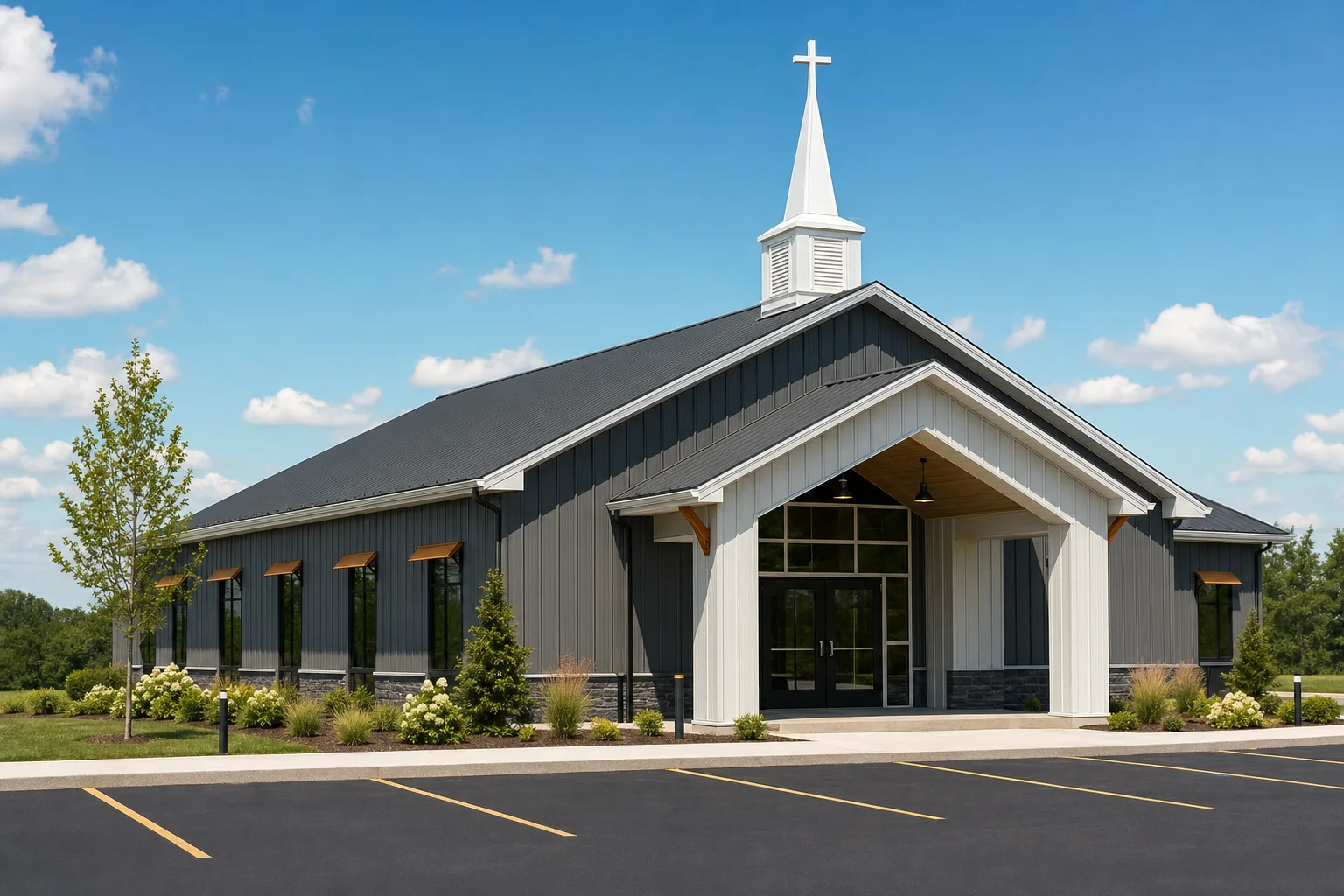
Two things decide a metal building in New York: snow and the permit office. Across most of the state your frame has to carry a heavy ground snow load, and almost every permanent structure over 144 square feet needs a permit from your local town, village, or city before you pour a footing. Those two facts shape the steel you buy and the paperwork you file.
This guide sits under our metal buildings by state pillar and covers New York start to finish: the code you build to, the loads your frame has to meet, the climate your insulation has to fight, and what people put up across the state. New York runs one statewide code with a major exception for New York City, so where you build changes the rules. Every hard number below is marked ‹confirm› so you verify it with the office that issues your permit.
Codes & permits
New York codes and who issues your permit
Most of New York builds to the New York State Uniform Fire Prevention and Building Code, the statewide rulebook the permits and codes guide explains in general. The Department of State writes and maintains it, and it adopts the International Building Code and International Residential Code as its base, with New York amendments layered on top ‹confirm›. The current Uniform Code edition draws on the 2018 IBC and IRC families ‹confirm›.
New York City is the big exception. The five boroughs run their own stricter NYC Building Code, administered by the New York City Department of Buildings, with extra rules for exterior walls and energy compliance ‹confirm›. If you build anywhere outside the city, your local town, village, or city building department administers the state code and issues the permit, not the state ‹confirm›.
Plan on stamped, engineered drawings. New York generally wants structural and foundation plans sealed by an engineer licensed in the state, proving the building handles local snow, wind, and soil loads ‹confirm›. Most metal building suppliers provide those stamped prints for your site. A permit application usually pairs the prints with your deed, a site plan showing setbacks, and a fee. Verify the exact submittal list and any electrical permit with your local building department before you order steel.
Loads
Snow, wind, and seismic loads in New York
Snow is the load that drives a New York building. Ground snow rises sharply as you move north and east, from moderate numbers near the coast to some of the heaviest in the country across the Tug Hill, the Adirondacks, and the North Country ‹confirm›. A frame stamped for a Buffalo or Watertown winter is a different building than one stamped for Long Island. The snow and wind load guide breaks down how those forces work.
Wind matters most on the coast. Long Island and the New York City shoreline see higher design wind speeds than the inland counties, and exposure to open water pushes the rating up ‹confirm›. Seismic demand stays low across most of the state ‹confirm›. The table below gives typical ranges to frame the conversation, not values to build from. Your jurisdiction sets the real numbers.
| Load type | Typical New York range ‹confirm› | Who sets it |
|---|---|---|
| Ground snow | About 20 psf near the coast to 70+ psf in the Tug Hill, Adirondacks, and North Country | Local building department / Uniform Code |
| Design wind speed | Roughly 110 to 130+ mph, highest on Long Island and the coast | Local building department |
| Seismic | Generally low across the state | Local building department |
Typical ranges only. Confirm the exact snow, wind, and seismic values with your local building department before you order a frame.
Verify locally
New York sets loads by jurisdiction, not by one statewide figure. Never order a frame off a range you read online. Ask your town, village, or city building department for the ground snow load, design wind speed, and seismic category at your exact address, then have your supplier stamp the building to those numbers.
Climate
Climate zones and insulation priorities
New York is a cold-climate state, so R-value leads your insulation plan. The state spans IECC climate zones 4A around New York City, Long Island, and the lower Hudson Valley, 5A across most of the rest, and 6A in the Adirondacks and far North Country ‹confirm›. The colder your zone, the more wall and roof insulation the code expects and the more you save on heat.
Cold air does not end the conversation. A steel shell in a New York winter sweats when warm inside air meets cold panels, so condensation control rides alongside R-value. A good vapor barrier and the right ventilation keep a heated shop or barndominium dry. Our insulation guide walks through assemblies that hit both targets at once. Confirm your zone and the minimum R-values with your local code office.
Pricing
What moves the price in New York
New York prices run above the national middle, and a few regional drivers explain why. Heavy snow ratings add steel, so an Adirondack or Tug Hill frame costs more per square foot than the same building near the coast ‹confirm›. Downstate labor and permitting cost more than upstate, and New York City adds its own code and inspection layer on top ‹confirm›.
Freight is the other factor. New York sits a long haul from many steel mills, so delivery to an upstate or North Country site can add to a kit that looks cheap on the order page ‹confirm›. As a dated illustration for 2026, a bare 40×60 shell often lands in the low-to-mid five figures ‹confirm› before slab, permits, and freight, with a finished, insulated building running well past that. Treat those as starting points and price your real build through the kit prices guide.
Across the state
Popular uses and metro building departments
What New Yorkers build splits by region. Upstate and the Southern Tier lean toward workshops, equipment storage, and agricultural buildings on open land. The suburbs around the metros favor garages and detached shops, while commercial and warehouse steel clusters near the highways. Long Island and the lower Hudson Valley add coastal-rated garages and storage.
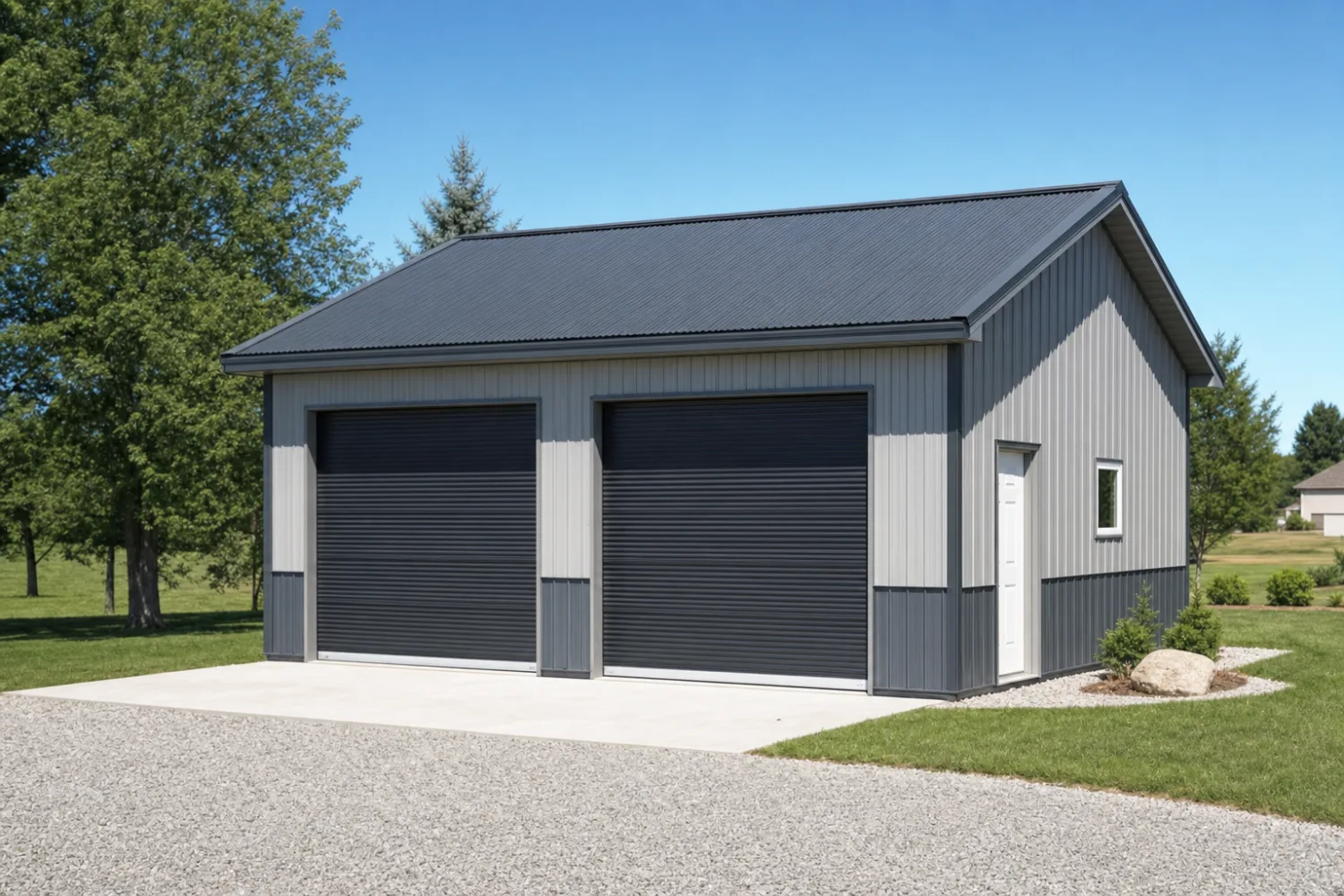
Your permit comes from the office that covers your address. In the five boroughs that is the New York City Department of Buildings at 280 Broadway, which runs borough offices including the Brooklyn Department of Buildings and the Queens Borough Department of Buildings ‹confirm›. Outside the city, every town, village, and city runs its own building department, so a project in Buffalo, Rochester, Syracuse, or Albany answers to that municipality’s code enforcement office ‹confirm›. Call the office for your exact parcel before you design the building.
FAQ
New York metal building questions
Do I need a permit for a metal building in New York?
Almost always, yes. New York requires a building permit for virtually any accessory structure over 144 square feet, and many jurisdictions set the line lower ‹confirm›. The permit comes from your local town, village, or city building department, or from the New York City Department of Buildings inside the five boroughs. Confirm the size threshold and fees with your local office.
Can I build a metal building on my property in New York?
Usually yes, if your zoning allows the use and you meet setbacks and lot-coverage limits. Start by calling your local building department to confirm the zoning, then submit a site plan and engineered drawings for the permit ‹confirm›. An HOA or historic district can add its own rules on top of the code.
Do I need engineer-stamped drawings in New York?
In most cases, yes. New York generally requires structural and foundation plans sealed by an engineer licensed in the state, proving the building handles your local snow, wind, and soil loads ‹confirm›. Most metal building suppliers provide stamped prints for your site as part of the order.
Who issues the permit, the state or the town?
Your local government. Outside New York City, the town, village, or city building department administers the state Uniform Code and issues the permit, not the state ‹confirm›. Inside the five boroughs, the New York City Department of Buildings handles it under the stricter NYC Building Code.
What happens if you build without a permit in New York?
You risk a stop-work order, fines that can run well above the permit fee, a forced retrofit, or in the worst case an order to tear the building down ‹confirm›. Unpermitted work also surfaces during a sale or refinance and can void an insurance claim. Pulling the permit first is far cheaper than fixing it later.
How much does a 40×60 metal building cost in New York?
It varies with snow rating, finish, region, and freight, so treat any figure as a dated 2026 estimate to verify with quotes ‹confirm›. A bare shell sits well below a finished, insulated, permitted building, and a heavy-snow upstate frame costs more than a coastal one of the same size. Price your real build through our kit prices guide.
Does New York use the International Building Code?
Yes, as a base. The New York State Uniform Code adopts the International Building Code and International Residential Code with New York amendments, and the current edition draws on the 2018 IBC and IRC families ‹confirm›. New York City layers its own stricter code on top. Confirm the adopted edition with your building department.
Read next
Keep reading
Building near a state line, or want the topical detail behind New York’s rules? Start here:
- Metal building kits in Pennsylvania
- Metal building kits in New Jersey
- Metal building kits in Connecticut
- Metal building kits in Massachusetts
- Metal building permits and codes
- Snow load and wind load explained
- Metal building foundation options
- Metal building insulation
- Metal building kit prices
Sources
Sources
Verify every code, load, and permit value with your local building department. These are the references behind the statements above:
- New York Department of State, Building Standards and Codes: https://dos.ny.gov/building-standards-and-codes
- UpCodes, New York State Building Code 2020 (Chapter 22, Steel): https://up.codes/viewer/new_york/ibc-2018/chapter/22/steel
- New York City Department of Buildings: https://www.nyc.gov/site/buildings/index.page
- Permit threshold and local administration, Keen’s Buildings (Metal Buildings New York): https://keensbuildings.com/metal-buildings-new-york/
- Metal building permit requirements, state-by-state, SteelBuildingKit: https://steelbuildingkit.com/metal-building-permit-requirements/
- Building department names and locations, Google Maps (New York City Department of Buildings, 280 Broadway; Brooklyn and Queens borough offices): Google Maps