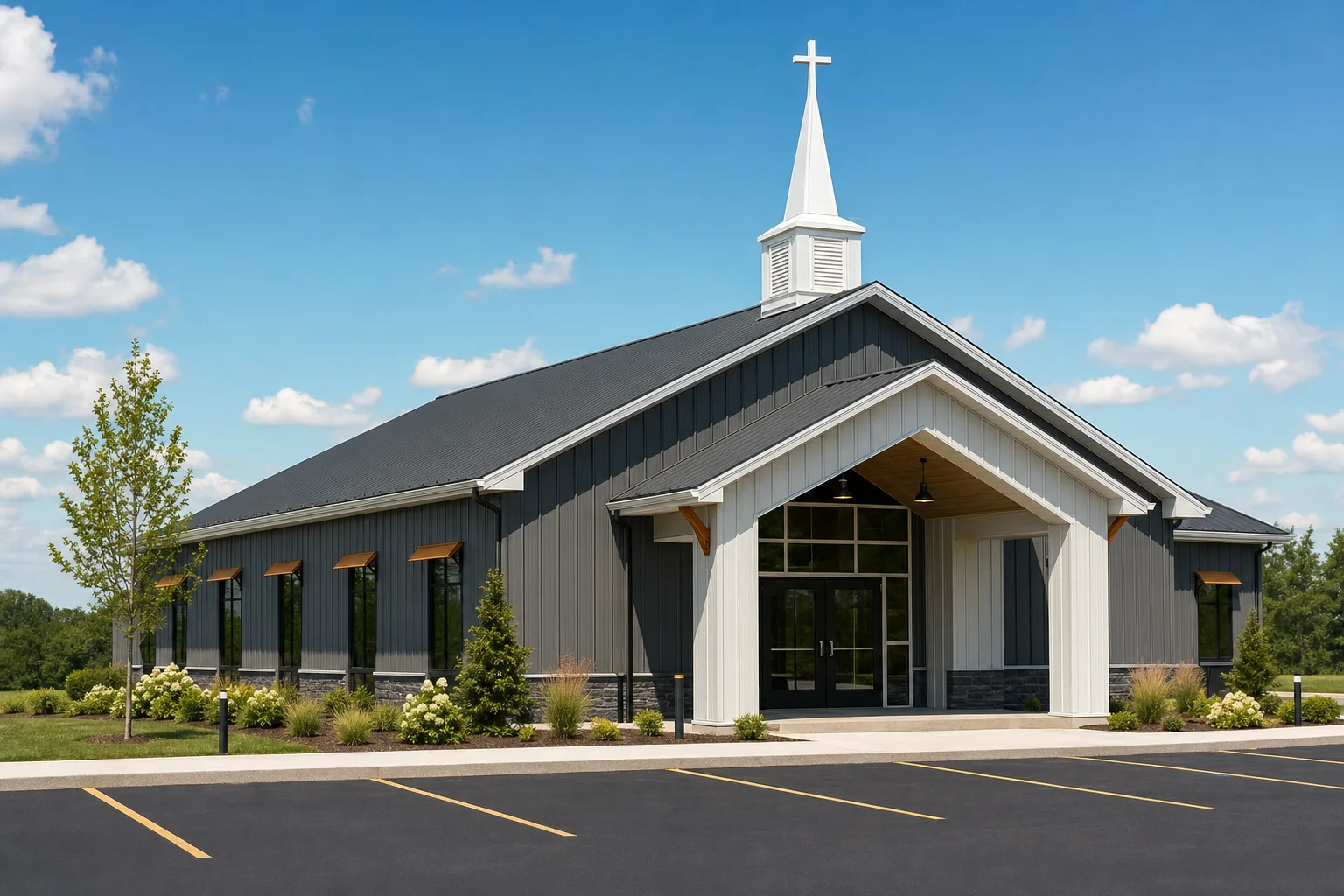
Yes, a well-built barndominium on a permanent foundation holds its value, and in most markets it appreciates alongside conventional homes nearby. Value tracks the same drivers any house answers to: location, square footage, finish quality, and whether comparable sales support the price. The steel frame is not what makes or breaks resale. Where a barndominium loses value, the cause is usually a thin-comps rural market, a barn-like finish that reads as a shop, or an appraisal with nothing to compare against, not the building material itself.
This page sits under the metal building homes pillar and gives the full answer behind a question that decides whether many people build one at all. Below: why a finished barndominium holds value, the handful of things that can drag resale down, and how to build one that appraises and sells like the home it is.
The real answer
Why barndominiums hold their value
A barndominium holds value because a buyer and an appraiser see a finished home, not a metal shell. Once it has a kitchen, bedrooms, baths, and a permanent foundation, it is a single-family residence in the eyes of the market, and it competes on the same terms as any other house in its price band. The value sits in the living space and the land, and the steel frame is just the durable structure holding it all up.
Durability quietly supports that value. A steel frame does not rot, warp, or feed termites, and a barndominium kept dry and maintained reads as a permanent, low-maintenance house to the next buyer. That same toughness shapes the insurance picture, since steel resists fire, wind, and pests in ways underwriters notice. The drivers that set the resale number are the ones below, and only one of them touches the metal at all.
| What drives resale value | Effect | How much you control it |
|---|---|---|
| Location and land | Largest factor; sets the ceiling for any home | Chosen at purchase, fixed after |
| Square footage and layout | More finished living space lifts value | High, set at design |
| Finish quality inside | A home-grade interior appraises like a house | High |
| Comparable sales nearby | Drives the appraisal that backs a buyer’s loan | Low; depends on the local market |
| Condition and upkeep | Dry, maintained steel holds value over decades ‹confirm› | High |
| Curb appeal | A residential look sells; a shop look discounts | High, set at design |
The frame material is not on this list. Value tracks the same factors as any house, plus the durability of well-kept steel.
The exceptions
What can drag a barndominium’s value down
When a barndominium underperforms on resale, the cause is almost never the steel. It is one of a few predictable problems, and each one is avoidable if you see it coming.
- Thin comparable sales. Appraisers value a home against recent nearby sales, and in rural areas with few barndominiums, there may be little to compare against. This is the single most common reason one appraises low, and it is a market issue, not a building flaw.
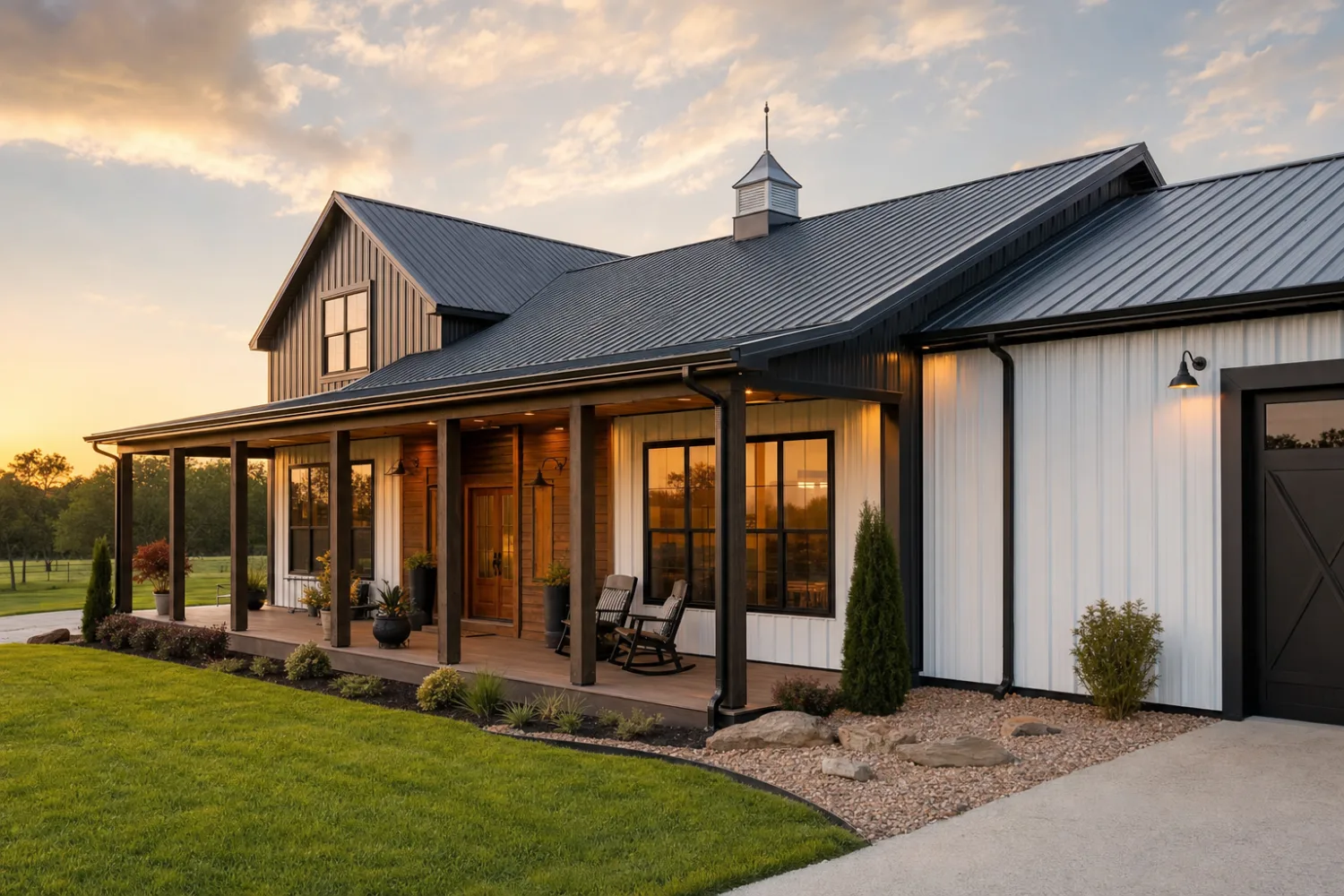
- A finish that reads as a shop. Exposed metal walls, roll-up doors as the main entry, and a bare slab floor make a barndominium look like a workshop someone is living in. A home-grade interior and a residential exterior are what let it appraise and sell like a house.
- Over-customization. A layout built entirely around one owner, like a giant single workshop with one bedroom, narrows the buyer pool. Conventional, flexible floor plans resell to more people.
- No permanent foundation. A home on a true slab or footing foundation is real property; one treated as a temporary structure can be financed and valued like one, which caps resale.
- Deferred maintenance. Rust streaks, failed sealants, and a worn coating signal neglect and knock down both appraisal and buyer confidence. Steel rewards light, steady upkeep.
Comps are the part to plan for
If you are building somewhere barndominiums are still rare, talk to a local appraiser and a lender before you start. They can tell you how the home will likely appraise and which lenders treat it as a standard residence. Getting the financing and appraisal path lined up early protects resale far more than any upgrade to the steel.
Protecting value
How to build a barndominium that holds its value
You protect resale at the design stage, not at the sale. Build it to read as a home, sit it on a real foundation, and keep the steel dry, and a barndominium holds value as well as any house in its market.
- Finish it like a house. A real kitchen, finished baths, drywall or a comparable interior, and flooring over the slab make it appraise as a residence rather than a converted barn.
- Put it on a permanent foundation. A slab or footing foundation makes it real property and opens conventional financing for the next buyer.
- Choose a conventional layout. Standard bedroom and bath counts widen the buyer pool and give appraisers more comps to lean on.
- Keep the shell sound. Maintain the coating, reseal seams on a schedule, and control interior moisture so the frame stays dry and rust-free for decades ‹confirm›.
Build a barndominium that looks and lives like a home, and the market values it like one. Build it to look like a shop with a bed in it, and that is what it will sell as.
Done right, a barndominium holds value as well as a comparable wood-framed house, and it asks less upkeep to get there. For the full picture on appreciation and comps, see the resale value of metal building homes guide, weigh the tradeoffs in our barndominium pros and cons breakdown, and compare the two formats head to head in metal home vs traditional house. The same durability runs through the wider family of metal building kits, where a frame built to last is the whole point.
Related
Read more
This answer connects to value, financing, and the durability behind the steel. Follow these next:
- Metal building homes: the complete guide (the parent pillar).
- Resale value of metal building homes (the deeper guide on appreciation and comps).
- Barndominium pros and cons (the honest ledger, resale included).
- Financing a barndominium (appraisal and lender treatment that backs value).
- Metal home vs traditional house (how the formats compare over decades).
- Metal building kits: the complete guide (the wider steel-building family).