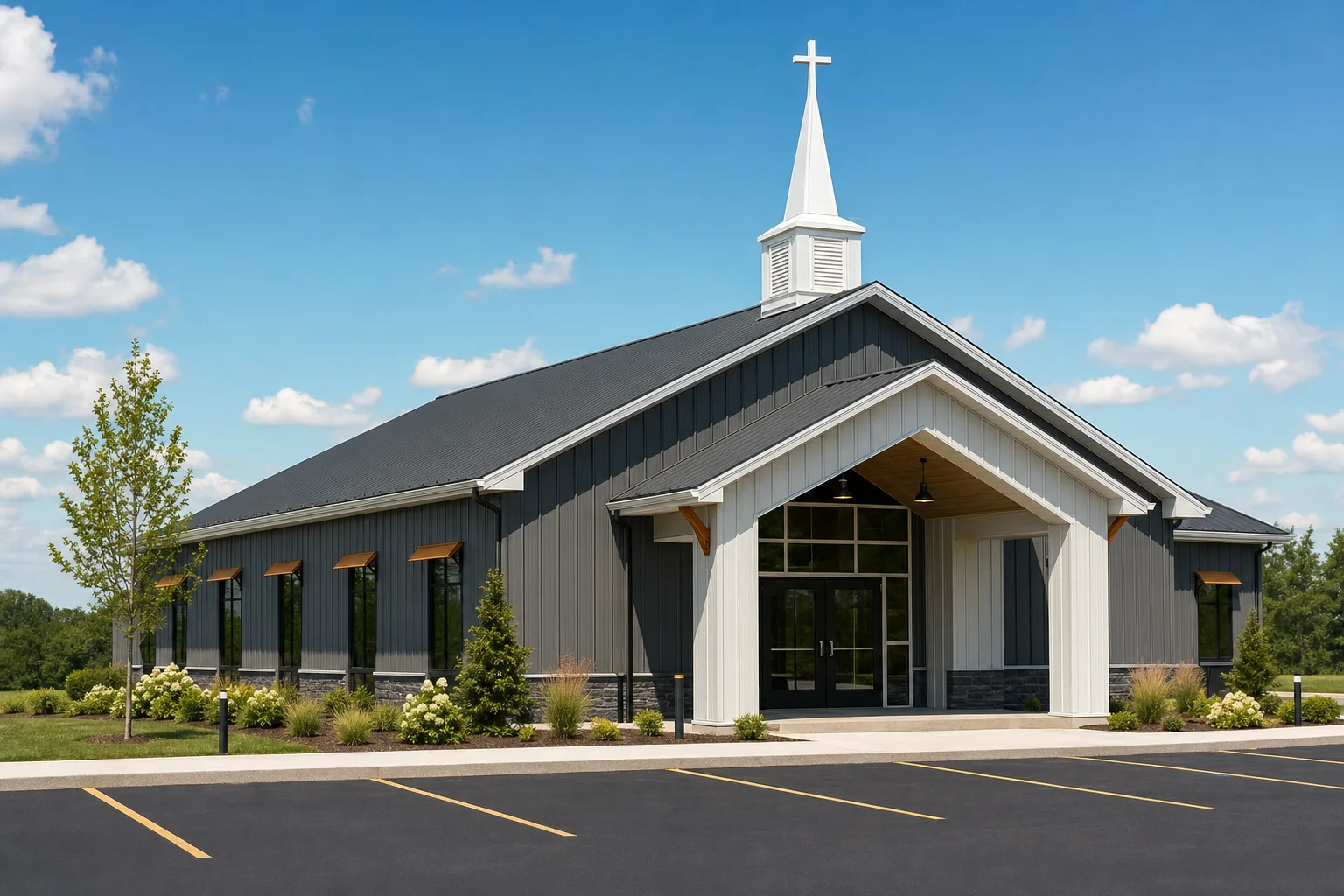
Yes, you can buy a used metal building. People sell pre-owned steel buildings all the time, usually as a take-down that gets dismantled and re-erected on your site, or as a standing building you buy and leave in place. You will find them through auctions, classified listings, building dealers that resell trade-ins, and farm or commercial sellers clearing a lot. The catch is that a used building rarely comes with the drawings, the load rating, or the missing parts you need, so the sticker price is the start of the math, not the end.
This page sits under the metal building kit prices pillar and answers the used-building question on its own terms: where these buildings come from, what a fair used price looks like once you add the hidden work, and when a new kit beats a secondhand deal. For the buyer-focused playbook on sourcing and inspecting pre-owned steel, our used metal building kits guide goes deeper on listings and red flags. Here we settle whether buying used is the right call at all.
The market
Where do used metal buildings come from?
Most used steel buildings come from take-downs, repossessions, cancelled orders, and standing structures sold with a property. A take-down is a building that gets unbolted, labeled, and trucked to your site, while a standing sale leaves the building where it is and you buy the right to keep or move it.
| Source | What you are buying |
|---|---|
| Take-down / relocatable building | A complete building dismantled from another site; you pay to disassemble, haul, and re-erect it ‹confirm› |
| Auction / liquidation | Buildings from closed businesses, farms, or government surplus, sold as-is with little documentation |
| Dealer trade-ins / cancelled orders | Buildings a supplier resells; sometimes near-new steel at a discount off a new kit ‹confirm› |
| Sold with a property | A standing shop or barn included in a land or building sale that you keep in place |
| Classified / marketplace listings | Private sellers clearing a lot; price and condition vary widely, and you verify everything yourself |
A starting map, not a verdict. Confirm what each source includes, since documentation and parts vary by seller.
The source shapes the deal more than the headline price. A dealer trade-in can be near-new steel with paperwork, while an auction barn may arrive with bent panels and no anchor bolts. Before you chase any listing, get clear on what a comparable new building runs in our how much kits cost guide, so you know whether the used price is a real saving.
True cost
Is a used metal building cheaper than a new kit?
Sometimes, but less often than the listing suggests. The steel itself may be cheap, yet the take-down, freight, missing fasteners, replacement panels, and re-engineering can push the all-in cost close to a new kit. A used building wins when it is local, complete, and the right size; it loses when you are paying to fix someone else’s problem.
Count the hidden work, not just the steel
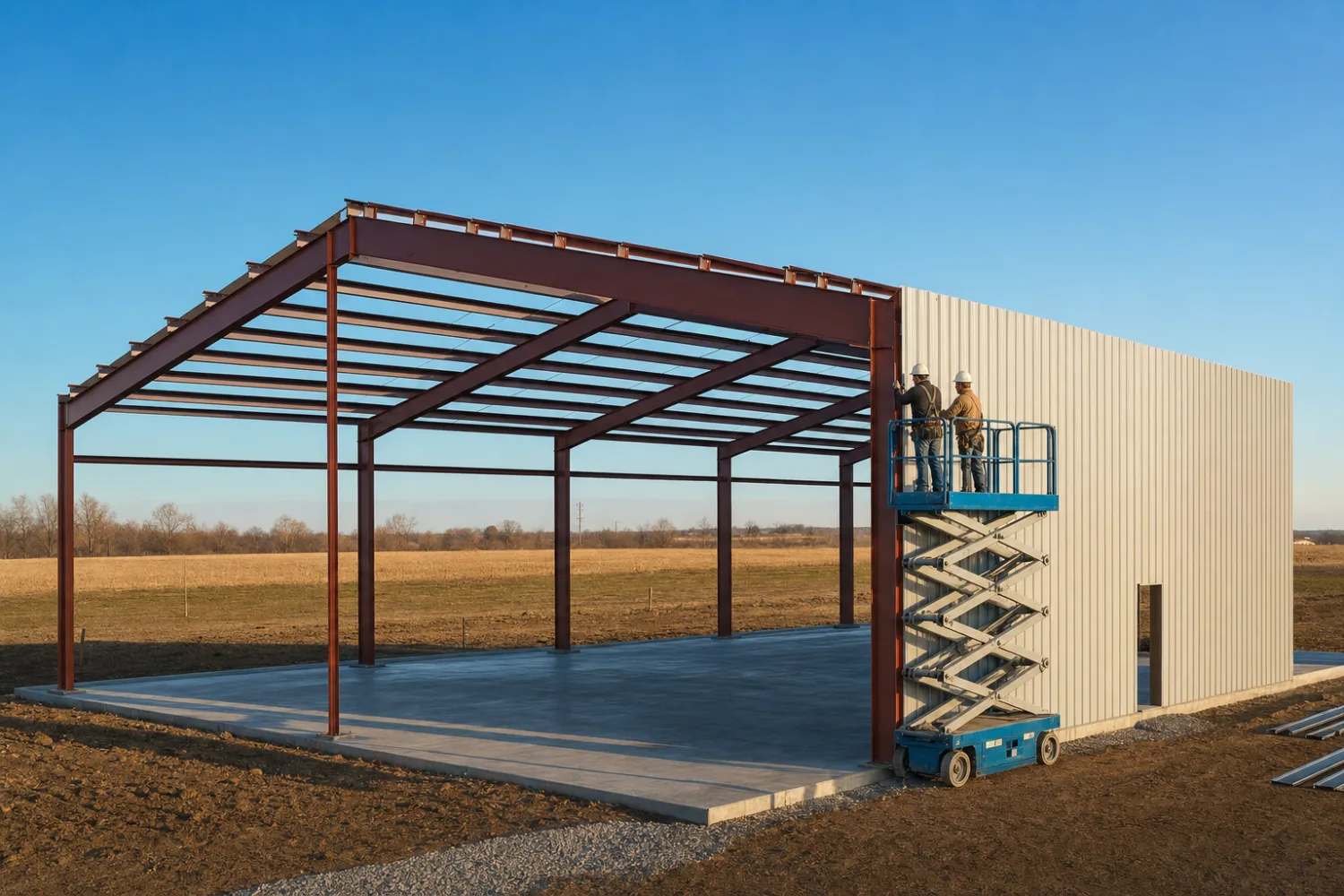
A used building seldom ships with anchor bolts, trim, sealants, or a full fastener pack, and panels cut for the old site rarely match a new slab. Add disassembly labor, a truck, a crane or crew to re-erect, and any replacement parts, and the bargain can evaporate. Those same line items, foundation, delivery, and labor, are exactly what our hidden costs guide breaks down for any build, new or used.
Run the comparison honestly. Add the purchase price, the take-down, the freight, the missing parts, and the re-erection, then set that total beside a new kit of the same size. New steel arrives complete, cut to spec, and stamped for your loads, which is worth real money. If the goal is a lower number rather than used steel specifically, our ways to save on a kit guide and the clearance and discount kits route often beat a secondhand building on both price and certainty.
Due diligence
What should you check before buying a used metal building?
Check that it is complete, that it is rated for your site, and that you can legally permit it. The three things that sink a used deal are missing parts, an unknown load rating, and a building that will not pass your local code, so confirm each before you hand over money.
- Completeness. Get an inventory of frames, panels, trim, and fasteners; missing members and bolts are the costs that hide in a cheap price.
- Load rating and drawings. A used building may have been engineered for a different snow and wind zone; without stamped drawings you may need a new engineer to qualify it for your site.
- Condition. Look for rust, dents, bent members, and weathered panels; surface rust is normal, but structural damage or heavy corrosion is a deal-breaker.
- Size and fit. Used dimensions are fixed, so a building that is close-but-not-right means cutting and patching; compare against the size you need in our prices by size guide.
- Permitting. Your building department may require engineered plans the used building cannot supply; confirm before you buy, since a building you cannot permit is worth scrap value.
Buy a used metal building for the steel, not the story. The deal is only real when the building is complete, rated for your site, and something your local code will let you stand up.
When it fits
When does buying used make sense?
Used wins when the building is local, complete, the right size, and you have the skills or crew to re-erect it. It loses when you are far from the seller, short on parts, or need engineered plans for a permit. Match the building to your site and your abilities, and the math gets clear fast.
A complete take-down twenty miles away, with drawings and all its parts, sold by someone clearing a lot, is a genuine bargain for a hands-on buyer with equipment. A vague auction listing three states away, missing its anchor bolts and its load rating, is a project that often costs more than a new kit once the work is done. For buyers chasing a low price, weigh used against a wholesale kit and the broader affordable kit options before you commit, and read the full picture in our metal building cost guide. If your project is a home rather than a shop, the rules shift toward financing and code, covered under the metal building homes pillar.
Related
Read more
This question connects to sourcing, pricing, and the cheaper-than-new routes. Follow these next:
- Metal building kit prices: the complete guide (the parent pillar).
- Used metal building kits (sourcing, inspecting, and re-erecting pre-owned steel).
- Clearance & discount kits (near-new steel at a discount off a new kit).
- How to save money on a metal building kit (cut the price without buying used).
- Metal building cost guide (the total budget a used building has to beat).