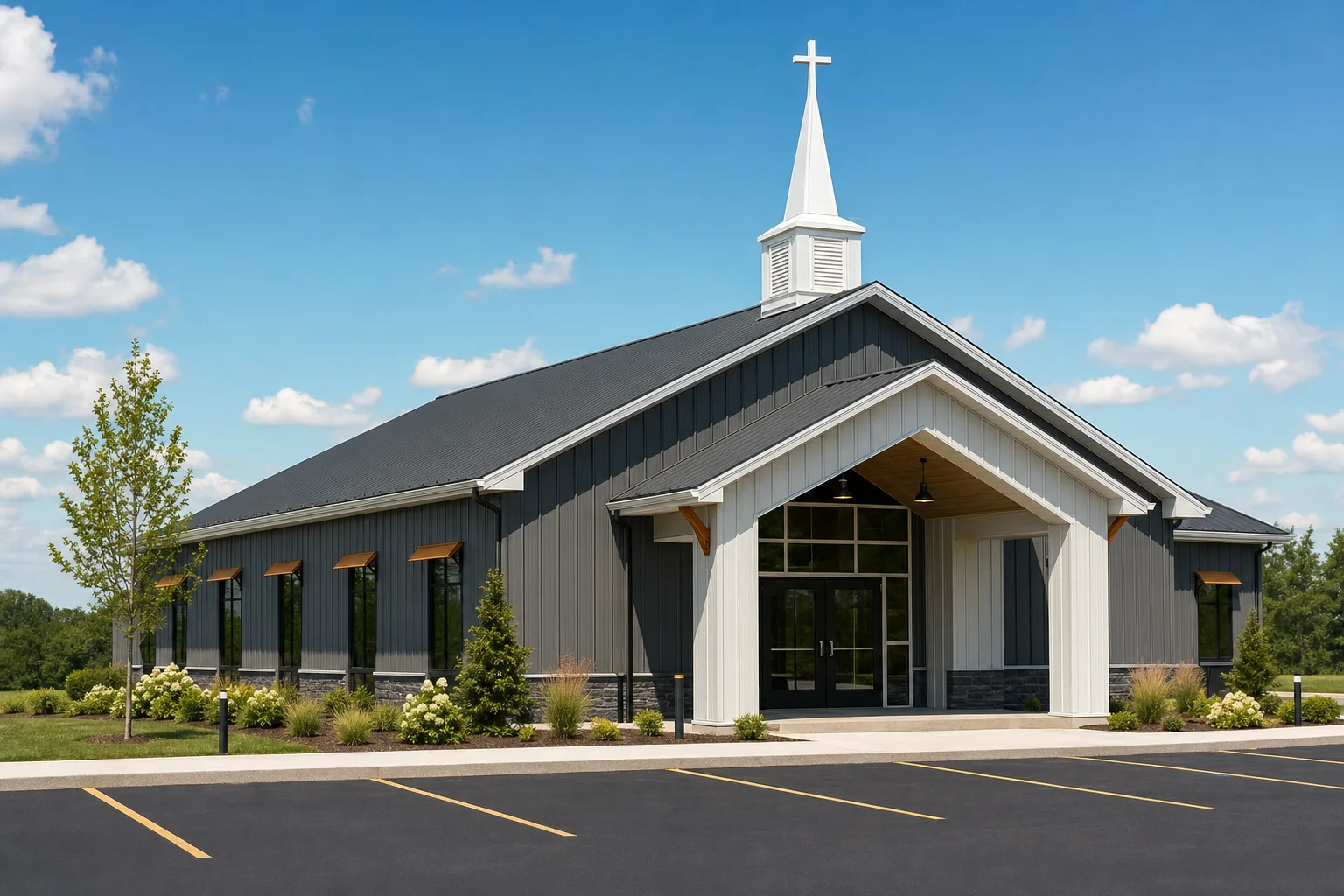
For most buyers, bolt-up is the better choice. A bolt-up building ships as a kit of pre-cut, pre-drilled, pre-punched parts that bolt together, so it costs less, goes up faster, and a small crew or a determined DIYer can raise it with hand tools and no welding skill. Weld-up is the better build only when you need a fully custom layout or on-site fabrication a kit cannot deliver, and you have a certified welder to do the work. Neither is stronger by default; the right pick depends on your budget, your timeline, and whether you plan to build it yourself.
This page sits under the metal building construction types pillar and answers the bolt-up versus weld-up question on its own terms: what each method is, how they compare on cost, speed, and strength, and which one fits your project. For the side-by-side breakdown of both methods, our weld-up vs bolt-up buildings guide goes deeper on the construction itself.
Bolt-up
Why bolt-up wins for most buyers
Bolt-up is the better fit for the vast majority of projects because it removes the hardest part of building in steel: the fabrication. The manufacturer engineers the frame, cuts every member to length, and drills every bolt hole at the plant, then ships the building as a numbered kit. On site you bolt the columns, rafters, purlins, and girts together by following a drawing set, the same way you would assemble flat-pack furniture at structural scale.
That shifts three things in your favor. The price drops, because factory fabrication is cheaper than field labor. The timeline shortens, because there is no cutting or welding to slow the crew. And the skill bar falls, because bolting does not need a certified welder, which is what makes bolt-up the backbone of the DIY metal building kit market. If you want to raise the building yourself or hire a general crew instead of a welding shop, bolt-up is the method that lets you.
Weld-up
When weld-up is the better build
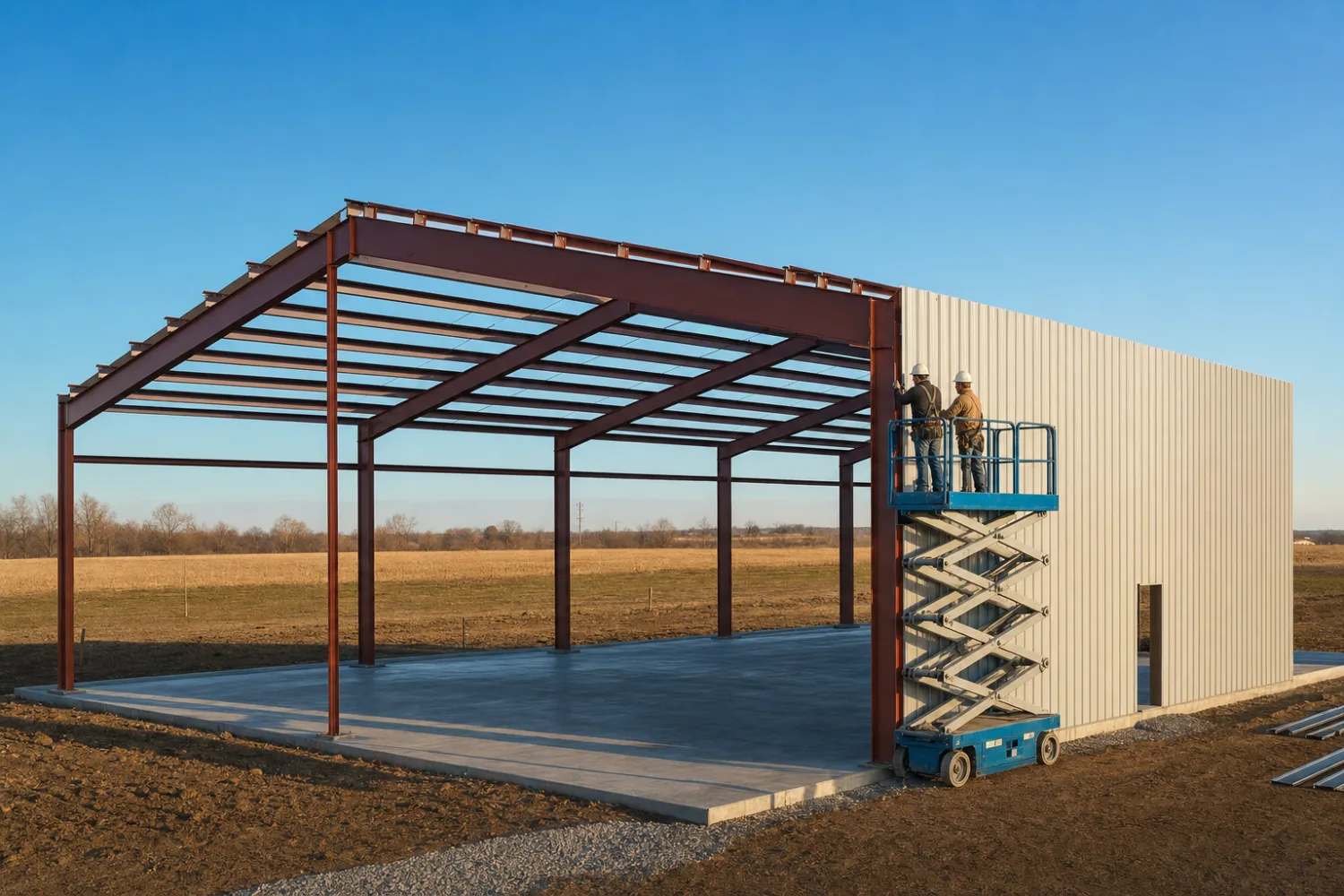
Weld-up earns its place when you need something a catalog kit cannot give you. In a weld-up build, a crew brings raw steel to the site, then cuts, fits, and welds the frame together in place. Nothing is pre-engineered to a kit; the fabricator builds to whatever the job calls for, which is the whole point. That freedom suits a one-off custom layout, an odd footprint, an addition tied into existing steel, or a buyer who already owns the welding gear and the skill.
The cost of that freedom is time, money, and labor. Field welding is slow and weather-sensitive, a certified welder costs more than a bolting crew, and many areas want a welding inspection on top of the usual permits. Done right, a weld-up frame is rock solid, but a bolt-up frame engineered for the same loads is every bit as strong, so the choice is rarely about raw strength. It is about whether the project needs custom fabrication enough to pay for it.
Strength is not the deciding line
A common myth says welded joints make a building stronger. In practice a bolt-up frame is engineered so the connections carry the rated loads, and bolted steel handles the flex of wind and seismic movement well. Both methods, built to the same stamped red-iron spec, meet the same code. Pick on cost, speed, and who is building it, not on a strength claim.
Head to head
Bolt-up vs weld-up: the comparison
The two methods split along five lines: who can build it, how fast it goes up, what it costs, how custom it can get, and how it holds up. Read them together, because a strength on one line is a tradeoff on another.
| Bolt-up | Weld-up | |
|---|---|---|
| How it is built | Pre-cut kit bolts together | Raw steel cut and welded on site |
| Skill needed | Hand tools, no welding | Certified welder and equipment |
| DIY-friendly | Yes, common for owner builds | Rarely, unless you weld |
| Build speed | Fast, no fabrication on site | Slower, field fabrication and welding |
| Relative cost | Lower, factory-fabricated | Higher, field labor and welder |
| Customization | Engineered options within a kit | Fully custom, any layout |
| Strength | Engineered to code | Engineered to code |
| Best for | Most shops, garages, homes, DIY | Custom one-offs, on-site fabrication |
A method comparison, not a verdict. Both meet code; the right pick matches your budget and build plan.
Pick the method by who is holding the wrench, not by a strength claim. A bolt-up kit a crew can raise in a weekend beats a weld-up frame you cannot build or afford.
Which to choose
Which method your project needs
Let the project decide. Start with your budget, your timeline, and who is doing the work, and the method follows. Here is how the common situations land:
- You want to build it yourself. Bolt-up. A pre-drilled kit is the only realistic path for an owner-builder, and our can you build it yourself guide covers what that takes.
- You want the lowest price and a quick build. Bolt-up. Factory fabrication and no field welding keep both the cost and the schedule down.
- You need a fully custom layout or on-site fabrication. Weld-up, if a kit cannot be engineered to fit. Get a stamped design and a certified welder.
- You are hiring out the labor either way. Compare the crew quotes for both. A bolt-up crew is usually faster and cheaper than a welding shop for the same building.
For most shops, garages, barns, and metal homes, bolt-up is the default for good reason: it costs less, builds faster, and opens the door to a DIY raise. Weld-up is the specialist tool you reach for when the job is genuinely custom. On a mid-size building the method choice can swing the labor cost by a few thousand dollars ‹confirm›, so it belongs on your plan early, not as an afterthought. See the metal building kit prices pillar for how the numbers shake out.
Related
Read more
This decision connects to framing, DIY, and cost. Follow these next:
- Metal building construction types (the parent pillar: bolt-up, weld-up, and frame shapes).
- Weld-up vs bolt-up buildings (the full side-by-side on both methods).
- Bolt-up metal building kits (how a bolt-together kit goes together).
- Hiring a crew vs DIY assembly (who should raise your building).
- Metal building kit prices (how the method affects what you pay).