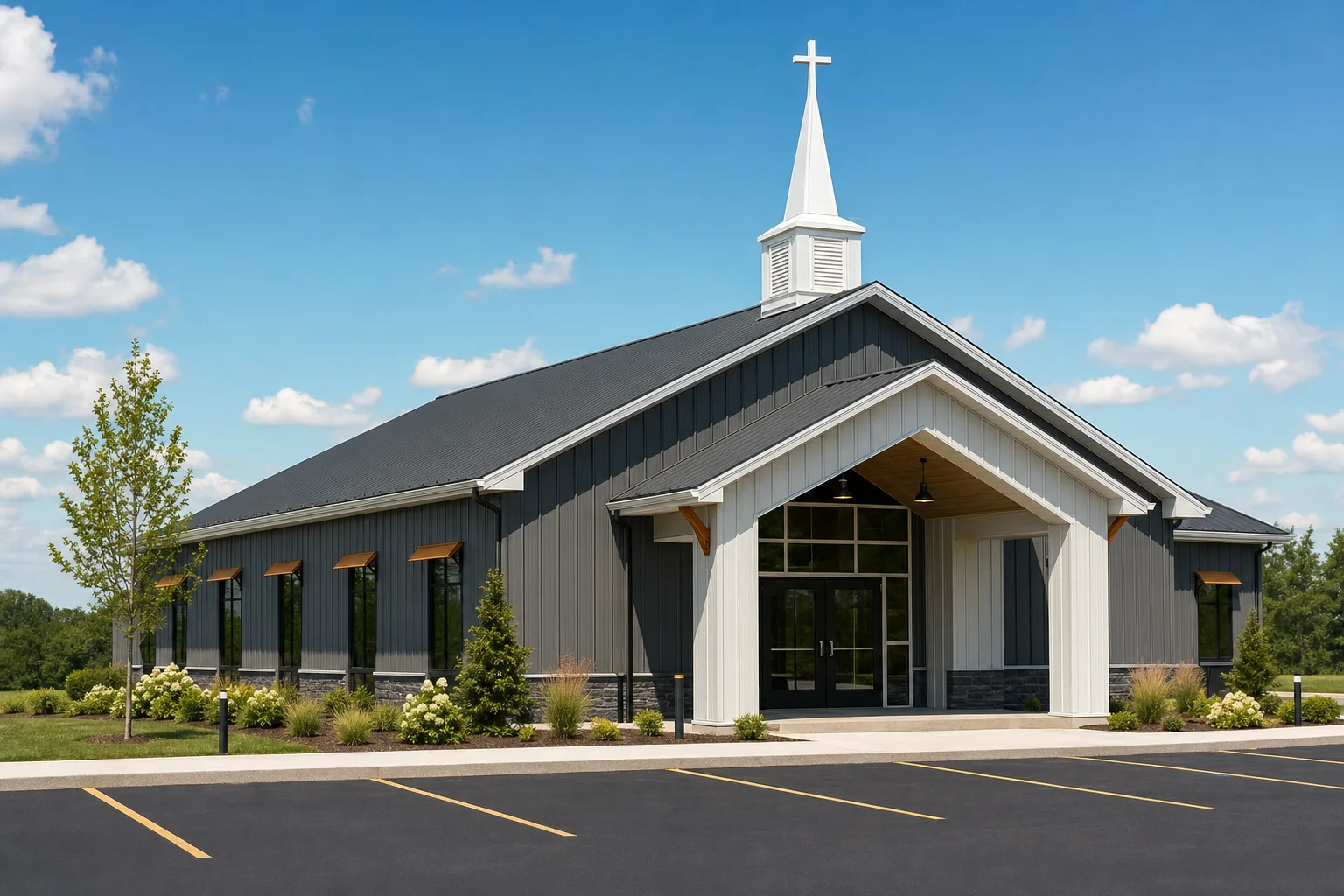
Yes, you can build a metal building kit yourself. A bolt-up kit ships as numbered, pre-engineered parts that go together with common hand tools, so a capable DIYer with one or two helpers can stand a small carport, garage, or workshop without a professional crew. The limit is rarely skill; it is the weight of the steel and the height you have to lift it to, which is why bigger and taller buildings start to want a crew and a lift.
This page sits under the construction types and DIY pillar and answers the self-build question on its own terms: which kits assemble cleanly by owner, what the job demands of you, and where the honest line falls between a weekend DIY and a job for a crew. If you are weighing the two paths, our hiring a crew vs DIY assembly guide sits right beside this answer.
What you can build
Which metal building kits you can build yourself
Bolt-up kits are the DIY-friendly ones, and the smaller the building, the more realistic the self-build. A bolt-up kit arrives engineered to your width, length, and height, with the holes punched and every member labeled, so assembly is closer to following numbered plans than to fabricating steel. A carport, a single-car garage, or a modest workshop sits well within reach of a handy owner with help. A wide, tall, or heavily loaded building is a different job.
The frame type sets the ceiling on DIY. A bolt-up kit bolts together with wrenches and impact drivers, which is why owners can erect them. A weld-up building is welded on site, which needs a welder and the skill to lay structural welds, so it is far less of a DIY project. If you mean to build it yourself, you want a bolt-up kit from the start.
| Building | DIY realistic? | Why |
|---|---|---|
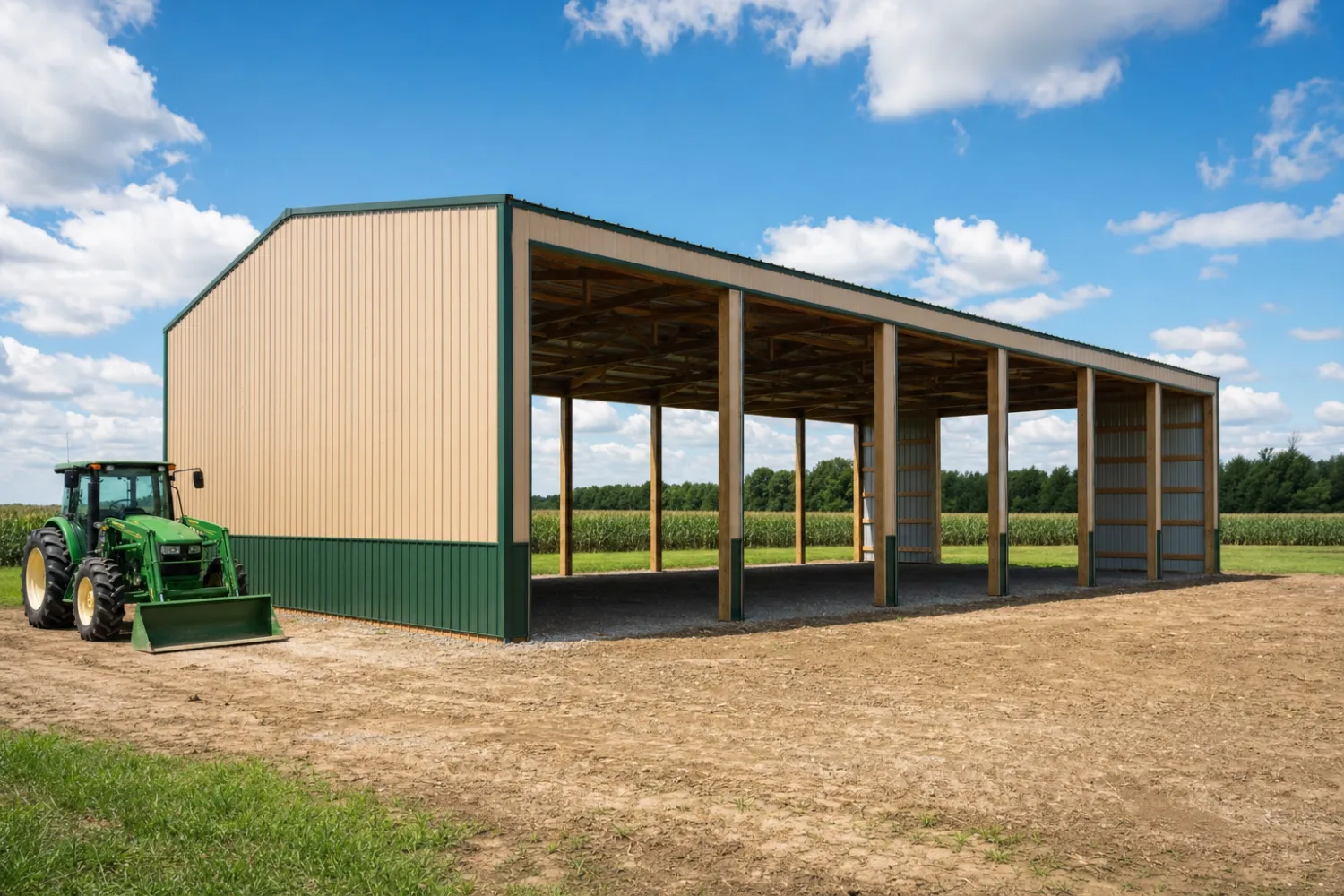
| Carport / RV cover | Yes | Light tube steel, short spans, ground-level work; one or two people manage it |
| Single-car garage | Yes | Bolt-up kit, modest panel weight, walls you can reach with a step setup |
| Workshop / shop to ~30 ft wide | Yes, with helpers | Bolt-up frame and panels are heavier; a crew of two to three and a lift help |
| Wide-span shop or barn (40 ft+) | Hire a crew | Heavy red iron, rafters set at height; equipment and experience matter |
| Weld-up building | Mostly no | On-site structural welding needs a skilled welder, not just assembly |
A feasibility map, not a verdict. Confirm your kit’s frame type and panel weights before you commit to DIY.
What it takes
What building a metal building kit yourself takes
The job asks for general construction sense, a couple of helpers, and the right lift, not a specialty trade ticket. If you have framed, roofed, or run a drill before, a bolt-up kit reads as a large version of work you already know. The honest requirements look like this:
- A crew of two to four. Frame members and roof panels are heavy and awkward; a solo build is slow and unsafe.
- The right tools. Impact drivers, a panel screw gun, a metal-cutting saw, levels, and fall-protection gear. Our tools needed to assemble a kit guide lists the full set.
- A way to lift steel. A telehandler, a boom lift, or at minimum solid scaffolding to set rafters and panels at height. Renting beats trying to muscle it.
- The stamped plans. The kit carries the engineering; your job is to build to the assembly drawings and pass any inspection your permit requires.
- A level foundation and a weather window. The slab or pier layout must match the kit, and a dry stretch keeps the build moving.
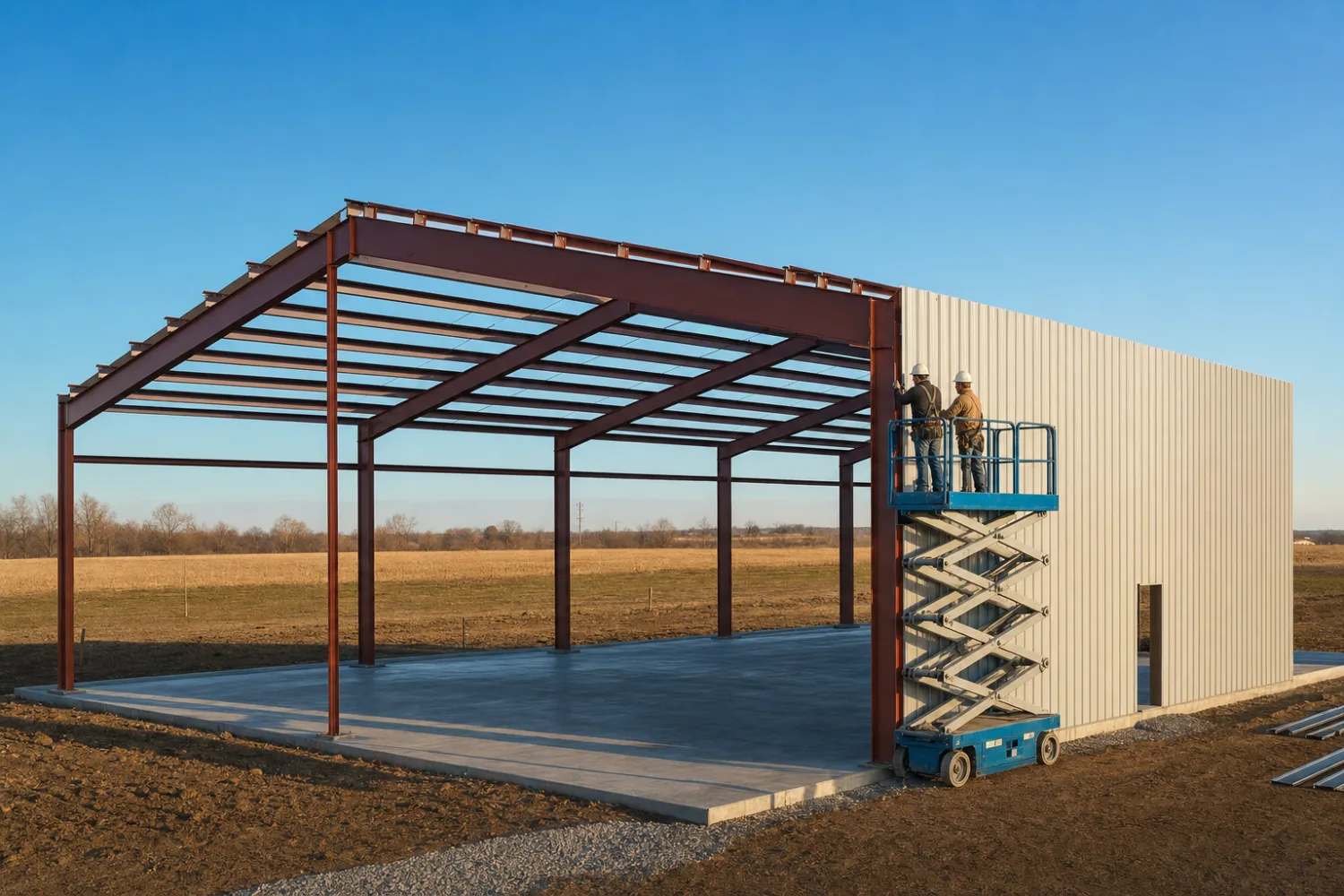
Respect the lift, not just the wrench
The frame bolts together with hand tools, so owners underrate the real hazard: lifting heavy steel to height. Most self-build trouble traces to setting rafters and panels without the right equipment or fall protection, not to the bolting itself. Budget for a rental lift and a safety setup, and never raise a primary frame shorthanded.
The effort
How hard and how long the self-build is
A small bolt-up kit goes up in a weekend or two; a larger one runs a few weeks of part-time work. The pace depends on the size, the crew, and the weather, not on hidden skill. A two-person team can stand a single-car garage over a long weekend, while a 30-foot workshop stretches across several weekends once you factor in the panels, trim, and a door or two ‹confirm›. Our how long does assembly take guide breaks the timeline down by size.
The kit makes the steel DIY-friendly; the lift and the crew decide the rest. Build the size you can raise safely with the help you have, and rent the equipment that keeps the job off the ground and on schedule.
The payoff is labor savings. Erection is a real slice of an installed price, so doing it yourself can take a meaningful cut off the all-in cost, money our metal building kit prices pillar lays out. The catch is that the savings are sweat: every hour you do not pay for is an hour you work, and a stalled DIY build can cost more in time and rework than it saved. Match the project to your time and your help honestly.
When to hire
When to hire a crew instead
Hire a crew when the building gets wide, tall, or heavy, or when the schedule cannot slip. A wide-span red iron shop puts rafters up high and asks for equipment and experience most owners do not have on hand. A commercial or code-strict build, a tight deadline, or a site with no room to stage steel all tip the math toward a professional erector. There is no shame in buying the kit and hiring the install; plenty of owners do exactly that.
The deeper DIY playbook, from planning the slab to the last panel screw, lives in our DIY metal building kits guide, and the crew-versus-self tradeoff is weighed in hiring a crew vs DIY assembly. Read the building first, then pick the path: a small bolt-up kit rewards the self-builder, and a big one rewards a crew.
Related
Read more
Building it yourself connects to the kit type, the tools, and the timeline. Follow these next:
- Construction types & DIY (the parent pillar).
- DIY metal building kits guide (the full self-build playbook).
- Hiring a crew vs DIY assembly (which path fits your build).
- Tools needed to assemble a kit (the gear the job takes).
- Step-by-step assembly overview (how the build sequence runs).
- Metal building kits: the complete guide (the kit product, cross-silo).