Two things shape a metal building in South Carolina: coastal hurricane wind and a mandatory statewide code that local offices enforce. The state runs uniform building codes through the South Carolina Building Codes Council, so your kit has to meet adopted wind and structural standards no matter which county you build in, and most jurisdictions want structural drawings sealed by a South Carolina engineer before they issue a permit ‹confirm›. The permit itself is local, set by your county or city, not by the state.
This guide sits under our metal buildings by state pillar and covers what changes when you put up steel in the Palmetto State: the code and permit path, the wind and seismic loads that drive your design, the humid climate your insulation has to fight, and where the major metros send you to pull a permit. Treat every number here as a starting point and confirm it with your local building department before you buy.
Codes & permits
South Carolina building codes and permits for steel buildings
South Carolina enforces statewide building codes, and no local government can opt out or weaken them. The South Carolina Building Codes Council, housed under the Department of Labor, Licensing and Regulation, adopts the model codes the whole state follows, including the International Building Code and International Residential Code on the 2021 editions ‹confirm›. Your metal building gets reviewed against those structural and wind standards. For the national picture of how this works, see our permits and codes guide.
Most jurisdictions ask for engineered drawings sealed by an engineer licensed in South Carolina, showing the frame holds the local wind and snow loads ‹confirm›. A reputable kit supplier provides stamped plans for your site. The permit is issued locally: if your land sits in an unincorporated area, you go to the county building department, and if you are inside city limits, you go to that municipal permit office ‹confirm›.
Size sets the threshold. Under the 2021 South Carolina Building Code, detached accessory structures under 120 square feet are exempt from a building permit, though many municipalities draw the line at 200 square feet, and some counties trigger a permit at 100 square feet or a set dollar value ‹confirm›. Exempt does not mean unregulated. Zoning, setbacks, and easements still apply to a small shed. A homeowner can act as their own contractor under the state owner-builder exemption, but you sign a disclosure that makes you liable for code compliance ‹confirm›.
Verify before you buy
Permit thresholds, site-plan rules, and stamped-drawing requirements are set jurisdiction by jurisdiction. Call your local building department with your exact size, use, and address before you order a kit. Building without a permit can mean fines, a stop-work order, or a forced teardown at your expense.
Loads
Wind, snow, and seismic loads in South Carolina
Wind is the load that drives most South Carolina designs. The coast from Hilton Head through Charleston to Myrtle Beach sits in a hurricane-prone region, so coastal counties design for higher ultimate wind speeds than the Upstate, and exposure near open water raises the bar again ‹confirm›. Snow is light across the state and only matters in the northwestern mountains. Read our snow load and wind load guide for how these numbers translate into frame and anchor specs.
South Carolina also carries a seismic story most southern states do not. The Lowcountry around Charleston produced one of the largest earthquakes in the eastern United States in 1886, and that history feeds elevated seismic design considerations along the coastal plain ‹confirm›. Your engineer accounts for it in the foundation and bracing, which is one more reason to build on a properly engineered foundation.
| Load type | Typical South Carolina range | Who sets it |
|---|---|---|
| Wind (ultimate design speed) | Higher on the coast, lower in the Upstate ‹confirm› | Local jurisdiction, per adopted IBC/IRC |
| Ground snow | Light statewide, modest in the mountains ‹confirm› | Local building department |
| Seismic | Elevated near the Charleston coastal plain ‹confirm› | Adopted code + site soil class |
Treat these as starting points. Your county or city sets the binding values for your address.
Never accept a single statewide load figure as gospel. The binding numbers come from your jurisdiction and your specific site, so get them in writing from the building department and hand them to your supplier before the frame is engineered.
Climate
Climate and insulation for a South Carolina metal building
South Carolina is humid and warm, sitting mostly in IECC climate zone 3A with a sliver of the far coast in zone 2A ‹confirm›. That makes condensation control, not deep cold-weather R-value, the first job of your insulation. Warm, moist air hitting cool steel sweats, and unmanaged moisture is the quiet enemy of any metal building in the Southeast.
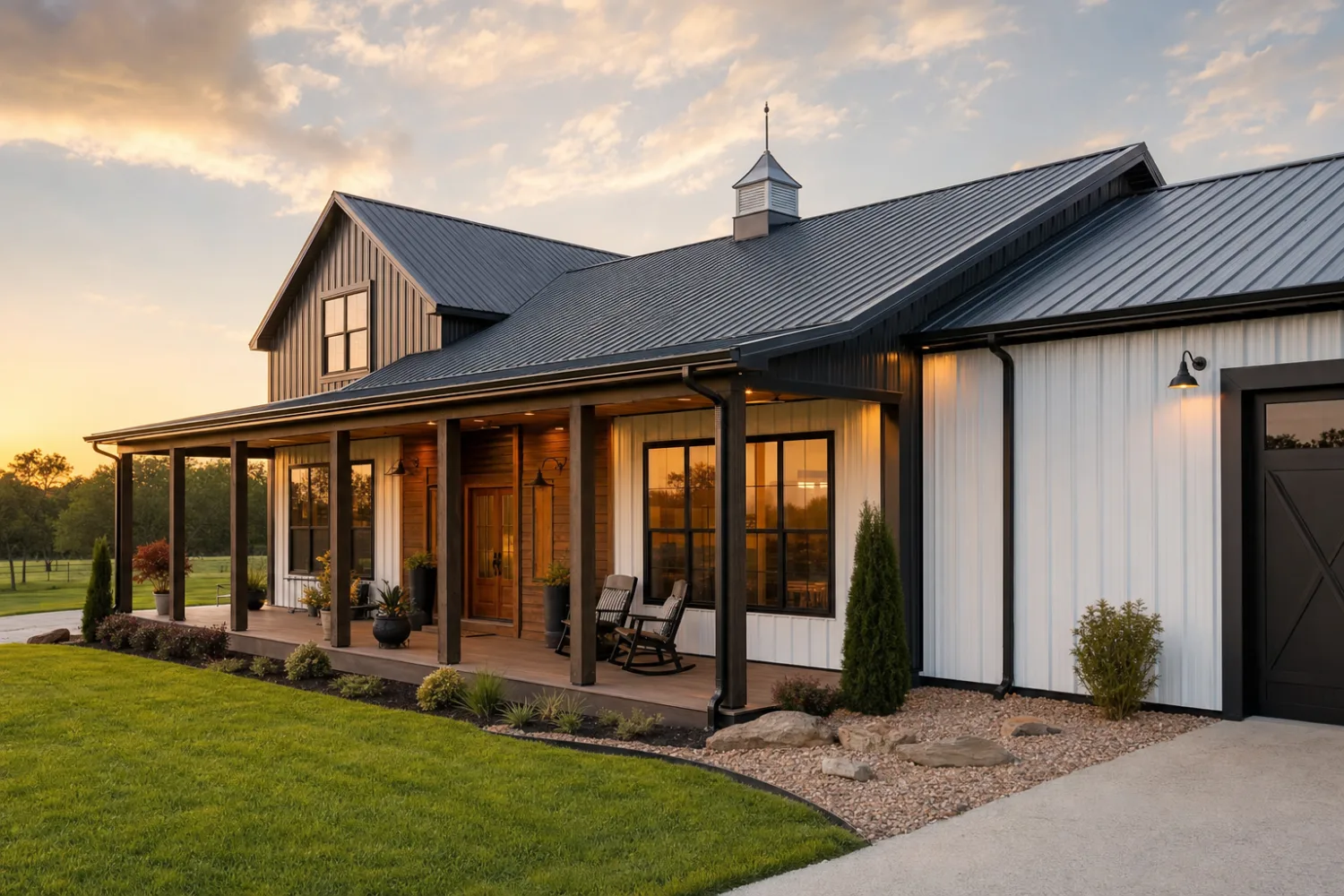
Plan for a vapor barrier, good ventilation, and insulation matched to a cooling climate. Our metal building insulation guide walks through the assemblies that keep a Lowcountry shop dry and a barndominium comfortable through a humid summer. The goal is a sealed, ventilated shell that stops sweat before it starts, then a target R-value that earns its keep against air-conditioning bills rather than hard freezes.
Pricing
What drives metal building prices in South Carolina
Steel is a national commodity, so the base price of a South Carolina kit tracks the same market as the rest of the country. What shifts your delivered cost is regional: how far the components travel from the mill or fabrication plant, local labor rates, and the engineering premium a coastal wind zone adds to the frame ‹confirm›.
Coastal builds tend to cost more than Upstate builds for the same footprint, because higher wind ratings mean heavier steel and more anchorage. Permit fees, site work, and a slab also vary by county. For dated 2026 illustrative ranges and the line items that move a quote, start with our metal building kit prices pillar, then price your exact size and load against two or three local suppliers.
Uses & metros
Popular uses and metro building departments in South Carolina
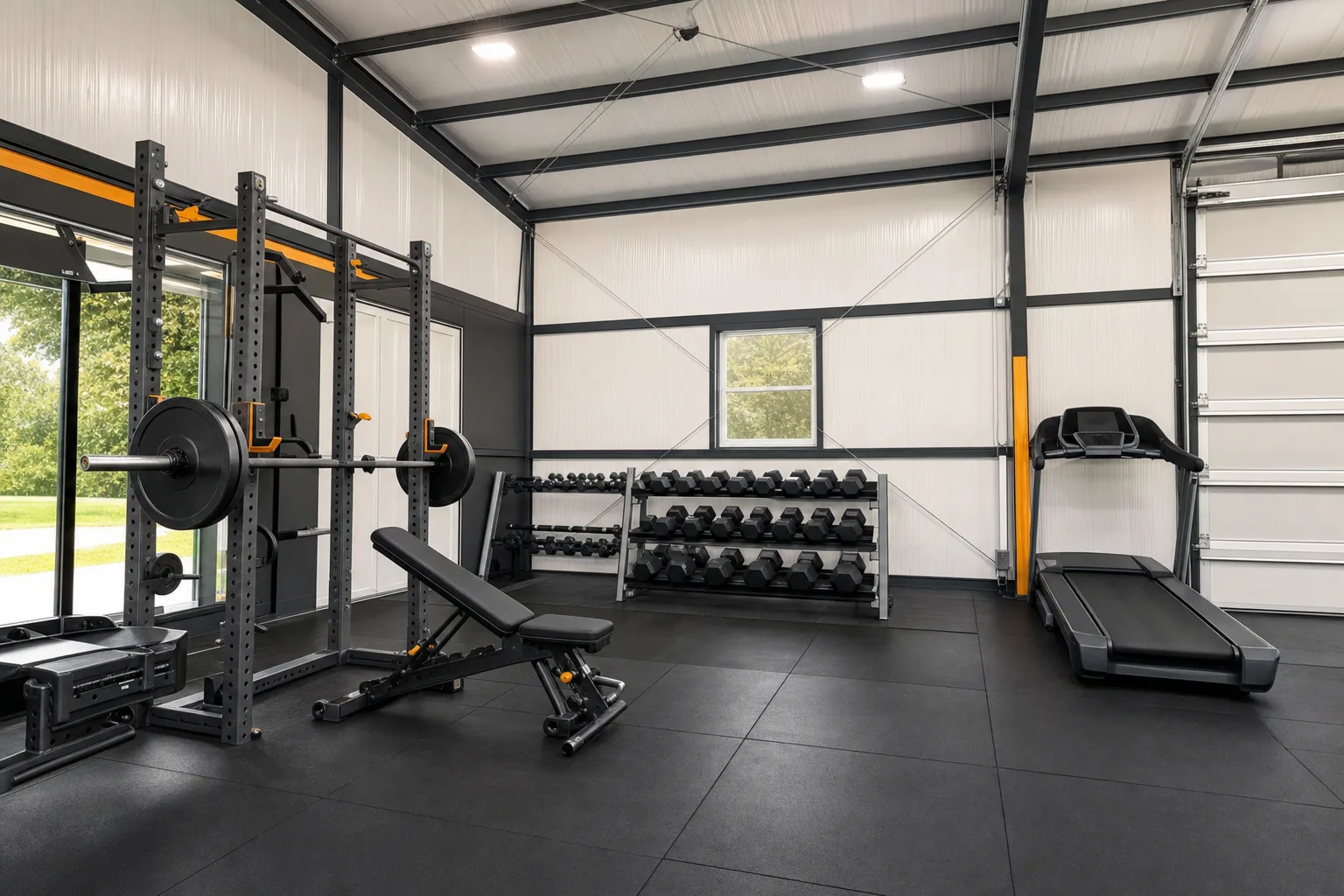
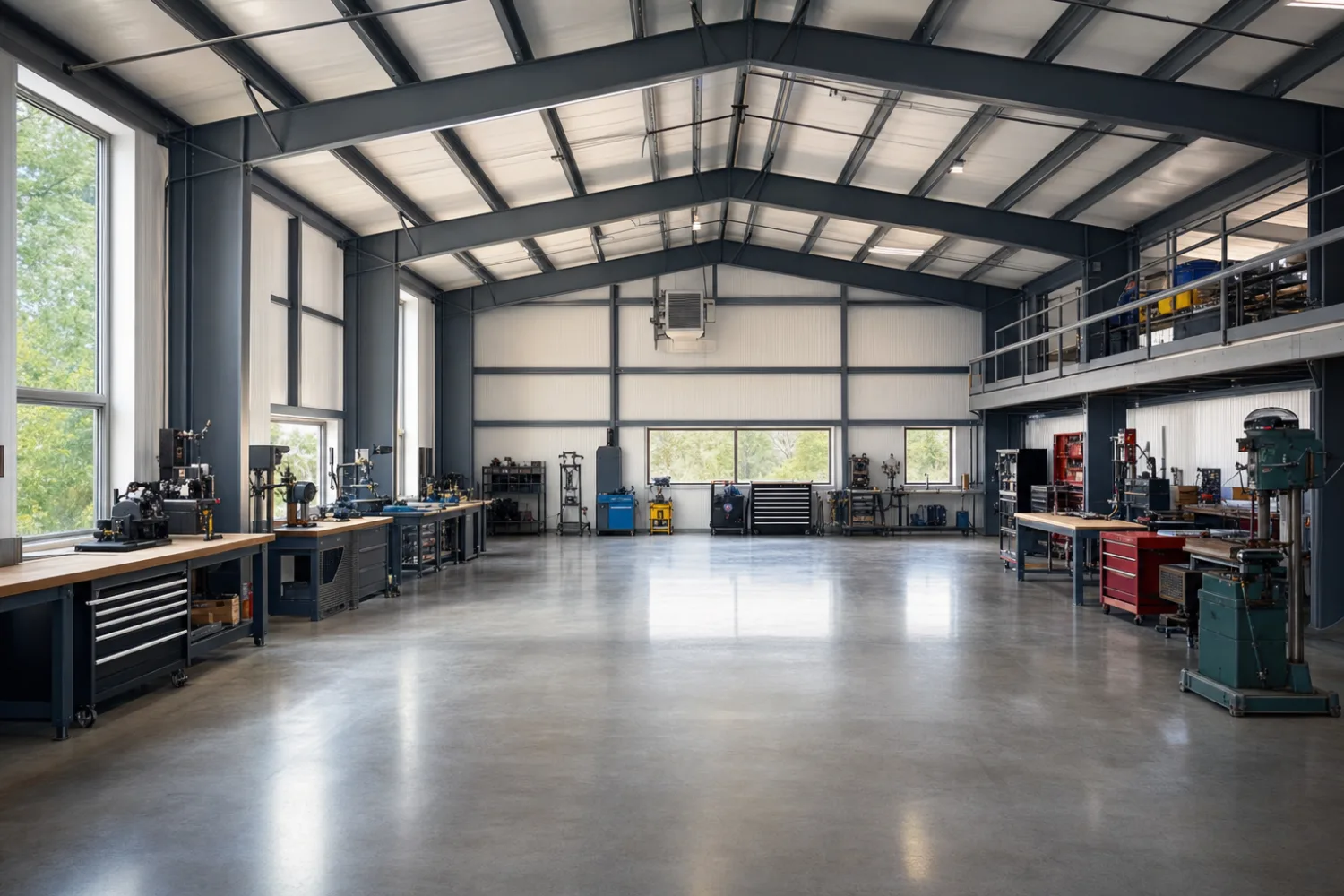
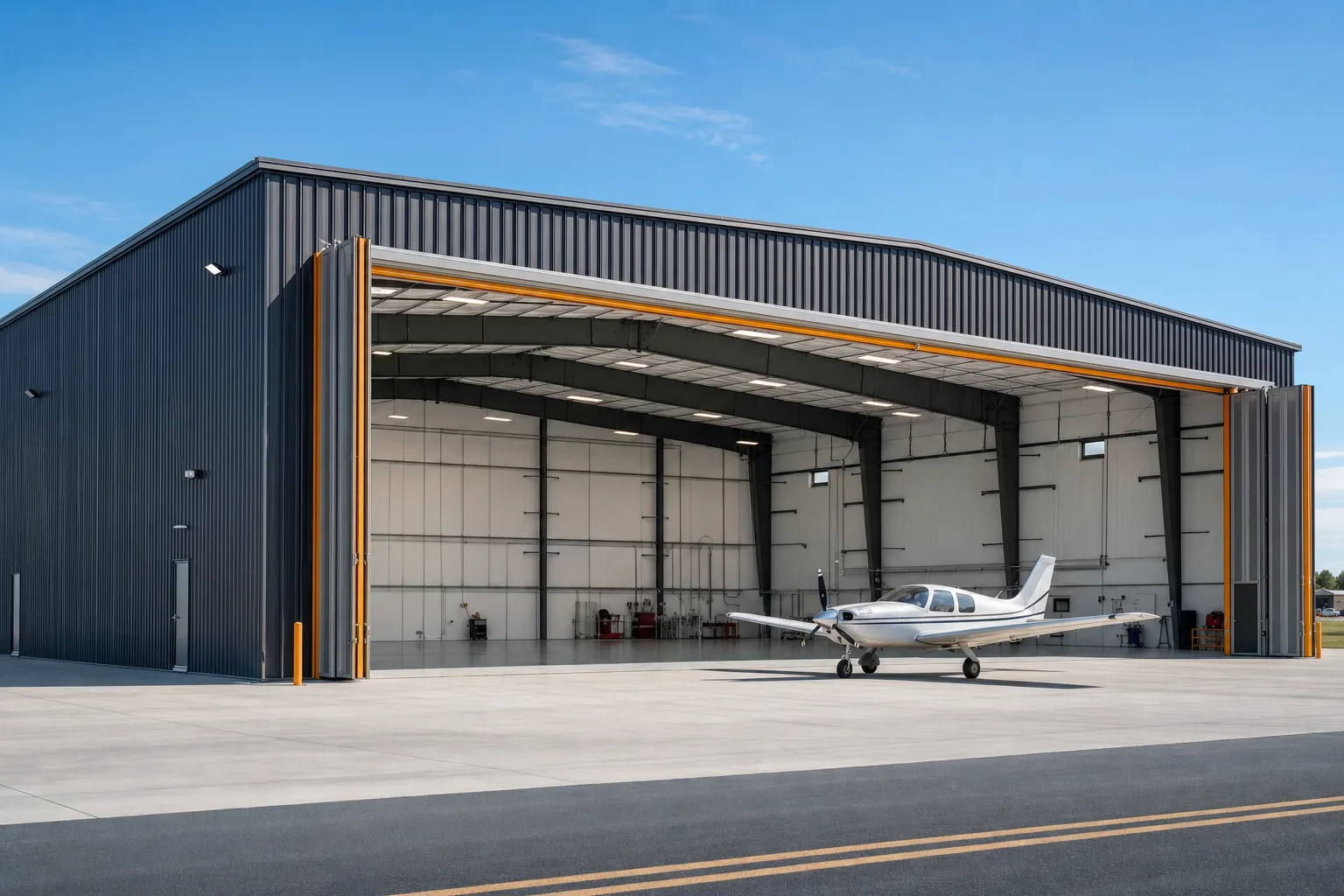
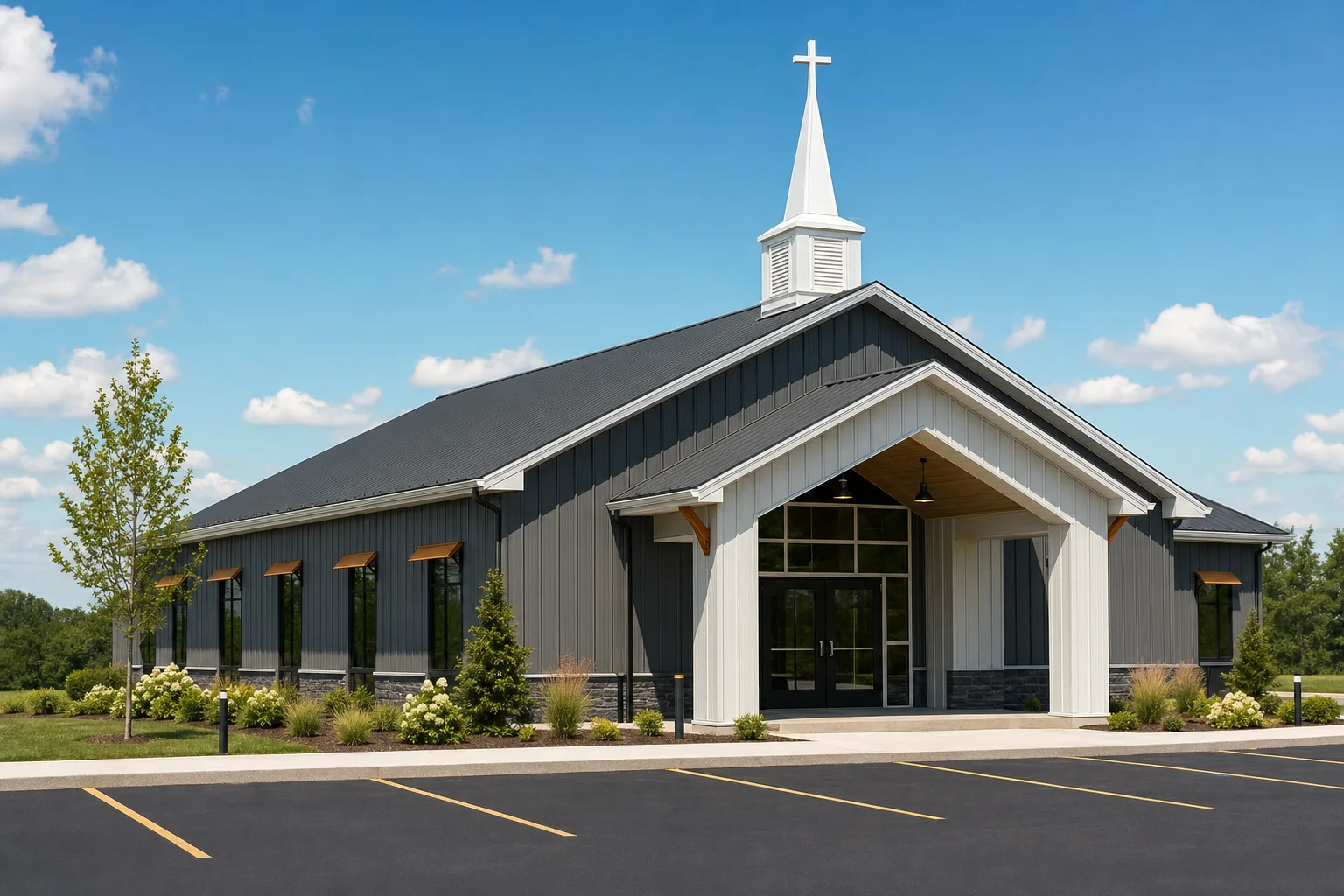
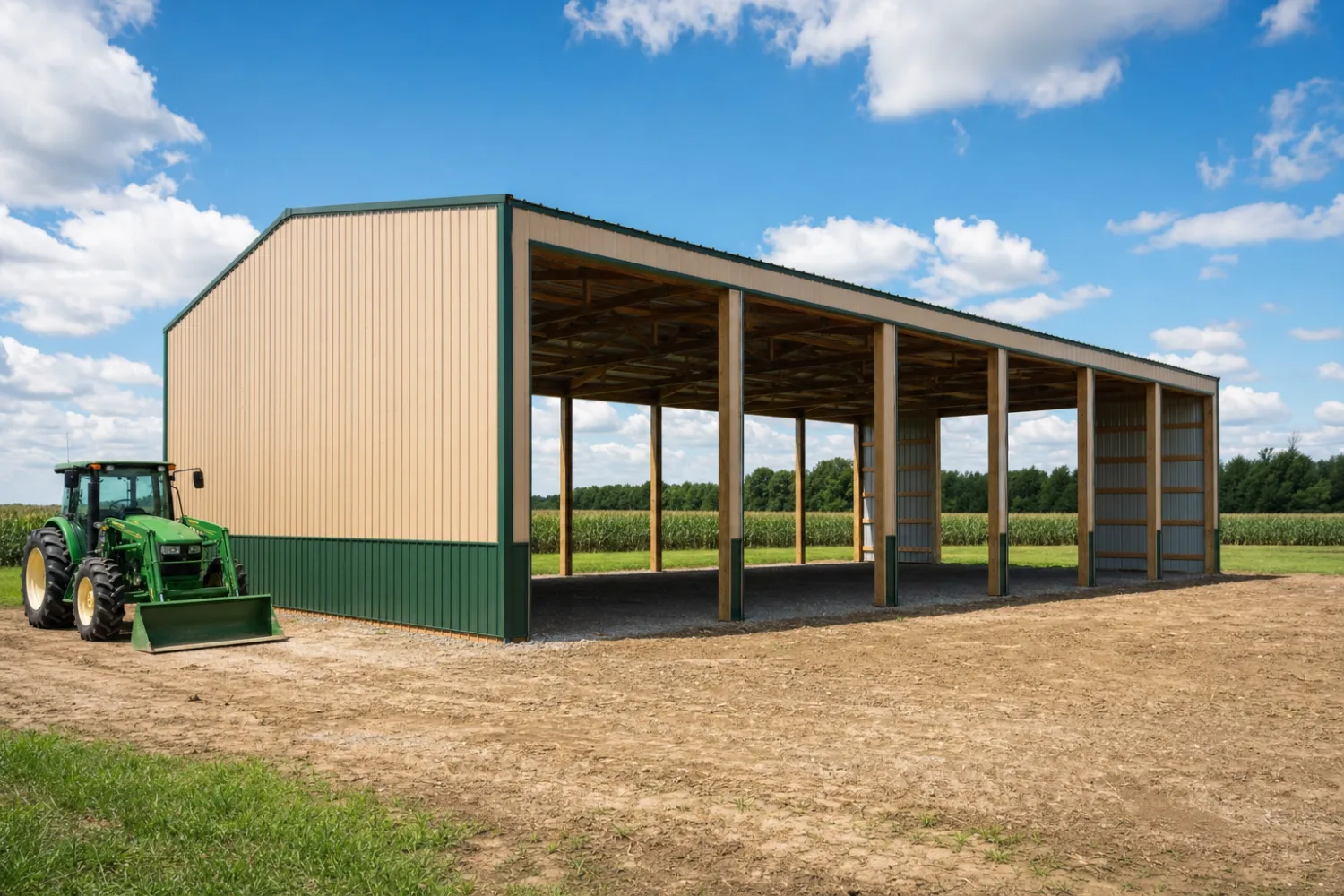
Across South Carolina you see steel going up as workshops, detached garages, agricultural pole barns, RV and boat storage near the coast, warehouses, and barndominiums on rural acreage. The use you choose drives the permit path, since a residential garage, a commercial warehouse, and a farm building each sit under different zoning and review.
Demand concentrates in the major metros: Charleston, Columbia, Greenville, Myrtle Beach, and Rock Hill. Each one routes you to a specific office. In the Charleston metro, the City of Charleston Permit Center at 2 George Street handles city permits, the City of Charleston Inspections Division runs the inspections, Charleston County Planning on Bridge View Drive covers unincorporated areas, and the City of North Charleston Building Inspections office serves North Charleston ‹confirm›. Confirm which one owns your parcel before you file, because the city and the county draw different lines.
FAQ
South Carolina metal building questions, answered
Do you need a permit to put a metal building on your property in South Carolina?
Usually yes. Under the 2021 South Carolina Building Code, a detached accessory structure under 120 square feet is exempt from a building permit, and many municipalities raise that to 200 square feet ‹confirm›. Anything larger, or anything with a slab, electrical, plumbing, or HVAC, needs a permit. Zoning and setbacks apply even to exempt sheds. Confirm your threshold with the local building department.
Can a homeowner pull a building permit in South Carolina?
Yes. A state owner-builder exemption lets you act as your own general contractor on a home you live in, but you sign a disclosure accepting responsibility for code compliance, and you generally cannot sell or rent the property within two years of finishing the work ‹confirm›. Specialty trades like electrical and mechanical often still require a licensed contractor.
Do I need engineer-stamped drawings for a metal building in South Carolina?
Most jurisdictions ask for structural plans sealed by an engineer licensed in South Carolina, proving the frame meets local wind and snow loads ‹confirm›. A reputable kit supplier provides stamped drawings for your site and loads. Verify the exact requirement with your building department before you order.
What requires a building permit in South Carolina?
In general, any new construction, structural alteration, addition, or demolition needs a permit, along with new electrical, plumbing, or mechanical work. Cosmetic updates like paint or flooring do not. Detached accessory structures under the local size threshold are exempt from the building permit but still answer to zoning ‹confirm›.
What happens if you build a metal building without a permit?
You risk a stop-work order, fines that can run several times the permit fee, and an order to bring the building up to code or tear it down at your expense. Unpermitted work can also block financing, raise your taxes, complicate insurance, and surface as a problem when you sell. Pulling the permit is far cheaper than fixing the fallout.
Is the building code the same in every South Carolina county?
The structural and wind codes are statewide and mandatory, set by the South Carolina Building Codes Council, and no county can opt out ‹confirm›. What varies locally is the permit process: size thresholds, site-plan rules, fees, and which office issues the permit. The standards travel with you across the state; the paperwork does not.
Read next
Keep reading
Compare neighboring states and dig into the specs that decide your build:
- Metal building kits in North Carolina (the next state north).
- Metal building kits in Georgia (just across the Savannah River).
- Metal building kits in Tennessee (the inland mountain neighbor).
- Metal building kits in Florida (the high-wind coastal benchmark).
- Metal building permits and codes (the national permit path).
- Snow load and wind load explained (how engineers size your frame).
- Metal building foundation options (slab, pier, and anchorage).
- Metal building insulation (humidity control for the Southeast).
- Metal building kit prices (the cost pillar).
Sources
Sources
- UpCodes, South Carolina code adoption: up.codes/codes/south_carolina
- SC LLR Building Codes Council: llr.sc.gov/bcc
- JP Carports, permit for a metal building in SC: jpcarports.com
- First Choice Carports, South Carolina metal building permit guide: firstchoicecarports.com
- Cold Spring Metal, carport permits in South Carolina: coldspringmetal.com
- Carport1, metal buildings in South Carolina (county thresholds): carport1.com
- City of Charleston Permit Center: charleston-sc.gov/856/Permit-Center
- City of Charleston Building Inspections: charleston-sc.gov/324/Building-Inspections
- City of North Charleston Building Inspections: northcharleston.org