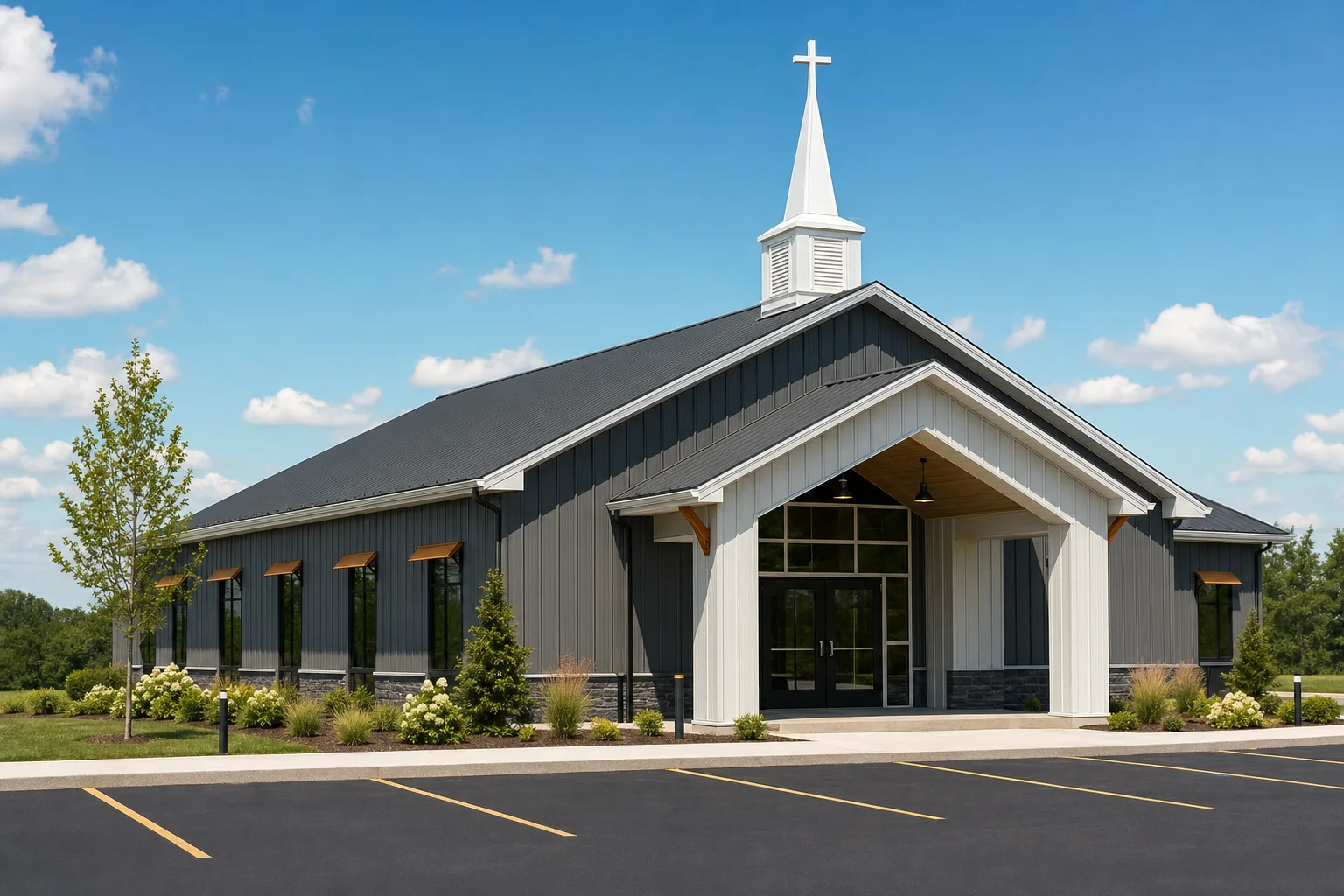
A well-built metal building lasts 40 to 60 years or more, and a protected steel frame often stays sound even longer ‹confirm›. There is no single expiration date, because the building ages in layers: the structural frame lasts the longest, the panels and their coating age next, and the fasteners and sealants are the first to need attention. How long yours lasts comes down to coating quality, the install, and the upkeep more than the thickness of the steel.
This page sits under the metal building kits pillar and gives the full answer behind a question that shapes every buying decision. Below: the honest range, how each part of the building ages on its own clock, what drives the number up or down, and how to push your building toward the long end of that range.
The honest range
How long a metal building lasts in practice
Plan on decades, not years. Steel does not rot, warp, split, or feed termites, so the structure itself is rarely the limit. The limit is corrosion, and corrosion is something you hold off with coatings, drainage, and a dry interior, not something baked into the metal. A building kept dry and maintained reaches the long end of its range; a neglected one in a wet climate ages far sooner.
The useful way to read lifespan is part by part, because a metal building does not wear out all at once. The frame is the slow part, the panels and finish are the middle, and the fasteners and sealants are the fast part you service. The table below sets rough, illustrative service lives against what limits each one.
| Component | Illustrative service life | What limits it |
|---|---|---|
| Structural frame | 50+ years ‹confirm› | Corrosion if it gets wet; primed and inside the shell, it lasts longest |
| Roof & wall panels | 40–60 years ‹confirm› | Coating wear; the metal stays sound while the finish holds |
| Panel coating / paint | 25–40 years ‹confirm› | Sun, rain, and abrasion; eventually chalks and wants a recoat |
| Fasteners & washers | 10–20 years ‹confirm› | Rubber washers harden and screws loosen; the first service item |
| Sealants & closures | 10–20 years ‹confirm› | Shrink and dry out at seams and trim; a planned replacement |
Illustrative ranges, not guarantees. Coating quality, climate, and upkeep move every row. Confirm specifics against your kit.
So the building outlives its first set of sealants several times over. You reseal seams and swap fasteners on a long cycle while the frame and panels carry on, which is why a metal building can stand for two or three human generations with light, steady attention.
What drives it
What decides how long your building lasts
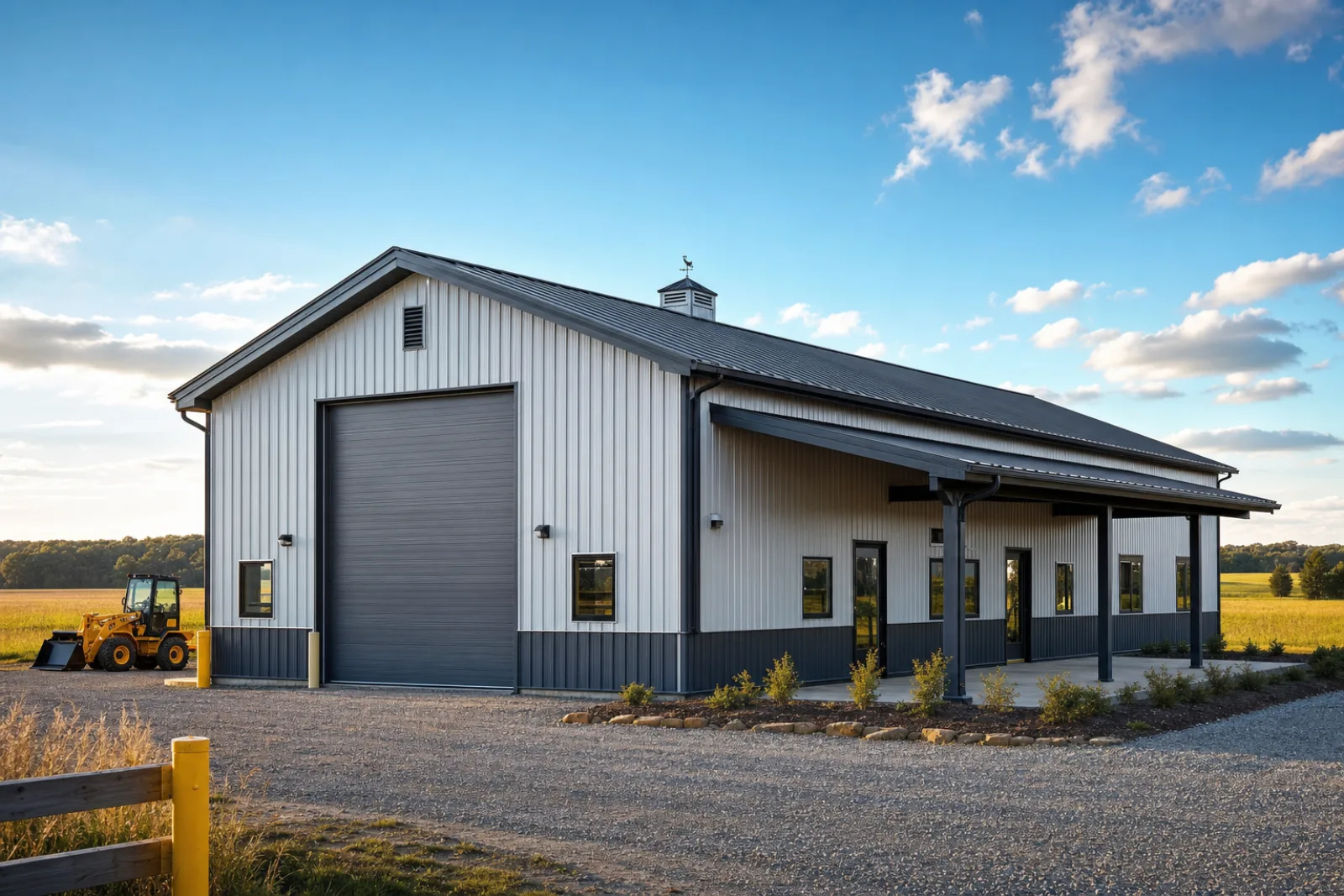
Five things decide a metal building’s lifespan, and only one of them is the steel. Get them right and an ordinary kit lasts a long time; get them wrong and a premium kit corrodes early.
- Coating quality. Rust is the thing that ends a steel building, and the coating holds it off. A Galvalume or painted finish on the panels and a sound primer on the frame are the first lever on lifespan, ahead of gauge.
- Condensation control. Most interior rust traces to trapped moisture, not weather that got in. Venting and insulating the building stops it from rusting itself from the inside.
- Maintenance. Routine upkeep keeps seals, fasteners, and drainage doing their job. The work is light, a yearly walk-around and the odd resealed seam, and skipping it is how small problems turn into rust.
- Install quality. A square, well-anchored building with tight seams sheds water the way it was designed to. A rushed install leaves gaps that let moisture work in for decades.
- Climate. Salt air, heavy snow, and constant humidity age a building faster than a dry inland site, so the same kit asks for more attention in a harsher place.
The steel is rarely the weak point
Owners often shop on gauge as if thicker steel guarantees a longer life. It helps with load and dents, but it does little against rust. A thinner panel with a quality coating, kept dry and maintained, outlasts a thick one left bare in a damp building. Spend your attention on the coating, the ventilation, and the upkeep first. The rust prevention guide covers the rest.
Going the distance
How to reach the long end of the range
Three habits move a building toward the high end of its lifespan: keep it dry, keep the coating sound, and service the small parts on a schedule. None of it is hard, and all of it is cheaper than fighting corrosion after it starts.
The warranty is a useful signal here, because it is the manufacturer’s own statement of how long each part should hold. The frame and panel substrate usually carry the longest terms, the paint finish a shorter one against chalk and fade, and the fasteners the shortest or none. Reading a metal building warranty line by line shows you the maker’s own ranking of what lasts, and the conditions almost always assume the building is installed correctly, drained, and kept free of trapped moisture.
Steel lasts when you keep it dry. The difference from wood is that steel shows you the problem as a rust streak you can fix, while wood hides it as rot you find too late.
Done right, the result is a structure that outlasts most of what surrounds it. A protected steel shell ages slowly and predictably, which is a large part of why metal building kits have taken so much of the market. For the question of corrosion itself, see whether metal buildings rust and what stops it.
Related
Read more
This answer connects to the coatings, upkeep, and warranty that protect the steel. Follow these next:
- Metal building kits: the complete guide (the parent pillar).
- Metal building rust prevention (stopping the corrosion that ends a building).
- Metal building maintenance (the upkeep that reaches the long end of the range).
- Metal building warranties (the durability terms behind each part).
- Galvanized vs Galvalume vs painted steel (the coatings that fight rust).
- Do metal buildings rust? (the corrosion question, answered).