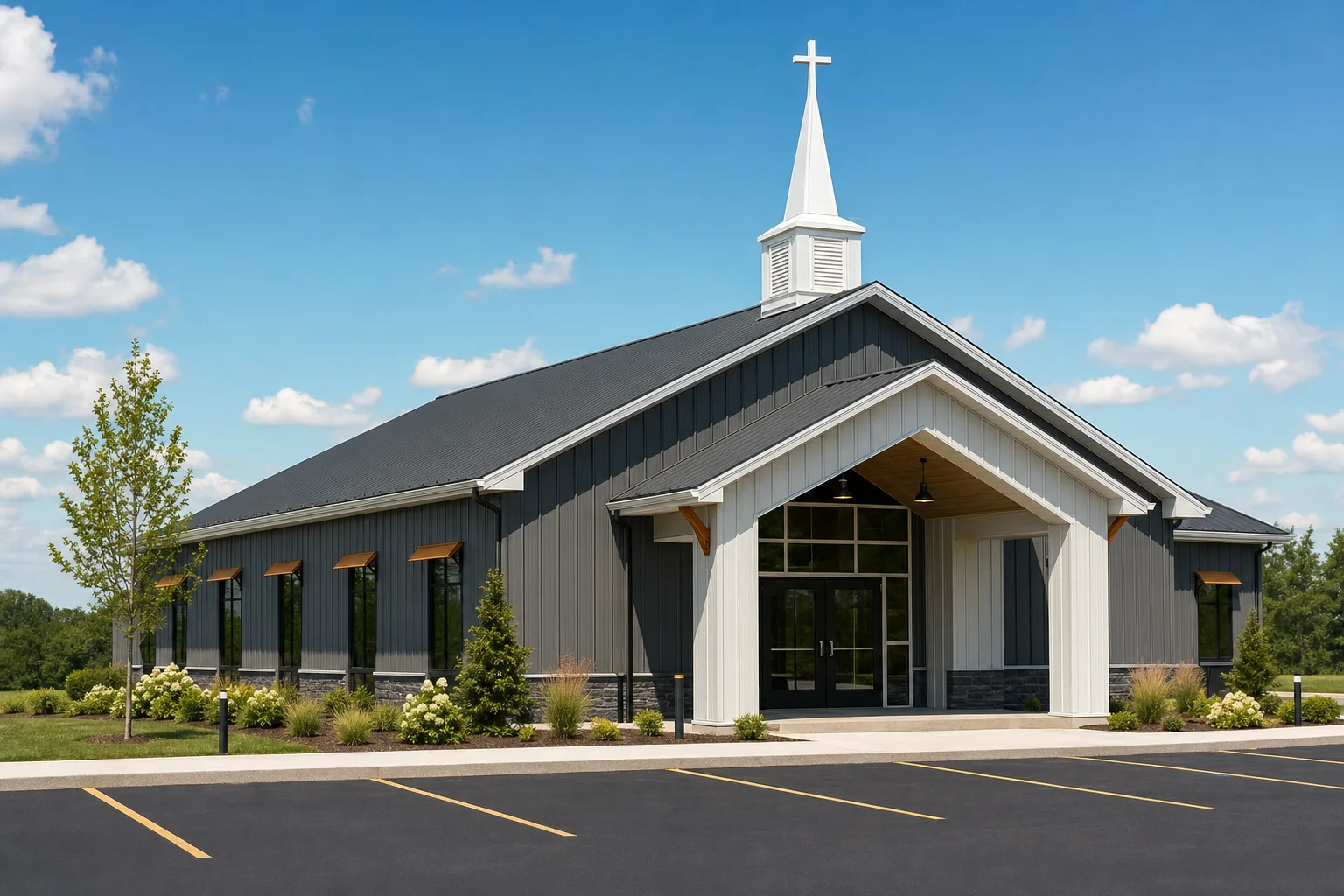
A metal building kit is a pre-engineered steel shell you bolt together on a slab; stick-built construction frames a building piece by piece from dimensional lumber on site. Steel wins on wide clear span, build speed, and the cost to put up a weather-tight shell. Stick-built wins on heavy custom finishes and the detailed residential geometry a steel frame is not shaped for. The right answer depends on what the building is for and how finished it has to be.
This guide sits under the metal building kits pillar in our Basics & Buying silo. Below: what each method is, where steel pulls ahead, where wood holds its ground, and how the shell-cost gap narrows once you finish the inside to a residential standard. If you are weighing a kit against a contractor framing from scratch, this is the comparison that keeps the two on the same scale.
Two ways to build
What a steel kit and stick-built construction are
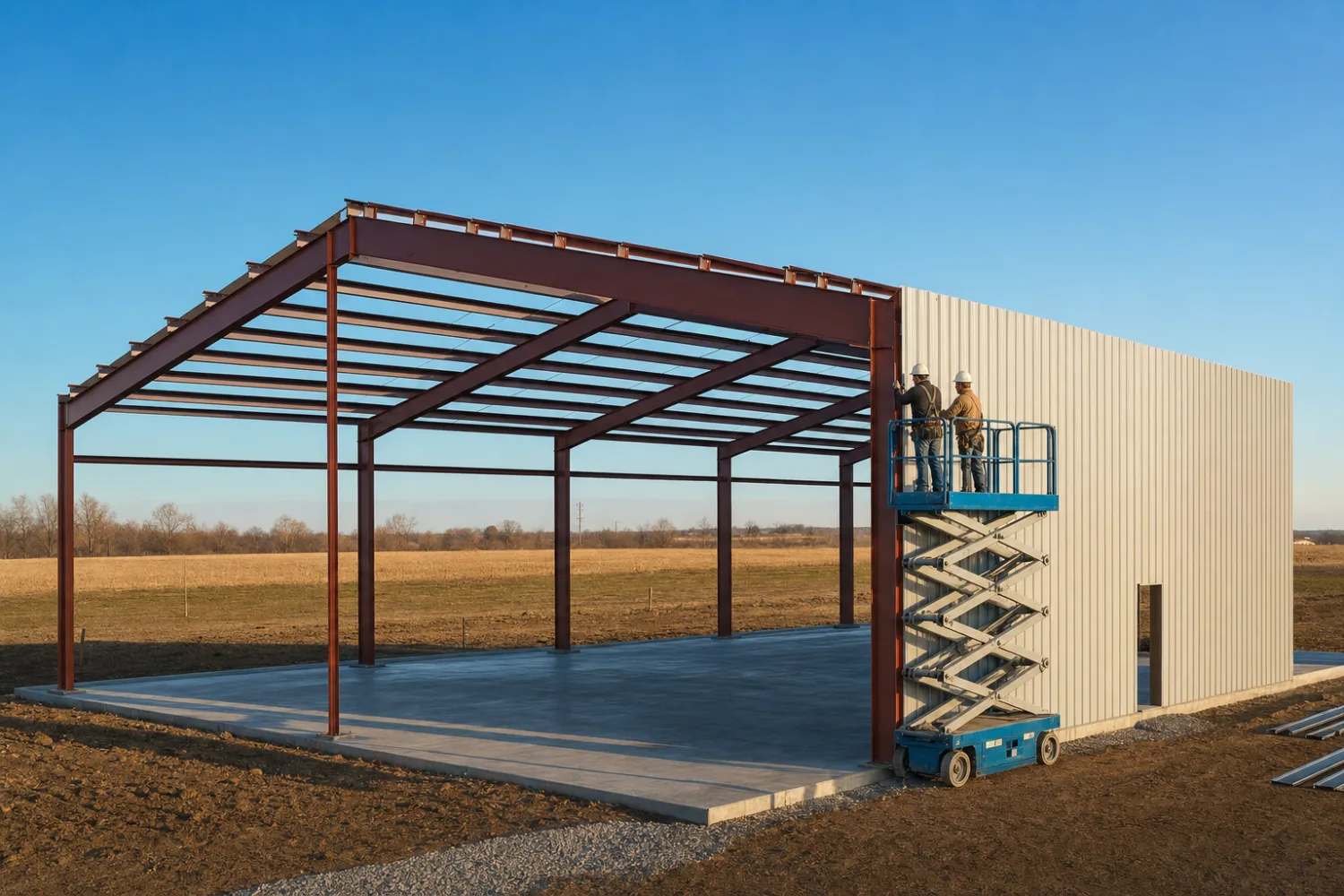
A metal building kit ships as a numbered package of steel: primary frame, secondary framing, panels, and fasteners, engineered to fit before it leaves the plant. You or a crew bolt it together in a known sequence. For the full breakdown of what arrives on the truck, see our what is a metal building kit guide.
Stick-built construction is the conventional method most houses use. A crew frames walls, floors, and a roof on site from wood studs, joists, and rafters, cutting and fastening each piece to plan. Nothing is pre-cut to a kit. The framing takes shape board by board, which is what gives it flexibility and what makes it slower.
The split matters because the two methods are good at different things. Steel is a system built for speed and span. Wood is a material built for shaping. Comparing them on price alone misses the point, because they are not buying you the same building. One enclosures space fast and cheap; the other lets you sculpt a custom result.
Where steel wins
Where a metal building kit comes out ahead
Steel wins on three fronts: clear span, speed, and the cost to get weather-tight. Each one traces back to the same thing, a frame engineered as a system instead of cut on site.
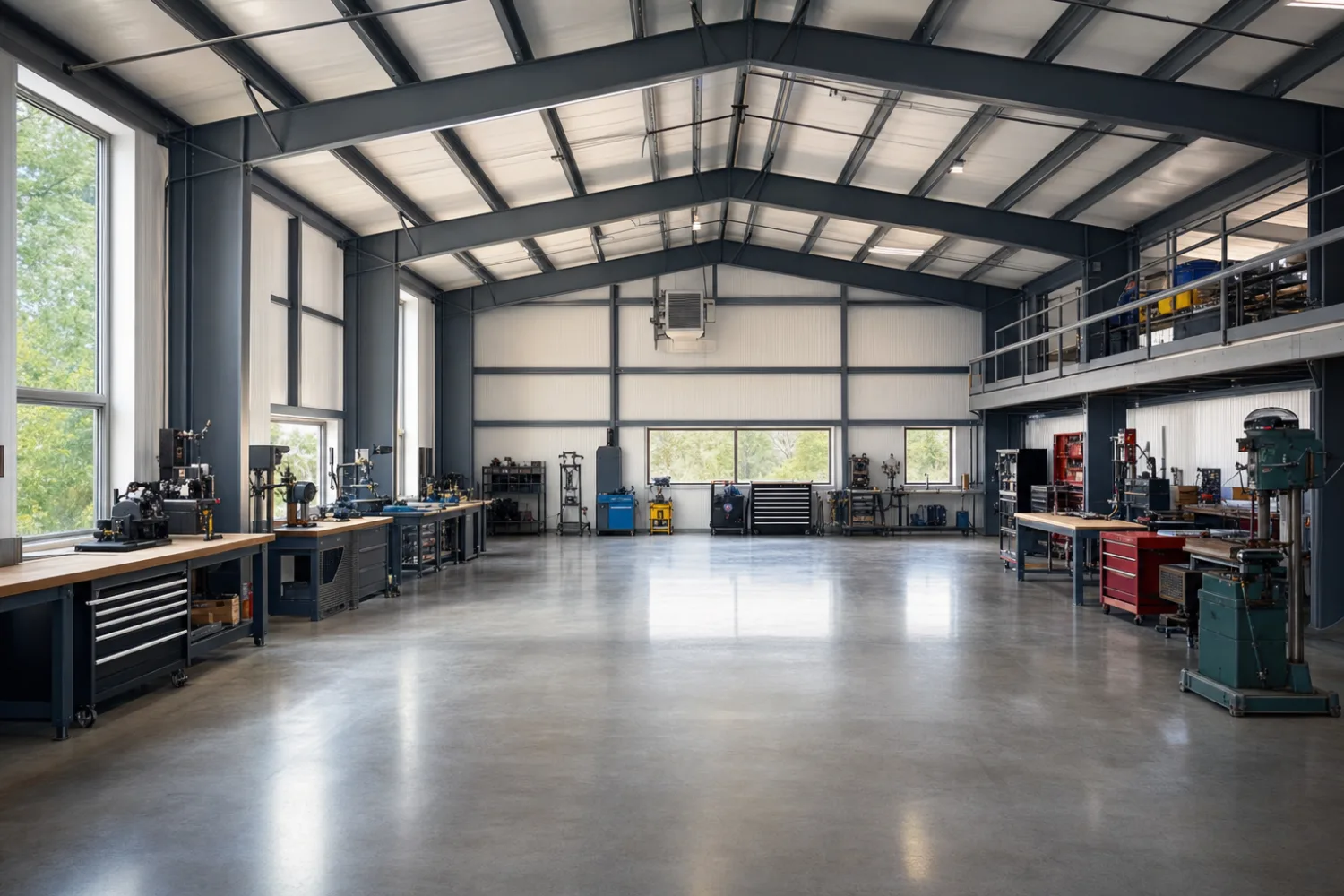
Start with span. A steel frame reaches wide and clear, so a 40 or 50-foot shop has no posts in the middle of the floor. Wood framing that wide needs interior bearing walls, posts, or engineered beams that add cost and eat the open space. If you want one uninterrupted room, steel gets you there for less. The frame choice behind that reach is covered in our red iron vs tube steel guide.
Speed is the second front. A bolt-up kit follows a fixed sequence with no cutting and fitting, so a shell that would take a framing crew weeks can go up in days. Less labor on site means a smaller bill and a building you can close in before the weather turns. For a workshop or a garage, that schedule is often the whole reason to go steel.
The third front is the cost to enclose. Pound for pound, a steel shell puts a roof and four walls over your slab for less than framing the same footprint in wood. The bare shell is where the kit price looks unbeatable, and for an unfinished shop or barn, that bare shell is most of the building.
Durability is the quiet fourth win. Steel does not rot, warp, twist, or feed termites, so a coated shell shrugs off the slow problems that age a wood frame. It is non-combustible, which can help with insurance in some areas ‹confirm›. The main thing to manage is moisture inside the shell, which is a condensation and ventilation question, not a weakness in the steel.
Where wood wins
Where stick-built construction still wins
Stick-built wins where the building has to be heavily finished or shaped to a residential form. Wood frames the kind of detail steel was never meant to carry.
Custom finish is the clearest case. Stick framing gives you stud bays sized for standard insulation, easy runs for wiring and plumbing, and a surface drywall hangs on without extra work. You can do all of that in a steel building, but it takes added framing and planning. For a heavily finished interior, wood starts a step ahead.
Residential geometry is the second case. Dormers, vaulted ceilings, complex rooflines, bay windows, and the trim details that read as a house are native to wood framing. A pre-engineered steel frame is built around clean spans and straight lines, so pushing it into ornate residential shapes fights the system. If the look has to say custom home, wood bends more easily.
There is a middle path worth knowing. Many owners build a steel shell and finish it to a residential standard inside, the barndominium approach our metal building homes guide covers. You get the steel shell economics and the finished living space, as long as you plan the finish work into the budget from the start.
Head to head
Steel kit vs stick-built: the comparison
The two methods split along the lines that decide most projects: span, speed, shell cost, finish, and durability. Read them together, because a win on one line is often a tradeoff on another.
| Steel building kit | Stick-built | |
|---|---|---|
| Clear span | Wide, no interior posts | Limited without added beams or walls |
| Build speed | Days for a bolt-up shell | Weeks of on-site framing |
| Shell cost per sq ft | Lower to enclose | Higher to frame and sheathe |
| Custom finish | Possible, needs added framing | Native to the method |
| Residential geometry | Best for clean spans | Handles dormers, vaults, trim |
| Durability | Steel resists rot, pests, fire | Quality wood lasts but is vulnerable |
| Best for | Shops, barns, garages, simple homes | Detailed custom houses |
A method comparison, not a verdict. The right pick depends on use and finish level, not price alone.
Compare the finished building, not the bare shell. Steel wins the race to weather-tight, but the gap narrows once both buildings are insulated, wired, and trimmed to the same standard.
The cost gap
How the cost gap narrows once you finish the interior
The steel advantage is largest at the shell and smallest at the finished house. That is the single most useful thing to understand before you choose, because the headline savings can shrink as the finish work goes in.
On a bare shell, a steel kit can come in well under stick-built for the same footprint ‹confirm›. That number is real, and for an unfinished shop or barn it is the number that counts. The kit puts up a roof and walls fast and cheap, and you are done.
Finish the inside to a residential standard and the math shifts. Insulation, framing for drywall, interior walls, wiring, plumbing, HVAC, and trim cost roughly the same whether the shell is steel or wood, and on a steel building you add framing to hang the finishes. By the time both buildings are move-in ready houses, the shell savings is a smaller share of the total ‹confirm›. The steel still costs less to enclose; it just no longer halves the whole project.
So the honest read is this: the more finished the building, the closer the two methods land. For a workshop, steel is the clear value. For a fully finished home, run both numbers all the way to the trim before you decide. The cost guide walks the full stack, and the prices guide sets expectations for the shell itself.
Which to choose
Which one fits your project
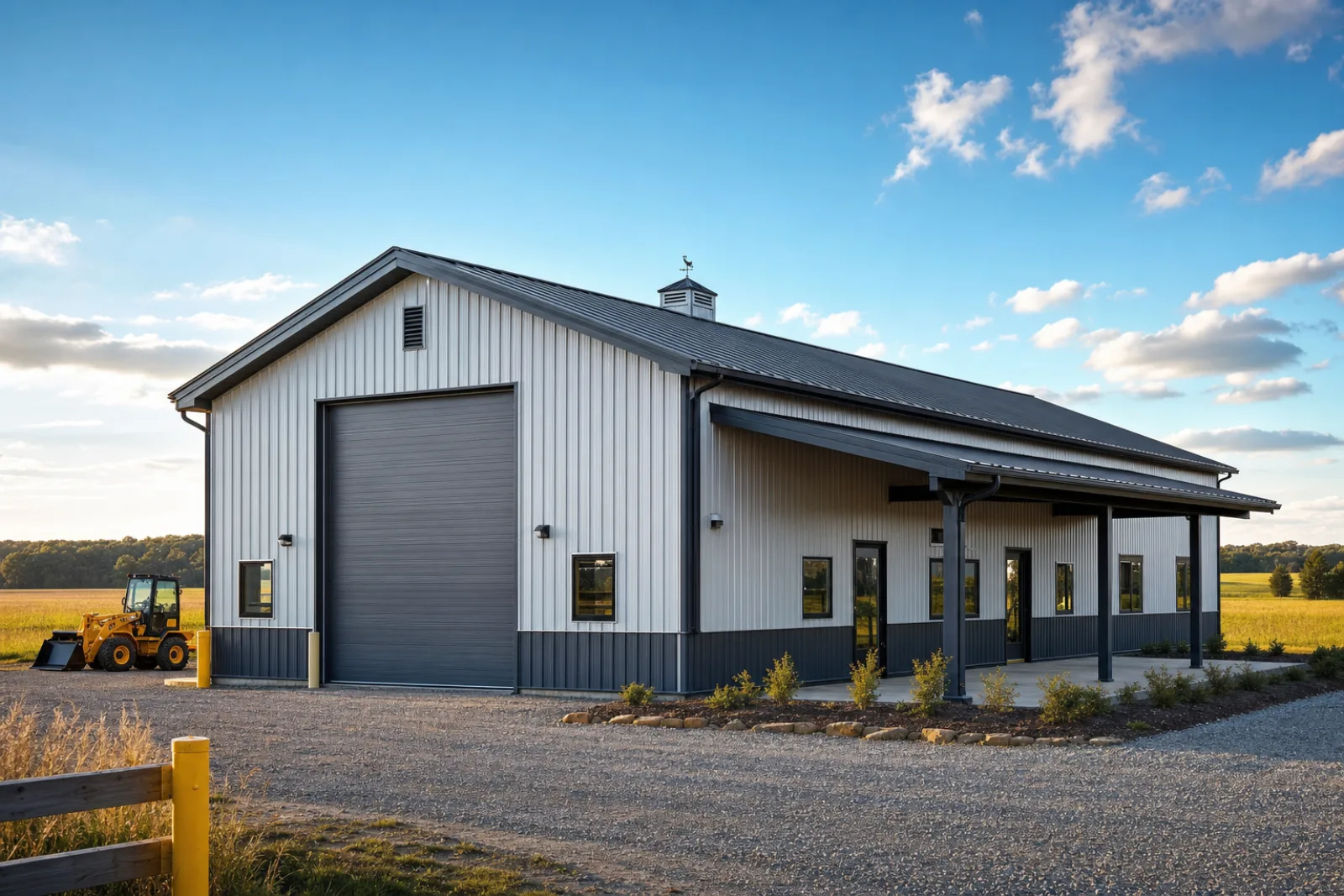
Let the use and the finish level decide. Start with what the building is for and how finished it has to be, then the method follows:
- Shop, garage, or barn. Steel kit. You want wide clear span, a fast shell, and a low cost to enclose, and the finish is light.
- Simple home or cabin. Steel shell, finished inside. The barndominium path gives you the shell economics with a livable result.
- Detailed custom house. Stick-built, or a hybrid. If the design leans on dormers, vaults, and heavy trim, wood framing bends to it more easily.
- Agricultural or storage building. Steel, every time, and often a pole barn is worth comparing too. See metal building kits vs pole barns.
Compare on the same scope
Most steel-versus-wood arguments fall apart because the two sides price different buildings. A bare steel shell against a finished stick-built house is not a fair fight. Decide the finish level first, then price both methods to that exact standard. That is the only comparison that tells you anything.
FAQ
Metal building vs stick-built: common questions
Are metal building kits cheaper than stick-built?
For a bare shell, usually yes. A steel kit puts up a roof and walls for less than framing the same footprint in wood, and it goes up faster, so labor costs less too. The gap is widest on unfinished buildings and narrows as you finish the interior to a residential standard.
Are metal buildings worth it?
For shops, garages, barns, and simple homes, the value is hard to beat: wide clear span, fast assembly, and a durable shell that resists rot, pests, and fire. The worth depends on the use. A workshop is an easy yes; a heavily detailed custom home is where you should run the numbers both ways.
Is steel stronger than wood framing?
Steel carries more load per pound and spans wider without interior support, which is why it frames buildings wood cannot reach without added beams. It also will not rot, warp, or feed termites. Quality wood framing is plenty strong for a house, but steel has the edge on span and on the things that degrade wood over time.
Can you finish a metal building like a house?
Yes. Owners insulate, frame interior walls, run wiring and plumbing, and hang drywall inside a steel shell every day, the barndominium approach. It takes added framing to give finishes something to attach to, so plan that work and its cost into the budget from the start.
Which lasts longer, a metal building or stick-built?
A steel building has the durability edge. Steel does not rot, warp, or attract termites, and a well-coated shell holds up for decades. Wood can last just as long when it is kept dry and maintained, but it is more vulnerable to moisture, pests, and fire. Most steel failures trace to condensation, not the steel itself.
Do metal buildings hold value like a house?
A well-built, finished steel home can hold value, especially in rural and agricultural markets where the type is familiar. Appraisal and resale depend more on the finish, the location, and local comparables than on the framing material. Build it to a real residential standard and it competes.
Related guides
Keep reading
This comparison connects to the rest of the buying decision. Follow these next:
- Metal building kits: the complete guide (the parent pillar).
- What is a metal building kit (what arrives on the truck).
- Metal building kits vs pole barns (the other build-method comparison).
- Red iron vs tube steel (the frame that gives steel its span).
- Metal building homes (finishing a steel shell to live in).
- Metal building kit prices and the cost guide (what the shell and the finish run).